Most common method: straight bar lacing—thread across and down for a clean Oxford finish.
I’ve taught hundreds of people how to lace an Oxford shoe, fixed frayed laces, and helped professionals keep a crisp dress shoe look. This guide explains exactly how to lace an Oxford shoe, why it matters for fit and style, the tools you need, step-by-step instructions, common mistakes, and real-world tips I’ve learned from hands-on experience. Read on and you’ll be able to lace your Oxford like a pro in minutes.

Why proper lacing matters
Proper lacing keeps your Oxford shoe looking sharp and fitting correctly. An Oxford is a closed-lace shoe, so neat lacing preserves the sleek silhouette. Poor lacing can make the vamp gap, cause pressure points, or ruin the shoe’s formal look. Learning how to lace an Oxford shoe improves comfort and ensures the shoe reads as formal and intentional.
Tools you’ll need
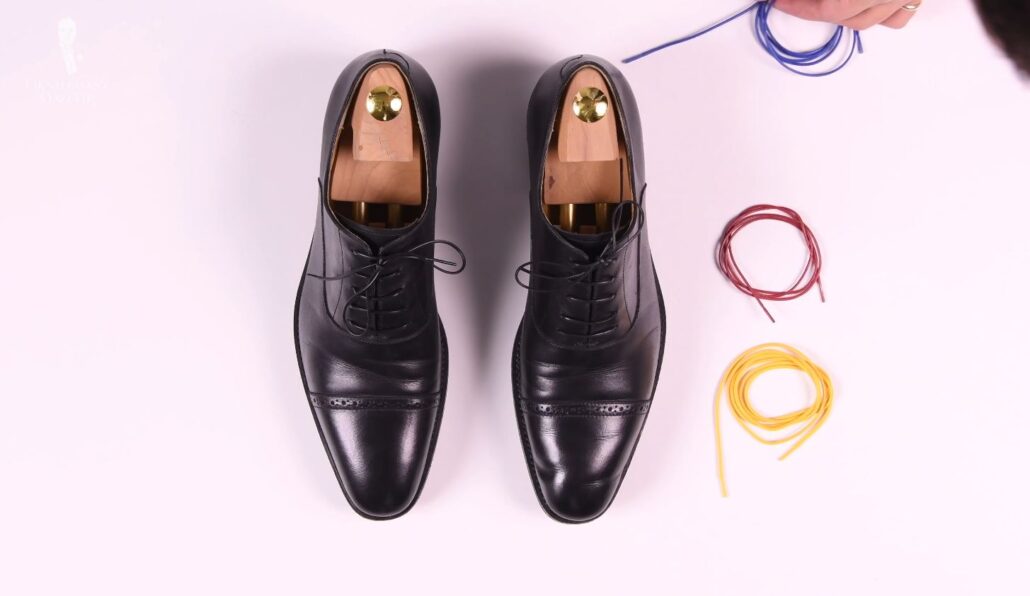
A few basic items make lacing faster and neater. Keep them on hand when you learn how to lace an Oxford shoe.
- A pair of well-matched laces, ideally waxed cotton or thin round dress laces.
- A shoehorn to help slide your foot in after lacing.
- Scissors or a small lighter if you trim and seal synthetic lace ends.
- A soft cloth and shoe brush for finishing touches.
I prefer waxed laces for Oxfords because they stay in place and resist fraying. I learned this after replacing dozens of cheap flat laces for clients who wanted a cleaner look.

Step-by-step: how to lace an Oxford shoe
Follow these clear steps for the classic straight bar (European) look that suits most Oxfords.
- Prepare the laces
- Use laces about 2–3 inches longer than the shoe’s eyelet span for straight bar lacing. Thin, waxed laces work best.
- Insert from the bottom
- Feed each lace end into the bottom eyelets from the outside in. The lace ends should match in length on the inside.
- Create the first bar
- Take the left lace and run it straight across to the right bottom eyelet, feeding from the inside out to create the visible lower bar.
- Cross under and up
- Take that same left lace (now on the right) and pass it up under the next eyelet on that side from the outside in. This hides the cross under the tongue.
- Repeat alternately
- Repeat the process: each time you make a visible horizontal bar, run the lace up under the next eyelet on the same side. Alternate sides until you reach the top.
- Finish with a neat knot
- When you reach the final eyelets, tuck any excess under the last bar or use a small bow. Keep the knot flat so it does not disrupt the clean lines of the Oxford.
Key tips as you practice how to lace an Oxford shoe:
- Keep bars parallel and evenly spaced.
- Pull laces gently and symmetrically to avoid lopsided tension.
- For a hidden knot, tuck the knot under the tongue after tying a snug bow.
I teach this method in fittings. The first few tries feel fiddly, but with two or three shoes you’ll do it quickly. The payoff is a crisp, formal appearance that matches the Oxford’s intended style.
Popular lacing styles for Oxford shoes
Different looks work for different events and shoe types. Here are common styles when you want to know how to lace an Oxford shoe.
- Straight bar lacing
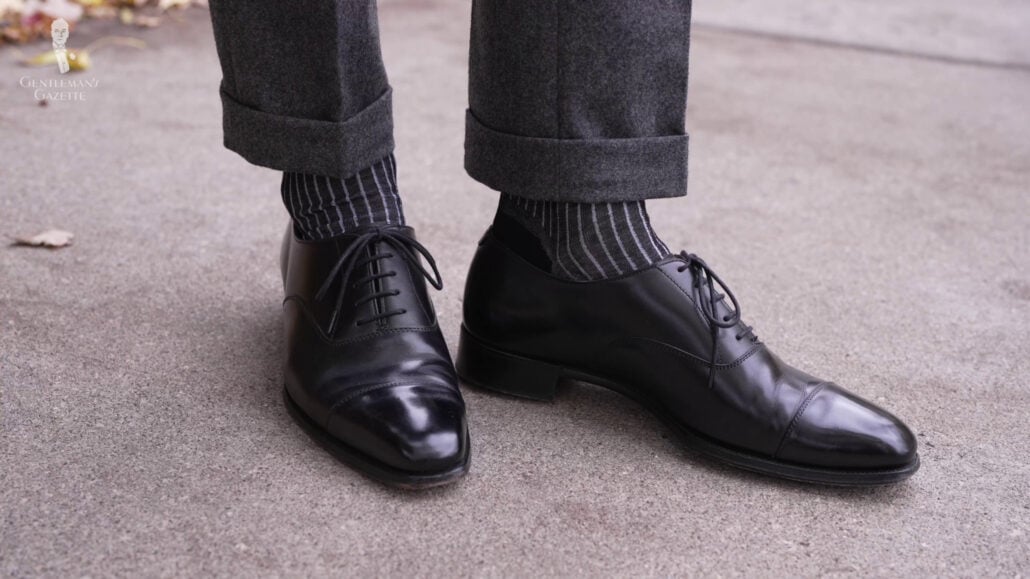
- Best for formal events and plain-toe or cap-toe Oxfords. Creates horizontal bars across the eyelets for a clean look.
- Criss-cross lacing
- A slightly more relaxed look. Works well for brogues or less formal Oxfords.
- Hidden-knot (European) lacing
- Keeps the knot under the tongue for minimal distraction. Good for tuxedos and very formal wear.
- Military (tight regulation) lacing
- Pulls lace tension evenly and firmly. Useful if you need extra support across the instep.
PAA-style questions (concise answers):
- Is straight bar lacing best for formal Oxfords?
- Yes. Straight bar lacing maintains the smooth, formal silhouette typical of dress Oxfords.
- Can I use flat laces on an Oxford?
- You can, but thin waxed laces look neater and hold shape better on closed-lacing shoes.

Common mistakes and how to avoid them
Avoid these pitfalls when you practice how to lace an Oxford shoe.
- Uneven tension
- Problem: One side is tighter than the other. Fix: tighten from the bottom up and adjust each bar evenly.
- Wrong lace length
- Problem: Laces are too short or too long. Fix: measure laces against eyelet count; most Oxfords need 24–30 inch laces depending on eyelets.
- Exposed bulky knot
- Problem: Large bows spoil the clean look. Fix: use smaller bows or tuck knots under the tongue.
- Using thick sports laces
- Problem: Bulky laces disrupt the shoe profile. Fix: switch to dress-specific laces.
Personal mistake I made early on was using standard running shoelaces for Oxfords. They looked bulky and softened the shoe’s line. Switching to waxed round laces transformed the appearance and fit overnight.
Caring for laces and shoes
Good care keeps both laces and Oxfords looking right. Simple habits help when you know how to lace an Oxford shoe.
- Clean and rotate
- Brush shoes after wear and rotate pairs so laces don’t remain compressed every day.
- Replace worn laces
- Swap laces before they fray; new ones improve the whole shoe’s look.
- Match lace style to shoe
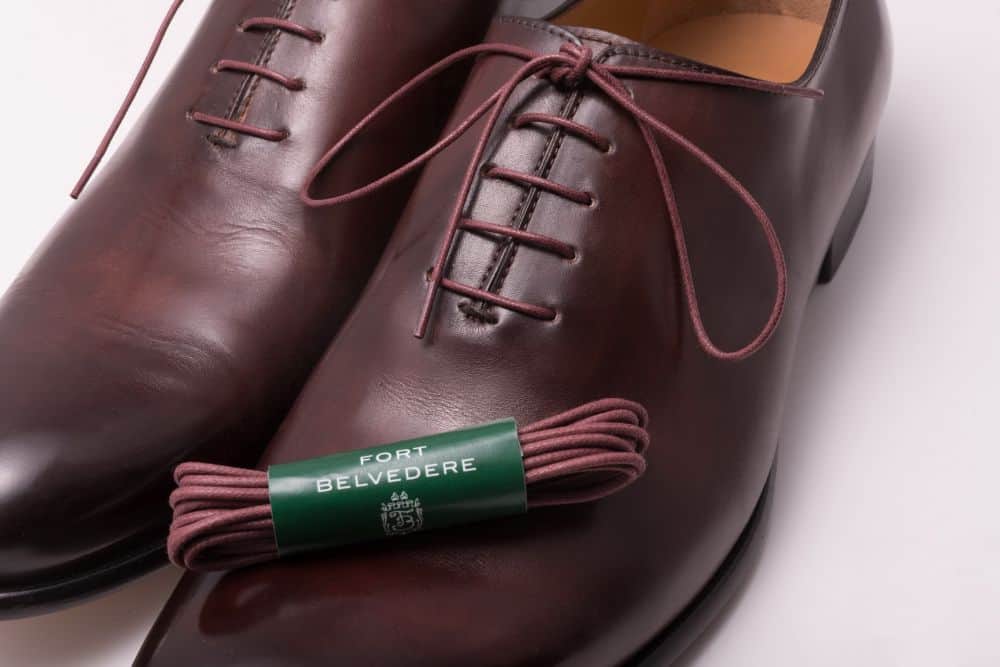
- Use round waxed laces for Oxfords and flat laces for casual shoes.
- Store properly
- Use shoe trees to maintain shape and prevent eyelet strain on laces.
From working with clients, I learned that a new pair of laces can refresh a shoe more effectively than polish alone. Small changes matter.

Frequently Asked Questions of how to lace an oxford shoe
How long should laces be for an Oxford shoe?
Most Oxfords need laces between 24 and 30 inches depending on the number of eyelets. Count eyelets and try a slightly longer lace if you prefer tucking or double-knotting.
Can I use straight bar lacing on brogues or wingtips?
Yes, straight bar lacing works on many dress shoes. For heavy broguing or decorative patterns, criss-cross may better accommodate the design.
How do I hide the knot on an Oxford shoe?
Tie a small knot and tuck it under the tongue or the final bar. A thinner waxed lace makes hiding the knot easier and neater.
What lace material is best for an Oxford?
Waxed cotton or thin round leather-look laces are ideal. They hold shape, resist fraying, and maintain a formal appearance.
How tight should an Oxford be when laced?
Laced snugly but comfortably with no heel slip and no pinching across the instep. Adjust tension gradually from the bottom up for even pressure.
Conclusion
Mastering how to lace an Oxford shoe takes a little practice and the right tools. Focus on even tension, use the proper lace length, and choose the straight bar method for the cleanest, most formal look. Try the steps on a weekend and you’ll notice how much neater your shoes look and how much more confident you feel wearing them. If you found this helpful, try it on your favorite pair, leave a comment with your results, or subscribe for more shoe-care tips.

Madison Clark is a footwear expert and the voice behind MyStyleGrid.com. She specializes in honest shoe reviews, style tips, and practical guides to help readers find the perfect pair for any occasion. With years of experience in blogging and content creation, Madison makes footwear knowledge simple, stylish, and easy to follow.