The best sandals for Achilles tendonitis combine soft cushioning, steady arch support, a secure fit, and a gentle heel design.
If your heel feels sore after a short walk, a stiff flip-flop may turn a small problem into a long day of pain. I know how frustrating it is to want an easy summer shoe but fear each step. The right sandal can reduce strain, cushion the foot, and help you move with more comfort. Still, sandals do not heal a torn or badly inflamed tendon. I recommend medical care for sharp pain, swelling, weakness, or pain that does not improve. This guide reviews supportive options for daily use, recovery, errands, and light walking.
Shevalues Orthopedic Sandals for Women

The Shevalues orthopedic sandal is a simple recovery-style flip-flop made for women who want more support than a flat foam thong. Its raised footbed helps the arch feel supported during easy walks and time at home. The soft, cushioned base may also reduce the harsh feel that comes from hard floors. For Achilles tendonitis, that balance matters because less foot strain can mean less stress traveling up to the heel and tendon.
I see this pair as a useful choice for casual wear, indoor use, and short errands. The open design keeps the foot cool, while the familiar flip-flop shape makes it easy to put on. It may work well for someone who dislikes a closed shoe during warm weather. However, users with severe pain may need a more secure sandal with an adjustable strap and a firm heel hold.
Pros:
- Supportive footbed for daily comfort
- Soft cushioning helps reduce impact on hard floors
- Easy slip-on design for quick use
- Cool, open construction for warm weather
- Useful for indoor recovery and light errands
- Orthopedic shape may help reduce foot fatigue
Cons:
- Flip-flop straps do not offer a locked-in heel fit
- Not the best choice for fast walking or sports
- May not suit people who need strong motion control
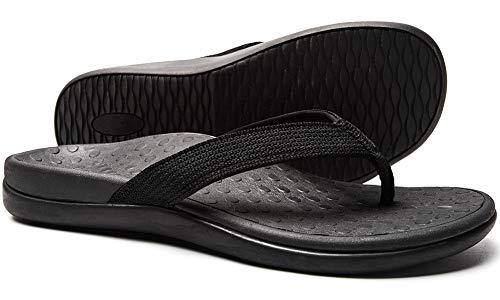
ONCAI Orthopedic Recovery Flip Flops

ONCAI’s orthopedic flip-flop focuses on arch support and a cushioned recovery feel. The footbed is designed to give the sole more structure than a basic beach sandal. That support can help the foot feel less tired when you stand or walk at a relaxed pace. I would consider it one of the better sandals for Achilles tendonitis when the main need is soft support around the house or during simple summer outings.
The beige and white color gives this pair a clean, casual look. It can fit into a daily wardrobe without looking like a medical shoe. The slip-on format is convenient, but the same design has limits when the foot needs strong stability. Take short walks first, and stop if the heel or tendon feels worse after use.
Pros:
- Orthopedic footbed offers more structure than a flat flip-flop
- Cushioned feel supports relaxed walking
- Light design works well for indoor wear
- Simple slip-on style saves time
- Neutral color matches casual summer clothing
- May help ease pressure linked to tired arches
Cons:
- Thong-style fit may allow some heel movement
- Not designed for steep trails or long hikes
- Arch height may feel too strong for some feet
Athlefit Women’s Orthopedic Flat Sandals
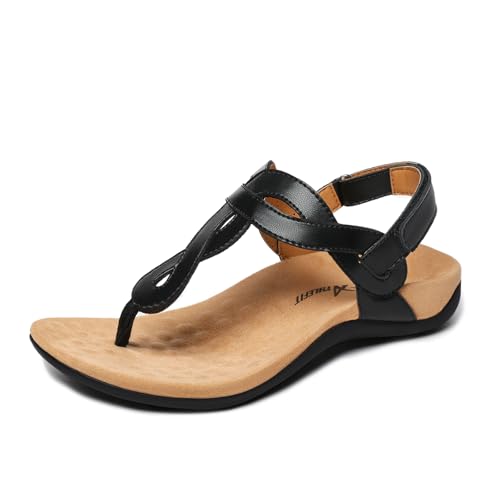
Athlefit makes this sandal for shoppers who want an orthopedic shape without giving up a more polished look. Its arch support gives the middle of the foot a stable base, while the cushioned sole helps soften each step. The flat profile may appeal to people who do not like a raised platform. For many users, a supportive flat sandal feels more natural than a soft but unstable flip-flop.
This option looks ready for errands, casual meals, and daily summer wear. I like that it can serve as a regular shoe rather than only a recovery sandal. It may be helpful when Achilles discomfort comes with tired arches or poor support from thin footwear. Still, “flat” does not mean ideal for every foot, so try it for brief periods before wearing it all day.
Pros:
- Orthopedic arch support adds useful structure
- Flat shape feels stable for many casual users
- More versatile appearance than a basic recovery sandal
- Cushioned sole helps soften contact with the ground
- Good choice for errands and daily summer use
- Black color is easy to pair with many outfits
Cons:
- May not provide enough heel control for severe symptoms
- Flat construction may not suit users who need a heel lift
- Fit can vary with foot width and strap position
PROFOOT Achilles Heel Cup for Women

The PROFOOT heel cup is not a sandal, but it deserves attention because it can support a sandal-based recovery plan. This insert sits under the heel and aims to cushion the impact of each step. It may also help keep the heel more centered inside a compatible shoe. For someone who already owns comfortable sandals with a removable footbed, it can offer another way to improve heel comfort.
Because this product is made for women’s sizes 6 through 10, checking fit matters before purchase. A heel cup should sit flat and should not slide under the foot. I would pair it only with footwear that has enough room and a stable base. It is not a stand-alone treatment, and it may not work inside open sandals that cannot hold an insert in place.
Pros:
- Targets heel cushioning directly
- May help improve heel alignment inside a compatible shoe
- Small design is easy to carry and store
- Can refresh an older pair of supportive footwear
- Useful for people who need extra heel padding
- Designed for a broad women’s size range
Cons:
- Not a sandal or complete footwear solution
- May move in open shoes without a secure footbed
- Can take up space in a snug shoe
- Does not replace treatment for a damaged Achilles tendon
OOFOS OOlala Recovery Sandal

OOFOS is known for recovery footwear, and the OOlala is built around a soft, flexible feel. The sole is made to absorb shock and cushion the foot after work, exercise, or long periods of standing. Its smooth footbed may feel gentle under a sore heel. Among the best sandals for Achilles tendonitis, this model stands out for people who value recovery comfort above a firm, traditional shoe feel.
The single-band design keeps the sandal simple and easy to wear. It works well after a workout or during quiet time at home. I would not use its softness as a reason to increase walking distance too fast, since a comfortable sandal can hide signs of overuse. Check that the strap holds the foot well and that the flexible sole does not make your tendon work harder.
Pros:
- Soft recovery feel may comfort tired feet
- Cushioned sole helps absorb walking impact
- Easy slip-on design works well after exercise
- Lightweight construction is convenient for travel
- Simple black style suits casual use
- Useful for standing, home wear, and post-workout recovery
Cons:
- Very soft cushioning may feel less stable to some users
- Single-band design offers limited adjustment
- May not provide enough support for long outdoor walks
KuaiLu Women’s Recovery Sandals
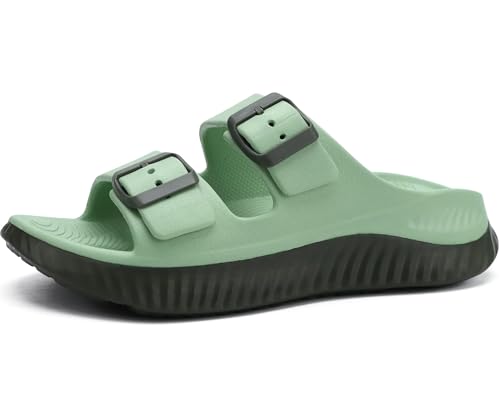
KuaiLu’s recovery sandal combines a cushioned footbed with arch support and a casual look. The green color gives it a more playful style than many black or beige orthopedic options. Its support can help reduce the tired, flat feeling that often appears after standing for hours. I consider it a practical middle ground between a very soft recovery slide and a more structured walking sandal.
This pair may suit home use, poolside wear, quick shopping trips, and relaxed outdoor time. The footbed should feel supportive without needing a complicated break-in routine. As with any recovery sandal, start with short wear sessions and watch for rubbing near the heel or strap. People with a wide foot should check the fit closely because arch support works best when the foot sits in the intended position.
Pros:
- Arch support helps give the foot a steadier base
- Recovery design suits tired feet after daily activity
- Bright green color adds a stylish casual touch
- Easy to wear for home and short outdoor trips
- Cushioning may reduce the feel of hard ground
- Good option for shoppers seeking comfort at a moderate price
Cons:
- Limited adjustment may affect the fit for some feet
- Not intended for running, hiking, or rough ground
- Color may not match every wardrobe
MEGNYA Women’s T-Strap Sandals

MEGNYA offers a T-strap sandal with an orthopedic footbed and memory foam cushioning. The strap layout can feel more secure than a loose flip-flop, which is useful when each step needs control. Its cushioned base may help soften pressure during light walking and daily chores. This design is worth a look for anyone who wants the best sandals for Achilles tendonitis with a more traditional sandal shape.
The blue color and T-strap look make it suitable for casual outfits, not only recovery time. A secure upper can help prevent the toes from gripping the footbed to keep the sandal in place. That may support a smoother stride, though it cannot correct every walking problem. I recommend adjusting the sandal so it feels snug but never tight across the top of the foot.
Pros:
- T-strap design can offer better foot security
- Memory foam adds a soft layer under the foot
- Arch support may help reduce foot fatigue
- Works for indoor and outdoor casual activities
- More polished style than a basic flip-flop
- May suit users who dislike loose sandals
Cons:
- Straps may rub until the sandal is broken in
- Memory foam can feel less firm than some users prefer
- Not a replacement for a walking shoe during long outings
REEF Cushion Vista Hi Platform Sandal

The REEF Cushion Vista Hi brings a fashion-first look to a comfort sandal list. It has a platform shape, an arch-support footbed, and a soft cushion layer. The added height may appeal to shoppers who want a dressier sandal without choosing a thin, hard sole. Its supportive footbed can help during casual wear, but the taller platform deserves careful attention when the Achilles tendon is already sore.
I would choose this model for short social events, meals, and easy walks on even ground. It is not my first pick for unstable surfaces because platform sandals can change balance and ankle motion. The foot should sit securely, and the upper should not force the toes to claw for grip. If you like fashion and need mild support, this pair offers a useful compromise.
Pros:
- Fashionable platform design suits casual dress
- Arch support adds structure beneath the foot
- Soft footbed helps improve step comfort
- Useful for short outings and social events
- Offers more style than a basic orthopedic sandal
- Can suit users who want a little extra height
Cons:
- Platform height may reduce stability for some users
- Not ideal for uneven ground or long walks
- May feel less natural during an Achilles flare
How Achilles Tendonitis Changes Sandal Choice
Achilles tendonitis, also called Achilles tendinopathy in many clinical settings, affects the thick tendon that joins the calf muscles to the heel bone. Pain often shows up above the heel or at the back of the heel. Stiffness may feel worse after rest, when you first get up, or after a rise in activity. A sandal cannot fix the tendon, but the right design can make daily steps less harsh.
The best sandals for Achilles tendonitis should not feel like a thin sheet under the foot. They should offer enough cushioning to soften impact and enough structure to keep the foot from rolling or sliding. A secure upper also matters. If your toes must grip the sandal with every step, your lower leg may work harder than it should.
Medical groups such as the American Academy of Orthopaedic Surgeons and the American Physical Therapy Association commonly stress load control, gradual exercise, and professional assessment for ongoing tendon pain. That advice matters more than any product claim. Use sandals as a comfort tool, not as a cure. If pain grows, reduce wear and seek advice from a qualified clinician.
Key Features to Look For
Soft but stable cushioning
Soft foam can feel pleasant, but softness alone does not equal support. A sandal that folds or twists too much may make the foot work harder. Look for cushioning that gives under the heel but still keeps the foot level. I prefer a balanced sole that feels springy without feeling like a pillow.
Moderate arch support
Arch support can help spread pressure across the foot. It may also reduce the tired feeling that comes from standing on a flat surface. Yet a high ridge can press into the arch and make walking feel worse. The best sandals for Achilles tendonitis should match your foot shape, not force your foot into a painful curve.
A secure upper
Straps, bands, or a T-strap should hold the foot without squeezing it. The heel should not slide far beyond the back of the sole. A loose sandal can cause short steps, toe gripping, and extra effort at the ankle. Adjustable straps are helpful when swelling changes during the day.
A gentle heel design
Some people with Achilles pain feel better in footwear with a small heel rise. It can reduce the amount the ankle bends upward during a step. However, a tall heel or unstable platform may create a new problem. Choose a low, stable rise rather than a dramatic lift, unless a clinician gives you different advice.
A smooth footbed
Raised seams and rough straps can create blisters when your gait changes. Check the area near the heel, the arch, and the toes. The foot should rest evenly on the sandal. If you feel one hot spot after ten minutes, do not assume it will disappear after a full day.
How I Evaluate the Best Sandals for Achilles Tendonitis
I start with the footbed because it is the part that affects every step. I look for a mix of cushioning, shape, and support rather than one feature used as a sales phrase. I also consider how well the sandal holds the foot. A sandal may have a good arch but still fail if the foot slides forward.
Next, I think about the real use. A sandal for post-workout recovery does not need the same design as one for a long day of shopping. I review the sole, upper, weight, and ease of use. I also note whether the sandal seems suited to a short trial period, because tendon pain often reacts to sudden changes.
I do not treat product descriptions as medical proof. Comfort claims can vary from person to person, and a product page cannot diagnose an injury. My review weighs useful design traits while keeping those limits clear. That approach helps shoppers choose with care instead of chasing a promise of instant pain relief.
Fit and Break-In Tips
Shop for sandals later in the day if your feet swell. Measure both feet and use the larger foot when checking size. Your heel should rest on the sandal without hanging over the edge. Your toes should have room, but they should not spill past the front.
Wear a new pair for ten to fifteen minutes at home first. Walk on a clean floor and check for heel slip, rubbing, and pressure under the arch. If the sandal feels good, add a little time each day. Do not wear a new pair for a full day during an active tendon flare.
Keep your first outdoor walk short and easy. Avoid hills, long stairs, and fast walking while you test the fit. A sandal that feels fine in the kitchen may feel different on pavement. Pain that lasts into the next day is a sign to cut back.
Which Sandal Type Is Right for You?
Recovery slides and soft flip-flops can work well around the home. They are easy to use and often provide a soft step. Their weak point is fit, since many have little adjustment. I prefer them for short, calm periods rather than long walks.
Strap sandals offer better control. A T-strap or adjustable upper can reduce foot movement inside the sandal. This style may suit errands and light outdoor walking. It is often a better choice than a loose thong when the heel feels sensitive.
Platform sandals can look great and may cushion the foot. Still, height can affect balance and ankle motion. I would reserve them for brief events on smooth ground. They are not usually my first choice during a strong Achilles flare.
Heel cups can add comfort to compatible footwear, but they need a stable place to sit. They work best in shoes or sandals that hold them flat. Never force an insert into a tight shoe. Extra pressure can defeat the reason you bought it.
My Recommendation
For most shoppers, I would start with the MEGNYA T-strap sandal because its more secure design, arch support, and memory foam offer a good balance for casual use. The OOFOS OOlala is my comfort pick for post-workout recovery and home wear. Athlefit is a strong everyday choice for users who want a neat look with a supportive footbed.
The Shevalues and ONCAI pairs suit shoppers who prefer a simple orthopedic flip-flop. KuaiLu offers a colorful recovery option, while REEF fits people who want style and mild support for short outings. PROFOOT is best viewed as a heel-cushion add-on, not a complete sandal. Among the best sandals for Achilles tendonitis, the right pick is the one that feels stable, fits well, and does not increase your pain.
| Best for | Why |
|---|---|
| Post-workout recovery | OOFOS OOlala offers a soft, cushioned recovery feel. |
| Secure casual walking | MEGNYA’s T-strap design helps limit unwanted foot movement. |
| Extra heel cushioning | PROFOOT adds heel support when used in compatible footwear. |
Care and Safe Use Tips
Keep sandals clean and dry. Sweat and grit can make straps rough and increase skin rubbing. Let wet footwear dry fully before wearing it again. Check the sole often for deep wear, since uneven wear can change how your foot lands.
Do not use a comfortable sandal to test a painful tendon. Comfort may reduce the warning signs without removing the cause. Keep activity within a level that does not cause a clear pain increase. Rest, ice if advised by your clinician, and a gradual strengthening plan may be more important than the footwear itself.
Seek prompt medical care if you feel a sudden pop, major swelling, bruising, or a sharp loss of push-off strength. Those signs may point to a more serious injury. Also seek care when pain keeps returning or limits normal walking. Good sandals can support comfort, but they cannot replace an exam.
FAQs Of Best Sandals for Achilles Tendonitis
Are sandals good for Achilles tendonitis?
Supportive sandals may improve comfort for light daily activity. Choose cushioning, a stable footbed, and a secure fit. Avoid thin, flat, loose sandals if they make your heel hurt. Stop wearing any pair that increases pain.
Should I wear flip-flops with Achilles pain?
Some orthopedic flip-flops can work for short use, but basic flat flip-flops often offer little support. A thong strap may also make you grip with your toes. If you choose flip-flops, look for a shaped footbed and use them for easy, brief walks.
Is arch support helpful for Achilles tendonitis?
Arch support may help spread pressure and reduce foot fatigue. It does not work the same for every person. A support that feels too high or hard can cause new pain. Select a moderate shape and increase wear slowly.
Can a heel cup help Achilles tendon pain?
A heel cup may cushion the heel and keep it more centered in compatible footwear. It must sit flat and stay in place. It is not a cure and may not fit open sandals. Ask a clinician before using one if you have swelling or a known tendon injury.
When should I see a doctor for Achilles pain?
See a medical professional for severe pain, swelling, bruising, weakness, or a sudden pop. Also seek care if pain lasts, returns often, or changes how you walk. Early advice can help prevent a small problem from becoming a long recovery.
Final Verdict: Which Should You Buy?
I would buy the MEGNYA T-strap for secure daily comfort, or OOFOS OOlala for soft recovery wear. Athlefit is a strong style-friendly choice.
The best sandals for Achilles tendonitis should fit well, cushion each step, and support gradual activity. Choose comfort, listen to pain, and seek care when symptoms persist.
Madison Clark is a footwear expert and the voice behind MyStyleGrid.com. She specializes in honest shoe reviews, style tips, and practical guides to help readers find the perfect pair for any occasion. With years of experience in blogging and content creation, Madison makes footwear knowledge simple, stylish, and easy to follow.