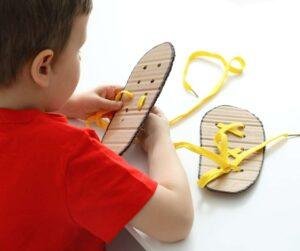
Most kids learn to tie shoes between ages five and seven, when hand control and focus are ready.
Knowing when should kids learn to tie shoes can make mornings calmer for both children and parents. Age matters, but readiness matters more. This guide explains the best age range, signs of readiness, easy teaching steps, common mistakes, and when to seek extra support.
When Should Kids Learn to Tie Shoes?
Most children learn to tie their shoes between ages five and seven. Some children master the skill at age four, while others need practice until age eight or later. This wide range is normal.
The answer to when should kids learn to tie shoes depends on several skills. Children need finger strength, hand control, visual planning, memory, and enough attention to follow each step.
Shoe tying is not a race. A child who uses Velcro shoes at age six is not behind. Many schools and families now use slip-on shoes, elastic laces, or fasteners that reduce the need to tie laces every day.
The American Academy of Pediatrics and child development experts generally support watching the whole child instead of judging one skill alone. A child’s play, speech, movement, self-care, and social skills give a better picture of development.

Signs Your Child Is Ready to Learn
Before asking when should kids learn to tie shoes, look for signs of readiness. These signs often tell you more than a birthday does.
Your child may be ready if they can:
• Use both hands together during play
• Pull, pinch, and hold small objects
• Make a basic knot with string or a robe tie
• Copy simple hand movements
• Follow two or three steps in order
• Sit with a task for five to ten minutes
• Show interest in dressing independently
• Tell the difference between left and right, even if they sometimes mix them up
• Open and close buttons, snaps, or zippers
Children do not need perfect fine motor skills. They only need enough control to hold one lace while moving the other. Think of the laces as two small roads. The child must guide them, cross them, and pull them without losing track.
A child who enjoys crafts, beads, blocks, puzzles, or drawing may already be building the needed skills. These activities strengthen the hands without making practice feel like work.
Why Shoe Tying Can Be Hard
Learning when should kids learn to tie shoes is easier when you understand the challenge. Shoe tying uses several skills at the same time.
First, the child must control both hands. One hand may hold a loop while the other wraps a lace around it. This is called bilateral coordination.
Second, the child must remember a sequence. The steps may seem simple to an adult, but children must recall what comes first, what moves next, and how tightly to pull.
Third, shoe tying requires visual and motor planning. The child watches the laces and predicts where each one should go. This is similar to following a small map with their fingers.
Fourth, the child must use enough force. Pulling too hard can create a tight knot. Pulling too softly can make the bow fall apart.
Children may also struggle because the shoe is on the wrong foot, the laces are too long, or the colors are hard to see. A small change in the setup can make the task much easier.
The Best Age to Start Practicing
Parents can introduce the idea of shoe tying around age four or five. Early practice should be playful, short, and free from pressure.
If you are wondering when should kids learn to tie shoes, a useful guide is:
• Ages three to four: Practice pulling, looping, and making simple knots with thick cords
• Ages four to five: Try a basic knot and large practice laces
• Ages five to six: Teach the full bow with clear steps
• Ages six to seven: Build speed, strength, and independence
• Ages seven and older: Offer more practice if the skill is still difficult
These ages are only a guide. A child may learn earlier or later and still develop normally.
In my experience working through everyday child skill practice, the best results come when adults begin before the skill becomes urgent. Starting two days before school pictures or a camp trip often creates stress. Starting months earlier gives the child room to make mistakes.
How to Teach Shoe Tying Step by Step
Choose a quiet time when your child is not hungry, tired, or rushing. Use a shoe with thick, firm laces. Brightly colored laces can help children see the steps.
Sit behind your child or beside them. Sitting behind the child lets you make the same movements in the same direction. Facing the child can make left and right seem reversed.
Try this simple method:
-
Cross the two laces and pull them into a snug knot.
-
Make a loop with one lace. Call it the “bunny ear.”
-
Hold the loop with one hand.
-
Wrap the other lace around the loop.
-
Push that lace through the small opening.
-
Pull both loops gently to make the bow.
Use the same words each time. For example, say, “Cross, pull, make a loop, wrap, push, and pull.” Repeated language helps the steps stay in the child’s memory.
Some children learn better with the two-loop method. Others prefer the “around the tree” method, in which one lace wraps around a loop before passing through. Try both and keep the one that feels clearer.
Make Practice Easier and More Fun
The answer to when should kids learn to tie shoes is not only about age. The learning environment matters, too.
Use a large cardboard shoe or a practice board first. A larger model gives children more space for their fingers. Once they understand the steps, move to a real shoe.
You can also practice with:
• Hoodie strings
• Thick yarn
• Ribbon
• A bathrobe belt
• Toy lacing cards
• A shoe placed on a table
Keep practice sessions short. Five minutes each day is often better than one long session each week. End after a success, even if the success is only making one good loop.
Offer calm praise that describes the effort. Say, “You held the loop while you wrapped the lace.” This gives useful feedback. Saying only “Good job” may feel kind, but it does not tell the child what worked.
Avoid taking over too quickly. If the child gets stuck, ask, “Which step comes next?” Give a small hint before doing the step for them.
Common Mistakes Parents Should Avoid
Many children struggle with shoe tying because adults move too fast. Parents often demonstrate the entire process in one quick motion. To a child, this can look like magic rather than a set of steps.
When thinking about when should kids learn to tie shoes, avoid comparing siblings or classmates. Comparison can turn practice into a test. A child may stop trying because they believe they are “bad” at it.
Other common mistakes include:
• Practicing when the child is tired or rushed
• Using thin, slippery laces
• Giving too many instructions at once
• Correcting every small movement
• Expecting a perfect bow right away
• Pulling the laces for the child
• Requiring lace-up shoes before the child is ready
• Treating untied shoes as disobedience
One mistake I have seen often is teaching on a shoe that is already on the child’s foot. The angle is awkward, and the child may not see the laces well. Starting with the shoe on a table usually creates a clearer path.
Alternatives to Traditional Shoelaces
Children do not have to master traditional bows at a certain age. Practical footwear choices can support independence while the skill develops.
Useful options include:
• Elastic laces that turn regular shoes into slip-ons
• Lock laces with a small sliding fastener
• Hook-and-loop closures
• Zippered shoes
• Slip-on sneakers
• Shoes with a single large strap
These choices are not a failure or a shortcut. They help children manage daily tasks while they continue to build hand skills.
A child may understand how to tie shoes but still avoid doing it because the task takes too long. Flexible footwear can reduce morning stress and leave more time for practice later.
If your child has a physical disability, low muscle tone, joint pain, or limited hand movement, an occupational therapist can suggest helpful tools. Adaptive laces and dressing methods can support both comfort and independence.
When to Ask for Extra Help
Parents often ask when should kids learn to tie shoes because their child seems far behind peers. Shoe tying alone does not diagnose a developmental problem.
Consider speaking with your child’s pediatrician or an occupational therapist if your child has ongoing difficulty with many fine motor tasks. Examples include using utensils, holding a pencil, cutting with scissors, dressing, or managing buttons.
It is also wise to ask for guidance if your child:
• Cannot use both hands together during simple tasks
• Has strong pain or fatigue in the hands
• Avoids most fine motor play
• Loses skills they once had
• Becomes unusually distressed by dressing tasks
• Has trouble following simple steps in other daily activities
• Shows delays in several areas of development
A professional can watch how your child moves and identify the real barrier. The issue may involve grip strength, motor planning, vision, attention, or confidence.
Do not wait for shoe tying alone to become a crisis. Early advice can make daily routines easier, even when the child has no formal diagnosis.
A Simple Two-Week Practice Plan
A short plan can make the answer to when should kids learn to tie shoes more practical. Adjust the plan to your child’s age and comfort.
Days 1 to 3: Build hand skills
Use yarn, ribbons, or a practice shoe. Let your child pull, cross, and make loose knots without expecting a bow.
Days 4 to 6: Make one loop
Practice making a loop and holding it steady. Help your child use the same hand position each time.
Days 7 to 9: Add the wrap
Show how the second lace goes around the loop. Use slow movements and bright laces.
Days 10 to 12: Push the lace through
Help your child find the opening and push the lace through. A finger can point to the hole without doing the whole step.
Days 13 to 14: Practice on a shoe
Move to a shoe on the table. After your child succeeds, try the shoe on the foot.
If the plan feels stressful, pause and return to an earlier step. Learning is not always a straight line. A short break can help the brain store the new movement.
Frequently Asked Questions
When should kids learn to tie shoes at school?
Many children learn between kindergarten and second grade, often from ages five to seven. Schools may teach the skill, but each child develops at a different pace.
Is a child behind if they cannot tie shoes at age seven?
Not necessarily. Some children need more time because of fine motor, attention, vision, or motor planning differences. If other self-care skills are also hard, discuss your concerns with a pediatrician.
What is the easiest shoe-tying method for kids?
The two-loop method is often easy to explain because it uses two “bunny ears.” However, some children prefer making one loop and wrapping the other lace around it, so it is worth trying both.
How long does it take a child to learn to tie shoes?
Some children learn in a few practice sessions, while others need weeks or months. Short, regular practice usually works better than long sessions filled with pressure.
Should children practice tying shoes on their feet?
Start with the shoe on a table because the laces are easier to see and reach. Move to the foot after your child understands the basic steps.
Are Velcro shoes bad for a child’s development?
No. Velcro shoes support independence and are useful when a child is still learning or has limited hand control. Children can practice laces separately without needing to wear them every day.
Can occupational therapy help with shoe tying?
Yes. An occupational therapist can assess hand strength, coordination, motor planning, and visual skills. They can also recommend adapted laces and other dressing tools.
Conclusion
The best answer to when should kids learn to tie shoes is usually between ages five and seven, but readiness matters more than age. Look for interest, hand control, two-hand coordination, and the ability to follow simple steps.
Use large, colorful laces, teach one movement at a time, and practice for only a few minutes. Give your child time, praise effort, and use adaptive shoes when needed. Start with a relaxed practice session this week, and share your experience or questions in the comments.
Rubel Miah is the Senior Editor at MyStyleGrid.com, where he brings a sharp editorial eye and an unshakable love for fashion to everything he does. A true style addict, Rubel lives and breathes trends, from streetwear to high fashion, and has a knack for turning inspiration into impactful stories. With years of experience in fashion journalism and digital media, he curates content that empowers readers to express themselves through style. When he’s not editing features or forecasting the next big thing, you’ll find him hunting down vintage pieces or capturing street style moments around the city.