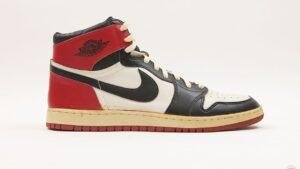
Jordan shoes are mainly made in Vietnam, China, and Indonesia, depending on the model and production season.
The answer to where Jordan shoes are made is more detailed than a single country name. Jordan Brand is part of Nike, which designs its products in the United States but relies on approved factories around the world to cut, stitch, mold, and assemble each shoe. This guide explains the main manufacturing countries, how to check a pair yourself, and what the country of origin does—and does not—tell you about quality.
Where Jordan shoes are made today
Most genuine Air Jordan shoes are made in Vietnam, China, or Indonesia. These countries have large footwear industries, skilled workers, and factories that can handle Nike’s complex designs and high production volumes.
The exact answer to where Jordan shoes are made depends on the shoe model, colorway, factory schedule, and release year. A pair of Air Jordan 1s may come from Vietnam, while another Jordan 1 made for a different market may come from China.


Nike does not make every Jordan shoe in one location. Instead, it uses a global supplier network. This approach helps the company manage demand, control costs, and produce different parts of the shoe at factories with the right equipment.
The main manufacturing countries include:
• Vietnam: A major footwear production center for Nike and Jordan Brand.
• China: A long-standing manufacturing base for athletic shoes and Jordan releases.
• Indonesia: An important source of Nike and Jordan footwear, especially for selected models.
• Other countries: Some Nike footwear may be produced in other approved locations, but Vietnam, China, and Indonesia are the countries shoppers most often see on Jordan shoe labels.
The best way to know where a specific pair was made is to read its inner label or the product box. Country information can change between production batches, so general claims about one model are not always accurate.

Why Jordan shoes are made overseas
Many readers ask where Jordan shoes are made because they assume a famous American basketball brand should manufacture every pair in the United States. The reality is that modern athletic footwear depends on a global supply chain.
Nike began moving much of its footwear production outside the United States decades ago. Overseas factories offered access to specialized labor, established shoe-making systems, and large production facilities. Today, building a shoe factory in the United States would also involve major costs for labor, materials, equipment, and supplier networks.
Jordan shoes contain many parts, including:


• Rubber outsoles
• Foam midsoles
• Air cushioning units
• Leather or synthetic uppers
• Mesh panels
• Thread and adhesives
• Plastic eyelets and heel parts
These components may come from different suppliers before final assembly. Think of the supply chain like a recipe. One factory may prepare the ingredients, while another combines them and completes the finished shoe.
Nike’s public supplier information shows that its products are made through independent contract factories. Nike sets product standards and audits suppliers, but the factories are not usually owned directly by Nike.
That distinction matters. When people ask where Jordan shoes are made, they are usually asking about the final assembly country shown on the label. It does not mean every material came from that same country.
Are Jordan shoes made in the United States?
Most modern Jordan shoes are not made in the United States. They are generally designed, developed, and marketed through Nike’s global operations, while production takes place mainly in Asia.
Michael Jordan’s original partnership with Nike began in the United States, and the brand has deep American basketball roots. However, American branding does not mean American manufacturing.
A product can have several different connections to the United States:
• The design may be created by a US-based design team.


• The shoe may be developed with athletes and product experts in the United States.
• The Jordan Brand may be managed through Nike’s US operations.
• The final shoe may be cut, stitched, and assembled in Vietnam, China, or Indonesia.
This is common across the footwear industry. Many popular US brands use international manufacturing while keeping design, marketing, research, and management operations at home.
Some limited products or special footwear projects may use unusual production arrangements. Still, shoppers should not assume that a Jordan shoe is made in the United States unless the label clearly says so.
Where are Air Jordan 1 shoes made?
Air Jordan 1 shoes are commonly made in Vietnam, China, or Indonesia. The country can vary by version, release year, size run, and manufacturing batch.
For example, one Air Jordan 1 High colorway may have a “Made in Vietnam” label, while a different Air Jordan 1 Low may say “Made in China.” Even two pairs with a similar appearance can come from separate factories.
The Air Jordan 1 is one of the most copied sneakers in the world. As a result, the country of manufacture alone cannot prove that a pair is genuine. Counterfeit sellers can print any country name they want on a fake label.
When checking an Air Jordan 1, compare several details:
-
Look at the inner size tag and note the manufacturing country.
-
Match the style code on the tag with the product box.
-
Compare the shoe with official product images.
-
Check the shape, stitching, logo placement, and materials.
-
Buy from Nike, an authorized retailer, or a trusted resale platform.


A real pair made in Vietnam is not automatically better than a real pair made in China. Factory location is only one part of the authentication process.
Does the manufacturing country affect Jordan shoe quality?
The country listed on a Jordan shoe does not, by itself, determine quality. Nike uses product specifications, factory requirements, testing standards, and quality checks across its approved supplier network.
In real-world use, small differences can still appear between production batches. You may notice slight changes in leather texture, glue marks, paint, stitching, or shape. These differences can result from materials, equipment, workers, or changes made during production.
From a practical buying perspective, focus on the finished shoe rather than the country alone. Check whether:
• The panels are aligned.
• The stitching is even.
• The outsole is firmly attached.
• The logos are placed correctly.
• The left and right shoes match in shape.
• The cushioning feels consistent.
• The box label matches the shoe tag.
A “Made in Vietnam” label is not a warning sign. Vietnam produces a large amount of high-quality athletic footwear for major global brands. The same principle applies to China and Indonesia.
A common mistake is to treat one country as proof of superior quality. That belief is usually based on rumors, not reliable evidence. A better approach is to inspect the shoe and verify the seller.


How to find where your Jordan shoes were made
You can usually find the manufacturing country in less than a minute. Nike places important product information on the shoe’s internal label and packaging.
Follow these steps:
-
Remove the insole only if needed and look inside the shoe near the tongue or side panel.
-
Find the small label showing the size, barcode, style code, and production details.
-
Look for wording such as “Made in Vietnam,” “Made in China,” or “Made in Indonesia.”
-
Check the shoe box for the same style code and size information.
-
Compare the label details with the official product listing or receipt.
The inner label may use different wording depending on the market. Some shoes show a country of origin in several languages, while others provide a shorter statement.
Do not confuse the production date with the manufacturing country. A code may show when the shoe was made, but it is not always easy for shoppers to decode every part of the label.
If the label is missing, blurry, badly printed, or inconsistent with the box, be cautious. One unusual detail does not automatically prove a fake, but several mismatched details deserve attention.
How Jordan shoe production works
Understanding the production process makes it easier to understand where Jordan shoes are made. A Jordan shoe is not created in one simple step.
The process often includes:
-
Design and development: Designers create the shape, colors, materials, and performance goals.
-
Material sourcing: Factories obtain leather, mesh, rubber, foam, thread, and other parts.
-
Cutting: Machines or workers cut upper materials into precise panels.
-
Stitching: The panels are sewn together to form the shoe’s upper.
-
Molding: Rubber outsoles, foam parts, and plastic components are shaped.
-
Lasting: The upper is pulled over a shoe form to create the final shape.
-
Assembly: The upper, midsole, outsole, tongue, laces, and other parts are joined.
-
Inspection: Workers check appearance, sizing, bonding, and construction.
-
Packaging: Finished shoes are placed in boxes and shipped to distribution centers.


Air Jordan shoes also use different construction methods across models. A performance basketball shoe may need advanced cushioning and support, while a lifestyle Jordan may focus more on classic shape and appearance.
This is why the answer to where Jordan shoes are made is connected to more than geography. It also involves materials, engineering, labor, testing, logistics, and quality control.
How to avoid fake Jordan shoes
Knowing where Jordan shoes are made can help with research, but it cannot authenticate a pair by itself. Fake shoes are produced in many countries, and counterfeit labels may copy real manufacturing details.
Use a complete inspection instead of relying on one clue.
Look for these warning signs:
• A price far below the normal market value.
• A seller who avoids showing detailed photos.
• A box label that does not match the shoe’s style code.
• Poor stitching, uneven glue, or misspelled words.
• A strange smell from harsh chemicals.
• Logos with incorrect shape, size, or spacing.
• A size tag that looks different from verified pairs.
• A seller with no clear return policy.
The safest option is to buy directly from Nike or a well-known authorized retailer. For resale purchases, use a platform that provides professional authentication and buyer protection.
One lesson experienced sneaker buyers learn quickly is to avoid emotional buying. Limited Jordan releases create pressure, and that pressure can make shoppers ignore obvious warning signs. Slow down, compare details, and keep proof of purchase.
Jordan manufacturing, workers, and sustainability
The question of where Jordan shoes are made also raises concerns about labor and the environment. These concerns are reasonable because footwear production uses large amounts of energy, water, packaging, chemicals, and human labor.
Nike publishes information about its supplier standards and factory relationships. Its requirements cover areas such as workplace safety, labor practices, environmental management, and responsible sourcing. Independent factory systems and company audits are intended to identify problems, although no audit program is perfect.
Transparency has limits. A supplier list can show where products are made, but it cannot tell shoppers everything about daily working conditions. Conditions may also change between audits or across different factories.
Jordan Brand and Nike have worked on sustainability efforts that include recycled materials, waste reduction, and lower-impact product programs. However, a shoe with recycled content is not impact-free. Manufacturing, shipping, use, and disposal still affect the environment.
Consumers can make more thoughtful choices by:
• Buying only the pairs they expect to wear.
• Caring for shoes so they last longer.
• Repairing minor damage when practical.
• Donating or reselling wearable pairs.
• Recycling shoes through available local programs.
Where Jordan shoes are made matters, but how long they remain in use matters too. A durable pair worn for years may be a better choice than several pairs bought and quickly discarded.
Does “Made in Vietnam” mean Jordan shoes are fake?
No. “Made in Vietnam” is common on authentic Jordan shoes and does not indicate that a pair is counterfeit.
Vietnam is one of Nike’s major footwear manufacturing locations. You still need to check the style code, construction, packaging, seller, and overall consistency before deciding whether a pair is genuine.
Are Jordan shoes made in China?
Yes. Some authentic Jordan shoes are made in China. China remains an important footwear manufacturing country, so a Chinese origin label is not automatically suspicious.
Are all Jordan shoes made in the same country?
No. Jordan shoes can come from Vietnam, China, Indonesia, and, in some cases, other approved production locations. The country may differ by model, colorway, season, and production run.
Where are Jordan shoes designed?
Jordan shoes are developed through Nike and Jordan Brand design and product teams, with strong ties to the United States. Design and manufacturing are separate steps, so a shoe designed in the US may be assembled overseas.
Can I verify authenticity by checking the country label?
No. The country label is only one piece of evidence. Counterfeit shoes can copy legitimate country names, so always check the seller, style code, box, materials, stitching, and overall build.
Conclusion
Jordan shoes are mainly made in Vietnam, China, and Indonesia, although the exact location depends on the model and production batch. Jordan Brand designs and develops products through Nike’s global operations, then uses approved overseas factories for materials, assembly, inspection, and packaging.
The country on the label does not determine whether a shoe is good or fake. Check the inner tag, match the style code to the box, inspect the construction, and buy from a trusted seller. Use these steps whenever you shop for a new or resale pair, and share your own Jordan manufacturing experience in the comments.
Rubel Miah is the Senior Editor at MyStyleGrid.com, where he brings a sharp editorial eye and an unshakable love for fashion to everything he does. A true style addict, Rubel lives and breathes trends, from streetwear to high fashion, and has a knack for turning inspiration into impactful stories. With years of experience in fashion journalism and digital media, he curates content that empowers readers to express themselves through style. When he’s not editing features or forecasting the next big thing, you’ll find him hunting down vintage pieces or capturing street style moments around the city.