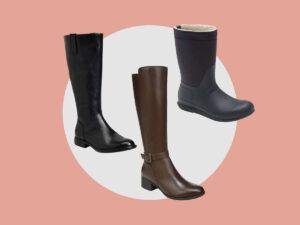
If regular tall boots feel tight around your lower leg, the zipper stops before the top, or the shaft leaves deep marks, you may need wide calf boots. The clearest way to know is to measure the widest part of your calf and compare that number with the boot’s shaft circumference in the brand’s U.S. size chart.
Wide calf boots are not only for people with large calves. They can also help if you have muscular legs, wear jeans under your boots, or want room to move without pressure.

What Are Wide Calf Boots?
Wide calf boots have a larger shaft circumference than standard tall boots. The shaft is the part of the boot that covers your calf and lower leg.
The term usually applies to knee-high or over-the-knee boots. It does not always mean the boot has a wide foot bed. A boot may fit your calf but still feel narrow around your toes or the ball of your foot.
Brands use different terms, such as:
- Wide calf
- Extended calf
- Extra-wide calf
- Full calf
- Wide shaft
- Stretch calf
These labels are not fully standardized. One brand’s “wide calf” may fit differently from another brand’s version. Always check the actual shaft measurement.
Wide calf is different from wide width
A wide calf boot gives more room around the lower leg.
A wide-width boot gives more room around the foot. In the United States, wide foot widths may appear as W, D, EE, or another brand-specific label.
You may need:
- A standard foot width with a wide calf shaft
- A wide foot width with a standard calf shaft
- Both a wide foot width and a wide calf shaft
- Neither, if the fit problem comes from boot shape or sizing
This distinction helps prevent a common mistake: buying a wider foot size when the real problem is a tight calf.
The Most Reliable Way to Tell if You Need Wide Calf Boots
Measure your calf at its widest point, then compare that measurement with the boot’s shaft circumference. This is more reliable than judging by your clothing size or the word “wide” in a product name.
What you need
Use:
- A soft measuring tape
- A mirror or another person, if possible
- The socks or pants you plan to wear
- The brand’s boot size chart
Do not measure over thick clothing unless you plan to wear that clothing under the boots.
How to measure your calf
- Stand in a relaxed position with your weight evenly placed on both feet.
- Find the widest part of your calf.
- Wrap the tape around the leg without pulling it tight.
- Keep the tape level with the floor.
- Record the measurement in inches.
- Measure both legs and use the larger number.
Your calf size can change slightly during the day. If your legs tend to swell after standing, walking, or working, measure at the time when you expect to wear the boots.
Measure with your real outfit
If you plan to wear the boots over leggings, jeans, or work pants, measure over those layers. The fabric adds to the space your calf needs.
For example, a 16-inch bare calf may need more than a 16-inch boot shaft if you wear denim underneath. A close fit may also feel too tight when you sit, climb stairs, or walk for a long time.
Compare the right measurements
Find these details on the product page:
- Shaft circumference
- Shaft height
- Boot height
- Calf measurement
- Stretch or adjustable features
- Size used for the listed measurement
Then compare the listed shaft circumference with your measured calf.
A useful rule is:
Required shaft room = calf measurement + space for your clothing and movement
Do not assume that a boot listed as 16 inches will feel comfortable on a 16-inch calf. It may fit, but it may also feel restrictive if the material has no stretch or if you wear thick socks and pants.
Signs You May Need Wide Calf Boots
Your body and your current boots can provide useful clues. No single sign proves that you need a wide calf style, but several signs together point to a shaft-fit problem.
The zipper will not close
This is the clearest sign. If the foot and ankle fit well but the zipper stops at your calf, the shaft is too small.
Do not force the zipper. Excess pressure can damage the zipper, distort the boot, or create painful pressure on your leg.
The boot leaves deep marks
Some light pressure is normal with a close-fitting boot. Deep red marks, numbness, tingling, or pain suggest that the shaft is too tight.
Remove the boots if your leg feels cold, numb, or unusually painful. A boot should not restrict normal comfort or movement.
You cannot fit your planned pants underneath
Try the boots with the clothes you normally wear. If they fit over bare legs but not over your jeans, you need more shaft room or a different styling plan.
A boot that only fits with thin tights may not meet your everyday needs.
The boot feels tight when you sit
Calf muscles and the boot shaft change position as your knee bends. A pair that feels fine while standing may press hard when you sit or drive.
Test the boots in both positions. You should be able to bend your knee without sharp pressure or a cutting sensation.
The shaft rolls or pushes down
A boot that is too tight can fold, roll, or slide down as you walk. This may happen because the shaft is gripping the calf instead of moving with it.
However, slipping can also mean the shaft is too loose or the boot lacks enough structure. Check both possibilities before changing sizes.
The boot fits your calf but feels loose at the ankle
This is a shape issue, not always a calf-width issue. Some boots are made with a broad shaft and a narrow ankle. Others use a straighter shaft.
Look for boots with:
- An adjustable buckle
- Elastic panels
- Lacing
- A shaped ankle
- A removable insert
- A shaft designed for a fuller lower leg
Your calf is muscular rather than soft
Muscular calves can need wide calf boots even when your overall body size is small. Calf circumference depends on muscle, bone structure, height, and genetics. It does not reliably match clothing size.
Use This Simple Fit Decision Table
The table below helps separate a calf problem from a foot-width problem.
| What happens when you try the boots? | Most likely issue | What to look for |
|---|---|---|
| Foot fits, but the zipper stops at the calf | Shaft is too narrow | Wide calf or extended calf |
| Calf fits, but toes feel cramped | Foot width or toe shape | Wide width or a rounder toe |
| Boot closes but leaves painful marks | Not enough calf ease | Larger shaft or stretch panel |
| Boot fits standing but hurts when sitting | Shaft is too tight or stiff | More room, softer material, or stretch |
| Boot fits over bare legs but not jeans | Clothing needs more room | Larger shaft or wear thinner layers |
| Ankle is loose while calf fits | Boot shape mismatch | Adjustable ankle or shaped shaft |
| Zipper closes but boot slides down | Shaft may be too loose | Smaller shaft, elastic grip, or different cut |
| Both foot and calf feel tight | Boot may be too small overall | Recheck foot size and shaft size |
The best choice is the one that fits your foot, ankle, calf, and planned clothing at the same time. A larger shoe size does not always solve a calf problem.
How Much Extra Room Should Wide Calf Boots Have?
There is no single extra measurement that works for every person or every boot. The right amount depends on the boot material, shaft shape, lining, clothing, and how you plan to wear the pair.
Use these factors instead of relying on a fixed rule:
Material
Leather may soften and mold slightly with wear, but it should not be expected to stretch by a large amount. Synthetic materials vary. Elastic fabric usually offers more flexibility.
Do not buy a painful pair because you expect it to “break in.” Break-in may improve stiffness, but it will not reliably fix a shaft that is clearly too small.
Shaft shape
A straight shaft may feel roomier in one area and tighter in another. A contoured shaft may fit the calf better but leave less space above or below it.
Look for the measurement at the point that matches your widest calf area. A single top-opening measurement may not describe the fit lower down.
Clothing
Thin tights need little extra space. Jeans, fleece-lined leggings, and work pants need more.
Take your clothing thickness seriously. A boot can fit your bare leg and still fail as an everyday winter boot.
Movement
You need room to walk, sit, climb stairs, and bend your knee. A shaft that feels acceptable while standing may be too tight during movement.
When trying boots at home, walk on a safe surface and test several positions before removing the tags.
Wide Calf Boots vs. Stretch Boots
Wide calf boots and stretch boots solve related but different problems.
Wide calf boots have a larger shaft measurement. They are useful when a standard shaft is too small across the entire calf.
Stretch boots use elastic fabric or another flexible panel. They can adapt to different calf shapes and may feel more comfortable during movement.
Stretch can help when:
- Your calf measurement falls near the top of a size range
- Your legs change slightly during the day
- You wear different sock or pant thicknesses
- You need easier movement while sitting
Stretch may not solve the problem when:
- The shaft is several inches too small
- The zipper is under strong tension
- The boot presses at one hard, fixed point
- You need a structured riding or work boot
- The elastic panel is too narrow for your calf shape
A wide shaft with a small stretch panel may fit differently from a fully stretch shaft. Read the product details and inspect photos of the side and back of the boot.
What to Look For When Shopping
Start with measurements, not labels. A product description should give enough information for you to judge the fit before buying.
Check for:
The shaft circumference
Look for the measurement in inches. Confirm whether it applies to your shoe size. Some brands list the shaft measurement for one sample size and adjust it for other sizes.
The shaft height
A tall shaft may end at a different part of your leg than expected. Height matters because your calf is not the same width from ankle to knee.
A flexible panel
Elastic panels, stretch fabric, and gussets can improve comfort. Check where the stretch sits. A panel at the back may help more than a small piece near the ankle.
Adjustable features
Useful options include:
- Buckles
- Laces
- Side gussets
- Rear elastic
- Hook-and-loop fasteners
- Removable calf inserts
Adjustable boots can offer more control, but an adjustment feature does not guarantee a wide fit. Confirm the maximum circumference.
Return terms
Fit varies by brand and boot shape. Before ordering, check:
- Whether returns are allowed after indoor fitting
- Whether sale items have different rules
- Who pays return shipping
- How long you have to return the boots
- Whether exchanges are available
Common Mistakes to Avoid
Choosing by clothing size
A clothing size does not predict calf circumference well. Two people who wear the same pants size may have very different calf measurements.
Measure your leg instead.
Measuring at the ankle
The ankle is narrower than the calf. An ankle measurement cannot tell you whether a tall boot will close.
Measure the widest part of the calf.
Measuring only one leg
Many people have small differences between their legs. Use the larger measurement when choosing boots.
Ignoring the boot’s lining
A thick lining takes up space. So can heavy socks and tucked-in pants.
Measure and try the boots with the layers you will really wear.
Assuming leather will stretch enough
Leather may soften, but it cannot always expand enough to solve a major fit problem. Buy a pair that is close to comfortable from the start.
Sizing up in the foot
A larger shoe size may add length without giving enough calf room. It can also make your heel slip and your foot move inside the boot.
Choose calf width and foot width separately.
Using a boot stretcher for the calf
Many standard boot stretchers work on the foot and lower vamp, not the tall shaft. A professional boot repair shop may be able to alter certain boots, but results depend on the material, construction, and available seam allowance.
When Should You Choose Extra-Wide Calf Boots?
Choose an extra-wide option when a regular wide calf boot is still too tight after you measure correctly and account for your clothing.
Extra-wide may be useful if:
- Your calf measurement exceeds the brand’s wide-calf chart
- The zipper still strains on a wide-calf pair
- You need thick winter layers
- You have a fuller calf shape near the top of the boot
- You want a relaxed fit rather than a close fit
Do not choose extra-wide only because the label sounds more comfortable. Too much room can cause the shaft to slide, wrinkle, rub, or collect snow and water.
The correct choice is the smallest shaft size that closes comfortably over your intended clothing without pain or strong pressure.
What to Do If Your Boots Almost Fit
If the boots are close but not quite right, check the cause before trying a fix.
If the zipper stops at the top
Measure the calf again and compare it with the shaft measurement. If your calf is larger, return the boots for a larger shaft rather than forcing the zipper.
If the boot feels tight only over pants
Try a thinner base layer, or choose a shaft with more room. Do not reduce necessary winter layers if doing so makes you cold.
If the material rubs
Check the seam, zipper, lining, and edge of the shaft. A smooth sock or a different boot shape may help. Stop wearing the boots if rubbing causes broken skin.
If the shaft slips
The boot may be too wide, too tall, or poorly shaped for your leg. An adjustment strap or a different shaft cut may help more than a smaller shoe size.
If swelling causes changing fit
Choose a fit that remains comfortable at the time you normally wear the boots. If one leg swells often, swelling is sudden, or it comes with pain, warmth, redness, or shortness of breath, seek medical care promptly. Boots should not be used to manage unexplained swelling.
Frequently Asked Questions
Do I need wide calf boots if I can zip regular boots?
Not always. If regular boots close without pain, deep marks, zipper strain, or movement limits, they may fit you well. Wide calf boots are useful when you need more room for comfort, clothing, or movement.
Are wide calf boots only for plus-size women?
No. Calf size does not depend only on body size. Muscular calves, leg shape, height, and genetics can all affect the fit of tall boots.
Can I wear wide calf boots with skinny jeans?
Yes. Choose jeans with a slim leg and compare the boot’s shaft measurement with your calf while wearing the jeans. Some wide-calf boots fit over skinny jeans, while others need stretch denim or thinner layers.
Should wide calf boots feel tight?
They may feel secure, but they should not cause pain, numbness, tingling, deep marks, or restricted movement. The zipper should close without excessive force, and the boot should remain comfortable when you sit and walk.
Can a shoe repair shop make boots wider in the calf?
Sometimes. A repair professional may add an elastic panel or alter a seam, depending on the boot’s construction. Ask for an assessment before buying a pair that is clearly too small.
Final Answer: Do You Need Wide Calf Boots?
You likely need wide calf boots if standard tall boots do not close around your calf, cause strong pressure, fail over your usual pants, or restrict movement. Measure the widest part of your larger calf, include your planned clothing, and compare that number with the brand’s shaft circumference.
Choose a wide or extra-wide shaft based on the actual measurement, not the label alone. The right pair should close with little effort, stay comfortable while sitting and walking, and fit your foot independently from your calf.
Your next step is simple: measure both calves today, write down the larger number, and use it when checking boot size charts.
Madison Clark is a footwear expert and the voice behind MyStyleGrid.com. She specializes in honest shoe reviews, style tips, and practical guides to help readers find the perfect pair for any occasion. With years of experience in blogging and content creation, Madison makes footwear knowledge simple, stylish, and easy to follow.