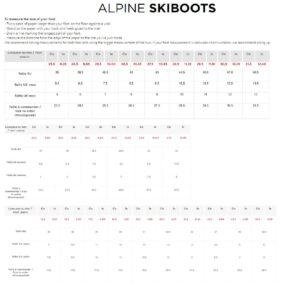
To find a ski boot size, look for a number marked on the boot’s tongue, liner, cuff, or shell. Ski boots usually show Mondopoint size, such as 26.5, rather than a standard U.S. shoe size. You may also see a three-digit number, such as 306 mm. That number is usually the boot sole length, not the boot size.
For example:
- 26.5 = Mondopoint size, based on foot length in centimeters
- 306 mm = boot sole length, used to adjust ski bindings
- US 8 = street-shoe size, which is not always printed on the boot
The fastest method is to check the boot in this order:
- Look at the outside of the boot shell.
- Check the tongue under the buckles.
- Remove the liner and inspect its heel or tongue.
- Look near the heel or toe of the sole.
- Check the original box or the manufacturer’s size chart.

Where to Look for the Size Printed on a Ski Boot
The ski boot size may be printed in more than one place. Manufacturers use different labels, so inspect both boots if the marking is hard to find.
Check the tongue
Open the buckles and pull the power strap or tongue forward. Many boots print the size on a label inside the tongue. You may see a number such as:
- 25.5
- 27/27.5
- 29.0
- 22.5
This is usually the Mondopoint size.
Check the liner
Remove the inner liner if the size is not visible on the shell. Look at the heel, footbed, or tongue of the liner. Some brands print the size on a fabric tag or stamp it into the foam.
The liner may also show a model code. Do not mistake that code for the boot size. A size marking normally uses a number close to the length of a foot in centimeters.
Inspect the shell
Look around the upper cuff, back of the shell, or side near the ankle. Some boots have a molded size mark instead of a printed label.
The shell may show a combined size such as 26/26.5. This means both sizes use the same shell. The liner or footbed may differ slightly between the two sizes.
Look at the sole
Check the heel and toe of the hard plastic sole. You may find a number such as 298, 306, or 318 followed by “mm.”
This is normally the boot sole length, or BSL. It tells a ski technician how long the boot is from the toe contact point to the heel contact point. It does not tell you the foot size.
Check the box or receipt
The boot box often lists:
- Mondopoint size
- U.S. size
- European size
- Boot sole length
- Model name
- Flex rating
Use the box as a useful clue, but confirm the number on the boot. A used boot may be in the wrong box, and a liner may have been replaced.
Understand the Difference Between Ski Boot Size and Sole Length
The most common mistake is reading the sole length as the boot size. These numbers serve different purposes.
| Marking | What it means | Example |
|---|---|---|
| Mondopoint | approximate foot length in centimeters | 26.5 |
| U.S. size | Street-shoe size conversion | Men’s US 8.5 |
| European size | General shoe-size conversion | EU 41 |
| Boot sole length | Outside length used for bindings | 306 mm |
| Shell size | Plastic shell group shared by nearby half sizes | 26/26.5 |
A boot marked 26.5 is not 26.5 millimeters long. It is a Mondopoint size linked to a foot length of about 26.5 centimeters.
A boot marked 306 mm is not a 30.6 Mondopoint boot. It is the length of the boot sole. The shell, liner, and foot shape affect this measurement, so two boots with the same Mondopoint size can have different sole lengths.
Why boot sole length matters
Boot sole length matters when a boot is placed into a ski binding. The binding must match the boot’s actual sole length and release settings.
If you are replacing ski boots, do not assume the new boots will fit your current binding setting just because both boots show the same size. A 26.5 boot from one brand may have a different sole length from a 26.5 boot from another brand.
A qualified ski technician should check the binding adjustment and perform the needed safety tests. Do not change release settings based only on the number printed on the boot.
How to Read Mondopoint Ski Boot Sizing
Mondopoint sizing uses centimeters. A size of 27.0 generally relates to a foot about 27 centimeters long. Ski boot makers may list the size as:
- 27.0
- 27
- 27/27.5
- MP 27.0
- Mondo 27.0
The number is a starting point, not a guarantee of fit. Ski boots need a close, secure fit so the foot can control the ski. A boot that feels loose in a casual standing position may become difficult to control on snow.
Common size examples
| Mondopoint size | Approximate foot length | General U.S. shoe comparison |
|---|---|---|
| 22.5 | 22.5 cm | Often around women’s US 5–6 |
| 24.5 | 24.5 cm | Often around women’s US 7–8 |
| 26.5 | 26.5 cm | Often around men’s US 8–9 |
| 27.5 | 27.5 cm | Often around men’s US 9–10 |
| 29.5 | 29.5 cm | Often around men’s US 11–12 |
These U.S. comparisons are only rough guides. Shoe brands use different shapes and size systems. A street shoe may have extra length, a wider toe box, or a different U.S. conversion than a ski boot.
For the most reliable result, use the boot manufacturer’s chart. Salomon, Tecnica, Rossignol, Lange, Nordica, Atomic, and other brands may assign slightly different U.S. equivalents to the same Mondopoint size.
How to Confirm the Size When the Marking Is Hard to Read
If the printed number has worn away, measure your foot and compare it with the boot’s shape and manufacturer chart.
Use this foot-measuring method
You will need:
- A sheet of paper
- A pencil
- A ruler or tape measure
- The ski socks you plan to wear
Then:
- Put the paper on a hard floor.
- Stand on the paper with your heel lightly touching a wall.
- Wear the ski socks you normally use.
- Mark the end of your longest toe.
- Measure from the wall edge to the toe mark.
- Repeat with the other foot.
- Use the longer foot as your starting measurement.
- Compare the measurement with the brand’s Mondopoint chart.
Do not measure while sitting. Your foot can lengthen slightly when you stand and place weight on it.
Example calculation
Suppose your longer foot measures 26.3 centimeters. A 26.5 Mondopoint boot may be a reasonable starting point. The correct choice still depends on the boot’s last, or internal foot shape, plus your foot width, instep height, and skiing goals.
Do not automatically round up to 27.5 because the larger boot feels more comfortable at first. Too much space can allow your heel to lift and your foot to slide inside the shell.
Check the shell fit
If the liner can be removed, place your foot inside the empty shell with your toes lightly touching the front. Bend your knee forward into a skiing stance.
A ski technician can check the space behind your heel. This test is more useful than judging the fit while standing straight, but the acceptable space depends on the boot type, skier level, foot shape, and desired fit.
If you are unsure, have a professional boot fitter assess the shell. A boot can show the correct size and still fit poorly.
How to Tell Whether the Number Is the Right One
The size marking tells you what the boot is labeled as. It does not prove that the boot fits correctly.
A suitable fit usually has these traits:
- Your toes lightly touch the front when you stand upright.
- Your toes pull back slightly when you flex your knees.
- Your heel stays mostly in place when you flex forward.
- Your foot does not slide from side to side.
- Your toes are not crushed or numb.
- Your shin makes steady contact with the tongue.
- You can buckle the boot without forcing the buckles into an extreme position.
Try the boots indoors for several minutes while wearing ski socks. Do not judge them by walking around like regular shoes. Ski boots feel stiff and awkward on a hard floor because they are built to transfer movement to skis.
Some pressure is normal during a new fitting. Sharp pain, numbness, loss of circulation, or strong pressure over one bone is not a sign that the boot simply needs more break-in.
A boot fitter may be able to adjust the liner, shell, footbed, or buckle position. Do not solve a poor fit by wearing several thick socks. Extra socks can create pressure points and reduce control.
What to Do if the Boot Shows Two Sizes
A marking such as 25/25.5 or 27/27.5 means the two sizes share one shell. This is common in ski boots.
The difference may come from:
- A slightly different liner length
- A different footbed
- A small adjustment in the liner
- A size label that covers the shell range
The shared shell does not mean the two sizes fit exactly the same. The liner and internal volume can change the fit.
If you need to identify the exact size, inspect the liner and footbed. Then compare the model and serial information with the manufacturer’s size chart. A ski shop can also measure the shell and identify whether the liner matches it.
What to Do if You Find Only a Three-Digit Number
A three-digit number near the sole is usually the boot sole length. For example, 298 mm or 306 mm may appear near the heel or toe.
Use this number to:
- Match the boot to binding adjustment information
- Help a ski shop identify the boot
- Compare the outside length of replacement boots
- Confirm that a boot is compatible with a binding range
Do not use it as a direct shoe-size conversion. A 306 mm sole does not mean the boot is a 30.6 Mondopoint size.
The exact location of the sole-length marking differs by brand. If you cannot find the Mondopoint size, take a clear photo of all markings to a ski shop or contact the manufacturer with the model name and serial number.
Common Mistakes When Finding Ski Boot Size
Mistaking BSL for Mondopoint size
This is the most common error. A number near 300 usually refers to sole length in millimeters, not foot length.
Using your everyday shoe size
A U.S. shoe size can help you estimate a starting point, but it cannot replace a foot measurement and shell check.
Assuming half sizes use different shells
Many ski boot brands use one shell for two half sizes. Check the shell and liner before assuming that 26.0 and 26.5 have different plastic shells.
Measuring the outside of the boot
The outside length includes plastic thickness and the sole shape. It does not provide a reliable foot-size measurement.
Ignoring left and right foot differences
Your feet may differ in length or width. Use the longer foot as the starting point, then address the smaller foot with proper fitting methods rather than buying a boot that is too large for both feet.
Changing binding settings yourself
Boot size and boot sole length affect binding setup, but skier weight, height, age, ability, boot type, and binding condition also matter. A certified technician should check the setup.
When to Ask a Ski Shop for Help
Ask a professional boot fitter or ski technician for help when:
- The size label is missing.
- The boot has several conflicting numbers.
- The liner and shell do not appear to match.
- You are buying used boots.
- You need to fit boots into existing bindings.
- Your heel lifts during flexing.
- You have numbness or sharp pressure.
- You are unsure whether the boot is a junior or adult model.
- The shell has cracks, worn soles, or damaged buckles.
Used boots need extra care. Liners can pack out with use, and worn soles may affect binding contact. A shop can inspect the boot’s condition and determine whether it can be safely used.
For binding work, ask the shop to perform a release test after adjustment. The number printed on the boot is only one part of that process.
Quick Checklist
Use this checklist to identify your ski boot size:
- Find the number inside the tongue, liner, or shell.
- Look for a value such as 24.5, 26.0, or 27.5.
- Treat that number as the Mondopoint size.
- Treat a value such as 298 or 306 mm as the boot sole length.
- Check the manufacturer’s chart for the U.S. shoe equivalent.
- Measure your longer foot if the label is missing.
- Confirm the fit while wearing ski socks.
- Have a technician check binding compatibility.
The key distinction is simple: Mondopoint describes the boot’s intended foot-length size, while boot sole length describes the outside sole used for binding setup.
FAQs
Is ski boot size the same as shoe size?
No. Ski boots usually use Mondopoint sizing, while everyday shoes use U.S. sizing. A U.S. shoe size can suggest a starting point, but the manufacturer’s chart and an in-person fit check are more reliable.
Where is the size printed on a ski boot?
Look inside the tongue, on the liner, on the upper shell, near the cuff, or on the boot box. The marking may show one size, such as 26.5, or a shared shell range, such as 26/26.5.
What does 26.5 mean on a ski boot?
It usually means a Mondopoint size of 26.5. The number relates to a foot length of about 26.5 centimeters. It does not guarantee that every 26.5 boot will have the same width, volume, or sole length.
What does 306 mean on a ski boot?
A number such as 306 usually means the boot sole length is 306 millimeters. It is used when checking and adjusting ski bindings. It is not the ski boot size.
Can two ski boots with the same size have different sole lengths?
Yes. Different brands and models can use different shell shapes and sole designs. Always use the actual sole-length marking on the boot when checking binding compatibility.
Should ski boots feel tight?
Ski boots should feel close and secure, but they should not cause sharp pain, numbness, or loss of circulation. If the fit remains painful after proper buckling and flexing, ask a qualified boot fitter to assess the shell and liner.
Final Answer
To find the size on a ski boot, look for a Mondopoint number such as 25.5, 26.5, or 27.0 on the tongue, liner, shell, or box. Do not confuse it with a three-digit number such as 306 mm, which is usually the boot sole length for binding setup.
If the size is missing, measure your longer foot in centimeters and compare it with the manufacturer’s chart. For the safest result, have a ski shop confirm the fit and check the bindings before skiing.
Madison Clark is a footwear expert and the voice behind MyStyleGrid.com. She specializes in honest shoe reviews, style tips, and practical guides to help readers find the perfect pair for any occasion. With years of experience in blogging and content creation, Madison makes footwear knowledge simple, stylish, and easy to follow.