Yes — a slight heel slip at first is normal, but it should not be excessive or painful.
I’ve fitted hundreds of boots and studied boot-making nuances, so I know why the fit at the heel sparks so much debate. This article answers are cowboy boots supposed to be loose in the heel with clear steps, real-world tips, and buying advice. Read on for how to check heel slip, when looseness is fine, when to size up or down, and quick fixes you can use at home.
How cowboy boots should fit: the basics
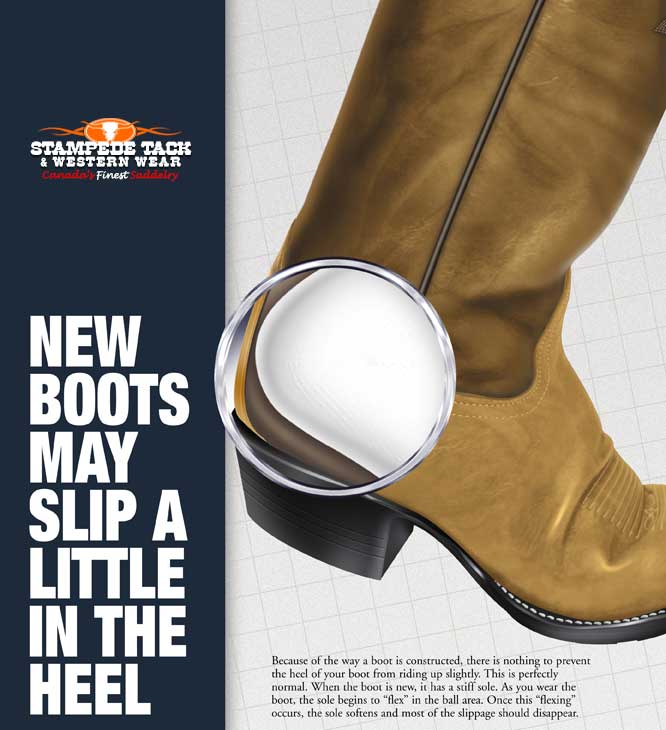
A good cowboy boot should feel snug without pinching. The instep and midfoot should be secure. The toe should have a little wiggle room. The heel may move slightly when you walk. That small slip helps the boot lock into place over time.
Are cowboy boots supposed to be loose in the heel? Not really loose. They should allow a tiny lift — about a thumb’s width — as you walk. Too much heel slip means the boot is the wrong size or not shaped for your foot.
Personal note: early in my boot-buying days I picked a pair that felt roomy. The heel slipped badly and caused blisters. Later I learned to trust a small heel lift, but not a lot. That change saved my feet on long rides and city walks.

Why some heel slip is normal
Leather and suede stretch. The heel counter and lining relax with wear. Many boots are built on a last that fits snug initially. Slight looseness helps the boot settle. Riding boots also need a little give so your heel can move into the heel pocket when you stirrup.
Benefits of small heel movement
- Helps the boot form to your foot over days or weeks.
- Reduces pressure points that cause rubbing and blisters.
- Lets the boot accommodate slightly different socks or foot swelling.
Limits of acceptable slip
- Thumb-width or less is normal.
- More than half an inch is too loose.
- Excessive slip can cause heel pain, blisters, and instability.
How to tell if heel looseness is a problem
Try these quick checks at home or in the store.
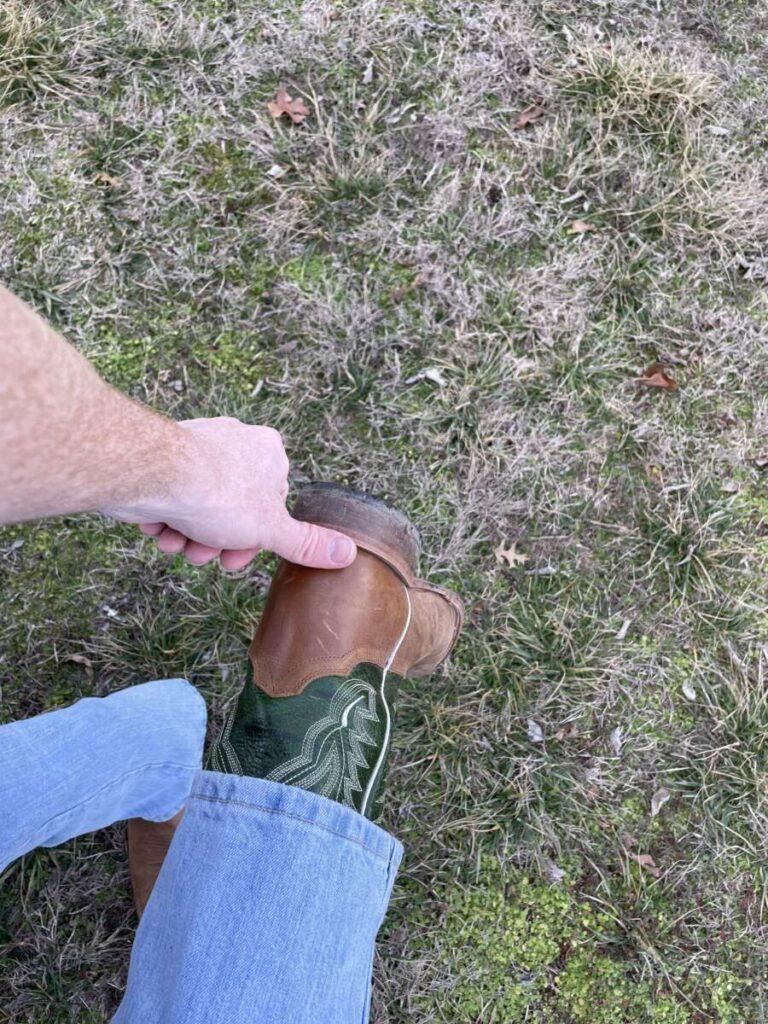
Heel lift test
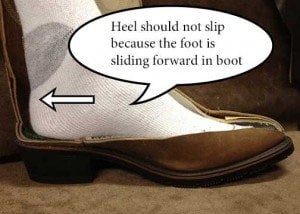
- Stand and push your foot forward in the boot.
- If your heel lifts one thumb width, that is often okay.
- If it lifts two thumbs or more, the boot is too big.
Walk test
- Walk a few steps and watch the heel.
- A tiny lift is fine. A slap or audible clack is bad.
- Blisters or hot spots after short wear mean improper fit.
Sitting and standing check
- Boots that feel fine seated but slip when you walk are likely too long or too wide at the heel. Try a different size or a pair with a narrower heel cup.
Causes of heel looseness
Understanding the cause helps fix it.
Wrong length
- Boots that are too long allow the foot to slide forward and the heel to lift.
Wide last or heel cup
- A last that’s too wide or a shallow heel cup won’t cradle the heel.
Poor sock choice
- Thin socks increase slip. Thicker or padded socks can help.
New leather stretch
- Smooth leather molds to feet and may loosen slightly after wear.
Worn liners or insoles
- Old or thin insoles reduce friction and support, causing slip.
Adjusting and fixing heel slip
Try these fixes before returning boots.
Add an insole
- A full-length or heel pad raises the foot and reduces lift.
- Use a shock-absorbing or contoured insole for better hold.
Use heel grips
- Stick-on heel grips are thin and add friction.
- They work well for minor slip and break-in season.
Try thicker socks or two socks
- Thicker riding socks fill space and cut down on lift.
Visit a cobbler
- A cobbler can install a heel insert or reshaped heel cup.
- They can also tighten welt stitching or add an anti-slip sole.
If problems persist, exchange for a different last or size. Don’t force long-term wear with persistent instability.

Buying cowboy boots the right way
Online and in-store shopping need different tactics.
In-store tips
- Try boots in the afternoon when feet are slightly swollen.
- Wear the socks you plan to use regularly.
- Walk on a flat surface and on a raised edge to simulate riding.
Online tips
- Know your last and brand sizing quirks.
- Read reviews that mention heel fit and break-in.
- Buy from retailers with good return policies.
Ask about construction
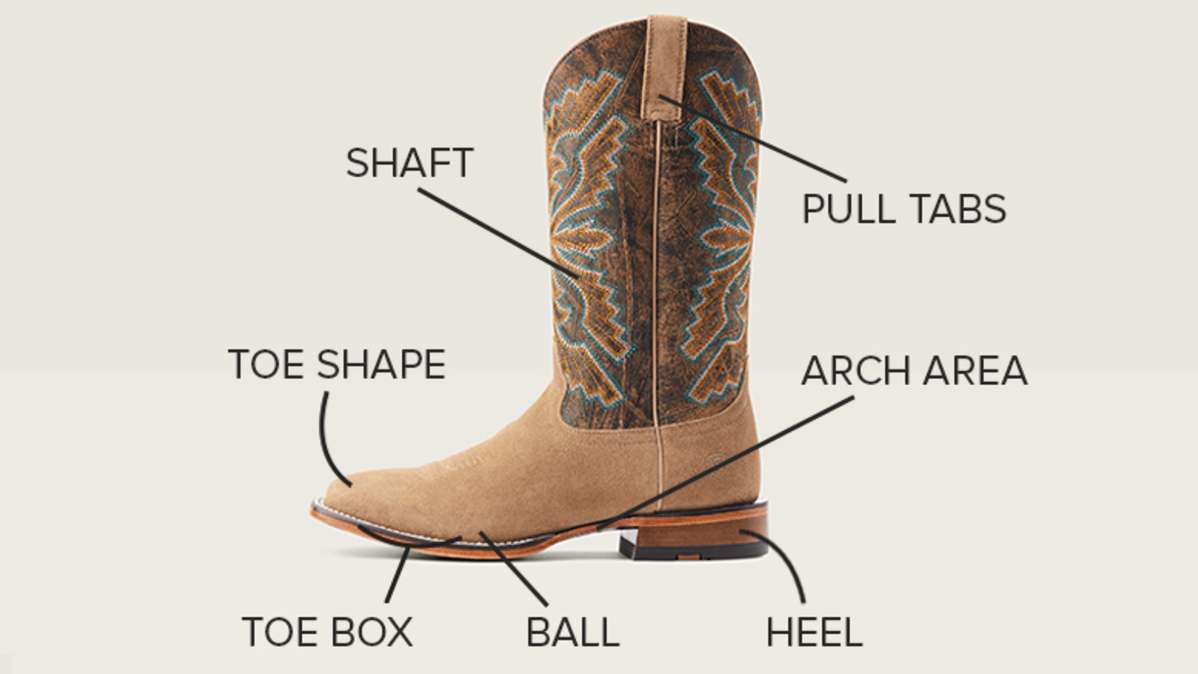
- Look for a defined heel cup and firm counter.
- Comfort is often better with full-grain leather and proper lining.

Breaking in vs. wrong fit
Many blame heel slip on break-in. That’s partly true. New leather can soften and the fit can improve. But break-in will not fix a boot that is too long or has a poor heel cup. If heel slip feels extreme on day one, try fixes or a different size.
From my experience, boots that improve after a week of wear usually needed only mild adjustments. Boots that still slip after multiple wears likely require a different last or professional modification.
Common mistakes to avoid
- Buying boots that feel large hoping they will shrink. Leather stretches, it does not shrink.
- Wearing thin dress socks during fitting. This hides how the boot will feel with proper socks.
- Ignoring heel cup depth. A shallow cup cannot be fixed by size alone.
- Expecting every brand to fit the same. Different lasts fit differently.
PAA-style quick questions
Will cowboy boots stop slipping after I break them in?
Some slipping can reduce as leather softens and contours to your foot. Persistent or large heel lift usually needs an insole or different size.
Is heel slip normal for riding boots?
A small heel lift helps the boot seat in the stirrup. Too much slip can be unsafe while riding and should be fixed.
How much lift is acceptable in cowboy boots?
About a thumb’s width is acceptable. Anything beyond that is likely too loose.
Frequently Asked Questions of are cowboy boots supposed to be loose in the heel
What causes heel slip in cowboy boots?
Heel slip usually comes from a boot that is too long, too wide, or has a shallow heel cup. New leather stretching and thin socks also add to slip.
Can I fix heel slip with an insole?
Yes. A full-length insole or heel pad can raise the foot and reduce movement. For larger issues, a cobbler may be needed.
Should cowboy boots be tight at the heel?
They should be snug, not tight. A firm heel cup that holds the heel in place is ideal without causing pain.
Do cowboy boots need to be broken in to fit properly?
They often do. Leather and liners soften with wear, which can improve fit. Break-in rarely fixes major sizing errors.
When should I return or exchange my boots?
If heel lift is more than a thumb’s width or causes pain and blisters after short wear, exchange them. Persistent instability means the fit is wrong.
Conclusion
Heel looseness in cowboy boots is a common concern, but the right fit is usually a small heel lift rather than full-on slippage. Check for a snug midfoot, a firm heel cup, and only a thumb’s-width lift while walking. If you face problems, try insoles, heel grips, thicker socks, or a cobbler before giving up. Take action: try the tests here, adjust with simple fixes, and choose a retail policy that lets you exchange until the fit feels right. Share your fit story below or subscribe for more practical boot tips.

Rubel Miah is the Senior Editor at MyStyleGrid.com, where he brings a sharp editorial eye and an unshakable love for fashion to everything he does. A true style addict, Rubel lives and breathes trends, from streetwear to high fashion, and has a knack for turning inspiration into impactful stories. With years of experience in fashion journalism and digital media, he curates content that empowers readers to express themselves through style. When he’s not editing features or forecasting the next big thing, you’ll find him hunting down vintage pieces or capturing street style moments around the city.