Business casual shoes for women include loafers, ballet flats, pumps, ankle boots, dressy sneakers, and clean low heels.
Knowing what shoes are considered business casual for a woman can make getting dressed much easier. The right pair should look neat, feel comfortable, and suit your workplace without feeling as formal as traditional office pumps. This guide explains the best styles, materials, colors, comfort tips, and common mistakes so you can choose with confidence.
What shoes are considered business casual for a woman?
Business casual shoes for women sit between formal office footwear and relaxed everyday shoes. They should look polished but not overly formal. In most workplaces, the best choices have a clean shape, modest design, and good condition.
The most widely accepted options include:
• Loafers and moccasins
• Ballet flats and pointed-toe flats
• Low block heels
• Classic pumps with a moderate heel
• Sleek ankle boots
• Dressy slingbacks
• Simple Mary Jane shoes
• Clean leather or faux-leather sneakers in relaxed offices
The answer to what shoes are considered business casual for a woman can change by industry. A law office may expect more traditional shoes, while a creative agency may allow refined sneakers or modern boots.
Your shoes should also match the rest of your outfit. A polished loafer may look professional with trousers but too heavy with a soft summer dress. A simple flat may work well with a skirt, cropped pants, or a tailored blazer.
Best business casual shoe styles for women
Different shoe styles create different impressions. Some look classic and formal, while others feel modern and relaxed. Understanding these differences helps you build a useful work shoe collection.
Loafers
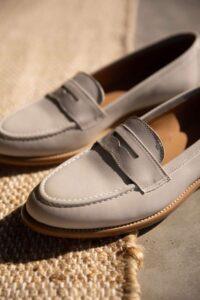
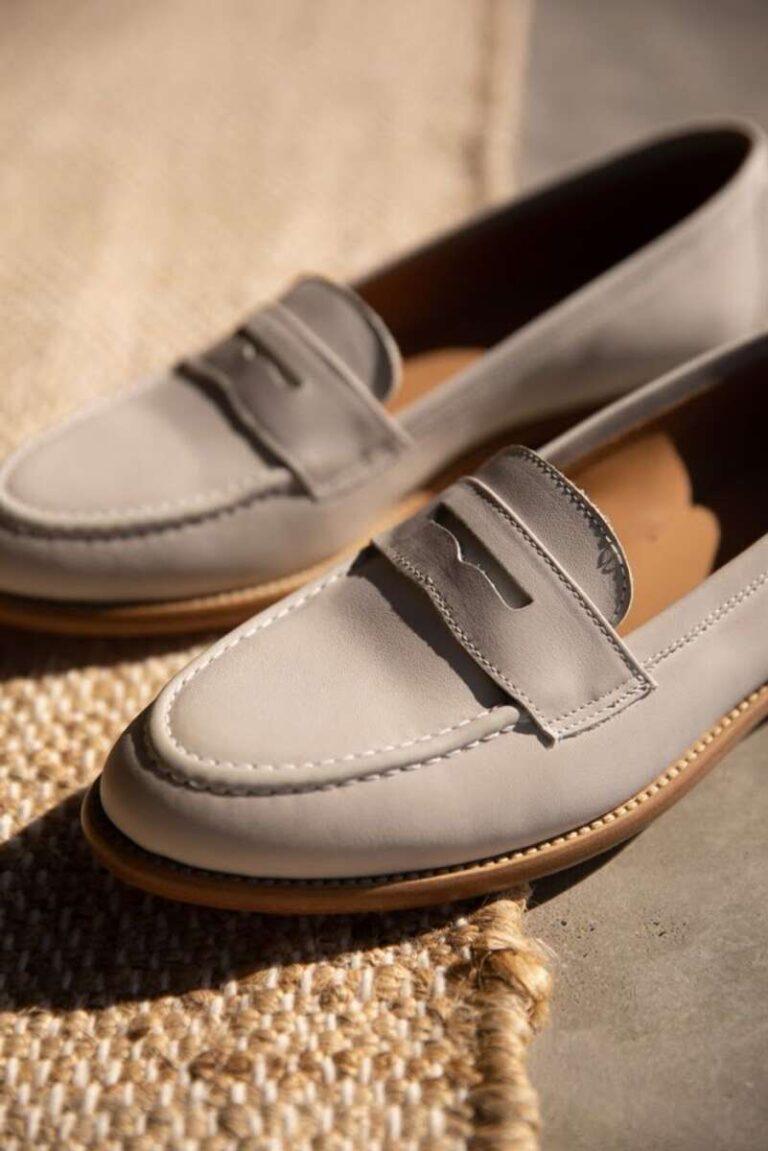
Loafers are one of the safest answers to what shoes are considered business casual for a woman. They are easy to wear, comfortable for walking, and polished enough for many office settings.
Choose a loafer with:
• A smooth upper
• A simple metal detail or no decoration
• A low or flat heel
• A structured shape
• A clean sole with little visual bulk
Black, brown, tan, burgundy, and navy loafers are easy to pair with work clothes. Penny loafers look classic, while chain or horse-bit loafers can add a modern touch.
Avoid very chunky soles if your office has a conservative dress code. They may work in a relaxed workplace, but a slim sole is usually more versatile.
Ballet flats
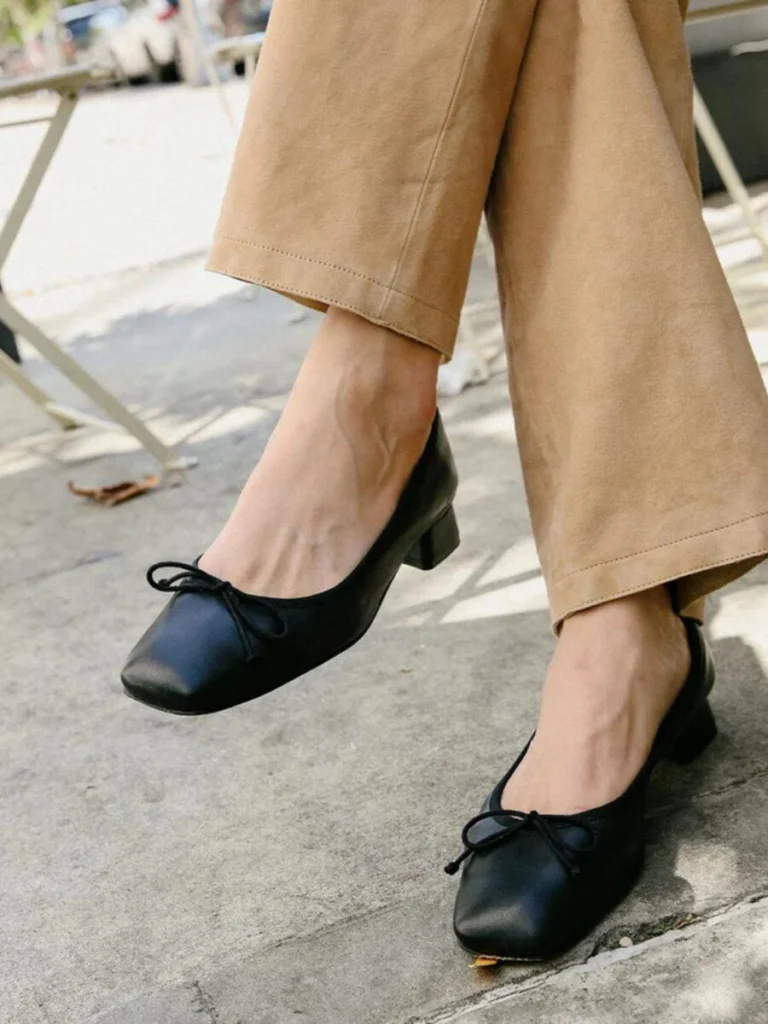
Ballet flats offer a soft and comfortable alternative to heels. They work well with trousers, dresses, skirts, and ankle-length pants.
For a professional look, choose flats with:
• A pointed, almond, or softly rounded toe
• A firm sole
• A neat finish
• Minimal bows or decorations
• Enough support for daily wear
Very thin flats may look more like casual weekend shoes. A slightly structured flat usually looks more polished and lasts longer.
Low block heels
Low block heels are practical for women who want extra height without the discomfort of a narrow heel. A heel between about 1.5 and 2.5 inches often provides a strong balance of comfort and polish.
Block heels are especially useful for:
• Business meetings
• Presentations
• Office events
• Days that include walking
• Trousers that need a little extra length
Look for a stable heel and a cushioned insole. A comfortable shoe helps you stand tall and move with confidence, which is often more important than adding several inches of height.
Classic pumps
Classic pumps remain a strong choice in traditional offices. They are especially suitable for finance, law, consulting, real estate, and formal client meetings.
A business casual pump usually has:
• A closed toe
• A moderate heel
• A simple shape
• A plain or lightly textured finish
• A neutral color
A heel of about 2 to 3 inches can look elegant without becoming overly formal. Very high stilettos, shiny finishes, and dramatic platform soles may look better for evening wear than daily business casual clothing.
Ankle boots
Ankle boots can be business casual when they have a clean, refined shape. They are useful in fall and winter and pair well with trousers, dresses, and midi skirts.
The best office ankle boots often include:
• A narrow or almond toe
• A low block heel or flat heel
• Smooth leather or a similar material
• Minimal buckles and hardware
• A shaft that fits neatly around the ankle
Avoid heavily distressed boots, hiking details, large buckles, and thick lug soles in conservative offices. In more relaxed workplaces, a simple Chelsea boot may be perfectly suitable.
Slingbacks
Slingbacks provide a polished look while feeling lighter than a closed pump. A closed or softly pointed toe makes them more office-friendly.
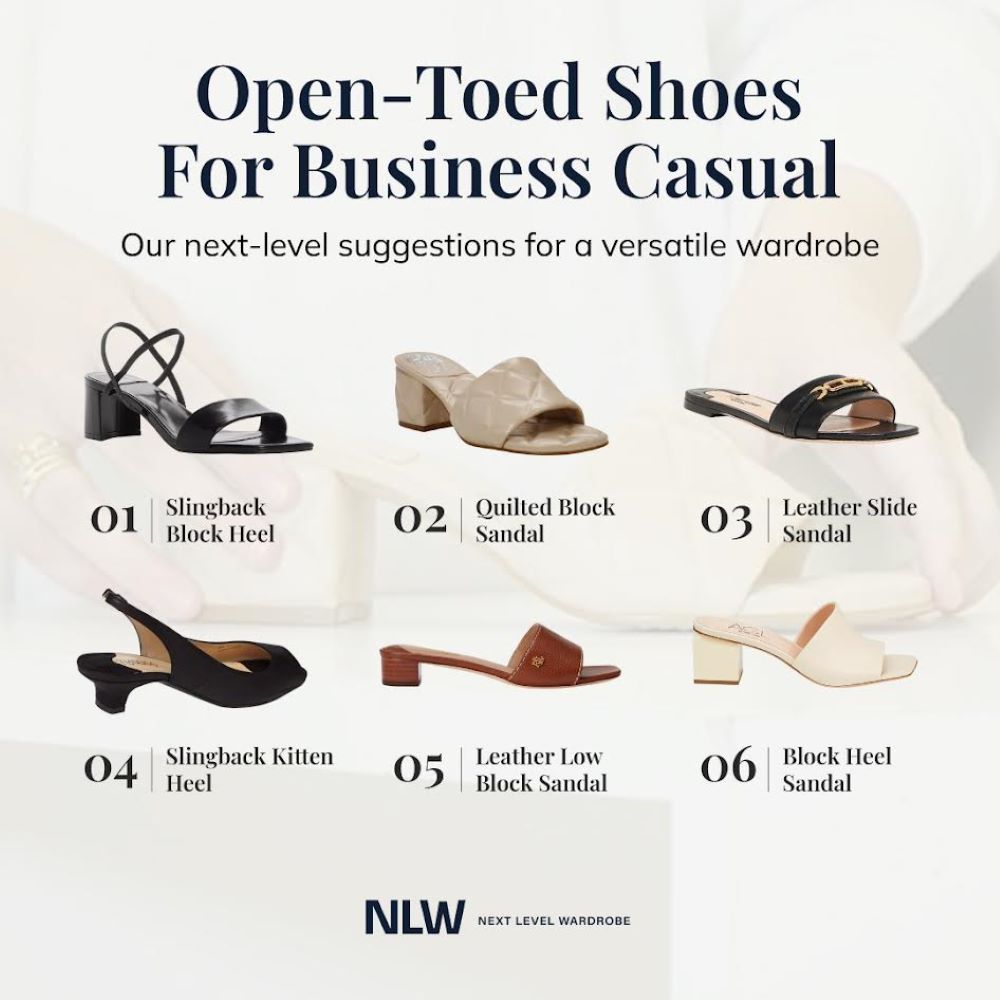
Slingbacks work well in warm weather, but check your workplace policy first. Some offices prefer fully closed shoes for safety or a more formal appearance. A low heel and secure strap are better for walking than a loose, high-heeled design.
Mary Jane shoes
Simple Mary Jane shoes can fit a business casual wardrobe when they have a refined shape. Choose a slim strap, moderate heel, and smooth material.
Avoid styles that look strongly like school shoes. A modern Mary Jane with a pointed toe or low block heel can look polished with tailored trousers or a knee-length dress.
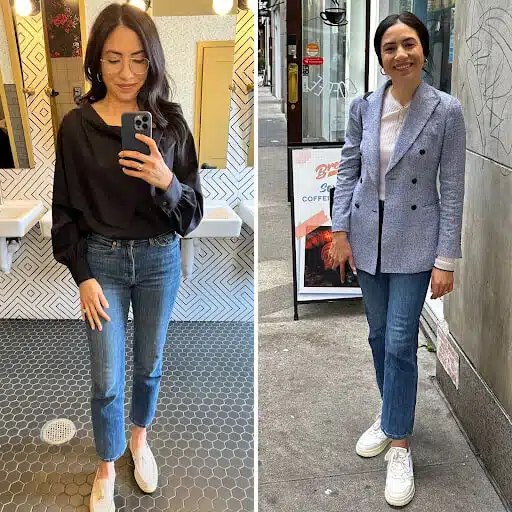
Dressy sneakers
Dressy sneakers are acceptable in some modern offices, but they are not a universal choice. They are most appropriate when the workplace already has a relaxed dress code.
Choose sneakers with:
• A clean white, black, gray, or neutral upper
• Minimal logos
• A slim profile
• No visible dirt or damage
• Leather, faux leather, or a refined textile finish
Running shoes, gym shoes, brightly colored athletic sneakers, and worn canvas shoes usually look too casual for business settings.
How to choose business casual shoes for your workplace
The right answer to what shoes are considered business casual for a woman depends partly on the culture around you. A shoe that works at a design studio may not work at a bank or medical office.
Use these steps before buying or wearing a new pair.
Check the written dress code
If your employer provides a dress code, read the footwear section carefully. Terms such as “closed-toe shoes,” “professional footwear,” or “polished shoes” offer useful clues.
If the policy is unclear, look at what experienced employees wear. Pay attention to people who meet with clients or managers. Their choices often show the safest standard.
Consider your industry
Different industries have different expectations.
• Finance and law often favor pumps, loafers, and conservative flats.
• Healthcare may require closed, supportive, and easy-to-clean shoes.
• Education may favor comfortable flats, loafers, and low boots.
• Technology and creative fields may allow refined sneakers and fashion-forward flats.
• Retail and hospitality may require supportive shoes that also match a uniform.
• Government and corporate offices often prefer classic neutral footwear.
When in doubt, dress slightly more formally on your first day. You can relax your choices after you understand the workplace.
Think about your daily movement
A beautiful shoe is not a good work shoe if it causes pain by lunchtime. Consider how much you walk, whether you use public transportation, and whether you stand during meetings.
A useful test is to wear the shoes at home for 20 to 30 minutes. Walk on different surfaces and check for rubbing, slipping, pinching, or pressure near the toes.
Match the formality of your outfit
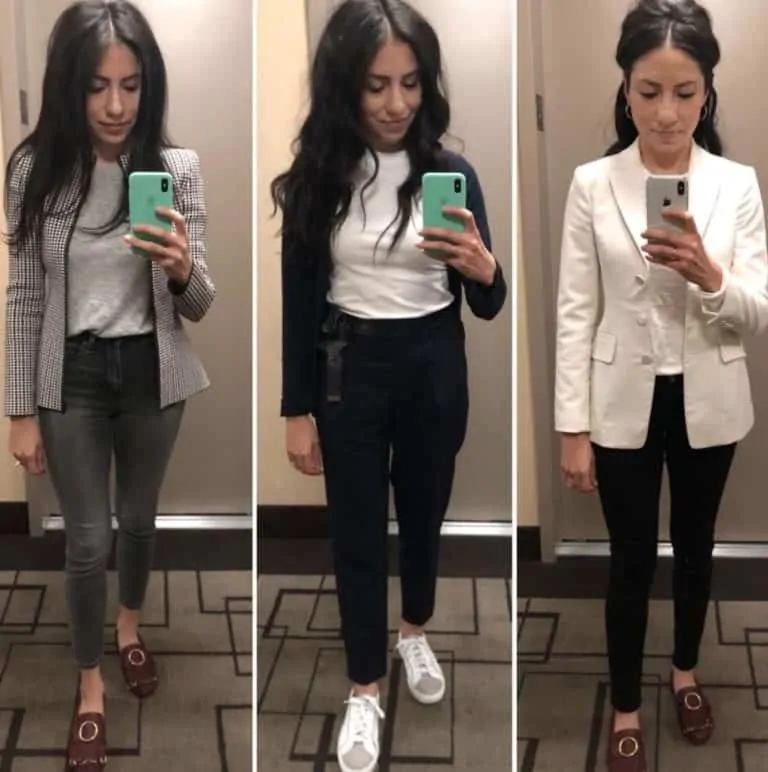
Shoes should support the outfit rather than compete with it. A tailored suit may call for pumps or sleek loafers. Wide-leg trousers may look better with a low heel or pointed toe.
A simple outfit can handle a little texture or color. A patterned dress or bold blazer usually pairs best with quiet shoes.

Best colors and materials for business casual shoes
Color and material strongly affect how professional a shoe looks. The same basic shape can feel formal, casual, playful, or trendy depending on its finish.
Reliable shoe colors
The most useful colors are:
• Black
• Brown
• Tan
• Cognac
• Navy
• Burgundy
• Dark gray
• Cream or soft beige
Black shoes are easy to style and work well in conservative offices. Brown and cognac shoes soften an outfit and pair well with navy, cream, olive, and beige clothing.
Burgundy can add personality while remaining professional. Cream and beige are attractive for spring and summer, but they need regular cleaning.
Appropriate materials
Leather is a traditional choice because it looks polished and can last for years with proper care. High-quality faux leather can also work well, especially when it has a smooth, clean finish.
Suede may be acceptable in dry weather, but it can look less formal and is harder to protect from rain. Patent leather has a glossy finish that may feel too dressy for daily business casual wear.
Canvas, mesh, rubber, and brightly colored synthetic fabrics often look more casual. They may work in relaxed offices, but they are not the safest choice for a formal workplace.
Match the finish to the setting
A matte finish usually feels calm and professional. A slight shine can look polished, but a very glossy finish may appear more suitable for evening clothing.
Texture matters too. Crocodile-style embossing, metallic details, and animal prints can work as small accents. Large patterns and bright decorations may distract from a professional outfit.

Shoes that are usually too casual for work
Some shoes are comfortable but do not meet a typical business casual standard. They may be fine for commuting, but you may want to change before entering the office.
Shoes that are often too casual include:
• Flip-flops and beach sandals
• Foam clogs
• Slippers and bedroom shoes
• Heavy hiking boots
• Worn-out sneakers
• Running shoes
• Shoes with torn fabric or peeling material
• Very casual canvas shoes
• Tall platform shoes
• Extremely high stilettos
• Shoes with large logos or loud decorations
Open-toe shoes vary by workplace. Some offices allow polished peep-toe shoes or dressy sandals during warm weather. Others require closed toes for safety, hygiene, or a more formal image.
Work boots also depend on the job. A clean, sleek Chelsea boot may be business casual, while a steel-toe boot or rugged outdoor boot usually serves a different purpose.

Comfort and fit matter more than trends
The best business casual shoe is one you can wear without distraction. Pain can affect your focus, posture, and mood. It can also lead to blisters, calluses, and foot problems over time.
When checking fit, look for:
• About a thumb’s width of space in front of your longest toe
• A heel that stays in place without rubbing
• Enough width across the ball of the foot
• A supportive sole
• A flexible upper that does not pinch
• A stable heel and balanced base
Feet often swell during the day. Try on work shoes in the afternoon or evening, when your feet are closer to their usual working size.
Do not assume a shoe will “break in” if it causes sharp pain. Softening may help a little, but a poor shape or wrong size will remain a problem.
In my experience helping people prepare for interviews and office jobs, the most common mistake is choosing appearance over fit. A stylish pump that hurts after ten minutes is less useful than a simple loafer that still looks polished at the end of a long day.

How to style business casual shoes
Knowing what shoes are considered business casual for a woman is only part of the process. Styling helps create a balanced and intentional appearance.
With trousers
Loafers, flats, pumps, and ankle boots all work well with trousers. Straight-leg and tapered pants look neat with loafers or pointed flats.
Wide-leg trousers often look best with a small heel or a pointed toe. The shoe should not disappear completely under the fabric, and the hem should not drag on the floor.
With skirts
Pumps, slingbacks, flats, and simple ankle boots pair well with skirts. A knee-length pencil skirt looks classic with pumps or loafers.
A midi skirt may work with flats, low block heels, or fitted ankle boots. Avoid shoes that make the outfit look too heavy unless the rest of the clothing has a structured style.
With dresses
A simple pump creates a traditional office look. Flats and low heels make a dress feel more relaxed while still polished.
For a printed dress, choose a solid shoe in a color already found in the outfit. This keeps the look neat and avoids too many competing details.
With jeans in a casual office
If jeans are allowed, pair them with refined loafers, pointed flats, or clean leather sneakers. The jeans should be dark, well-fitted, and free of rips or heavy fading.
Avoid combining very casual jeans with very casual shoes. That pairing can quickly move the outfit from business casual to weekend casual.
Seasonal business casual footwear
Weather affects both comfort and professional appearance. A good work wardrobe should include shoes for heat, rain, cold, and changing office temperatures.
Spring and summer
Suitable warm-weather options may include:
• Slingbacks
• Breathable loafers
• Refined flats
• Low-heeled dress sandals, where permitted
• Light-colored leather shoes
Avoid beach sandals, rubber flip-flops, and overly casual slides. Even in a warm climate, the shoe should look intentional and clean.
Fall
Fall is a good season for loafers, suede flats, ankle boots, and low block heels. Rich colors such as burgundy, chocolate brown, olive, and navy can add depth to neutral clothing.
Protect suede shoes from rain and keep a backup pair at work if the weather changes often.
Winter
For winter, choose sleek leather boots, weather-resistant loafers, and closed-toe shoes with enough traction. A boot should look like part of your outfit rather than outdoor gear.
If snow or rain is common, commute in practical boots and change into polished shoes at work. This simple habit protects your office shoes and reduces the risk of slipping.
Building a small business casual shoe wardrobe
You do not need a large collection. A few well-chosen pairs can cover most workdays.
A practical starter wardrobe includes:
- Black loafers for everyday wear
- Neutral flats for comfort
- Low block heels for meetings
- Sleek ankle boots for cool weather
- A polished pump or slingback for formal occasions
- Clean dressy sneakers if your workplace permits them
Choose shoes that work with at least three outfits already in your closet. This prevents impulse purchases and makes dressing easier.
It is also helpful to rotate shoes. Wearing the same pair every day can increase odor, wear, and discomfort. Let each pair rest for at least one day when possible.
Keep basic care items nearby:
• A soft shoe brush
• Leather conditioner
• Stain protection for suitable materials
• Replacement heel tips
• Cushion inserts
• A small emergency blister kit
A well-maintained affordable shoe often looks more professional than an expensive shoe that is scuffed or damaged.
Common mistakes to avoid
Many footwear mistakes are easy to prevent once you know what employers usually notice.
Wearing shoes that are too worn
Peeling faux leather, dirty soles, broken heels, and deep creases can make an outfit look careless. Inspect your shoes under bright light before wearing them to work.
Choosing a heel that is too high
Very high heels can look glamorous but may not suit a normal business casual setting. They can also make walking, standing, and commuting harder.
Ignoring workplace safety
Some jobs require closed-toe shoes, slip-resistant soles, or specific footwear materials. Always follow safety rules before style preferences.
Wearing new shoes on an important day
New shoes can cause blisters or unexpected pressure. Wear them at home first, then use them for a shorter workday before taking them to a major interview or presentation.
Mixing too many trends
A dramatic platform, bright color, large buckle, and bold pattern may overwhelm a simple work outfit. If the shoe is expressive, keep the rest of the outfit calm.
Forgetting the commute
A shoe may look professional but fail during a long train ride or walk. Carrying a comfortable backup pair is a practical solution, not a style failure.
How business casual footwear is changing
Workplace dress codes are not fixed. Remote work, hybrid schedules, creative industries, and younger professional cultures have made office clothing more flexible.
Clean sneakers, modern loafers, fashion flats, and low boots are now common in many workplaces. Still, flexibility does not mean anything goes. Shoes should remain clean, intact, safe, and suitable for the people you meet.
The best way to handle a changing dress code is to read the room. If your manager wears refined sneakers, that may signal more flexibility. If clients, executives, or patients dress formally, traditional shoes may remain the safer choice.
There is also no single rule for every woman, body, culture, or workplace. Comfort needs differ, and professional style should not require wearing painful shoes. A polished flat can be just as appropriate as a heel when the design is neat and the setting allows it.
Frequently Asked Questions About What Shoes Are Considered Business Casual for a Woman
Are flats considered business casual for women?
Yes, flats are usually considered business casual when they are clean, structured, and in good condition. Loafers, pointed-toe flats, ballet flats, and simple Mary Janes are common choices.
Can women wear sneakers with business casual outfits?
Women can wear sneakers in a business casual workplace when the dress code allows them. Choose clean, slim sneakers with minimal logos and pair them with polished trousers, dark jeans, or a tailored blazer.
Are open-toe shoes business casual?
Open-toe shoes may be business casual in some workplaces, especially during warm weather. Check company rules first, because conservative offices, healthcare settings, and safety-focused jobs may require closed-toe shoes.
Are ankle boots appropriate for business casual outfits?
Yes, sleek ankle boots are often appropriate for business casual outfits. Select a simple design in leather or a similar material, with a low heel and minimal decoration.
What heel height is best for business casual shoes?
A heel between about 1.5 and 3 inches is often suitable for business casual dressing. The best height is the one that allows you to walk, stand, and work comfortably.
Are loafers more professional than sneakers?
Loafers are generally more widely accepted because they have a traditional, polished shape. Sneakers can still look professional in relaxed offices, but loafers are the safer choice when you are unsure about the dress code.
Can women wear colorful shoes to work?
Yes, colorful shoes can work if the color is tasteful and the design is polished. Burgundy, navy, forest green, and muted red are often easier to style than neon or highly reflective shades.
How should business casual shoes fit?
Business casual shoes should hold your heel securely, give your toes room, and avoid pressure across the widest part of your foot. Try them on later in the day and walk around before deciding whether the fit is right.
Conclusion
The clearest answer to what shoes are considered business casual for a woman is simple: choose polished, comfortable, and workplace-appropriate styles such as loafers, flats, low heels, pumps, sleek ankle boots, or approved dressy sneakers.
Start with neutral colors and classic shapes. Then consider your industry, dress code, commute, climate, and comfort needs. A clean, well-fitted shoe will always make a stronger impression than a trendy pair that causes pain or looks out of place.
Review your current shoe collection and select three reliable pairs for different work situations. For more practical style guidance, explore related office wardrobe tips and share your favorite business casual shoe style in the comments.
Madison Clark is a footwear expert and the voice behind MyStyleGrid.com. She specializes in honest shoe reviews, style tips, and practical guides to help readers find the perfect pair for any occasion. With years of experience in blogging and content creation, Madison makes footwear knowledge simple, stylish, and easy to follow.