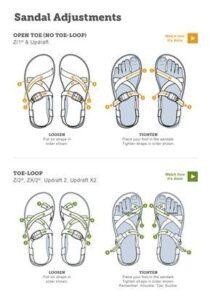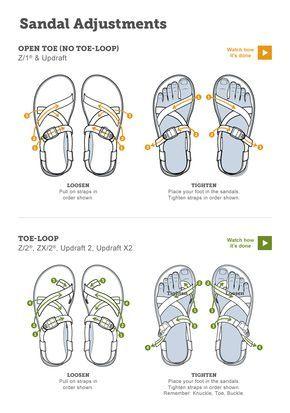
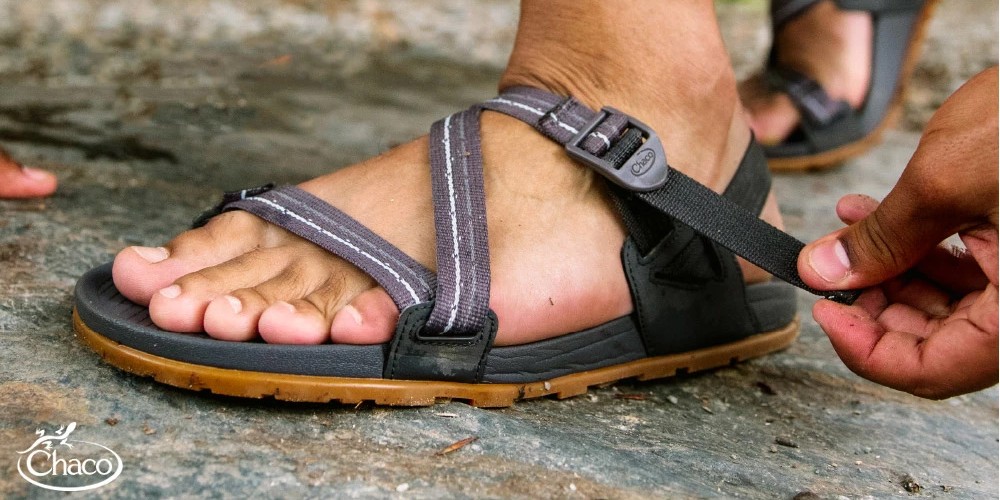
Adjust Chaco sandals by loosening the strap, placing your foot, then tightening each section for a secure, even fit.
Chaco sandals use one long, adjustable strap that moves through the sole and around your foot. That design gives you a custom fit, but it can feel confusing at first. This guide explains how do you adjust Chaco sandals step by step, how tight they should feel, and how to fix common fit problems without creating pressure points.

How Do You Adjust Chaco Sandals?
The easiest way to adjust Chaco sandals is to treat the strap as one connected system. Do not pull only the buckle strap and expect the whole sandal to fit. You need to move the strap through each section around your toes, arch, instep, and heel.
Follow these steps:
- Loosen the buckle strap completely. Pull the strap through the buckle until your foot can slide in easily.
- Place your foot flat in the sandal. Keep your heel inside the heel cup and line up your toes with the front edge.
- Start at the toe area. Pull the strap gently until it rests close to your toes without squeezing them.
- Adjust the strap across the middle of your foot. It should feel secure over the instep but should not leave deep marks.
- Move the strap around your ankle and heel. Keep the heel strap snug enough to stop your foot from sliding.
- Finish at the buckle. Pull the loose end until the sandal feels stable, then secure the buckle.
- Walk for a few minutes. Make small changes if your foot moves, your toes feel cramped, or the strap rubs.
Chaco straps often need several small adjustments. A single strong pull can make one part too tight while leaving another part too loose.
Understanding the Chaco Strap System
Most Chaco sandals use a continuous strap. The strap enters the sole near the toe, crosses the foot, passes through the side of the sandal, wraps around the heel, and returns toward the buckle.
This design lets you adjust different parts of the sandal. It also explains why one section may seem stuck. The strap can press against the sole and create friction, especially when the sandal is new or wet.
The main strap zones are:
• Toe area: Holds the front of your foot in place.
• Forefoot area: Runs across the widest part of your foot.
• Instep area: Sits across the top of your foot.
• Heel area: Helps stop your foot from sliding forward or lifting out.
• Buckle area: Provides the final adjustment and keeps the strap secure.
Think of the strap like a belt that travels around a small road system. If one section is tight, the rest of the strap may not move freely. Loosening nearby sections first usually makes adjustment easier.

How to Adjust Chaco Sandals for the First Time
New Chaco sandals often feel stiff. The webbing may not slide through the channels with ease, and the footbed may feel firm under your foot. This is normal, but you should never force the strap with sharp or sudden pulls.
Here is a safe first-time method:
- Open the buckle and loosen the visible strap.
- Find the strap section near the toe loop.
- Pull the strap gently in both directions to help release tension.
- Move the strap a little at a time through the sole.
- Place your foot in the sandal.
- Tighten the toe, instep, and heel areas in small steps.
- Walk indoors before wearing the sandals on a long hike or trip.
When people ask, “How do you adjust Chaco sandals?” they often expect one simple buckle movement. In practice, the first adjustment may take several minutes because the strap must settle into the sole.
A useful tip is to adjust both sandals while standing. Your feet spread slightly when they carry your weight. Adjusting only while sitting can make the sandals feel too tight once you begin walking.
How Tight Should Chaco Sandals Be?
Chaco sandals should feel secure, not restrictive. Your foot should stay centered on the footbed, and the sandal should move with you when you walk.
Use these fit checks:
• You can slide one fingertip under the strap in most areas.
• Your toes can spread and move naturally.
• Your heel stays inside the heel cup.
• The sandal does not slide from side to side.
• The strap does not cause sharp pain or numbness.
• Your foot does not spill over the sides of the footbed.
A small amount of pressure is normal, especially across the instep. Deep red lines, tingling, cold toes, or numbness are signs that the strap is too tight. Loosen the sandal and check the fit again.
The right fit may change during the day. Feet can swell after long periods of standing, walking, heat, or travel. For this reason, check your sandals after ten to fifteen minutes of use rather than judging them after only a few steps.

How to Adjust Chaco Sandals Around the Toe
The toe area controls how far your foot slides forward. If it is too loose, your toes may grip the footbed while walking. If it is too tight, the strap may rub the skin or press against the toe joints.
To adjust the toe section:
- Loosen the buckle first.
- Hold the strap near the toe loop.
- Pull gently until the strap sits close to the front of your foot.
- Leave enough space for natural toe movement.
- Walk and check whether your toes reach the front edge.
Your toes should not hang over the footbed. They also should not be pushed backward by a tight strap. A well-adjusted toe section keeps your foot in place while allowing your toes to relax.
If the toe strap twists, remove the tension and flatten the webbing before tightening it again. A twisted strap can create a narrow pressure point that feels much worse after several miles.
How to Adjust Chaco Sandals Across the Instep
The instep is the top of the foot between the toes and ankle. This area often needs the most care because foot shapes vary widely. A high instep may need more room, while a low instep may need a closer fit.
To adjust this section:
• Loosen the strap near the buckle.
• Move the strap across the top of the foot in small amounts.
• Keep the webbing flat against your skin.
• Check that the strap does not press directly on a sensitive joint.
• Walk up and down a few steps.
The strap should hold your foot down without acting like a clamp. If you see a deep groove after removing the sandal, loosen the instep slightly. If your foot lifts away from the footbed while walking, tighten it by a small amount.
One common mistake is tightening the instep before adjusting the toe area. This can lock the strap in place and make the rest of the sandal difficult to change. Start near the toe, then work toward the ankle and buckle.

How to Adjust the Heel Strap
The heel strap helps keep your foot from sliding forward or lifting out of the sandal. It should sit around the back of your heel without cutting into the Achilles area.
To adjust the heel:
- Loosen the front and middle sections slightly.
- Pull the strap around the heel until it feels secure.
- Make sure the strap sits flat and does not twist.
- Tighten the buckle only after the heel feels stable.
- Walk on level ground and check for heel movement.
Your heel may lift slightly during a normal walking step. A small amount is not always a problem. However, repeated slipping can cause rubbing, blisters, and poor balance.
If the heel strap feels too short, do not assume the sandal is defective. The strap may be tight in another section. Release tension near the toe or instep, then try moving the heel strap again.
How Do You Adjust Chaco Sandals When the Strap Is Stuck?
A stuck Chaco strap is usually caused by friction, dirt, moisture, or tension inside the sole. Avoid yanking hard because a sudden pull can damage the webbing or make the strap fold inside the channel.
Try this process:
- Remove the sandal from your foot.
- Open the buckle fully.
- Move the strap back and forth near the stuck area.
- Pull the strap from the closest accessible section.
- Clean visible dirt from the strap and sole.
- Add a small amount of clean water if the webbing is dry and tightly wedged.
- Continue with slow, even movements.
Chaco sandals are designed to handle water, but wet webbing may feel tighter until it dries. Let the sandals dry naturally at room temperature. Avoid high heat from a dryer, heater, or car dashboard because heat can affect adhesives and materials.
If the strap will not move after gentle attempts, contact the manufacturer or an authorized repair service. Forcing it may turn a minor adjustment issue into a repair problem.
Common Chaco Fit Problems and Solutions
The sandals feel too tight
Loosen the buckle and release tension from the toe and instep areas. Check for a twisted strap or a footbed size that is too small.
The sandals feel too loose
Tighten the toe and instep sections before pulling the buckle. If you tighten only the buckle, the heel may still slip.
The strap rubs the skin
Flatten the strap and move it away from the irritated spot. Wear the sandals for short periods while your feet adjust, but stop if you develop broken skin or strong pain.
The heel slips while walking
Reduce extra space around the instep and tighten the heel section slightly. Make sure your foot is fully seated in the heel cup before making the final adjustment.
The toes hang over the edge
The sandal may be too small, or the toe section may be too loose. Adjust the front strap first, then check the size and footbed shape.
One sandal fits differently from the other
This is common. Feet are not perfectly identical, so adjust each sandal separately rather than copying the same strap position on both sides.
In my experience reviewing footwear fit, the biggest mistake is treating discomfort as something that must be endured. A sandal may need a short break-in period, but sharp rubbing or numbness is a fit warning, not a challenge to overcome.
Adjusting Chaco Sandals for Hiking and Travel
For a short walk, a moderately snug fit may be enough. For hiking, water sports, or travel days, your sandals need more control because your feet will move over uneven ground.
Before a longer outing:
• Test the sandals indoors first.
• Walk on stairs and gentle slopes.
• Check the fit after fifteen minutes.
• Tighten loose areas in small steps.
• Carry a small blister-care kit.
• Avoid starting a long hike with a brand-new adjustment.
Your feet may swell in hot weather. Leave enough room for comfort, but do not make the sandals so loose that your toes must grip the footbed. On wet trails, a secure heel and stable instep are especially important because water and mud can increase slipping.
For travel, adjust the sandals before leaving home. Airport walking, sightseeing, and warm weather can expose fit problems quickly. A few minutes of testing can prevent a painful day.
Cleaning and Maintaining Chaco Straps
Clean straps are easier to adjust. Dirt can increase friction inside the sole and make the webbing feel stiff.
For routine care:
- Rinse off loose dirt with cool or lukewarm water.
- Use mild soap and a soft brush on the webbing.
- Work around the buckle and strap channels.
- Rinse away all soap.
- Let the sandals air-dry away from direct heat.
Do not use bleach, harsh solvents, or aggressive brushes. These products may weaken the webbing or change its color. If the sandals smell after heavy use, cleaning the footbed and allowing full air circulation can help.
Inspect the straps from time to time. Fraying, damaged stitching, a cracked buckle, or a loose sole deserves attention. A worn strap may not hold its adjustment during active use.
What to Avoid When Adjusting Chaco Sandals
A few habits can make adjustment harder or cause discomfort.
• Do not tighten the buckle as hard as possible.
• Do not pull the strap sharply when it is stuck.
• Do not ignore numbness, tingling, or sharp pain.
• Do not adjust only one section and assume the whole sandal is fixed.
• Do not wear new sandals on a long hike without testing them.
• Do not dry wet sandals with strong heat.
• Do not cut or alter the strap unless a qualified repair professional recommends it.
The goal is even support. A good adjustment spreads pressure across the foot instead of placing all the tension on one small area.
Frequently Asked Questions About How Do You Adjust Chaco Sandals
How do you adjust Chaco sandals with a buckle?
Open the buckle, loosen the strap, and place your foot fully into the heel cup. Adjust the toe, instep, and heel sections first, then use the buckle for the final snug fit.
Why will my Chaco strap not move?
Dirt, moisture, strap tension, or friction inside the sole can stop the webbing from sliding. Loosen nearby sections, move the strap gently back and forth, and clean the sandal before trying again.
Should Chaco sandals feel tight?
They should feel secure but not painful. You should have natural toe movement, no numbness, and no deep strap marks after walking.
How long does it take to break in Chaco sandals?
Many people become comfortable after several short wears, but the time varies by foot shape, model, and activity. Start with brief walks and adjust the straps as your feet respond.
Can I adjust each Chaco sandal differently?
Yes. Adjust each sandal to the foot wearing it. Small differences between your left and right feet are normal.
How do I stop my heel from slipping in Chaco sandals?
Make sure your foot is seated in the heel cup, then tighten the instep and heel areas slightly. Do not rely on the buckle alone, since the rest of the strap may still be loose.
Conclusion
Learning how do you adjust Chaco sandals is mainly about balancing the toe, instep, heel, and buckle sections. Loosen the full strap before making changes, keep the webbing flat, and tighten each area in small steps. A secure fit should support your foot without causing pain, numbness, or harsh pressure.
Test your sandals indoors, especially before hiking or traveling. With a few careful adjustments, your Chacos can feel stable, comfortable, and ready for daily walks or outdoor adventures. Share your best fitting tip or explore more footwear care guides to get even more from your sandals.

Rubel Miah is the Senior Editor at MyStyleGrid.com, where he brings a sharp editorial eye and an unshakable love for fashion to everything he does. A true style addict, Rubel lives and breathes trends, from streetwear to high fashion, and has a knack for turning inspiration into impactful stories. With years of experience in fashion journalism and digital media, he curates content that empowers readers to express themselves through style. When he’s not editing features or forecasting the next big thing, you’ll find him hunting down vintage pieces or capturing street style moments around the city.