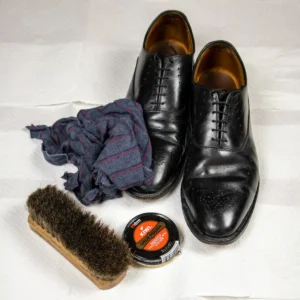
For shoes worn in the United States, regular polishing helps leather footwear look neat and last longer through office days, commutes, weddings, travel, and changing weather. The basic method is simple: remove dirt, apply a small amount of polish, let it dry, brush away the excess, and buff the surface to a shine.
This guide explains how to polish leather dress shoes, work shoes, boots, and other smooth leather footwear. It also covers suede, nubuck, synthetic materials, common mistakes, and what to do when the finish looks uneven.

What You Need to Polish Shoes
You need only a few basic items:
- A soft horsehair shoe brush or clean soft brush
- A dry cloth, such as cotton or microfiber
- Shoe cream or wax polish
- A clean cloth for applying polish
- A shoe tree or rolled towel
- Newspaper or a mat to protect the floor
- A small amount of clean water, if you want a higher shine
Use a polish that matches the shoe’s material. Smooth leather can usually take cream polish or wax polish. Suede and nubuck need special cleaners and brushes. Canvas, mesh, and most fabric shoes should not be treated with leather wax.
Cream polish versus wax polish
Cream polish adds color, light moisture, and a soft shine. It works well for routine care and for covering small scuffs.
Wax polish forms a firmer layer on the surface. It gives a stronger shine, especially on the toe and heel. Wax is best used after the shoe is clean and conditioned.
Some products combine cream and wax. Read the label and test the product in a hidden area first.
How to Polish Leather Shoes Step by Step
Follow this order for the best result. Do not rush the drying and buffing stages.
1. Remove the laces
Take out the laces before polishing. This lets you reach the tongue and the areas near the eyelets. It also keeps polish from staining the laces.
If the laces are dirty, wash or replace them separately.
2. Insert shoe trees
Place cedar or plastic shoe trees inside the shoes. Shoe trees help the leather keep its shape and make it easier to polish flat areas.
If you do not have shoe trees, use clean towels or paper. Avoid newspaper if the ink may transfer to light-colored lining.
3. Brush away loose dirt
Use a dry brush to remove dust, sand, and dried mud. Pay attention to the welt, seams, heel, and space around the eyelets.
Do not apply polish over grit. Small particles can rub against the leather and create fine scratches.
For mud, let it dry first. Wiping wet mud can spread it and push dirt deeper into the grain.
4. Clean the leather
For light dirt, wipe the shoe with a slightly damp cloth. Use gentle pressure and avoid soaking the leather.
For heavy buildup, use a leather cleaner made for the shoe’s finish. Apply it according to the product label. Let the shoes dry at room temperature before polishing.
Keep leather shoes away from hair dryers, heaters, and direct high heat. Heat can dry, shrink, or distort leather.
5. Apply a thin coat of cream polish
wrap a soft cloth around two fingers. Pick up a small amount of cream polish. A little goes a long way.
Work in small circles over the leather. Cover the toe, vamp, sides, heel, and areas near the seams. Use a cotton swab or small brush around tight spaces.
Do not apply polish to the rubber sole or rubber welt. It can make those areas slippery and leave marks on floors.
Let the cream polish sit for several minutes. The surface should look slightly dull or hazy before you brush it.
6. Brush the shoe
Use a clean shoe brush and make quick, light strokes across the leather. The brush spreads the polish and removes excess product.
Continue until the shoe looks even. A good brush can bring out a soft shine without much extra work.
7. Add wax for a brighter shine
If you want more shine, apply a very thin layer of wax polish. Focus on the toe and heel, where the leather is less flexible.
Avoid building thick wax on the vamp or other areas that bend. Heavy wax can crack when the shoe flexes.
For a mirror shine, add several very thin layers. Let each layer settle before adding the next one. Use a drop of water on the cloth only when needed to smooth the wax. Too much water can mark or overwork the finish.
8. Buff the shoes
Use a clean, dry cloth to buff the surface. Move back and forth with light pressure.
Stop when the leather feels smooth and looks even. More rubbing does not always create more shine. If the finish becomes cloudy, you may be using too much product.
How to Polish Different Types of Shoes
The right method depends on the shoe material. Using leather wax on the wrong material can cause stains, stiffness, or permanent damage.
| Shoe material | Use | Avoid |
|---|---|---|
| Smooth leather | Leather cream, wax, soft brush | Soaking and high heat |
| Suede | Suede brush and approved cleaner | Wax, oil, and regular leather cream |
| Nubuck | Nubuck brush and approved cleaner | Smooth leather polish |
| Patent leather | Patent leather cleaner or a soft damp cloth | Abrasive wax and rough brushes |
| Synthetic leather | Product labeled for synthetic material | Assuming all leather products are safe |
| Canvas or mesh | Fabric-safe cleaner | Leather polish and heavy oils |
Smooth leather
Smooth leather is the easiest type to polish. Use cream polish for normal care. Add wax when you want a sharper shine.
Conditioner may help dry leather, but do not use it every time you polish. Too much conditioner can soften the leather, darken it, or leave a greasy surface.
Suede and nubuck
Do not polish suede or nubuck with standard shoe wax. These materials have a textured surface that needs to stay soft and raised.
Use a suede brush to lift the nap, which is the short, fuzzy surface. For stains, choose a cleaner made for suede or nubuck and test it first in a hidden place.
Patent leather
Patent leather has a coated, glossy surface. It usually needs wiping rather than traditional polishing.
Use a soft, damp cloth or a cleaner designed for patent leather. Avoid rough cloths and abrasive products that can dull the coating.
Synthetic leather
Synthetic materials vary widely. Check the shoe label or maker’s care instructions before applying polish.
If the surface is smooth and nonporous, a small amount of synthetic-safe cream may improve its appearance. Test first because some products can leave streaks or cause peeling.
How Often Should You Polish Shoes?
Polish shoes when they look dull, show light scuffs, or feel dry—not simply because a set number of days has passed.
As a general guide:
- Dress shoes used often: polish every 1 to 2 weeks
- Shoes used a few times each month: polish every 1 to 2 months
- Work boots: clean as needed and condition when the leather looks dry
- Formal shoes: polish before important events, then inspect them afterward
- Shoes exposed to salt or winter slush: clean them soon after wear
Your climate and routine matter. Road salt, snow, rain, dust, and hot conditions can increase the need for cleaning. Rotating shoes also helps each pair dry between wears.
Polishing improves appearance, but it does not repair cracked leather, separated soles, deep cuts, or broken stitching.
How to Get a Mirror Shine on Leather Shoes
A mirror shine is a smooth, reflective finish on the toe or heel. It takes patience and thin layers.
- Clean and dry the shoes.
- Apply cream polish and brush it out.
- Add a very small amount of hard wax to the toe.
- Rub the wax with a soft cloth using small circles.
- Add a drop of water only if the wax drags or looks rough.
- Wait briefly, then repeat with another thin layer.
- Stop when the surface becomes smooth and reflective.
Do not try to create a mirror shine across the bending part of the shoe. Flexing can crack a thick wax layer. Keep the high-shine finish on firm areas such as the toe cap and heel counter.
A mirror shine is cosmetic. It does not make leather waterproof, and it may need to be removed and rebuilt over time.
How to Fix Common Shoe-Polishing Problems
Most polishing problems come from too much product, poor preparation, or using the wrong product.
The shoe looks cloudy
Likely causes:
- Too much polish
- Incomplete buffing
- Polish applied over dirt
- Several old layers of wax
Fix: Brush the shoe with a clean brush. If that does not work, wipe it gently with a suitable leather cleaner, let it dry, and start again with less polish.
The color looks uneven
Likely causes:
- Uneven cleaning
- Too much colored cream in one area
- A polish color that does not match the leather
- Existing wear or fading
Fix: Use a neutral or closely matched polish. Apply thin coats across the whole panel rather than covering only the scuff.
The polish cracks
Likely causes:
- Thick wax on a flexible area
- Dry or damaged leather
- Excessive heat
- Bending the shoe before the polish has settled
Fix: Remove the loose wax, clean the area, and use a small amount of cream polish. Keep hard wax on the toe and heel.
The shoe becomes darker
Likely causes:
- Dark-colored cream polish
- Oil or conditioner
- Water soaking into unfinished leather
Fix: Test products before full use. For valuable or light-colored shoes, use a neutral product or take them to a professional shoe repair shop.
The shine does not improve
Likely causes:
- The leather is heavily scratched
- The shoe has a matte or coated finish
- The surface still has dirt or old product
- The polish is not made for that material
Fix: Identify the material first. Some damage needs recoloring, refinishing, or repair rather than more polish.
Common Mistakes to Avoid
Avoid these habits when polishing shoes:
- Using too much polish: Thick layers look dull and can crack.
- Skipping cleaning: Dirt trapped under polish can scratch leather.
- Polishing wet shoes: Let them dry naturally first.
- Using one product on every material: Suede, nubuck, and patent leather need different care.
- Heating wet shoes: High heat can deform leather and damage adhesives.
- Ignoring the label: Care instructions can vary by finish and maker.
- Using household oils: Cooking oil, petroleum products, and similar substances can stain or weaken some finishes.
- Polishing only the toe: The whole visible leather surface should have an even finish.
- Using a dirty brush: Old pigment can transfer to another pair.
- Wearing shoes before the product settles: Fresh polish can mark clothing, carpets, and floors.
Always test a new cleaner, conditioner, or polish on a hidden section. Stop if the color changes sharply, the coating becomes sticky, or the surface starts to peel.
Does Shoe Polish Waterproof Leather?
Shoe polish may add limited water resistance, but it does not make leather waterproof.
Wax can help water bead on the surface for a short time. Cream polish may help keep the surface conditioned. Neither product protects every seam, lining, welt, or sole from water.
If you need stronger protection, use a water-repellent product made for the shoe’s material. Follow the label and test it first. Some sprays can darken leather or change the texture of suede.
For wet shoes, remove the laces and insoles if possible. Let the shoes dry at room temperature. Use shoe trees after the leather is no longer wet but still needs to return to shape.
Should You Polish New Shoes?
New smooth leather shoes may need only a light coat of cream polish. Some shoes already have a factory finish, so heavy polishing is unnecessary.
Before wearing new shoes to an important event:
- Check the care instructions.
- Remove dust with a soft brush.
- Test the polish in a hidden area.
- Apply a thin coat.
- Buff the shoes.
- Walk in them briefly to check comfort and finish.
Do not use a dark polish to hide a color mismatch. A close match or neutral polish is safer for a first treatment.
When Should You Use a Shoe Repair Professional?
A shoe repair professional can help when the problem goes beyond surface care.
Seek professional help for:
- Deep cuts or large cracks
- Peeling finish
- Loose soles
- Broken stitching
- Severe water damage
- Major color changes
- Valuable vintage or designer shoes
- Leather that has become stiff and brittle
Polish cannot restore missing leather or reattach a sole. Adding more product may make later repairs harder.
Key Takeaways
- Brush off dirt before applying any polish.
- Use cream polish for routine color and care.
- Use wax for extra shine, mainly on firm areas.
- Apply thin coats instead of one thick coat.
- Let the product settle, then brush and buff.
- Do not use regular leather polish on suede or nubuck.
- Test every new product in a hidden area.
- Polish improves appearance but cannot fix structural damage.
Frequently Asked Questions
Can you polish shoes without a brush?
Yes. You can apply and buff polish with soft cloths. A brush makes the work faster and helps remove excess polish from seams and textured areas.
Can you polish shoes with a damp cloth?
Use a slightly damp cloth to remove light dirt, but do not apply polish to wet leather. Let the shoes dry at room temperature first.
Is black polish safe for brown shoes?
Usually not. Black polish can darken brown leather and create an uneven color. Use brown, neutral, or a color recommended for the shoe.
Can you polish leather sneakers?
You can polish smooth leather sneakers if the product is safe for that finish. Avoid polishing fabric panels, mesh, suede sections, and rubber parts.
How long should shoe polish dry?
Many products need only several minutes before brushing, but the label is the best guide. A thicker coat may need more time. The shoe should not feel wet or sticky before buffing or wearing.
What is the fastest way to polish shoes?
Brush away dirt, apply a thin layer of cream polish, wait a few minutes, and buff with a clean brush or cloth. This gives a clean soft shine without the extra time required for a mirror finish.
Final Recommendation
For most smooth leather shoes, use this routine: brush away dirt, clean the surface, apply a thin layer of matching cream polish, let it settle, brush it out, and buff with a clean cloth. Add wax only when you want a brighter shine, and keep it off flexible areas.
Start with a hidden spot, use less product than you think you need, and let the material—not the shine alone—guide your care routine.
Rubel Miah is the Senior Editor at MyStyleGrid.com, where he brings a sharp editorial eye and an unshakable love for fashion to everything he does. A true style addict, Rubel lives and breathes trends, from streetwear to high fashion, and has a knack for turning inspiration into impactful stories. With years of experience in fashion journalism and digital media, he curates content that empowers readers to express themselves through style. When he’s not editing features or forecasting the next big thing, you’ll find him hunting down vintage pieces or capturing street style moments around the city.