Most snowboard boots last two to five seasons, but riding days, fit, care, and boot quality can change that range.
Knowing how long do snowboard boots last helps you plan gear costs, avoid painful rides, and stay safe on the mountain. In practice, a well-made pair may serve a casual rider for many years, while a daily rider may wear out the same boots in one or two seasons. This guide explains the real signs of wear, how to extend boot life, and when replacement is the smarter choice.

How long do snowboard boots last?
For most riders, snowboard boots last about two to five seasons. That estimate assumes regular care and moderate use, such as 10 to 30 days on snow each winter.
A more useful way to measure boot life is by riding days:
• Occasional riders may get 60 to 100 days from a good pair.
• Regular riders may get 40 to 80 days.
• Instructors, patrollers, and daily riders may need new boots after 30 to 60 days.
• Aggressive riders may replace boots sooner if they ride hard, hike often, or use stiff boots.
These figures are not fixed rules. A soft, flexible boot may lose support sooner than a stiff freeride boot. The quality of the foam, liner, lacing system, outsole, and outer shell also matters.
The best answer to how long do snowboard boots last is simple: replace them when they no longer hold your foot securely, keep you comfortable, or transfer movement well. Calendar age matters less than condition.
What affects snowboard boot lifespan?
Several factors decide how long do snowboard boots last. Think of your boots like running shoes with a hard winter job. Every ride creates pressure, moisture, heat, and repeated bending.
Riding frequency and style
The more days you ride, the faster materials compress and break down. A resort rider who takes a few trips each season puts far less stress on boots than someone who rides every weekend.
Your riding style matters, too. Freeriding, deep snow, jumps, park laps, and side-country hikes all add different forms of wear. Walking across parking lots and lodge floors can also grind down the outsole.
Boot construction
High-quality snowboard boots often use better stitching, stronger outer materials, and more durable soles. Their liners may also resist compression for longer.
However, an expensive boot is not automatically the longest-lasting boot. A boot that does not match your foot shape can wear unevenly and feel finished early. Good fit is one of the strongest predictors of useful boot life.
Fit and sizing
A boot that is too large allows your heel to lift. That movement creates extra friction and forces you to overtighten the laces or boa system. A boot that is too small can crush your toes and damage the liner through constant pressure.
Your heel should stay down when you bend your knees. Your toes may lightly touch the front when you stand straight, but they should pull back slightly when you flex into a riding stance.
Moisture and drying
Wet boots break down faster. Moisture weakens some liners, creates odors, and can affect glue, stitching, and inner foam. Snow that melts inside the boot can also freeze later and make the liner stiff.
Dry your boots after every ride. Remove the liners when possible, open the shell fully, and let both parts dry in a warm, ventilated room.
Storage habits
Do not store snowboard boots in a sealed plastic bag while they are damp. Avoid placing them directly against a heater, fireplace, or heat vent. High heat can warp plastic parts, shrink liners, and damage adhesives.
At the end of the season, clean off dirt and salt. Dry the boots fully, loosen the closure system, and store them in a cool, dry place.
Signs your snowboard boots need replacing
The clearest answer to how long do snowboard boots last comes from their performance. If your boots feel less precise or less comfortable, inspect them before your next trip.
Look for these warning signs:
• Your heel lifts even when the boots are correctly tightened.
• Your ankles roll inside the boots during turns.
• The liner feels flat, packed out, or much softer than before.
• Your feet move from side to side inside the shell.
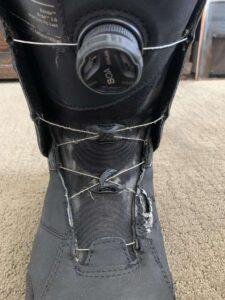
• The outer shell has deep cracks, torn panels, or open seams.
• The sole is worn smooth or begins separating from the boot.
• The laces, cables, eyelets, or boa parts no longer hold tension.
• Your toes hurt because you keep tightening the boot to gain control.
• Your feet feel cold because the liner has lost its shape or insulation.
• Your legs feel unusually tired after a normal day of riding.
A little cosmetic wear is normal. Scratches and dirt do not mean a boot has failed. Structural damage, poor heel hold, and loss of support are more important than appearance.
I once kept using a pair that looked fine from the outside but had badly compressed liners. My feet moved inside the boots, so I tightened them harder. That caused numb toes and sore shins. A new liner helped for a short time, but replacing the boots gave me much better control and comfort.
How to test your snowboard boots at home
You can perform a simple check before deciding whether to buy new snowboard boots. This test cannot replace professional boot fitting, but it can reveal common problems.
Check the liner
Remove the liner and inspect the ankle pocket. If the foam is deeply compressed or your heel sits in a new hole, the liner may be worn out.
Put the liner back in and stand in your normal riding stance. Your heel should remain secure when you bend your knees and shift your weight from side to side.
Check the shell
Look for cracks near the ankle flex zone, toe box, heel, and outsole. Pay close attention to seams and areas that rub against your bindings.
A small surface scratch is usually harmless. A crack that opens when you flex the boot can allow water in and reduce support.
Check the sole
Set each boot on a flat surface. If it rocks, twists, or has severe wear under the heel or toe, it may not sit correctly in the binding.
A badly worn sole can also change how the boot fits inside the binding. That may affect response and create unwanted movement.
Check the closure system
Tighten the laces, boa dial, or strap as you would before riding. Wait several minutes, then check whether the tension has changed.
If the system slips, the cable frays, or the laces will not hold a knot, repair the part before riding. Many closure problems are repairable, so you may not need a full replacement.
Can you repair worn snowboard boots?
Sometimes, repair is a smart way to extend how long do snowboard boots last. A boot shop may replace laces, boa cables, ankle straps, liners, or certain insoles.
Common repairs include:
• Replacing a broken boa cable or dial
• Sewing a small outer-shell tear
• Adding a new footbed
• Replacing worn laces
• Using compatible replacement liners
• Repairing minor sole separation
Repair works best when the boot still has a strong shell and good heel hold. It is less useful when the liner is fully compressed and the outer boot is soft, cracked, or misshapen.
Do not rely on glue alone for major sole separation. A sole that comes loose while hiking or riding can cause a fall. Take serious damage to a qualified boot technician.
Manufacturers often provide replacement parts for closure systems. Check the product warranty and repair policy before buying a new pair. A warranty covers defects for a stated period; it does not promise a specific number of riding seasons.
How to make snowboard boots last longer
Good care can add many riding days to your boots. It can also keep them warmer, cleaner, and more comfortable.
Follow this routine:
-
Remove snow and dirt after each ride.
-
Open the boots fully before drying them.
-
Remove the liners if the design allows it.
-
Dry the liners and shells in a warm, well-ventilated room.
-
Never place the boots directly on a heater.
-
Store them loosely closed during the off-season.
-
Keep them away from pets, sharp tools, and damp garages.
-
Use clean, dry socks for every ride.
-
Walk as little as possible in the boots on rough surfaces.
-
Check laces, cables, seams, and soles during the season.
Use one thin or medium snowboard sock rather than several thick socks. Too many layers can create pressure points and reduce circulation. Avoid cotton because it holds moisture close to your skin.
Your bindings also affect boot wear. A binding that is too tight can crush the boot shell or create pressure on the ankle. Adjust the straps so they hold the boot firmly without deforming it.
Do snowboard boots get looser over time?
Yes, snowboard boots usually feel looser as the liner foam compresses. This process is often called packing out. Some packing out is normal and may improve comfort during the first few days.
The problem begins when your heel starts lifting or your foot slides inside the boot. At that point, tightening the closure system may only hide the issue. It can also create painful pressure across your foot.
A heat-moldable liner may improve fit when used correctly. A professional boot fitter can shape the liner and check whether the shell still matches your foot. If the shell is too large or the liner is badly worn, molding may not solve the problem.
When asking how long do snowboard boots last, remember that a boot can look new while its liner feels old. Internal support is often the first part to fail.
When should you replace snowboard boots?
Replace your boots before a major trip if they show serious wear or cause discomfort. Waiting until the first day of a vacation can turn a small gear problem into a painful week.
Replacement is usually wise when:
• The heel lifts despite correct sizing and tightening.
• The boot no longer supports your ankle.
• The shell has a major crack.
• The outsole separates from the shell.
• The liner is fully compressed.
• The closure system fails during use.
• Your feet become numb, painful, or unusually cold.
• You cannot control your board as well as you could before.
Try new boots before the season starts. Wear the same socks you use for riding. Stand, flex, walk, and hold a riding stance for at least 15 minutes.
Do not choose boots by brand reputation alone. Fit, flex, riding style, and board setup must work together. A soft boot may suit a beginner or park rider, while a stiffer boot may better support fast carving and steep terrain.
How to choose snowboard boots that last
Durability begins with the right purchase. Start by choosing the correct flex for your riding and body weight.
A soft boot is easy to flex and often feels comfortable at first. It may suit beginners, casual riders, and park riders. A medium or stiff boot usually provides more support and control, but it can feel less forgiving.
Look for these features:
• A secure heel pocket
• Strong stitching around flex zones
• A durable rubber outsole
• A replaceable or reliable closure system
• A liner that supports the ankle
• A shell that flexes without collapsing
• A fit that feels snug but not painful
Try several models if possible. Boot shapes vary widely between brands and even between product lines. Your foot length, width, arch, heel shape, and instep height all affect fit.
The best long-lasting boot is not always the most rigid or costly one. It is the boot that fits well, matches your riding, and receives proper care.
How long do snowboard boots last in storage?
Snowboard boots can last many years in storage if they are clean, dry, and protected from heat. Storage alone does not stop aging, though. Rubber, foam, adhesives, and synthetic materials can still become brittle over time.
Before storing boots for summer, remove all moisture and dirt. Let them dry for at least a full day, then place them in a breathable boot bag or open storage area.
Avoid damp basements, hot attics, and car trunks. Check the boots before the next season by flexing the shell and inspecting the sole. If the material cracks or flakes, do not trust the boots on snow.
This is why how long do snowboard boots last cannot be answered by seasons alone. A lightly used pair stored badly may fail sooner than a well-used pair that was cleaned and dried after every ride.
Frequently Asked Questions About How Long Do Snowboard Boots Last
How many years should a pair of snowboard boots last?
Most snowboard boots last two to five seasons for casual or moderate riders. Frequent riders may wear them out in one or two seasons, while occasional riders may use them longer.
How many days do snowboard boots last?
A typical pair may last about 40 to 100 riding days. The exact number depends on boot quality, riding style, fit, walking surfaces, and care.
Is it bad to ride in old snowboard boots?
Old boots are not automatically unsafe, but worn liners, cracked shells, and loose heels can reduce control. Replace boots when they no longer support your foot or keep the closure system secure.
Can snowboard boots be repaired?
Many small problems can be repaired, including broken laces, boa cables, straps, and minor stitching. Major shell cracks, severe liner compression, and large sole separation often justify replacement.
How do I know if my snowboard boots are too big?
Your heel will lift, your foot may slide, and you may need to overtighten the boot. A correct fit feels snug, with little movement, while still allowing normal toe comfort and circulation.
Should snowboard boots feel tight when new?
New boots should feel snug but not painful. The liner will compress slightly with use, so a loose fit at the start may become too loose later.
Can I make snowboard boots last longer?
Yes. Dry them after each ride, avoid direct heat, store them in a dry place, and walk less on rough ground. Regular inspections can also catch small problems before they become major failures.
Conclusion
The answer to how long do snowboard boots last is usually two to five seasons, or roughly 40 to 100 riding days. Your boots may last longer with careful drying and storage, but poor fit, heavy use, moisture, and compressed liners can shorten their life.
Focus on performance rather than age. If your heel lifts, your liner feels flat, your shell cracks, or your feet hurt, it is time to inspect, repair, or replace the boots. Give your current pair a careful check before your next ride, and explore professional boot-fitting advice or trusted gear reviews before choosing your next pair.
Madison Clark is a footwear expert and the voice behind MyStyleGrid.com. She specializes in honest shoe reviews, style tips, and practical guides to help readers find the perfect pair for any occasion. With years of experience in blogging and content creation, Madison makes footwear knowledge simple, stylish, and easy to follow.