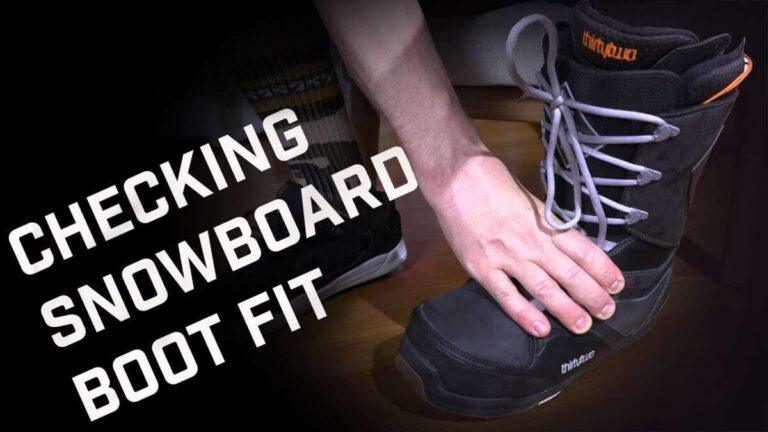
Snowboard boots should fit snugly—your toes touch the liner, heel stays put, and no hot spots.
I’ve fitted boots for years and ridden all kinds of terrain. I’ll walk you through exactly how are snowboard boots supposed to fit, why each fit detail matters, and how to test and fix common problems. Read on for clear steps, real tips from the hill, and simple checks you can do in the shop or at home.
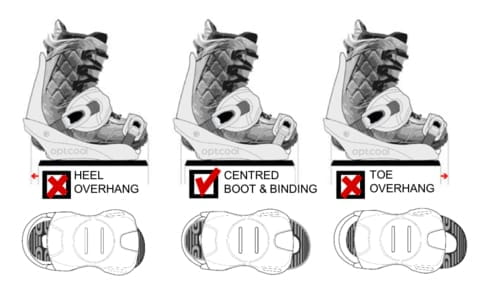
Fit basics: what "good fit" really means and why it matters
A good fit keeps your foot stable. It protects your ankle and transfers board feel. That is why knowing how are snowboard boots supposed to fit matters more than brand hype.
Key fit points
- Toes lightly touch the end of the liner with no crumpling.
- Heel must not lift when you flex or carve.
- Ankle and instep should feel snug but not pinched.
- Cuff should support your lower leg without cutting in.
Why fit matters
- Safety: A bad fit increases the chance of injury.
- Control: Proper fit gives crisp edge control and faster response.
- Comfort: Good fit reduces numbness and hot spots, letting you ride longer.
I often tell new riders that fit is the most important purchase choice after board size. Learn to spot the signs and you’ll ride better and hurt less.

How to measure your foot and pick the right size
Measure both feet. Do it late in the day. Feet swell after activity. Use a ruler or a brannock-type tool. Record length in centimeters for mondo sizing.
Step-by-step
- Place paper on a flat floor against a wall.
- Stand with your heel to the wall and mark the longest toe.
- Measure from wall to mark in cm.
- Repeat for the other foot and use the larger number.
- Use the boot maker’s mondo size or size chart and follow fit notes.
A common rule: pick boots in mondo size that match your measurement or slightly smaller for performance fit. If you ask how are snowboard boots supposed to fit, start with a correct measurement.
Understanding sizing systems and how they relate to fit
Different brands use different scales. The main ones are mondo (cm), US, UK, and EU. Mondo is the most precise for snowboard boots.
Quick notes
- Mondo = foot length in centimeters. This is the best base.
- US sizes vary by brand and model.
- Try to match your measured cm to the boot’s stated mondo size.
- Don't rely only on your street shoe size.
When shoppers ask how are snowboard boots supposed to fit, I always tell them to trust mondo sizing and the boot's own chart.

Fit by riding style and flex: match fit to what you ride
Your riding style changes the ideal fit. Snowboard boots supposed to fit differently for park, all-mountain, and freeride.
Park and freestyle
- Slightly tighter fit for board feel and response.
- Softer flex helps presses and presses need ankle mobility.
- Minimal heel lift allowed.
All-mountain
- Balanced snug fit.
- Medium flex for control and comfort.
- Slight room for socks and optional thicker liner.
Freeride and alpine
- Firmer support. Snug fit for power transfer.
- Less toe room; heel must be locked in.
- Stiffer shells often require heat molding liners.
If you wonder how are snowboard boots supposed to fit for your style, ask what flex you ride and match fit to that goal.

How to do a proper try-on and quick fit tests
Try boots with the socks you plan to wear. Lace up fully and stand in a normal stance. Try the tests below.
Try-on checklist
- Toe touch test: Stand straight. Your toes should just touch the liner front. When you bend your knees, toes pull back slightly.
- Heel lift test: Flex forward. Heel should stay put. Up to 1/4 inch lift is ok; more means the boot is too big.
- Cuff and ankle feel: Walk and flex. The ankle should feel locked but not crushed.
- Pressure points: Ride for a short time in the shop if possible. Any strong hot spot is a red flag.
Common quick questions
Q: Will boots stretch with use?
A: Liners compress a little, but shells do not stretch much. Expect some liner pack-out but not big size gains.
Q: Should my toes touch the end?
A: Yes, light touch when standing is normal. When you flex, toes should pull off the end slightly.
These short checks answer many who ask how are snowboard boots supposed to fit when trying them on.

Lacing systems, liners, and micro-adjustments that change fit
Lacing and liner tech can tweak fit. Know the systems and how they affect fit.
Lacing options
- Traditional laces: Fine control but slower to adjust.
- Speed laces: Fast and even tension; adjust tightness quickly.
- BOA: Precise micro-adjustments and consistent hold.
Liners and heat molding
- Heat-moldable liners adapt to your foot after shaping.
- Thicker liners add warmth but take space.
- Replace liners if they are packed out and you get heel lift.
Micro-adjust tips
- Use lace locks or separate zones to tighten heel without pinching toes.
- Consider an aftermarket footbed for arch support and heel lock.
- If heel lift persists, try a thinner sock or different liner.
If you ask how are snowboard boots supposed to fit with a BOA or laces, remember the system helps fine-tune but does not fix a wrong size.

Common fit problems and simple fixes
Problems happen. Most have clear fixes. I’ve fixed all of them in the shop and on the hill.
Problem: Heel lift
- Fix: Use tighter ankle lacing, a heat-molded liner, or a thicker insole. Try heel pads.
Problem: Numb toes or cold feet
- Fix: Check circulation. Avoid over-tightening. Use thinner socks and insulated liners.
Problem: Hot spots and pain
- Fix: Heat-mold liner, add padding, or try a different shell shape.
Problem: Too much toe room
- Fix: Use a thicker liner, an insole, or move to a smaller mondo size.
Problem: Too tight across forefoot
- Fix: Consider a boot with a wider last or look for models labeled "wide."
These solutions show practical ways to get the fit right and answer how are snowboard boots supposed to fit in different problem cases.

Break-in, time to replace, and real-world expectations
Boots have a break-in curve. Liners compress and the feel changes. Expect small changes, not dramatic ones.
Break-in timeline
- First ride: expect stiffness and some pressure.
- 2–10 rides: liner warms and shapes; performance improves.
- After 20–50 rides: liner may pack out and feel looser.
When to replace
- Persistent heel lift after new insoles and molding.
- Liner worn through or shell cracked.
- Pain that does not improve with adjustments.
From my experience, a well-fit boot lasts several seasons if you care for the liners and dry boots after each day.

Buying tips: online shopping, returns, and what to test on arrival
Buying online can be fine with a plan. Know how are snowboard boots supposed to fit before you click buy.
Tips for online buying
- Measure your foot in cm and use the manufacturer’s chart.
- Read reviews for fit notes like "runs small" or "narrow last."
- Keep the box and tags in case you need a return.
- Try boots indoors on carpet for 20–30 minutes before hitting the hill.
Try-on at home
- Wear your riding socks.
- Do the toe and heel tests.
- Walk, squat, and mimic turns. Heel lift or hot spots mean swap sizes or models.
These steps reduce surprises and make online buys safer.
Personal experience and lessons learned from fitting boots
I’ve fitted riders from first-timers to pros. Here are lessons I learned the hard way.
What worked for me
- Measure every foot every season. Feet change.
- Heat-mold liners when allowed. It fixes many fit issues.
- Try different brands. Each brand shapes feet differently.
- Don’t chase "zero space." A true performance fit lets toes touch at rest.
Mistakes I made
- Buying based on shoe size alone led to heel lift.
- Ignoring sock thickness caused numb toes mid-season.
- Not re-molding liners after a year meant lost control.
I share these so you avoid the same bad days I had.
Frequently Asked Questions of how are snowboard boots supposed to fit
How tight should snowboard boots feel when I first try them on?
They should feel snug and secure with light toe contact. Tightness should not cause sharp pain or cut circulation.
Can snowboard boots be stretched if they feel too small?
Shells rarely stretch. Liners can form to your foot slightly, but if the shell is too small, choose a larger size or different model.
How much heel lift is acceptable in snowboard boots?
A small lift up to about 6 mm is normal when flexing. More than that reduces control and means the fit is too large or liners are worn.
Should my toes hit the front of the boot while standing?
Yes, toes should touch lightly when standing. When you bend your knees, toes should pull back from the front a bit.
When should I replace my snowboard boots?
Replace when liners are packed out, heel lift persists after fixes, or the shell is damaged. Pain that won’t go away is a clear sign to replace.
Conclusion
Getting fit right matters. How are snowboard boots supposed to fit affects safety, control, and comfort. Measure your feet. Try boots with your socks. Do the toe, heel, and flex tests. Use liner molding and insoles to fine-tune fit. If something still hurts, try another model or size.
Take action today: measure your feet, visit a shop or buy from a retailer with a good return policy, and test boots the way you learned here. Tell us about your fit wins or struggles in the comments, subscribe for more gear guides, or share this post with a friend who needs better-fitting boots.

Rubel Miah is the Senior Editor at MyStyleGrid.com, where he brings a sharp editorial eye and an unshakable love for fashion to everything he does. A true style addict, Rubel lives and breathes trends, from streetwear to high fashion, and has a knack for turning inspiration into impactful stories. With years of experience in fashion journalism and digital media, he curates content that empowers readers to express themselves through style. When he’s not editing features or forecasting the next big thing, you’ll find him hunting down vintage pieces or capturing street style moments around the city.