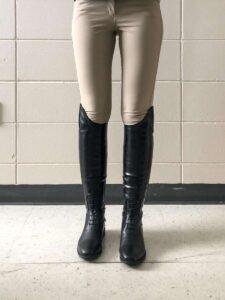
Knee high boots should feel snug around your foot and calf without pinching, slipping, or limiting natural movement.
Knowing how are knee high boots supposed to fit can save you from sore toes, rubbing calves, and boots that never feel right. The best fit gives your foot steady support, leaves room for normal movement, and sits smoothly around your leg. This guide explains each fitting point, from toe space and ankle support to calf width, shaft height, socks, and walking comfort.
What a Proper Knee High Boot Fit Feels Like
The simplest way to understand how are knee high boots supposed to fit is to think of them as supportive clothing for your feet and legs. They should follow your shape without squeezing it. A good pair feels secure when you walk but does not create pressure points.
Your boots should fit well in these main areas:


• Toes should have enough room to move.
• The heel should stay mostly in place.
• The arch should feel supported.
• The ankle should feel stable, not crushed.
• The shaft should sit close to your calf without cutting into it.
• The top should end below the knee joint.
A new pair may feel firm, especially if made from leather. However, firm does not mean painful. Leather can soften and mold to your leg, but it will not usually stretch enough to fix a shaft that is much too tight.
When testing boots, walk on a clean indoor surface for several minutes. Bend your knees, climb a few steps, and sit down. Boots that feel fine while standing may pinch when your ankle bends.
A useful fitting rule is simple: the boot should move with your leg, not fight against it. If you spend the day adjusting the shaft, pulling up the heel, or rubbing a sore spot, the fit is not right.

How Should Knee High Boots Fit Around the Calf?
The calf is often the hardest part of finding the right fit. Knee high boots should sit close to your calf, but they should not leave deep marks, restrict blood flow, or make sitting uncomfortable.


For most people, a small amount of space is helpful. You should be able to slide one or two fingers between the boot shaft and your calf. This space allows for socks, jeans, and natural changes in leg size during the day.
The right amount of calf room depends on the boot style:
• Slim boots often have a narrow shaft and suit smaller calves.
• Regular boots offer a moderate shaft width for everyday wear.
• Wide calf boots provide extra room at the upper leg.
• Extra-wide calf boots suit fuller calves or people who want to wear thick clothing underneath.
Measure your calf before shopping. Stand with your leg relaxed, then measure around the widest part of your calf. Take the measurement while wearing the socks, leggings, or pants you plan to wear with the boots.
Compare your measurement with the brand’s size chart. Do not assume that a size 8 boot from one brand will have the same calf width as a size 8 from another brand. Shaft measurements vary widely between brands and styles.
If the boots feel tight only at the top, look for stretch panels, elastic gussets, or a wide-calf design. If the shaft is loose, a boot insert, thicker socks, or a style with adjustable straps may help.
A loose shaft is not always a major problem. Some riding boots and casual boots are designed with a little space. The issue begins when the shaft collapses, rubs, or slides down with every step.
How Much Toe Room Should Knee High Boots Have?
Your toes need room to spread and move. When you stand, your longest toe should sit about one thumb’s width from the end of the boot. This is usually around three-eighths to one-half inch, though foot shape and boot design matter.
The toe box should also match your foot’s shape. A pointed boot naturally gives less room than a round or square toe boot. That does not make pointed boots wrong, but they may not suit wide feet or long periods of walking.
To check toe room:
-
Put on the socks you expect to wear.
-
Stand with your weight evenly spread across both feet.
-
Press gently at the front of the boot.
-
Make sure your toes are not touching the end.
-
Walk downhill or down a set of steps if possible.


Your toes should not hit the front when your foot slides forward. This can cause bruised nails, blisters, and pain under the toes. A boot that feels slightly roomy is often safer than one that feels short.
Do not rely only on your thumb pressing the toe. Soft leather and padded linings can make a boot feel longer than it is. Walking gives a more accurate result.
If the toe area feels tight across the widest part of your foot, the problem may be width rather than length. Going up a full size can make the boot too long. A wider size or a roomier toe shape may be the better solution.
How Should the Heel and Ankle Fit?
A small amount of heel movement is normal in new boots. Your heel may lift slightly during the first few steps, especially in tall leather boots. However, it should not slide up and down so much that it causes rubbing.
The heel should settle as you walk. If it lifts more than about one-quarter inch with every step, the boot may be too large, too wide, or poorly shaped for your foot.
Your ankle should feel held in place without pressure. Watch for these signs of a poor ankle fit:
• The boot folds sharply into your ankle.
• The ankle opening cuts into your skin.
• Your foot slides forward when walking.
• Your heel lifts with every step.


• You feel pressure on the ankle bone.
Try the boots with the type of sole and socks you will use in daily life. A thin dress sock creates a different fit from a thick wool sock. Insoles can also raise your foot slightly and make the heel fit more securely.
If the boot is slightly loose, you may be able to improve the fit with:
• A thin insole
• A heel grip
• Cushioned socks
• A tongue pad
Avoid using several thick inserts at once. They can crowd your toes and raise your heel too much.
If the ankle feels tight, do not assume the boot will stretch enough. The leather may loosen over time, but seams, stiff counters, and structured panels can limit the amount of change.
Should Knee High Boots Be Tight or Loose at the Top?
Knee high boots should be close enough at the top to stay in place, but loose enough to let you bend your knee. The top edge should sit below the back of your knee. It should not press into the knee crease or dig into the calf.
When checking how are knee high boots supposed to fit at the top, sit in a chair. Your knee should bend freely without the boot edge pushing into the back of your leg. Stand up, walk, and squat slightly to check the same area in motion.
A top opening that is too tight may cause:
• Red marks
• Pinching behind the knee


• Restricted movement
• Heat and sweat buildup
• General leg discomfort
A top opening that is too loose may slide down. This can cause the shaft to bunch around your ankle or create wrinkles at the calf.
Some boots have a straight shaft, while others follow the shape of the leg. A contoured shaft often gives a closer fit. Adjustable buckles and elastic panels can provide a more flexible fit than a rigid zip-up design.
Remember that leg shape is not a problem to correct. Calves vary in muscle, bone structure, and width. The goal is to choose a boot that works with your body rather than forcing your leg into a narrow shape.
How Should Knee High Boots Fit With Jeans and Socks?
Your outfit changes the fit. A boot that feels perfect over bare legs may feel too tight over jeans. Before buying, decide how you expect to wear the boots most often.
For dresses and skirts, thin socks or tights usually need less shaft room. For jeans, leggings, or thermal layers, you need extra space around the calf. Do not test boots with thin tights if you plan to wear them over thick denim.
Try these combinations:
• Bare legs with thin socks
• Tights with a dress
• Leggings with a lightweight top
• Slim jeans tucked into the boots
• Thick socks with casual pants


The fabric should lie flat inside the boot. If your jeans bunch behind the knee, the boots may feel tight even when your calf measurement is correct. A slim, flexible denim style often works better than stiff or heavy jeans.
Do not tuck bulky pants into a narrow shaft. This can create pressure that feels like a boot-size problem. In some cases, the clothing layer is the real cause.
Socks also affect comfort. Seamless socks can reduce rubbing across the toes and heel. Wool or moisture-wicking materials may keep feet more comfortable during long wear, while cotton can hold moisture against the skin.
How to Measure for Knee High Boots at Home
Measuring at home makes online shopping much easier. You need a flexible measuring tape, the socks or pants you plan to wear, and a chair or wall for support.
Follow these steps:
-
Measure both feet while standing.
-
Record the length from the back of the heel to the longest toe.
-
Measure the widest part of each foot.
-
Measure around the widest part of your calf.
-
Measure from the floor to just below the knee crease.
-
Write down the larger measurement if your feet or calves differ.
Always measure later in the day if possible. Feet can swell after hours of standing and walking. A boot that fits only in the morning may feel tight by evening.
Compare your numbers with the brand’s chart. Look for more than a basic shoe size. Important details include foot width, shaft height, calf circumference, and heel height.
If one leg is larger, fit the larger leg. A small difference can often be managed with a thin sock or insert on the smaller side. A large difference may require an adjustable style or a professional alteration.
When shopping online, read reviews for comments about shaft width, ankle shape, and toe room. Customer photos can show how the boots sit on different calves, but remember that lighting and camera angles can be misleading.
Signs Your Knee High Boots Do Not Fit Correctly
Even attractive boots are not worth keeping if they cause pain. Understanding how are knee high boots supposed to fit also means knowing when the fit is wrong.
Watch for these warning signs:
• Your toes touch the front when you walk.
• Your little toe feels squeezed.
• Your heel slips out with each step.
• The zipper strains or waves.
• The boot leaves deep marks on your calf.
• The shaft falls down repeatedly.
• Your foot goes numb.
• You develop blisters after a short walk.
• Your knee cannot bend freely.
• You change your walking pattern to avoid pain.
Numbness, tingling, or strong pressure should not be treated as a normal break-in phase. These signs may indicate that the boot is too narrow or too tight.
Some minor stiffness is normal. Leather boots may need short wear periods before they feel flexible. Start with 20 to 30 minutes at home, then increase the time gradually. Do not wear painful boots for a full workday in the hope that they will suddenly become comfortable.
A common fitting mistake is buying a smaller size because the boot looks more flattering when close to the leg. Comfort and proper movement matter more than a sharp outline. The best-looking boot is the one you can wear with confidence and ease.
Do Knee High Boots Stretch?
Many leather boots soften with wear, but stretching has limits. Leather may relax around the foot and calf, especially in areas that receive regular movement. Synthetic materials often stretch less and may return to their original shape.
A boot may loosen slightly in:
• The upper foot
• The ankle
• The calf area
• The back of the shaft
A boot will not reliably gain a full shoe size through normal wear. It may also fail to stretch where you need it most. For example, a stiff zipper panel may not expand enough to solve a narrow calf.
A professional shoe repair specialist can sometimes stretch leather safely. This option works best for small width adjustments. It is less useful when the boot is too short, the shaft is far too narrow, or the heel shape does not match your foot.
Avoid soaking boots or applying heat to force them wider. Water can damage leather, while heat may dry, crack, or distort the material. These methods can also weaken glue and damage the lining.
The safest approach is to buy the correct size and shape from the start. Break-in should improve comfort, not rescue an unsuitable fit.
Choosing the Right Knee High Boot Shape
Boot shape affects fit as much as size. Two boots with the same labeled size can feel very different because of their lasts, materials, and construction.
Consider these common styles:
Riding boots
Riding boots usually have a firm shaft and a lower heel. They should feel stable around the ankle and calf. Some space at the top is normal, but the shaft should not collapse.
Heeled fashion boots
Heels can push your foot forward. This makes toe room and heel security especially important. A boot that fits while flat may feel too short once your foot slides toward the front.
Slouch boots
Slouch boots are designed to fall or fold slightly. They should still fit securely around the foot. A loose shaft is part of the style, but a loose heel is not.
Western-inspired boots
These boots often have a tapered toe and a structured shaft. Your heel may lift a little during break-in, but your toes should not feel crowded.
Stretch boots
Stretch fabrics can fit a wider range of calves. They should feel smooth and supportive, not stretched to the point that the zipper or seams pull.
When choosing a style, match the boot’s design to your daily needs. A tall, stiff boot may look polished but feel tiring for long walks. A flexible boot may be better for commuting or travel.
Tips for Breaking In New Knee High Boots
A careful break-in period can make new boots feel much better. Start indoors so you can notice pressure points before they become injuries.
Try this simple process:
-
Wear the boots with your usual socks for 20 minutes.
-
Check your feet and calves for red marks.
-
Repeat the next day if there is no pain.
-
Increase wear time by 15 to 30 minutes.
-
Walk on different surfaces after the boots feel comfortable indoors.
Use blister protection on areas that tend to rub. A soft bandage or blister pad can help during the early stages. However, protection should not hide severe pressure or numbness.
A fitting lesson worth remembering is that comfort should improve little by little. If each wear session feels worse, stop and reassess the size, width, or shaft design.
Keep the boots clean and conditioned according to the material. Proper care helps leather stay flexible and reduces cracking. Always test conditioner on a hidden area first, since products can change color.
How to Make Knee High Boots More Comfortable
Small adjustments can improve a nearly correct fit. They cannot fix a boot that is too short or severely narrow, but they can help with minor problems.
For a loose heel, try a heel grip or thin insole. For light calf looseness, wear a slightly thicker sock or use a boot cuff. For rubbing, choose seamless socks and add a protective pad to the affected area.
If your feet swell, look for boots with:
• A rounded or square toe
• A flexible upper
• A low or moderate heel
• A side zipper
• Stretch panels
• A removable insole
People with wide feet may need to focus on width labels, not just shoe size. A wide foot inside a regular boot can feel cramped even when there is enough length.
People with narrow feet may need a slim last, a heel grip, or a supportive insole. Avoid sizing down to reduce looseness, because a shorter boot can create toe pain.
If you have diabetes, reduced sensation, circulation problems, or persistent foot pain, ask a qualified health professional for personalized advice. Footwear needs can differ when sensation or circulation is affected.
Frequently Asked Questions About How Are Knee High Boots Supposed to Fit
Should knee high boots be tight around the calf?
Knee high boots should feel close around the calf but should not pinch or leave deep marks. You should usually have enough room for one or two fingers, plus the socks or pants you plan to wear.
Should my heel slip in new knee high boots?
A small amount of heel movement can be normal during break-in. If your heel lifts noticeably with every step or causes rubbing, the boot may be too large or the ankle shape may not suit your foot.
How much space should be at the end of knee high boots?
Your longest toe should have about three-eighths to one-half inch of space when you are standing. Your toes should not touch the front when walking downhill or down stairs.
Should knee high boots touch the knee?
The top of the boot should sit below the knee crease. It should not press into the back of your knee or restrict bending when you sit, walk, or squat.
Do knee high boots stretch around the calf?
Leather may soften and stretch slightly, but it will not always provide enough extra room for a large fit problem. Stretch panels, wide-calf designs, or professional boot stretching are better options for a noticeably tight shaft.
Are knee high boots supposed to be hard to zip?
No. A zipper may feel firm on a new boot, but it should close without strong force or fabric strain. If it waves, catches, or pulls at the seam, the shaft may be too narrow.
Can I wear thick socks with knee high boots?
You can wear thick socks if the boots have enough room around the foot and calf. Test the boots with the exact socks you plan to wear, since extra fabric can create pressure.
Conclusion
The answer to how are knee high boots supposed to fit is clear: they should feel secure, comfortable, and supportive without squeezing your toes, ankle, calf, or knee. Check toe room, heel movement, calf width, shaft height, and comfort while walking. Also test the boots with your real socks and clothing.
Measure your feet and calves before buying, use the brand’s size chart, and do not depend on break-in to fix a poor fit. Choose comfort that lasts beyond the fitting room. Explore more footwear guides, share your fitting tips, or leave a comment about what has worked for you.
Rubel Miah is the Senior Editor at MyStyleGrid.com, where he brings a sharp editorial eye and an unshakable love for fashion to everything he does. A true style addict, Rubel lives and breathes trends, from streetwear to high fashion, and has a knack for turning inspiration into impactful stories. With years of experience in fashion journalism and digital media, he curates content that empowers readers to express themselves through style. When he’s not editing features or forecasting the next big thing, you’ll find him hunting down vintage pieces or capturing street style moments around the city.