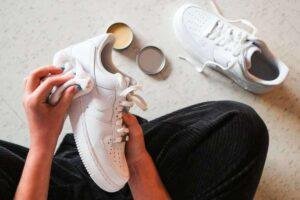
If your shoes squeak on U.S. floors, sidewalks, or office hallways, the sound usually comes from friction or moisture. The noise may come from the outsole rubbing the floor, the insole moving inside the shoe, or two shoe parts rubbing together.
Start by finding the source. Walk slowly on a clean, dry surface and listen closely. Then dry the shoes, tighten loose parts, and treat the rubbing area with a method that fits the shoe material. Most squeaks stop with simple home care, but a loose sole or damaged shoe may need professional repair.

Find Out Why Your Shoes Squeak
The best fix depends on where the sound starts. Do not apply powder, oil, or conditioner until you know which part is making the noise.
Try these checks:
- Walk on several surfaces. Test carpet, tile, hardwood, and concrete. If the shoe squeaks only on smooth floors, the outsole may be rubbing against the floor.
- Press and twist the shoe by hand. Squeeze the sole, bend the toe, and flex the heel. A squeak during this test may point to a loose sole or internal part.
- Remove the insole if it is removable. Walk a few steps without it, if the shoe remains safe to wear. If the sound stops, the insole or footbed is likely the cause.
- Check for moisture. Look for damp fabric, sweat, wet insoles, or water trapped between layers.
- Inspect the shoe. Look for peeling edges, loose stitching, cracked rubber, worn tread, or a heel that shifts.
Common causes include:
| Squeak source | Typical clue | Best first step |
|---|---|---|
| Outsole and floor | Noise occurs only on smooth floors | Clean and dry the outsole |
| Insole and footbed | Noise changes or stops when the insole is removed | Dry or stabilize the insole |
| Tongue, laces, or upper | Noise occurs while the shoe bends | Adjust laces and use a suitable conditioner |
| Wet interior | Sound began after rain, washing, or heavy use | Air-dry the shoe fully |
| Loose sole or heel | Squeak occurs during hand flexing | Stop heavy use and seek repair |
A squeak is not always a sign of poor quality. Some rubber soles grip polished floors so firmly that small movements create sound. However, a new squeak that comes with looseness, pain, or visible damage deserves closer attention.
Dry the Shoes Before Trying Other Fixes
Moisture is one of the easiest causes to correct. Water, sweat, and humidity can make leather, fabric, foam, and rubber rub against each other.
Follow these steps:
- Remove the laces and removable insoles.
- Wipe away surface water with a clean towel.
- Open the shoes as much as possible.
- Let them air-dry in a well-ventilated room.
- Place plain paper inside to absorb moisture. Replace it when damp.
- Wait until the shoe is fully dry before wearing it again.
Do not place most shoes on a radiator, heating vent, or high-heat dryer. Strong heat can warp rubber, shrink leather, weaken glue, and damage foam. If a shoe maker allows machine drying, use the lowest safe setting. otherwise, air-drying is the safer choice.
For leather shoes, let the leather dry slowly. Afterward, apply a small amount of a leather product made for that type of leather. Test it on a hidden spot first. Do not use leather conditioner on suede or nubuck unless the product label says it is suitable.
For athletic shoes, clean and dry the insoles separately. Avoid sealing damp shoes in a gym bag, car trunk, or plastic container. Trapped moisture can keep the squeak going and may create an odor.
Stop an Insole From Rubbing
If the squeak disappears when you remove the insole, the insole is moving against the footbed. This often happens when the insole is damp, loose, worn, or slightly curled.
Try this order:
- Dry the insole and shoe separately.
- Put the insole back in the correct position. Make sure its heel sits fully against the heel cup.
- Check for wrinkles or curled edges. Replace an insole that no longer lies flat.
- Use a thin, non-slip layer if needed. A shoe-specific insole grip or thin insert can reduce movement.
- Trim only replacement inserts made for trimming. Follow the printed guide and avoid cutting the original footbed.
A small amount of cornstarch may help absorb moisture under some removable fabric insoles. Use very little, keep it away from the outsole, and remove any excess. Powder can make the shoe slippery if it reaches the tread or floor.
Avoid thick layers of powder or paper. They can change the shoe’s fit and reduce foot support. Do not add anything under an insole if it causes pressure, numbness, heel movement, or pain.
If the insole is glued in place, do not force it out. Pulling it free can damage the shoe. Instead, dry the shoe and ask the manufacturer or a shoe repair professional about the correct fix.
Fix a Squeaky Outsole
A rubber or synthetic outsole may squeak because it grips a smooth floor. Dirt, cleaning residue, or moisture can make the problem worse.
Clean the outsole first:
- Brush away grit with a soft brush.
- Wipe the tread with a damp cloth and mild soap.
- Remove soap with a clean, damp cloth.
- Dry the outsole completely.
- Test the shoe again on the surface where it squeaked.
Do not put oil, petroleum jelly, cooking spray, or WD-40 on the outsole. These products may reduce traction and create a fall risk. They can also stain floors, damage some materials, or interfere with adhesives.
If the outsole squeaks only on a particular indoor floor, the shoe may not be defective. Polished tile, sealed wood, and some gym floors can create more noise than carpet or rough concrete. In that case, cleaning the sole may help, but it may not remove the sound completely.
Do not sand the sole as a first step. Sanding can reduce tread depth and traction. It may also damage a warranty or make the shoe unsafe on wet surfaces.
Reduce Noise From Leather, Laces, and Shoe Uppers
Leather shoes can squeak when the tongue, eyelets, quarters, or other panels rub as the shoe bends. Tight laces can increase pressure and movement around these parts.
Try these changes:
- Loosen the laces slightly across the top of the foot.
- Lace the shoe again so the tongue lies flat.
- Check whether the tongue is folded or rubbing against an eyelet.
- Apply a leather conditioner only if the shoe is smooth leather and the product is approved for that leather.
- Use a suede or nubuck treatment for those materials instead of standard leather conditioner.
- Wear the shoes for short periods while the material becomes more flexible.
Use a small amount of conditioner. Too much can soften leather, darken its color, leave a residue, or affect the finish. Always test the product in a hidden area.
For fabric or synthetic uppers, avoid oils unless the manufacturer specifically approves them. A cleaner made for the material is usually safer. If the sound comes from a loose lace or metal eyelet, replacing the lace or having the eyelet repaired may solve the problem.
Repair a Loose Heel or Sole
A squeak that happens when you bend the shoe by hand may signal a loose component. The outsole, midsole, heel, shank, or internal support piece may be shifting.
Look for:
- A sole edge that lifts from the upper
- A heel that moves from side to side
- A visible gap in the sole
- Cracks near the heel or toe
- Stitching that has opened
- A clicking or squeaking sound inside the shoe
Do not keep wearing the shoe for long walks if the sole or heel is loose. The shoe may lose traction or support without much warning.
A shoe repair professional can often reattach a loose sole or heel. Contact the manufacturer first if the shoe is new or still covered by a warranty. Do not use household super glue as a quick fix. It can become brittle, stain the material, make later repairs harder, and create a stiff spot.
Some repair adhesives are made for footwear, but the correct adhesive depends on the materials and the location of the damage. A professional can prepare the surfaces and use the right product.
A Simple Troubleshooting Order
Use this order when you want the fastest safe approach:
- Find the sound. Test the floor, insole, upper, and sole by hand.
- Dry every removable part. Let the shoe and insole dry apart.
- Clean the outsole. Remove dirt and soap residue.
- Stabilize the insole. Reposition it or use a thin shoe-specific grip.
- Adjust the laces. Reduce rubbing around the tongue and eyelets.
- Condition only the right material. Patch-test leather products.
- Inspect for damage. Stop if the heel or sole shifts.
- Seek repair or replacement. Use professional help when the problem is structural.
The right fix should make the shoe quiet without making it slippery, tight, unstable, or painful. A silent shoe is not a successful repair if it no longer supports your foot.
What Not to Do
Several popular quick fixes can create a bigger problem.
Do not spray oil on the outsole
Oil may quiet the squeak for a short time, but it can sharply reduce traction. It may also transfer to floors and damage rubber or glue.
Do not use high heat
Heat can shrink leather, warp foam, loosen glue, and change the shape of the shoe.
Do not add thick padding
A thick insert can crowd the toes, lift the heel, and change how the foot sits in the shoe.
Do not ignore pain
Squeaking with heel movement, rubbing, numbness, or foot pain may mean the shoe no longer fits or supports you well.
Do not mask a loose sole
A powder or conditioner cannot repair a detached outsole. Continued use may worsen the damage.
When Should You Replace the Shoes?
Consider replacement when the shoe has major tread loss, a cracked midsole, a shifting heel, repeated sole separation, or damage that affects balance. Repair may be worthwhile when the upper is in good shape and the damaged part can be securely replaced.
A shoe is more likely to need replacement if:
- The outsole is worn smooth.
- The shoe tilts when placed on a flat surface.
- The heel rocks from side to side.
- The foot slides inside even after proper lacing.
- The shoe causes pain or blisters.
- A repair has failed more than once.
If the shoe is new, do not modify it right away. Document the squeak with a short recording, check the return policy, and contact the seller or manufacturer. A warranty claim may be better than a home repair.
Key Takeaways
- Find the squeak source before applying any product.
- Dry the shoe and insole fully.
- Clean the outsole with mild soap and water.
- Use a thin insole grip if the insole shifts.
- Avoid oil, petroleum jelly, and WD-40 on the sole.
- Use heat only when the shoe maker specifically allows it.
- Have loose soles and heels repaired by a professional.
- Replace shoes when damage affects traction, fit, or stability.
Frequently Asked Questions
Why do my shoes squeak when I walk on tile?
Tile is smooth, so a rubber outsole can grip and release it with each step. Clean and dry the outsole first. If the shoe squeaks only on one indoor floor and has no damage, the noise may result from the floor-and-rubber combination rather than a defect.
How do I stop sneakers from squeaking?
Remove and dry the insoles, clean the outsoles, and check whether the insoles shift. If the sound continues, inspect the heel and sole for movement. Avoid oils because they can make athletic shoes slippery.
Can baby powder stop shoes from squeaking?
Powder may reduce moisture between a removable insole and the footbed, but it is not a universal fix. Use only a small amount, keep it off the outsole, and remove excess powder. A shoe-specific insole grip is often more controlled.
Why do my leather shoes squeak?
Leather panels, the tongue, laces, or eyelets may rub as the shoe bends. Adjust the laces and use a conditioner made for the specific leather. Test the product first, and never use standard leather conditioner on suede or nubuck.
Should I use WD-40 to stop shoe squeaks?
No. WD-40 and similar oily sprays can reduce traction, stain surfaces, damage some materials, and affect shoe adhesives. Clean, dry, and stabilize the rubbing parts instead.
What if my shoes still squeak after drying?
Test the shoes without the removable insoles, then flex them by hand. If the noise remains or you see a loose sole, heel, or internal part, stop using the shoes for demanding activity and consult the manufacturer or a shoe repair professional.
Conclusion
The safest way to stop squeaky shoes is to identify the source, remove moisture, clean the outsole, and stabilize any moving insole or upper part. Avoid oily sprays and high heat, since both can damage the shoe or reduce traction.
If the squeak comes with a loose heel, detached sole, or poor support, treat it as a repair issue rather than a noise problem. Start with drying and cleaning today, then reassess the shoe before your next long walk.
Rubel Miah is the Senior Editor at MyStyleGrid.com, where he brings a sharp editorial eye and an unshakable love for fashion to everything he does. A true style addict, Rubel lives and breathes trends, from streetwear to high fashion, and has a knack for turning inspiration into impactful stories. With years of experience in fashion journalism and digital media, he curates content that empowers readers to express themselves through style. When he’s not editing features or forecasting the next big thing, you’ll find him hunting down vintage pieces or capturing street style moments around the city.