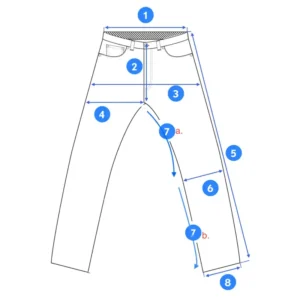
A 6-foot man will often wear pants with a 32- to 34-inch inseam, but height alone does not set the right length. Your leg length, rise, shoe height, pant style, and preferred break matter more than your height.
For a quick starting point:
- Slim or average build: Try a 32-inch inseam first.
- Long legs or a low-rise style: Try a 34-inch inseam.
- Dress pants: Choose a length that creates a slight break over the shoe.
- Jeans and chinos: Aim for little or no break, depending on the cut.
- Cropped or casual pants: The hem may sit above the shoe by design.
The best test is simple: measure a pair of pants that fits you well, then compare that measurement with the brand’s size chart. US brands can vary by one or more inches, even when the label shows the same size.

The short answer: 32 or 34 inches is the usual range
Most 6-foot men fall near a 32- or 34-inch inseam, yet there is no universal “6-foot pant length.” Two men can have the same height but different leg lengths. One may have a longer torso, while the other may have longer legs.
Your inseam is the distance from the crotch seam to the bottom of the leg. It is more useful than height when choosing pants. Waist size and inseam are separate measurements, so a label such as 34 × 32 usually means a 34-inch waist and a 32-inch inseam.
A useful starting table looks like this:
| Body shape or preference | Common starting inseam |
|---|---|
| Shorter legs or regular fit | 30–32 inches |
| Average proportions | 32 inches |
| Long legs or tall slim build | 34 inches |
| Very long legs | 36 inches |
| Cropped casual style | 28–30 inches |
These are starting points, not fixed rules. The cut also changes the result. A slim pair may need a shorter inseam because extra fabric gathers at the ankle. A wide-leg pair may need more length so the hem falls cleanly.
What does the correct pant length look like?
The correct length depends on the amount of fabric that reaches your shoe. Tailors and clothing brands often describe this as the break.
A break is the fold or crease formed when the front of the pant leg meets the shoe. There are four common options:
- No break: The hem ends just above the shoe with little or no fold.
- Slight break: The hem makes one small fold. This is the safest choice for many trousers.
- Medium break: The hem creates a clear fold and covers more of the shoe.
- Full break: The fabric folds several times or rests heavily on the shoe.
For most men, a slight break gives the most balanced look. It works well for office trousers, wool pants, and many formal outfits. A no-break hem can look sharper with slim trousers, loafers, or modern tailoring.
Jeans and casual pants often look better with little break. If the hem bunches in several folds above the shoe, the pants are probably too long. If the hem rises far above the ankle when you stand, they may be too short unless the cropped look is intentional.
The back of the hem matters too. For dress pants, the hem should generally touch or lightly cover the top of the shoe. It should not drag on the floor or cover the entire heel.
How to measure your ideal inseam at home
Measuring a well-fitting pair of pants is usually more reliable than measuring your body alone. Clothing measurements can differ from the labeled size, and some pants are prewashed or designed with extra fabric.
Method 1: Measure pants that already fit
Use a pair that has the length you like.
- Lay the pants flat on a table or clean floor.
- Smooth the legs without stretching the fabric.
- Fold one leg over the other.
- Find the crotch seam where the front and back seams meet.
- Measure in a straight line from the crotch seam to the bottom of the inside leg.
- Record the result in inches.
- Compare it with the brand’s size chart.
Do not measure from the waistband to the hem. That gives the outseam, which includes the rise and does not tell you the inseam.
Also, do not follow the outer side seam. The outer seam runs from the waist to the ankle and includes the full rise. The inseam follows the inner leg.
Method 2: Measure your body
If you do not have a pair that fits:
- Stand upright in the shoes you plan to wear.
- Wear thin, close-fitting clothing.
- Place a book between your legs.
- Hold the book level and snug against the crotch.
- Measure from the top of the book to the floor.
- Keep the tape straight and ask another person to help if possible.
This method gives an estimate. It does not account for the pant rise, fabric weight, leg opening, or the break you want. For that reason, compare the result with a pair you already like before ordering expensive trousers.
How long should different types of pants be?
The right length changes with the type of pants and the shoes worn with them. A 32-inch inseam may look right in jeans but too short in dress pants if the two garments have different cuts.
Dress pants
Dress pants usually look best with a slight break. The hem should cover part of the shoe but should not touch the floor. A classic straight-leg trouser can take a little more length than a narrow trouser.
For a 6-foot man, a 32- or 34-inch inseam may work. Choose based on where the hem lands when you stand and walk in your dress shoes.
Suit trousers
Suit trousers should coordinate with the jacket and the level of formality. A traditional suit often uses a slight or medium break. A modern slim suit may use little or no break.
Do not judge suit trouser length while wearing socks. Try the trousers with the shoes that you will wear to the event. The heel height and shape of the shoe can change where the hem falls.
Jeans
Jeans can use no break, a slight break, or a small amount of stacking. The right option depends on the cut:
- Straight-leg jeans: A slight break often works well.
- Slim jeans: Little break keeps the leg line clean.
- Relaxed or wide jeans: A little more length can prevent the hem from looking short.
- Boot-cut jeans: The hem should cover part of the boot and fall close to the heel.
- Raw or unsanforized denim: Check shrinkage information before choosing a length.
Some denim shrinks after washing. Follow the care label and check whether the listed size is measured before or after washing.
Chinos
Chinos usually look clean with a slight break or no break. For a casual outfit with sneakers, the hem can sit close to the top of the shoe. For a business-casual outfit with loafers or leather shoes, a small break often looks more balanced.
Cargo pants and work pants
Work pants often need extra room and length for movement. A hem that is slightly longer may be practical when you kneel, climb, or wear work boots. Avoid excessive fabric that can catch underfoot.
Cargo pants can also be worn with a shorter hem, but the choice should match the design. A tapered cargo pant may look best above the shoe, while a straight work pant may need more length.
Use your shoes to check the length
Shoes can change the visual balance of pants. A low-profile sneaker exposes more of the ankle area, while a boot fills the space under the hem. This is why you should check pant length with the shoes you plan to wear.
Use this simple guide:
| Shoes | Length approach |
|---|---|
| Low-top sneakers | No break or slight break |
| Loafers | No break or slight break |
| Dress shoes | Slight break is a safe default |
| Chelsea boots | Slight break or clean no-break hem |
| Work boots | Enough length to cover the boot without dragging |
| High-top sneakers | A hem near the top of the shoe often works |
If you wear one pair of pants with many shoes, choose a moderate length. A slight break is more flexible than an extra-short hem. If you mainly wear one shoe type, tailor the pants to that shoe.
The hem should stay in place as you walk. If it rises several inches above the shoe, the inseam may be too short, the leg opening may be too narrow, or the fabric may be shrinking.
How your build changes the answer
Height gives only a rough starting point. Your proportions and the cut of the pants can move the correct inseam up or down.
Long legs
If your legs are long compared with your torso, a 34-inch inseam may fit even if your waist is average. A shorter inseam can make the pants look cropped when you stand or sit.
Shorter legs
If you have a longer torso and shorter legs, a 30- or 32-inch inseam may look better. Do not choose a 34-inch inseam simply because you are 6 feet tall.
Athletic thighs or calves
A tight leg can pull the fabric upward and make pants appear shorter. Check the fit around the seat, thighs, and calves before changing the length. If the pants are too tight, hemming will not solve the main problem.
Slim build
Slim pants often look better with a clean hem and little stacking. Extra length can create wrinkles around the ankle. A 32-inch inseam may be enough for a tall, slim man, especially with low shoes.
Larger or relaxed build
A relaxed trouser can handle a little more fabric at the hem. Still, the hem should not pool on the floor. A slight break usually keeps the outfit neat without making the leg look too short.
Why labeled inseams are not always exact
A label is a guide, not a guarantee. Brands may measure pants in different ways, and the finished garment can vary because of fabric, washing, and construction.
Common reasons include:
- The brand rounds the measurement.
- The garment was washed before sale.
- Stretch fabric changes during wear.
- The pants have a curved or shaped leg.
- The rise changes how the hem sits.
- The style includes intentional stacking.
- The inseam was measured before alterations.
- The cut is designed to be worn cropped or long.
Always check the brand’s US size chart and return policy before ordering. If a chart lists body measurements rather than garment measurements, use it as a fit guide rather than treating the numbers as the finished inseam.
If the waist and seat fit but the length is wrong, alteration is often simple. A tailor can usually shorten trousers and many jeans. Lengthening depends on whether the garment has extra hem allowance. Jeans with a distressed hem may need a specialized alteration to keep the original edge.
Common mistakes when choosing pant length
The most common mistake is choosing an inseam from height alone. Height can suggest a range, but it cannot show where your crotch, knee, and ankle sit.
Avoid these errors:
- Measuring from the waistband instead of the crotch seam.
- Checking length while barefoot.
- Trying pants with shoes that are much different from your usual shoes.
- Ignoring shrinkage in denim or cotton.
- Judging the front but not the back hem.
- Using a loose or stretched pair as your measurement sample.
- Assuming every brand’s 32-inch inseam is identical.
- Buying a longer inseam to gain room in the waist.
- Confusing a fashion crop with a pants-shortening problem.
- Ignoring bunching caused by a tight thigh or narrow ankle.
When you try pants on, stand naturally and walk a few steps. Sit down as well. A good length should look right while standing and remain comfortable when you move.
A practical fit check for a 6-foot man
Use this five-point check before keeping or altering pants:
- Waist: The pants stay up without a belt pulling them tight.
- Seat and thighs: You can sit and walk without strong pulling lines.
- Knee and leg: The seams sit in the right place and the fabric does not twist.
- Hem: The length matches the style and creates the break you want.
- Shoes: The hem works with the shoes you will actually wear.
If the waist, seat, and thighs fit but the hem is wrong, the pants are good candidates for alteration. If the fabric pulls across the seat or thighs, choose a different size or cut before changing the length.
For online shopping, measure a favorite pair and compare its inseam with the garment’s product chart. If the site does not provide an inseam, contact the seller before ordering. This step is more dependable than guessing from a model’s height.
Frequently asked questions
Is a 32-inch inseam too short for a 6-foot man?
No. A 32-inch inseam is common for a 6-foot man. It may fit well if you have average or shorter leg proportions, wear slim pants, or prefer little break. Check the hem with your shoes rather than judging the number alone.
Is a 34-inch inseam better for a 6-foot man?
A 34-inch inseam may be better if you have long legs, wear a lower-rise pant, or want a slight break with boots or dress shoes. It can be too long if it creates heavy folds or touches the floor.
Should pants touch the floor when standing?
No. Pants should not drag on the floor. Dress pants may cover part of the shoe, while jeans and chinos may end near the top of the shoe. The correct length depends on the style and the break you want.
Can a tailor fix pants that are too long?
Usually, yes. Shortening is a common alteration. Lengthening is more limited because it depends on extra fabric inside the hem. Denim with a special wash or original hem may require a more careful alteration.
Should pants be longer with boots?
Often, yes. Boots are taller and may need more coverage than low sneakers. Aim for enough length to cover the boot without producing large folds or dragging at the heel.
Final recommendation
For a 6-foot man, start with a 32-inch inseam for an average build and a 34-inch inseam for longer legs or a longer, more traditional break. Then check the pants with your usual shoes.
The best length is the one that gives the intended break, stays off the floor, and remains comfortable when you walk and sit. Measure a pair that already fits, compare that measurement with the brand’s US size chart, and have the pants altered if the fit is right everywhere else.
Rubel Miah is the Senior Editor at MyStyleGrid.com, where he brings a sharp editorial eye and an unshakable love for fashion to everything he does. A true style addict, Rubel lives and breathes trends, from streetwear to high fashion, and has a knack for turning inspiration into impactful stories. With years of experience in fashion journalism and digital media, he curates content that empowers readers to express themselves through style. When he’s not editing features or forecasting the next big thing, you’ll find him hunting down vintage pieces or capturing street style moments around the city.