
The best dress pants fit your waist, drape cleanly, resist wrinkles, and suit your work and lifestyle.
Choosing the best dress pants is less about chasing one famous brand and more about judging fabric, fit, rise, construction, and care needs. This guide explains how experienced shoppers and tailors assess dress pants, with practical advice for work, weddings, travel, and everyday smart style.
What makes the best dress pants?
The best dress pants balance comfort, structure, and appearance. They should look sharp without feeling stiff, hold their shape during the day, and work with several shirts, jackets, and shoes.
A well-made pair usually has these traits:
• A clean waistband that sits securely without pinching
• A smooth front with no pulling near the pockets or fly
• A straight, tapered, or gently relaxed leg
• Fabric with enough weight to drape well
• Strong stitching at stress points
• A hem that works with your shoes
• A color that matches your wardrobe
The best dress pants do not need to be expensive. A $70 pair with a good fit can look better than a $300 pair that is too tight or too long. Fit is the frame, while fabric and construction complete the picture.

Best dress pants by use
Different situations call for different materials and cuts. The best dress pants for an office may not be the best dress pants for a summer wedding or a long flight.
Best dress pants for work
For a traditional office, choose wool trousers in navy, charcoal, or medium gray. Worsted wool looks smooth and professional, while a small amount of stretch can improve comfort.
For a business casual office, cotton chinos, wool blend pants, or refined technical trousers may work well. Avoid very shiny fabric, loud patterns, and extremely slim cuts.
Good work options include:
• Charcoal wool trousers for a formal office
• Navy trousers for easy outfit matching
• Dark gray stretch pants for long workdays
• Cotton twill pants for relaxed business casual settings
Best dress pants for weddings
Weddings allow more texture and color than most offices. Wool trousers, linen blends, and cotton dress pants can all work, depending on the season and dress code.
For a formal wedding, wear dark wool trousers with a matching or contrasting blazer. For a summer event, try beige, light gray, olive, or navy linen blend pants.
The best dress pants for a wedding should look polished in photographs. Avoid thin fabric that shows pocket outlines or wrinkles badly after sitting.
Best dress pants for travel
Travel pants should resist wrinkles, dry quickly, and allow easy movement. A wool blend or performance fabric often works better than pure cotton for long trips.
Look for:
• A moderate amount of stretch
• A secure waistband
• Deep front pockets
• A fabric that does not attract lint
• A clean design without large cargo pockets
The best dress pants for travel should still look like trousers, not gym clothes. This distinction matters when you move from an airport to a meeting or dinner.
Best dress pants for summer
Linen, cotton, tropical wool, and lightweight blends are strong choices for warm weather. Linen feels cool but wrinkles more easily. Tropical wool resists wrinkles better and keeps a formal look.
Light gray, tan, stone, cream, and pale blue can make summer outfits feel lighter. Choose a lined or partially lined pair when you want more structure, but remember that a full lining may feel warmer.
Best dress pants for winter
For cold weather, choose flannel, heavier wool, corduroy, or brushed cotton. These fabrics add warmth and give outfits a rich texture.
Charcoal flannel trousers are especially useful. They pair with navy blazers, knit sweaters, white shirts, and dark brown shoes. The best dress pants for winter should feel substantial without becoming bulky under a coat.

Best fabrics for dress pants
Fabric affects comfort, drape, breathability, durability, and care. Understanding the main choices makes it easier to find the best dress pants for your needs.
Wool
Wool remains one of the most useful trouser fabrics. It breathes well, resists wrinkles, and hangs neatly from the waist.
Common wool choices include:
• Worsted wool: Smooth, light, and formal
• Flannel wool: Soft, warm, and slightly textured
• Tropical wool: Lightweight and breathable
• Merino wool: Fine, soft, and comfortable against the skin
A wool trouser labeled Super 100s, Super 120s, or Super 150s refers to fiber fineness. A higher number does not always mean better. Very fine wool can feel luxurious but may be less durable for daily wear.
Cotton
Cotton dress pants are comfortable and easy to clean. Chinos are the most common cotton option, but cotton twill trousers can look more formal when they have a pressed crease and a clean waistband.
Cotton tends to wrinkle more than wool. It may also fade or lose shape after repeated washing. For that reason, cotton is often best for business casual outfits rather than strict formal dress.
Linen
Linen is cool and breathable. It is a natural choice for hot weather, beach weddings, and relaxed summer events.
Its main weakness is wrinkling. That is not always a flaw. Linen wrinkles are part of the fabric’s character, but heavily creased linen may look too casual for a formal office.
Polyester and performance blends
Synthetic blends can offer stretch, durability, and wrinkle resistance. They are useful for commuting and frequent travel.
However, some polyester pants feel warm or look slightly shiny. Check the fabric in natural light before buying. A matte finish usually looks more refined.
Stretch fabrics
A small amount of elastane or spandex can improve comfort. Around 1% to 4% stretch is often enough for movement without making pants look like athletic wear.
Too much stretch can cause the knees and seat to bag. The best dress pants with stretch should recover their shape after sitting and walking.
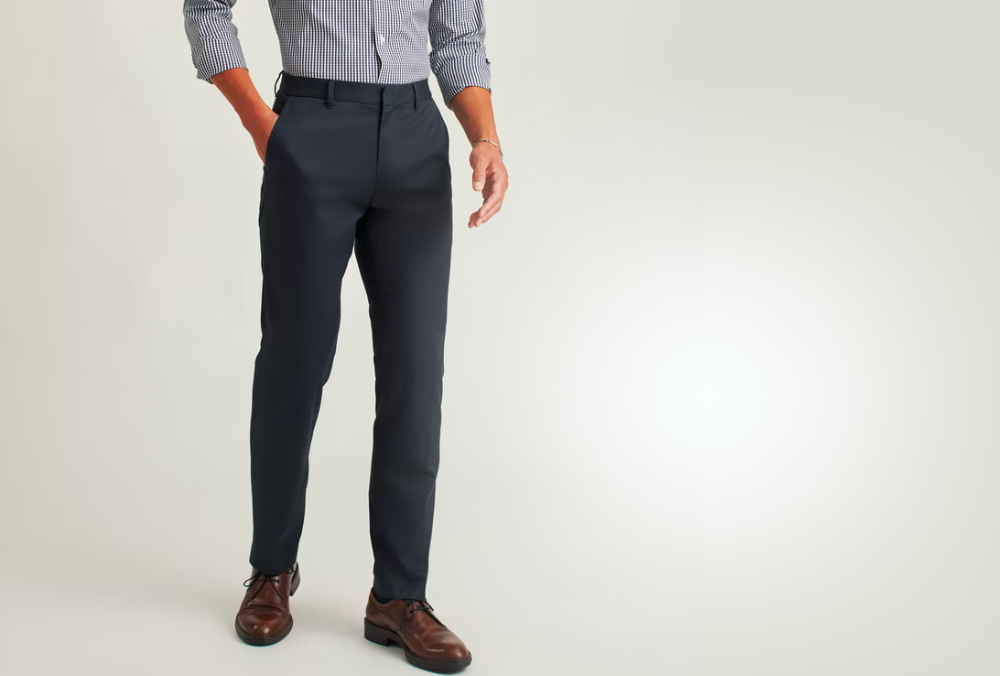
How dress pants should fit
Fit is the most important factor when choosing the best dress pants. A tailor can adjust some areas, but not every problem can be fixed easily.
Waist
The waistband should sit securely without a belt. You should be able to place one or two fingers between your body and the waistband.
If you need to tighten the belt several inches, the pants are likely too large. If the waistband digs into your skin while sitting, choose a larger size or a different rise.
Seat and hips
The seat should lie smoothly against your body. Horizontal wrinkles usually suggest that the pants are too tight. Excess fabric under the seat may mean they are too loose.
Do not judge the fit only while standing. Sit, walk, and climb a few steps in the fitting room if possible.
Rise
The rise is the distance from the crotch seam to the top of the waistband. A mid rise suits many body types and works well with tucked shirts.
Low rise pants can look modern but may feel uncomfortable when sitting. High rise trousers can create a longer leg line and pair well with tucked shirts or jackets.
Thigh
You should be able to pinch a small amount of fabric at the thigh. Tightness across the upper leg can create diagonal wrinkles and limit movement.
Athletic builds often need more room in the seat and thigh. Some brands offer athletic, classic, or relaxed cuts for this reason.
Leg shape
Straight legs offer a timeless look. Slim legs look modern but should never cling to the calf. Tapered pants narrow slightly toward the ankle and work well with streamlined shoes.
Extremely wide or narrow pants can work as fashion choices, but they require more care with jacket proportions and footwear.
Break
The break is the fold where the pant leg meets the shoe.
• No break: A clean, modern finish with little fabric at the shoe
• Slight break: A small fold that works for most wardrobes
• Full break: More fabric at the shoe and a traditional appearance
For most people, a slight break is the safest choice. The best dress pants should not bunch into several heavy folds above the shoe.

Pleated or flat-front dress pants?
Both styles can look excellent. The right choice depends on your body, wardrobe, and personal taste.
Flat-front pants have a clean, simple appearance. They often suit slim or straight body types and work well with modern jackets.
Pleated pants provide extra room at the waist and thighs. They can be more comfortable for sitting and walking. Single pleats usually look more current and easier to style than multiple pleats.
Choose pleated pants when:
• You prefer a higher rise
• You need more room in the thighs
• You wear classic or relaxed tailoring
• You want a softer, more traditional silhouette
Choose flat-front pants when:
• You like a streamlined shape
• You wear shorter or slimmer jackets
• You want a simple business wardrobe
Pleats are not automatically old-fashioned. Poor fit makes pleats look messy, while good proportions make them look intentional.

The best colors for a dress pants wardrobe
A small color range can create many outfits. Start with neutral shades before buying unusual colors.
Gray
Gray is one of the most useful trouser colors. Charcoal works with formal jackets, while medium gray pairs well with navy, brown, black, and many patterned shirts.
Navy
Navy dress pants create a polished look without copying a full suit. They work with gray jackets, tan sport coats, sweaters, and white shirts.
Khaki and tan
Tan pants suit spring and summer outfits. They look best with navy, blue, white, olive, and brown.
Black
Black dress pants are useful for formal settings and evening outfits. They can look severe in casual combinations, so balance them with texture, such as a knit polo or wool jacket.
Olive and brown
Olive and brown add depth to a wardrobe. These colors are less formal than gray or navy but work well in business casual settings.
A practical starter wardrobe includes:
-
Charcoal wool trousers
-
Navy trousers
-
Medium gray trousers
-
Tan cotton or linen blend pants
-
Dark brown or olive pants for casual outfits
Best dress pants brands and shopping options
No single brand makes the best dress pants for every person. Brands use different patterns, fabrics, rises, and size systems. Try to compare fit and construction rather than relying on a label.
Budget-friendly options
At lower prices, focus on fabric feel, stitching, and alteration potential. Department stores and mainstream clothing brands often offer useful wool blends, cotton trousers, and stretch pants.
Check for:
• A firm waistband
• Even seams
• Secure buttons
• A smooth zipper
• Extra hem allowance
• A fabric that does not look overly shiny
Mid-range options
Mid-range brands often provide better fabric, more consistent sizing, and stronger construction. This category is a good place to look for daily office trousers and versatile wool pants.
Look for half lining, natural fibers, reinforced pockets, and a clean interior finish. These details do not guarantee perfection, but they often signal better attention to construction.
Premium options
Premium trousers may use finer wool, better pattern cutting, hand finishing, or more careful quality control. Their value is highest when the fit is already close to your body.
Do not pay more simply for a luxury label. A premium pair still needs the right rise, thigh room, leg shape, and length.
Made-to-measure and tailoring
Made-to-measure trousers can solve fit problems that ready-to-wear pants cannot. They may be especially helpful for people with a large difference between waist and thigh measurements.
The best dress pants from a tailor are not automatically perfect. Be clear about how you sit, walk, and wear your clothes. A tailor needs that information to balance comfort and shape.

How to check dress pants before buying
A few minutes of inspection can prevent an expensive mistake.
-
Check the fabric in bright light. Look for uneven color, shine, or thin areas.
-
Put your hands in the pockets. The pocket openings should lie flat.
-
Sit down. Watch for tightness at the waist, hips, and thighs.
-
Walk several steps. The trousers should move without pulling.
-
Inspect the seams. Stitching should be straight and secure.
-
Test the waistband. It should feel firm but not restrictive.
-
Check the hem. Make sure there is enough fabric for the desired length.
-
Look at the back pockets. They should sit at an even height.
-
Match the pants with your usual shoes. The hem may look different with sneakers, loafers, or boots.
One common mistake is buying pants based only on the waist size. Two pairs marked 34 can fit very differently because brands use different blocks and measurements.
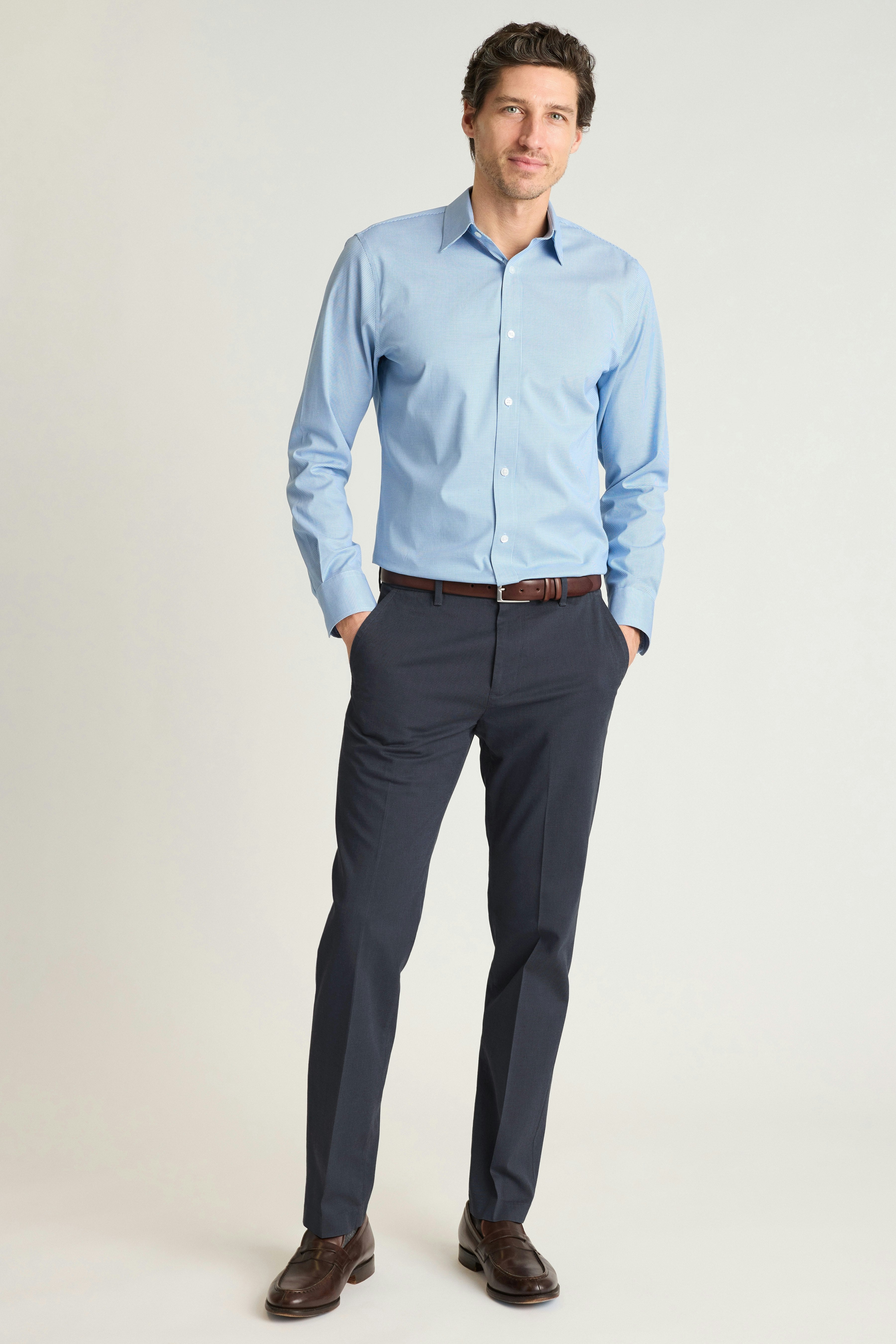
Tailoring the best dress pants
Small alterations can make average pants look custom-made. The most useful changes are usually simple.
A tailor can often adjust:
• Waist size
• Trouser length
• Leg taper
• Seat fit
• Pocket placement in limited cases
Length is usually the first alteration to consider. The correct hem depends on the trouser width, shoe height, and desired break.
Waist changes are also common, but major adjustments can disturb the pocket position and balance. If the seat and thighs are wrong, it may be better to try another cut.
Avoid buying pants that are dramatically too small and hoping a tailor can fix them. Letting out fabric is limited by the seam allowance, and tight trousers may still have the wrong shape.
How to care for dress pants
Good care helps the best dress pants keep their shape and color.
Hang trousers by the waistband or use a quality clamp hanger. Allow them to rest after wear so moisture can evaporate and wrinkles can relax.
Follow the care label. Wool trousers often need professional cleaning, but they should not be dry-cleaned after every wear unless necessary. Too much cleaning can shorten the life of the fibers.
Useful habits include:
• Rotate several pairs instead of wearing one pair daily
• Brush away dust after use
• Air pants before placing them in a closet
• Steam light wrinkles when the care label permits
• Empty pockets before washing or cleaning
• Repair loose buttons early
• Store trousers in a cool, dry place
Do not iron directly over a shiny wool surface. Use a pressing cloth and low heat when ironing is appropriate.
Common mistakes when buying dress pants
Many poor purchases come from small errors rather than bad products.
Choosing style over comfort
A very slim cut may look sharp in a mirror but become uncomfortable after hours of sitting. Clothing should support your day, not turn every meeting into a test of endurance.
Ignoring the rise
A low rise can cause a shirt to untuck and a waistband to slide when you sit. Try the pants in motion before deciding.
Buying the wrong fabric for the climate
Heavy wool in a hot office can feel miserable. Thin synthetic fabric may feel clammy in warm weather. Match the fabric to your environment.
Treating stretch as a substitute for fit
Stretch can improve movement, but it cannot correct a poor pattern. If the pants pull, sag, or twist, try a different cut.
Failing to alter the hem
Unaltered pants often come too long. A simple hem can change the entire appearance of an outfit.
Buying too many colors too soon
Start with gray and navy. Once those work well, add tan, brown, olive, or a subtle pattern.
How to style the best dress pants
Dress pants become more useful when they work with several types of clothing.
For a formal office, pair charcoal trousers with a white or pale blue shirt, a navy blazer, and black or dark brown shoes.
For business casual style, wear navy trousers with a knit polo, Oxford shirt, or fine-gauge sweater. Loafers, derbies, and clean leather sneakers can all work when the office allows them.
For a smart weekend outfit, try tan trousers with an Oxford shirt, denim jacket, or textured overshirt. Brown loafers or minimal sneakers keep the look relaxed.
For evening wear, choose dark gray or black trousers with a fine knit sweater, dress shirt, or unstructured jacket. Texture helps prevent the outfit from looking flat.
A simple styling rule is to balance shapes. Slim trousers work well with a closer-fitting jacket, while fuller trousers often look better with a jacket that has some structure and length.
Are expensive dress pants worth it?
Expensive dress pants can be worth the price when they offer better fabric, construction, fit, or repair service. They are not worth it when the main difference is a logo.
Consider the cost per wear. A $150 pair worn twice a week for several years may offer more value than several $50 pairs that lose shape quickly.
Still, price does not predict fit. Read the fiber content, inspect the seams, and use the return policy. If possible, compare the same style after sitting, walking, and wearing your usual shoes.
The best dress pants are the pair you can wear often, maintain easily, and feel confident in. That value is personal and depends on your lifestyle.
Frequently Asked Questions: What Are the Best Dress Pants?
What are the best dress pants for everyday work?
Medium gray, charcoal, and navy wool or wool blend trousers are strong everyday choices. They offer a professional look and pair with many shirts and jackets.
Are wool pants better than polyester pants?
Wool usually offers better breathability, drape, and wrinkle recovery. Polyester blends can be more affordable, durable, and easy to care for, so the better choice depends on your climate and routine.
Should dress pants be slim or straight?
Dress pants should follow your leg without clinging. Slim, straight, and gently tapered cuts can all work, but comfort and clean drape matter more than the label.
How long should dress pants be?
A slight break is the safest length for most wardrobes. The hem should touch or lightly rest on the shoe without creating several folds of fabric.
Can dress pants be worn without a suit jacket?
Yes. Navy, gray, tan, and textured trousers work well with shirts, sweaters, polos, and casual jackets. Avoid wearing suit trousers as separates if the fabric has a strong matching-suit sheen.
How many pairs of dress pants should a man own?
A useful starting wardrobe has three pairs: charcoal, navy, and medium gray. Add tan, brown, olive, or seasonal fabric after you know which fits and colors you wear most.
Can women wear traditional men’s dress pants?
Yes, if the rise, waist, hip, and leg shape suit the wearer. Many women prefer the roomier pockets and structured cut of traditional men’s trousers, while women’s tailoring may offer a better hip-to-waist shape.
Conclusion
The best dress pants combine a secure waist, comfortable rise, clean drape, suitable fabric, and a hem that works with your shoes. Start with charcoal, navy, and gray, then choose wool for polish, cotton for relaxed style, linen for heat, and performance blends for travel.
Try every pair while sitting and walking, and budget for simple tailoring when needed. Use these checks the next time you shop, then build your wardrobe around the fits you trust. Explore more style guides, compare fabrics carefully, and share your favorite dress pants in the comments.
Madison Clark is a footwear expert and the voice behind MyStyleGrid.com. She specializes in honest shoe reviews, style tips, and practical guides to help readers find the perfect pair for any occasion. With years of experience in blogging and content creation, Madison makes footwear knowledge simple, stylish, and easy to follow.
One Response