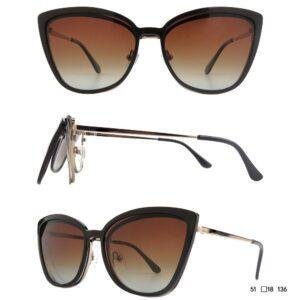
Yes. Sunglasses are good for your eyes when they block 99% to 100% of UVA and UVB rays. In the United States, the right pair can reduce glare, protect the eye’s surface, and lower long-term exposure to ultraviolet (UV) radiation.
Sunglasses do not make your eyes weaker or dependent on them. However, dark lenses without UV protection may not protect your eyes. For daily use in the U.S., look for labels that say “100% UV protection,” “UV400,” or “blocks 99%–100% of UVA and UVB.”

How sunglasses protect your eyes
Sunglasses protect your eyes by reducing UV exposure and cutting bright visible light. UV radiation is not the same as the light that helps you see. You cannot feel or see most UV rays, but repeated exposure can harm eye tissues over time.
The U.S. Food and Drug Administration (FDA), the American Academy of Ophthalmology (AAO), and the American Optometric Association (AOA) all support using UV-blocking eyewear outdoors.
UV radiation can affect several parts of the eye
Long-term exposure to UV radiation may contribute to:
- Cataracts: A clouding of the eye’s natural lens.
- Photokeratitis: A painful, temporary sunburn of the cornea, sometimes called “snow blindness.”
- Pterygium: A raised growth on the white part of the eye that can extend toward the cornea.
- Skin cancer around the eyes: The eyelids and nearby skin can receive significant sun exposure.
- Retinal damage: Intense or repeated light exposure may harm the retina, although the risk depends on the type and amount of exposure.
UV exposure is not the only cause of these conditions. Age, genetics, smoking, certain medicines, medical conditions, and other factors also matter. Sunglasses lower one source of exposure; they do not prevent every eye disease.
Sunglasses reduce glare and eye strain
Bright sunlight can make you squint. Reflected light from roads, water, snow, sand, and windows can be especially uncomfortable. Sunglasses reduce the amount of visible light that reaches your eyes, which may make outdoor tasks easier.
They may help reduce:
- Squinting
- Temporary discomfort
- Light sensitivity
- Glare while walking, boating, or driving
- Headaches linked to bright light in some people
Sunglasses do not cure headaches, migraines, or light sensitivity. If bright light causes new or severe symptoms, ask an eye-care professional for advice.
UV protection matters more than lens darkness
A very dark lens is not automatically a safe lens. Darkness controls visible light. UV protection depends on the lens material or its UV-blocking coating.
A dark lens without proper UV protection may allow your pupils to widen while still letting harmful UV rays reach the eye. This is why a cheap, clear or lightly tinted lens with verified UV protection can be safer than a very dark fashion lens with no reliable label.
What to look for when buying sunglasses
Choose sunglasses that block 99% to 100% of UVA and UVB rays. The label may also say “UV400,” which generally means the lenses block UV wavelengths up to 400 nanometers.
Use this checklist:
| Feature | What it does | What to know |
|---|---|---|
| 100% UVA/UVB protection | Blocks ultraviolet rays | The most important feature |
| UV400 | Indicates broad UV protection | Check that the claim comes from a reliable seller |
| Polarization | Cuts reflected glare | It does not automatically provide UV protection |
| Wraparound or large frames | Reduce light entering from the sides | Helpful near water, snow, and open roads |
| Impact-resistant lenses | Lower the chance of shattering | Useful for sports, work, and children |
| Comfortable fit | Helps you wear them consistently | Poor fit can cause pressure or slipping |
The American National Standards Institute (ANSI) publishes standards for protective eyewear. If you need eye protection for work, construction, laboratory tasks, or sports, ordinary sunglasses may not be enough. Look for eyewear rated for the specific hazard.
Polarized lenses: useful, but not a UV guarantee
Polarized lenses reduce glare from flat surfaces such as water, pavement, and snow. They can make driving, fishing, skiing, and boating more comfortable.
Polarization does not mean the lenses block UV rays. Read the label for UV protection separately. A lens can be polarized but provide poor UV protection, or provide UV protection without being polarized.
Some digital screens may look darker or distorted through polarized lenses. This can happen with certain vehicle displays, phones, and liquid-crystal screens. It does not usually mean the lenses are harmful.
Gray, brown, and other lens colors
Lens color changes how light looks, but it does not prove that a lens blocks UV.
- Gray lenses: Often preserve fairly natural color and work well for general outdoor use.
- Brown or amber lenses: May increase contrast in some settings.
- Green lenses: Can reduce brightness while keeping moderate color balance.
- Yellow lenses: May improve contrast in low-light conditions, but they are not a substitute for UV protection.
- Mirrored lenses: Reflect some visible light, but the mirror finish alone does not confirm UV protection.
Choose the color that feels comfortable for your activity. Confirm UV protection on the label.
Fit matters
Frames should sit close to your face without pressing on your temples or cheeks. Large lenses and wraparound frames can reduce UV entering around the sides.
A good fit should:
- Stay in place when you move your head
- Leave your eyelashes free
- Avoid pressure behind the ears
- Give you a clear, undistorted view
- Cover the area around the eyes as much as practical
Sunglasses cannot block every ray that reaches the skin near the eyes. A wide-brimmed hat adds another layer of protection.
When should you wear sunglasses?
Wear UV-blocking sunglasses whenever you spend time outdoors during daylight. UV rays can reach your eyes on cloudy days, in winter, and near reflective surfaces.
You may need extra care in these settings:
Driving
Sunglasses can reduce glare and improve comfort while driving during the day. Choose lenses that do not make it hard to see road signs, traffic lights, or changes in light.
Avoid very dark lenses at night. Do not use sunglasses that create strong distortion or make it difficult to judge distance.
Some polarized lenses may make certain dashboard or navigation screens harder to read. Check your vehicle before relying on them for long trips.
Snow, water, and sand
Snow, water, and pale sand reflect sunlight toward the eyes. This increases glare and can raise the risk of painful UV exposure.
Wear sunglasses with:
- Verified UV protection
- A close fit
- Side coverage when possible
- Impact-resistant lenses for active use
Ski goggles and other specialized eyewear may offer better coverage than ordinary sunglasses.
Work and sports
Sunglasses are not always safety glasses. If flying debris, chemicals, dust, or fast-moving objects are possible, use protective eyewear designed for that risk.
For sports, look for impact-resistant lenses and frames. Polycarbonate lenses are commonly used for protective eyewear because they are light and resistant to impact, but the complete product still needs to meet the right safety standard.
Children
Children spend time outdoors and receive years of cumulative UV exposure. Their sunglasses should block UVA and UVB rays, fit well, and survive normal use.
For babies and very young children, a hat and shade are also useful. Do not force a child to wear sunglasses if the fit is poor or the child cannot see safely. An eye-care professional can help when a child has strong light sensitivity or an eye condition.
Are sunglasses good for your eyes indoors?
Usually, sunglasses are not needed indoors unless bright light causes symptoms or a clinician has recommended them. Wearing dark sunglasses indoors for long periods can make it harder to see and may affect how you respond to changes in light.
Some people need tinted lenses because of:
- Migraine-related light sensitivity
- Eye inflammation
- Recent eye surgery
- Certain retinal conditions
- Medication-related light sensitivity
- Neurological conditions
If you suddenly need sunglasses indoors, or ordinary indoor light becomes painful, schedule an eye exam. The cause may be minor, but new light sensitivity can also occur with conditions that need treatment.
Avoid wearing sunglasses to hide blurry vision, eye redness, pain, flashes, or new floaters. Sunglasses may make symptoms less noticeable without treating the cause.
Do sunglasses weaken your eyes?
No. Sunglasses do not weaken healthy eyes or make them dependent on tinted lenses.
Your eyes may feel more sensitive when you remove sunglasses after spending time in bright light. This is usually a normal adjustment, not a sign that sunglasses have harmed your vision.
A different issue occurs when someone wears very dark lenses in normal indoor light. The lenses may make the environment seem unusually bright after removal, but this does not mean the eyes have become weaker.
If your need for dark glasses keeps increasing, ask an optometrist or ophthalmologist for an evaluation.
Can sunglasses improve vision?
Sunglasses do not correct nearsightedness, farsightedness, astigmatism, or presbyopia unless they contain a prescription.
Prescription sunglasses can provide both vision correction and UV protection. They may be useful if you already wear glasses and do not want to switch between regular glasses and nonprescription sunglasses.
Options include:
- Prescription tinted lenses
- Clip-on sun lenses
- Photochromic lenses that darken outdoors
- Contact lenses used with UV-blocking sunglasses
UV-blocking contact lenses do not cover the whole eye or the skin around it. They should not replace sunglasses and a hat.
Signs that a lens may be poor quality
Replace or stop using sunglasses if they:
- Make straight lines look bent
- Cause dizziness or nausea
- Create double images
- Have deep scratches across your main field of view
- Slip so much that you cannot see safely
- Have no clear UV-protection claim
- Show cracks or loose parts
Scratches do not usually remove UV protection, but they can reduce visual comfort and safety. Damaged protective eyewear should be replaced.
Common mistakes when choosing sunglasses
The most common mistake is choosing lenses based only on how dark or stylish they look. A safe choice starts with verified UV protection, then considers fit, glare control, durability, and the activity.
Avoid these errors:
- Assuming dark means protective. Darkness and UV blocking are different features.
- Assuming polarized means UV-blocking. Check both claims.
- Buying safety eyewear for the wrong hazard. Sunglasses may not protect against impact or chemicals.
- Wearing scratched or distorted lenses while driving. Visual distortion can create a safety problem.
- Using regular sunglasses for a solar eclipse. Ordinary sunglasses cannot safely block the intense light from the sun. Use eclipse viewers that meet the applicable safety standard and follow guidance from NASA or the American Astronomical Society.
- Ignoring side exposure. Large or wraparound frames can give better coverage in bright settings.
- Treating sunglasses as a medical treatment. They can reduce light and UV exposure, but they do not diagnose or cure an eye condition.
Do expensive sunglasses protect your eyes better?
Not necessarily. Price does not prove UV performance. A modestly priced pair with a trustworthy 100% UVA/UVB claim may provide the key protection you need.
More expensive glasses may offer better build quality, optical clarity, fit, warranty service, or prescription options. Those features can matter, but they are separate from basic UV protection.
Can you test UV protection at home?
Home tests are not a reliable way to confirm the full UV performance of sunglasses. A label from a reputable manufacturer or seller is more useful, though labels can still be inaccurate.
If you need certainty, an optical shop may be able to check lens transmission with a UV meter. Ask what the test measures and whether it evaluates both UVA and UVB.
When to seek eye care
Contact an eye-care professional if you have persistent eye pain, sudden light sensitivity, blurred vision, redness, discharge, flashes, a sudden increase in floaters, or vision loss.
Seek urgent care for sudden vision loss, a severe eye injury, chemical exposure, or intense pain after looking at a bright source. Do not rely on sunglasses to manage these symptoms.
People with cataracts, retinal disease, glaucoma, eye inflammation, recent eye surgery, or strong light sensitivity may need more specific advice. Your optometrist or ophthalmologist can recommend suitable tints, coatings, or protective eyewear.
Frequently asked questions
Are sunglasses good for your eyes every day?
Yes, if they block 99% to 100% of UVA and UVB rays and do not interfere with safe vision. Daily outdoor use is especially helpful in bright conditions and near reflective surfaces.
Are cheap sunglasses safe?
They can be safe if they provide genuine 100% UVA/UVB or UV400 protection and have clear, undistorted lenses. Price alone does not determine UV protection.
Are sunglasses good for dry eyes?
They may help by shielding the eyes from wind, dust, and bright light. Wraparound frames can reduce airflow over the eye. Sunglasses do not treat the underlying cause of dry eye, so ongoing symptoms deserve an eye exam.
Should you wear sunglasses on cloudy days?
Yes, especially during extended outdoor activity. Clouds reduce visible brightness but do not block all UV radiation. Reflections from pavement, water, and snow can also expose the eyes to bright light.
Do sunglasses prevent cataracts?
They may reduce UV exposure, which is one risk factor for cataracts. They cannot prevent every cataract because age, genetics, smoking, diabetes, and other factors also affect cataract risk.
Are blue-light glasses the same as sunglasses?
No. Blue-light glasses are designed to filter some visible blue light, often from screens or indoor lighting. Sunglasses are designed mainly to reduce outdoor brightness and UV exposure. Blue-light filtering does not automatically mean UVA and UVB protection.
Key takeaways
- Sunglasses are good for your eyes when they provide 99% to 100% UVA and UVB protection.
- Look for “100% UV protection” or “UV400.”
- Polarization reduces glare but does not guarantee UV protection.
- Lens darkness, color, and price do not prove safety.
- Large or wraparound frames can reduce light entering from the sides.
- Use impact-rated eye protection for work and sports hazards.
- Children benefit from properly fitted UV-blocking sunglasses.
- New eye pain, vision changes, or strong light sensitivity should be checked by an eye-care professional.
Conclusion
Sunglasses are a simple way to limit UV exposure, reduce glare, and make outdoor vision more comfortable in the United States. The best pair is not necessarily the darkest or most expensive. Choose lenses with verified UVA and UVB protection, a clear view, a secure fit, and the right safety rating for your activity.
For your next purchase, check the label first. Then choose the frame and lens features that match where and how you will wear them.
Rubel Miah is the Senior Editor at MyStyleGrid.com, where he brings a sharp editorial eye and an unshakable love for fashion to everything he does. A true style addict, Rubel lives and breathes trends, from streetwear to high fashion, and has a knack for turning inspiration into impactful stories. With years of experience in fashion journalism and digital media, he curates content that empowers readers to express themselves through style. When he’s not editing features or forecasting the next big thing, you’ll find him hunting down vintage pieces or capturing street style moments around the city.