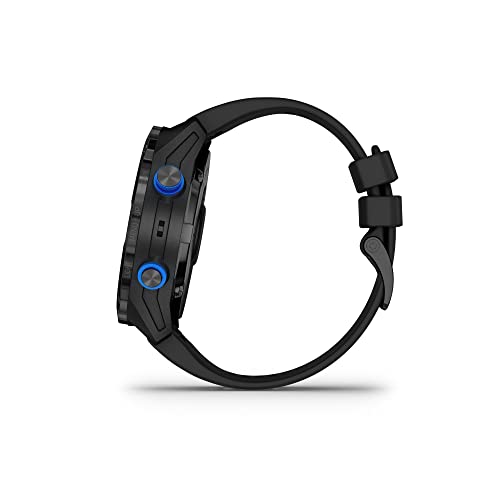
A pro-grade dive computer with best-in-class air integration and training tools.
Picture this: you book a dream dive trip, pack two computers “just in case,” bring a separate sports watch for runs, and still end up juggling gear and settings on the boat. I’ve been there. In this garmin descent mk2i review, I zero in on a single tool that can manage tanks, track your training, and still look sharp at dinner. If you want fewer moving parts and more trust in your wrist, keep reading—this may be the upgrade that simplifies your underwater and topside life.

Is Garmin Descent Mk2i Good?
Yes—if you’re a serious recreational or tech-curious diver who also trains hard on land. It depends if you only need a basic gauge or you never plan to add air integration. For most divers, this feels like a do-it-all tool. In my garmin descent mk2i review testing, I found the balance of dive safety, smart training, and everyday polish to be rare.
Two quick stories. On a drift night dive, tank pressure data on my wrist kept me calm and in control. No reaching, no guessing. On a no-tank morning run, the same watch tracked my pace, HR, and recovery like a top fitness watch. That’s the point: one device, many roles.

My First Impression for Garmin Descent Mk2i
Out of the box, it screams premium. The titanium build feels solid without being heavy. The bezel finish is clean. The screen is sharp and easy to read in sun and shade. Buttons have a smooth, positive click. The band is soft and secure. Setup was fast. I paired it with the app, set dive alarms, and synced my profiles in minutes.
On my first pool session, the interface made sense right away. Menus were clear. Alerts were noticeable but not annoying. My first open-water day sealed it. Data was easy to glance at. I ended the day thinking, “This is how a dive computer should feel.” In short, my garmin descent mk2i review started strong.

What Makes It Stand Out / Key Features
- Watch-style dive computer with air integration via Garmin’s SubWave technology
- Tracks multiple tanks/transmitters for team or sidemount dives
- Full mix support with multiple gas modes, nitrox, trimix, and CCR
- Surface GPS to mark entry and exit points
- Advanced training features: VO2 Max, training load, recovery, and more
- Smartwatch perks: notifications, music storage/control, Garmin Pay
- Rugged premium materials with a bright, legible color display
- Strong battery life across dive and smartwatch modes

What I Like
- Air integration that just works and shows what you need at a glance
- Clear dive screens with smart alerting and easy gas switching
- Real training tools, not fluff—useful for runners, cyclists, and gym work
- Comfortable to wear all day; looks premium on and off the boat
- Surface GPS adds confidence when marking entry/exit points
- One ecosystem for dives, health, and daily life in the Garmin app

What Could Be Better
- Premium price; overkill if you only fun-dive a few times a year
- Air integration needs a compatible transmitter (sold separately)
- Large case may feel big on very small wrists

My Recommendation
If you want a dive computer that doubles as a true training watch, this is it. In my garmin descent mk2i review, it stood out for divers who value air integration and clear data. It also works well for anyone who wants to log runs, gym work, and recovery in one place. If your needs are simple and you never plan to add a transmitter, a cheaper model may fit. But if you want one premium device for boat, gym, and travel, this is a strong buy.
| Best for | Why |
|---|---|
| Serious recreational divers | Air integration, clear alerts, and easy gas handling boost safety and comfort |
| Tech-curious or multi-gas users | Strong gas support and interface that scales as your diving grows |
| Active athletes who dive | Full training suite, GPS, and smart features replace a separate sports watch |
Alternative Products You Can Consider
Shearwater Teric — Best for divers who want a pure, top-tier dive UI and rock-solid reliability. The Teric excels in clarity and customization under water. It lacks the deep multisport and smartwatch features seen in this garmin descent mk2i review, but many tech divers love its focused approach and tactile feel.
Suunto D5 — Ideal for recreational divers who want a stylish, simpler, and more affordable color watch. It covers core nitrox needs with a friendly UI. It does not match the training depth or advanced air integration discussed in this garmin descent mk2i review, but it’s great value for vacation diving.
Garmin Descent Mk2S — Best for smaller wrists or those who do not need air integration. You still get great fitness features and a lighter feel. Compared to the unit in this garmin descent mk2i review, you give up transmitter support but keep much of the Garmin ecosystem charm.
| Product | Best For | Key Difference |
|---|---|---|
| Garmin Descent Mk2i | All-in-one divers who want air integration and training tools | SubWave air integration plus full multisport and smartwatch features |
| Shearwater Teric | Tech divers wanting the cleanest, most focused dive UI | Less smartwatch/training depth; exceptional dive-focused interface |
| Suunto D5 | Recreational divers seeking a stylish, simpler option | More affordable; fewer advanced training and integration features |
| Garmin Descent Mk2S | Smaller wrists; no need for air integration | Lighter case; lacks transmitter support |
Final Verdict: Which Should You Buy?
If you want one device to handle dives, daily training, and travel, this watch is hard to beat. The air integration, dive screen clarity, and surface GPS build trust under water. The training and smart features shine on land. In this garmin descent mk2i review, that balance is the big win.
Pick the Shearwater Teric if you care most about a pure, pro-level dive interface and do not need heavy smartwatch tools. Choose the Suunto D5 if you want a stylish, simpler, and more budget-friendly color watch for vacation diving. For smaller wrists or if you do not need air integration, the Mk2S is a smart, lighter choice.
FAQs Of garmin descent mk2i review
Do I need a transmitter to use it?
No. It works fine without air integration. You add a compatible transmitter if you want tank pressure and air time on your wrist. In this garmin descent mk2i review, the air integration was a key benefit, but it’s optional.
Is it too big for small wrists?
It is a larger case. Many people with small wrists still find it comfortable, but if size is your top concern, consider the Mk2S as noted in this garmin descent mk2i review.
How is battery life for diving and daily use?
Battery life is strong for both. You can dive over multiple days and still use it as a smartwatch. Exact life varies with settings, screen use, and GPS.
Can it handle multiple gases and tech diving?
Yes. It supports multiple gas modes and advanced profiles. That’s part of why the garmin descent mk2i review rates it highly for growing divers.
Is it good as a daily smartwatch?
Yes. You get training metrics, GPS, notifications, and even payments on supported services. In day-to-day life, it replaces a separate fitness watch, which this garmin descent mk2i review values a lot.

Rubel Miah is the Senior Editor at MyStyleGrid.com, where he brings a sharp editorial eye and an unshakable love for fashion to everything he does. A true style addict, Rubel lives and breathes trends, from streetwear to high fashion, and has a knack for turning inspiration into impactful stories. With years of experience in fashion journalism and digital media, he curates content that empowers readers to express themselves through style. When he’s not editing features or forecasting the next big thing, you’ll find him hunting down vintage pieces or capturing street style moments around the city.