You just got the box.
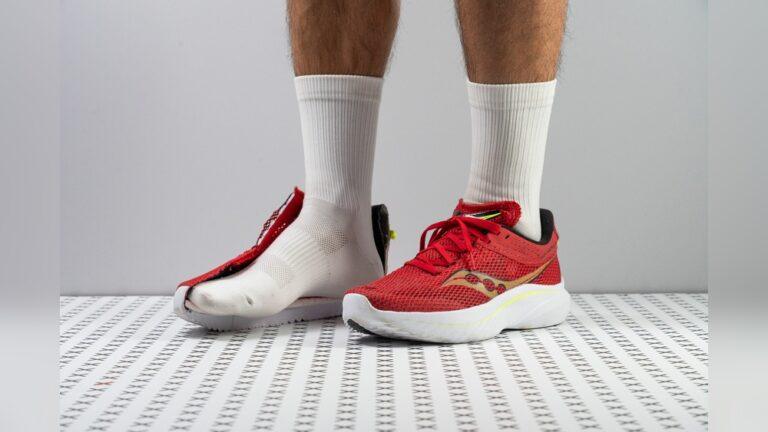
It is bright and clean. You open it up. You see your new pair of Saucony Kinvara 14s. They look fast. They feel light.
You are excited. You want to run right now.
But wait.
You put them on. They feel a bit stiff. Maybe they are tight near the toe.
You worry. Will these hurt my feet? Will I get a blister?
I know that feeling. I have been there.
Buying new shoes is fun. But breaking them in can be scary. You do not want pain. You just want to run.
The good news is simple. You can break them in safely. You can do it without pain.
I have run in the Kinvara series for years. I have made mistakes. But I have also learned the tricks.
In this guide, I will show you how to break in Saucony Kinvara 14 without foot pain.
I will share my story. I will give you easy steps. And I will help you run happy.
Let’s get started.
Understanding Your New Kinvara 14
First, let’s look at the shoe.
The Kinvara 14 is special. It is not like a heavy stability shoe. It is built for speed.
It uses a special mesh. This mesh is very light. It is also very thin.
Because it is thin, it does not stretch much. This is good for holding your foot. But it can be tricky at first.
The foam is called PWRRUN.
This foam is not like a soft pillow. It is a bit firm. It is bouncy.
This firmness is good. It helps you run fast. But, it takes time to soften.
If you read a Saucony Kinvara 14 review, you will see a pattern. People say it needs a few runs. They are right.
You must be patient. The foam needs to learn the shape of your foot.
Credit: runrepeat.com
The Secret Factor: The 4mm Drop
This is the most important part.
Many beginners miss this.
Most shoes have a high heel. The heel is 10mm higher than the toe.
The Kinvara 14 is different. It has a 4mm drop.
This means your heel is lower to the ground.
Why Does This Matter?
When your heel is lower, your calf stretches more. Your Achilles tendon works harder.
If you are not used to this, you will hurt.
I remember my first pair of Kinvaras. I came from a high-heel shoe. I ran 5 miles on the first day.
Big mistake.
The next day, I could not walk. My calves were on fire.
This was not the shoe’s fault. It was my fault. I did not respect the drop.
So, when we talk about Kinvara 14 heel drop adjustments, we mean taking it slow. Your muscles need time to get long and strong.
Step 1: The Indoor Phase
Do not run yet.
I repeat. Do not run yet.
Your first step is easy. Wear them inside.
Put them on while you cook. Wear them while you work at your desk. Wear them while you watch TV.
Why Do This?
Your feet are warm. Heat helps the shoe mold.
The glue warms up. The mesh relaxes. The foam starts to compress under your weight.
Do this for two or three days.
Walk on your carpet. Walk on your wood floor.
This is the “Carpet Test.”
If something hurts on the carpet, it will hurt on the road. But on the carpet, you can stop. You can take them off.
If you run 3 miles away and they hurt, you are stuck. You have to limp home.
So, stay inside first. It is safe.
Step 2: Choosing the Right Socks
Socks are your best friend.
Or your worst enemy.
Do not wear thin socks yet. And never, ever wear cotton.
Cotton holds sweat. Wet feet get blisters.
For the break-in, use a thicker sock.
Why Thick Socks?
A thick sock adds a layer. It pushes against the mesh. It speeds up the stretching.
It also protects your skin.
If the heel collar is stiff, a thick sock stops the rub.
This helps prevent foot pain from new running shoes.
Once the shoe is soft, you can wear thin socks. But for now, go thick.
Step 3: The First Few Runs
Okay. You wore them inside. They feel good.
Now we run.
But we do not run far.
The Two-Mile Rule
Keep your first run short. Two miles is enough. Or even 20 minutes.
This is just a test drive.
You want to heat up the shoe. You want to flex the sole.
But you do not want to stress your feet.
Alternate Your Shoes
Do not wear the Kinvara 14 every day. Not yet.
Wear them on Monday. Wear your old shoes on Tuesday. Wear the Kinvaras again on Thursday.
This gives your feet a break.
It also helps with breaking in running shoes fast because you stay healthy. If you get a blister, you can’t run at all. That is slow.
So, swap them out. It keeps your feet fresh.
Lacing Hacks for a Better Fit
Sometimes, the pain is just bad lacing.
The Kinvara 14 fits snug. But feet are all different.
Maybe your heel slips. Maybe your toes are squished.
We can fix this with laces.
The Heel Lock
If your heel moves up and down, you will get a blister.
Look at your shoe. See that extra hole at the top? The one nobody uses?
Use it.
- Thread your lace through that top hole.
- Leave a small loop.
- Cross the laces.
- Put the lace ends through the loops.
- Pull tight.
This locks your heel back. It stops the slipping. It works like magic.
Loosening the Toe Box
If the front feels tight, try this.
Skip the first set of holes near your toes. Start lacing from the second set.
This gives the mesh room to open up. Your toes can spread out.
This is a key part of a Saucony Kinvara 14 sizing guide. Adjust the laces to fit your foot.
My Personal Experience: The Transition Week
Let me tell you about my week with the Kinvara 14.
I learned from my past mistakes. I did it right this time.
Day 1:
I only walked. I wore them to the grocery store. They felt light. The tongue was thin but soft. I felt no rubbing.
Day 2:
I did a 20-minute jog. I stayed on the grass. Grass is soft. It helps the foam work better. My calves felt a tiny bit tight. I stretched them after.
Day 3:
Rest day. I wore my work boots.
Day 4:
I ran 3 miles on the road. The shoe felt snappy. The foam started to give back energy. It felt less stiff than Day 1.
Day 5:
I wore my old shoes.
Day 6:
I ran 5 miles. No blisters. No hot spots. The heel lock kept my foot secure.
By the end of the week, they felt like my shoes. They had my foot shape inside.

Credit: www.saucony.com
Common Pain Points and Fixes
You might still feel something. Let’s troubleshoot.
Top of the Foot Pain
If the top hurts, your laces are too tight.
The Kinvara tongue is thin. It does not have much padding.
If you tie them too tight, the lace cuts in.
Loosen them up. Your foot swells when you run. Give it room.
Arch Pain
The Kinvara has a neutral arch. It is not high. It is not low.
If your arch hurts, you might need support.
Try an insert. Take out the thin liner. Put in a supportive insole.
The Kinvara is deep enough to hold most insoles.
Calf Tightness
We talked about this. It is the drop.
If your calves hurt, stop running.
Walk. Stretch. Foam roll.
Do not push through calf pain. It can turn into an injury.
What NOT to Do (Expert Advice)
I see bad advice online. Please be careful.
Do NOT use a shoe stretcher.
Shoe stretchers are for leather. They are for dress shoes.
The Kinvara is made of engineered mesh. If you force it to stretch, you break the fibers.
You ruin the fit. The shoe will become sloppy.
Do NOT soak them in water.
Some people say to wear wet shoes.
This is bad for running shoes. Water hurts the glue. It breaks down the foam.
Plus, wet socks cause blisters instantly.
Keep them dry.
Do NOT run a marathon on Day 1.
This is obvious. But people do it.
Respect the break-in time.
Essential Post-Run Foot Care
You care for the shoes. But you must care for your feet too.
The PWRRUN foam break-in time is about 20 to 30 miles. During that time, treat your feet like royalty.
Roll Your Arches
Get a golf ball. Or a tennis ball.
Put it on the floor. Step on it gently. Roll it under your foot.
This loosens the tissue. It feels amazing after a run in new shoes.
Ice Baths
If your feet feel hot or swollen, use ice.
Soak them in cold water for 10 minutes.
This stops swelling. It calms the nerves.
When to Seek Professional Help
Pain is tricky.
There is “good” pain. This is muscle soreness. It means you are working.
Then there is “bad” pain. This is sharp. It stabs.
If you feel sharp pain in your heel or bone, stop.
If the pain does not go away after 3 days of rest, see a doctor.
See a podiatrist.
Maybe the shoe is wrong for you. Maybe you need a stability shoe.
Do not be a hero. Listen to your body.

Credit: runtothefinish.com
FAQ: Breaking In Your Kinvaras
Here are answers to questions I get asked often.
How long does it take to break in Saucony Kinvara 14?
It usually takes about 20 to 30 miles of running. For most people, this is about two weeks of easy running.
Do Kinvara 14s stretch out?
The mesh upper stretches a very small amount. It will mold to your foot shape, but it will not become a whole size bigger.
Can I wear them without socks?
I do not recommend it. The mesh is breathable, but friction on bare skin will cause blisters. Always wear socks.
Are they good for walking?
Yes, they are excellent for walking. They are light and look good. Walking is actually a great way to break them in before running.
What if my heel slips?
Use the “Runner’s Loop” or heel lock lacing method. Use the extra eyelet at the top of the shoe to secure your ankle.
Conclusion
Breaking in your Saucony Kinvara 14 does not have to hurt.
It is a process. It takes a little patience.
But it is worth it.
These shoes are fast. They are fun. Once they are broken in, they disappear on your feet.
Remember the steps.
Start inside.
Wear thick socks.
Respect the 4mm drop.
Take it slow.
I hope my tips help you. I hope you enjoy every mile in your new shoes.
Now, go put them on. Walk around your living room. And get ready for your best runs yet.
Action Plan:
- Put your Kinvaras on right now.
- Do the “Carpet Test” for 30 minutes.
- Check your laces. Are they too tight?
You are ready. Happy running!

Madison Clark is a footwear expert and the voice behind MyStyleGrid.com. She specializes in honest shoe reviews, style tips, and practical guides to help readers find the perfect pair for any occasion. With years of experience in blogging and content creation, Madison makes footwear knowledge simple, stylish, and easy to follow.