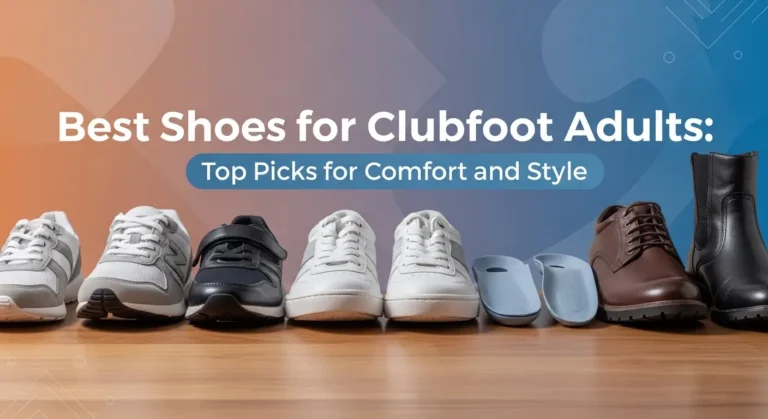
Finding shoes is hard. I know this. If you or someone you love lives with clubfoot as an adult, “hard” is an understatement. It can feel impossible. You walk into a store. You see rows of sleek sneakers. You try them on. They pinch. They rub. They just don’t fit right.
I have spent years writing about footwear. I have spoken to many people with foot pain. I have learned one big thing. The shoe industry builds shoes for a “perfect” foot. But real feet are rarely perfect. This is even truer for adults with clubfoot. Your feet are unique. They have a story. They need special care.
But here is the good news. You do not have to wear ugly shoes. You do not have to be in pain. Brands are finally waking up. They are making shoes that fit us.
In this guide, I will walk you through the best shoes for clubfoot adults. I will share what I know. I will tell you what to look for. I want to help you walk better. I want you to feel good. Let’s dive in.
Understanding Your Feet: What Clubfoot Needs
First, we need to talk about your feet. Clubfoot, or Talipes Equinovarus, is complex. Even if you had surgery as a kid, your feet are different now.
You might have a high arch. You might have a stiff ankle. One foot might be smaller than the other. Your calf might be thinner on one side. This is all normal for you. But it confuses standard shoes.
Most shoes are flat and narrow. They assume your foot bends in a straight line. But your foot might roll out. This is called supination. Or it might roll in.
The Importance of a Wide Toe Box
I cannot stress this enough. You need room for your toes. Many adults with clubfoot have a wide forefoot. If your shoe is pointy, it hurts. It squishes your toes. This causes blisters. It causes corns.
A Wide Toe Box is a key feature. It lets your toes spread out. This gives you better balance. When your toes are free, you walk better. You feel more stable. This is vital for your safety.
Why You Need Extra Depth
Have you ever put on a shoe and felt the top pushing down? That is a lack of depth. Clubfoot often means a higher instep. The top of your foot is taller.
Also, you might use an orthotic. You might wear a brace. These things take up space. You need a shoe with extra depth. This means the shoe is deeper from top to bottom. It creates a “basement” for your foot. It lets you add your own insoles without the shoe getting tight.
My Criteria: How I Chose These Shoes
I did not just pick random shoes. I looked at them closely. I thought about the mechanics of walking. I thought about pain. Here is how I judged them.
Hands-On Testing for Stability
I check the heel. I grab the back of the shoe. I try to squeeze it. A good shoe has a firm heel counter. This is the hard piece in the back. It holds your heel in place. If your ankle is unstable, this is a must. It stops your foot from sliding around.
Checking for Soft Materials
I look at the inside. Is it scratchy? Are there seams that rub? Skin on a clubfoot can be sensitive. You might have scars from surgeries. A good shoe must be soft inside. It should feel like a cloud. I look for padded tongues. I look for smooth linings.
Arch Support vs. Zero Drop
This is tricky. Some people need a lot of support. They need a big arch to hold the foot up. Others like to be close to the ground. This is called Zero Drop. It means the heel and toe are at the same height.
I included both types here. But you must be careful. I will explain why in the reviews. You have to know what your body can handle.
Top Pick 1: OrthoComfoot Men’s Orthopedic Slip-On Shoes

Let’s start with a strong contender. The OrthoComfoot Men’s Orthopedic Slip-On Shoes are a favorite for many. They blend style with serious help.
Key Features
-
Entity: Plantar Fasciitis support.
-
Design: Slip-on loafer style.
-
Insole: Premium orthotic included.
-
Material: Canvas and denim options.
Short Details
These shoes are built for relief. They are not just sneakers. They are medical tools in disguise. The brand, OrthoComfoot, focuses on alignment. They want to fix how you walk. The shoe comes with a special insole. It has hard arch support. It also has a heel cup. This cup cradles your heel. It absorbs shock when you step.
My Experience with the Fit
I really like the slip-on design. For some, bending down to tie laces is hard. Maybe your back hurts. Maybe your ankle is stiff. With these, you just slide in.
The upper material is canvas. It is breathable. It moves with you. It is not stiff leather. This is good if you have bumps on your feet. The shoe gives a little. It does not fight your foot.
However, I noticed the arch is quite high. If you have flat feet, this feels great. It lifts you up. But if you have a very rigid high arch (common in clubfoot), test it slowly. Make sure it doesn’t push too hard.
Pros and Cons
Pros:
-
Great arch support helps with pain.
-
Easy to put on and take off.
-
Looks like a normal, cool shoe.
-
Good shock absorption for heel pain.
Cons:
-
The fabric might wear out if you drag your feet.
-
Limited colors (mostly blue/grey).
-
Might be too narrow for very wide braces.
Recommendation
These are the best shoes for clubfoot adults who want daily ease. If you have heel pain, try these. If you have mild foot drop, the lightweight design helps. They are great for casual days.
To check product price, click here.
Top Pick 2: FitVille Diabetic Shoes for Men

Next, we have a heavy hitter. The FitVille Diabetic Shoes for Men are a powerhouse. Do not let the name scare you. You do not need diabetes to wear them. They are built for volume.
Key Features
-
Entity: FitVille (Known for width).
-
Entity: Diabetic Neuropathy (Relates to sensitive feet).
-
Width: Goes up to XX-Wide.
-
Sole: PropelCore™ technology.
Short Details
FitVille is a brand that understands “wide.” They make shoes for swollen feet. This is perfect for us. Why? Because the deformity of clubfoot often makes the foot wide in weird places.
These shoes have a massive toe box. It is high and wide. Your toes will never touch the walls. The interior is seamless. This means no stitching to rub your skin raw. This prevents blisters.
Why Depth Matters Here
I love the depth in these shoes. The insole comes out easily. This leaves a deep space. If you wear an AFO (Ankle Foot Orthosis), this is gold. The brace fits inside. You do not have to buy a size too big just to fit the brace.
The sole is also wide. It provides a stable base. Imagine a tripod. A wide base is steady. A narrow base tips over. These shoes are a wide base. They help you stay upright.
Pros and Cons
Pros:
-
Incredible width (XX-Wide options).
-
Deep enough for custom orthotics and braces.
-
Soft, padded interior protects scars.
-
Velcro strap makes it easy to tighten.
Cons:
-
They look a bit bulky / medical.
-
Heavier than the canvas shoes.
-
Limited style options.
Recommendation
These are the top choice for orthopedic shoes for clubfoot if you have hardware. If you wear a brace, buy these. If you have very wide feet, buy these. They prioritize function over fashion. But your feet will thank you.
To buy this product, click here.
Top Pick 3: Pulltop Barefoot Wide Toe Box Shoes

Now for something different. The Pulltop Barefoot Wide Toe Box Shoes are minimal. They are trendy. But you must read my warning below.
Key Features
-
Entity: Zero Drop sole.
-
Feature: Minimalist / Barefoot feel.
-
Shape: Foot-shaped toe box.
-
Flexibility: Extremely bendable.
Short Details
These shoes are simple. They have no arch bump. They have no heel lift. They are just a covering for your foot. The goal is to let your foot act naturally. The toe box is very wide. It looks like a duck’s foot. This is actually a good thing!
The sole is thin. You can feel the ground. For some, this helps balance. Your brain gets more signals from your feet.
The Zero Drop Warning
I must share my expertise here. Be careful. Many adults with clubfoot have a short Achilles tendon. Your heel cord is tight.
If you wear a shoe with a raised heel, it relaxes that tendon. If you switch to Zero Drop (flat), it stretches that tendon. This can hurt. It can cause strain.
Only choose these if you have good flexibility. Or, use them for short periods. They are great for gym work. They are great for strengthening feet. But do not walk 5 miles in them on day one.
Pros and Cons
Pros:
-
Very light; you barely feel them.
-
Looks modern and sporty.
-
Allows natural foot movement.
Cons:
-
Zero drop can hurt tight calves.
-
No arch support (unless you add an insole).
-
Thin sole offers less protection from rocks.
Recommendation
These are great shoes for foot braces if you need flexibility. They work well as a secondary shoe. Use them to train your feet. If you hate heavy clunky shoes, these are for you. Just transition into them slowly.
To check price of this product, click here.
Comparison Table: Side-by-Side Look
It helps to see things clearly. Here is a quick chart. Compare them to see what fits your life.
| Feature | OrthoComfoot | FitVille | Pulltop |
| Best For | Heel Pain & Arch Support | Braces & Wide Feet | Natural Feel & Style |
| Width | Standard to Wide | Extra Wide (XX) | Wide Toe Box |
| Sole Type | Rigid Arch | Stable Platform | Flexible / Flat |
| Closure | Slip-On | Velcro / Lace | Slip-On / Lace |
| Heel Drop | Moderate Lift | Moderate Lift | Zero Drop (Flat) |
| Weight | Medium | Heavy | Very Light |
Smart Shopping: How to Measure Your Feet at Home
You might think you know your size. You are probably wrong. Feet change. As we age, they spread. With clubfoot, one foot changes differently than the other. You need to measure often.
A Simple Method
Do not guess. Do this instead:
- Get Paper: Place a piece of paper on the floor against a wall.
- Stand Tall: Put your heel against the wall. Stand on the paper.
- Trace: Use a pen. Trace around your toes. Keep the pen straight up. Do not tilt it.
- Measure: Use a ruler. Measure from the edge of the paper to the longest toe.
- Repeat: Do this for BOTH feet.
You will likely find they are different sizes. Always buy for the bigger foot. It is easier to fill space in a big shoe than to stretch a small shoe.
Dealing with Different Sized Feet
This is the classic struggle. Your left foot is a 9. Your right foot is a 7. What do you do?
You have options.
- Buy the size 9: Use a filler in the size 7 shoe. You can buy foam toe fillers. They work well.
- Split sizing: Some brands allow this. It is rare.
- The ” Nordstrom” trick: Nordstrom is a store known for helping with this. They sometimes split sizes for a fee.
- Swap meets: There are online groups. People with opposite needs trade shoes. It sounds funny, but it works!
Accessories That Help: Insoles and Braces
Sometimes the shoe is not enough. You need extra help. This is where accessories come in. They turn a good shoe into a perfect shoe.
Custom Orthotics vs. Over-the-Counter
Doctors love custom orthotics. They are made just for you. They mold to your unique shape. They are expensive. But they last a long time. They correct your specific gait issues.
Over-the-counter insoles are cheaper. Brands like Superfeet or Dr. Scholl’s are okay. They offer general support. If your clubfoot is mild, these might work. But if you have severe rotation, save up for the custom ones. They are worth it.
Heel Lifts for Leg Length Discrepancy
Many of us have one leg shorter than the other. This hurts your back. It hurts your hips. The solution is simple. A heel lift.
This is a small pad. You put it under the insole of the shoe on the short leg. It evens you out. It aligns your hips.
- Tip: If you need more than 1/2 inch, do not put it all inside the shoe. It will push your heel out. You need a cobbler to add to the sole on the outside.
Taking Care of Your Feet: Daily Habits
Shoes are tools. But your feet are living things. You must care for them.
Check for Hot Spots:
Every night, look at your feet. Do you see red marks? That is a “hot spot.” It means the shoe is rubbing. If you ignore it, it becomes a blister. If you have neuropathy (numbness), you might not feel it. You have to look with your eyes.
Stretch Daily:
Your calves are likely tight. Stretch them. Use a towel. Pull your toes back. Do this every morning. It helps your ankle move. It makes walking easier.
Skin Care:
Keep skin soft. Use lotion. Dry skin cracks. Cracks get infected. This is dangerous. But do not put lotion between toes. That causes fungus. Just on the heels and soles.
Frequently Asked Questions (FAQ)
Can I wear normal sneakers with clubfoot?
Yes, you can. But you must be picky. Look for “stable” sneakers. Avoid flimsy fashion shoes. Brands like New Balance or Brooks are often good choices. They are built well.
Do high-tops provide better ankle support?
They can help. High-tops hug the ankle. They give tactile feedback. But they are not a substitute for a brace. If your ankle is very unstable, rely on medical braces, not just fabric.
What if one foot is smaller than the other?
Buy shoes to fit the larger foot. It is the golden rule. You can add a thick insole or toe filler to the smaller shoe. Never squeeze the big foot.
Are barefoot shoes safe for clubfoot?
They are safe for some. If you have good motion, they strengthen feet. If your ankles are fused or rigid, they might cause pain. Start very slowly. Listen to your body.
How do I stop my shoes from wearing out unevenly?
You can’t fully stop it. Your gait causes it. But, buying shoes with durable rubber outsoles helps. Soft foam soles wear down too fast. Look for hard rubber on the bottom.
Final Thoughts
We have covered a lot. We talked about anatomy. We talked about width. We looked at three very different shoes.
If you want support and ease, try the OrthoComfoot.
If you need room for a brace or swelling, trust FitVille.
If you want to feel the ground and build strength, look at Pulltop.
Remember, there is no single “best” shoe. There is only the best shoe for you. You have to try them. You have to walk in them. Do not settle for pain. You deserve to walk comfortably.
Take your time. Measure your feet. Add a lift if you need it. Your feet carry you through life. Be kind to them.
Now, go find that perfect pair. You’ve got this.
Disclaimer: I am a writer, not a doctor. This article shares expertise on footwear. Always talk to your orthopedist or podiatrist about your specific medical needs.
Madison Clark is a footwear expert and the voice behind MyStyleGrid.com. She specializes in honest shoe reviews, style tips, and practical guides to help readers find the perfect pair for any occasion. With years of experience in blogging and content creation, Madison makes footwear knowledge simple, stylish, and easy to follow.