Introduction
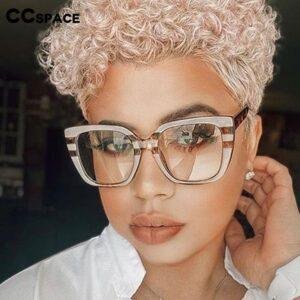
Yes, big glasses are in style across the United States. Oversized eyeglass frames remain popular because they make a clear fashion statement, suit many face shapes, and offer a bold change from small, narrow frames.
The key is fit. Stylish big glasses should look intentional, not as if they slide down your face or hide your features. The best pair balances frame size, face shape, bridge fit, lens needs, and personal style.
In this guide, you will learn what counts as “big,” who can wear oversized frames, how to choose the right size, and when large glasses may create practical problems.

What Counts as Big Glasses?
Big glasses usually have lenses and frames that extend wider or taller than standard eyeglasses. They may also have a thick rim, a deep lens shape, or a wide bridge.
“Big” does not mean one exact measurement. It depends on the size of your face and the frame’s shape.
For example:
- A 52-millimeter round frame may look large on a small face.
- A 58-millimeter rectangular frame may look normal on a wide face.
- A tall square frame may feel oversized even when its total width is moderate.
- Thick acetate rims can make a frame look larger than thin metal rims of the same size.
Most eyeglass frames list three numbers, such as 54-18-140:
- 54 mm: lens width
- 18 mm: bridge width
- 140 mm: temple length
The first two numbers matter most when judging whether a frame will look or feel large.
Why Are Oversized Glasses Popular?
Big frames attract attention to the eyes and upper face. They can make a simple outfit look more deliberate without adding much else.
Their current appeal also comes from several style movements in the US:
- A return to bold, expressive accessories
- Interest in vintage-inspired eyewear
- Popularity of thick acetate frames
- A move away from very small, narrow sunglasses and eyeglasses
- Greater interest in gender-neutral fashion
- Social media visibility for statement frames
These trends do not mean every large frame will suit every person. Fashion changes, but good fit remains useful in every trend cycle.
Large glasses also offer more visual space for frame color and shape. A clear frame, dark tortoise pattern, soft brown, or bright color can become the main feature of an outfit.
Are Big Glasses Still in Style for Men and Women?
Yes. Big glasses are not limited to one gender. Men and women in the US wear oversized frames in round, square, oval, cat-eye, aviator, and geometric shapes.
The most useful distinction is not men’s versus women’s eyewear. It is the relationship between the frame and the wearer’s face.
Styles often chosen by men
Common options include:
- Large rectangular frames
- Thick black or tortoise acetate
- Oversized browline frames
- Wide clear frames
- Large metal aviator shapes
These styles can create a strong, polished, or creative look. A slightly wider frame often works well for people who want a modern appearance without a very dramatic shape.
Styles often chosen by women
Popular choices include:
- Oversized cat-eye frames
- Large round frames
- Soft square frames
- Bold geometric shapes
- transparent or lightly tinted acetate
These frames can look classic, playful, artistic, or refined. The color and edge shape often affect the mood more than the size alone.
Gender-neutral options
Many large frames have a simple shape and neutral color. Black, brown, gray, clear, silver, and dark green can work across many personal styles.
The best frame is the one that fits your face, prescription, and wardrobe. Labels matter less than those practical details.
Which Face Shapes Look Best With Big Glasses?
Almost any face shape can wear large glasses. The goal is to choose a frame that adds balance rather than repeating every feature of the face.
| Face shape | Large-frame styles to try | Why they may work |
|---|---|---|
| Round | Square, rectangular, or angular | Adds contrast and structure |
| Oval | Most oversized shapes | The face is often well balanced already |
| Square | Round, oval, or softly curved | Softens strong jaw and brow lines |
| Heart-shaped | Wide lower rims, round, or soft cat-eye | Helps balance a wider forehead |
| Long | Tall lenses and deeper frames | Adds visual width and height |
| Diamond | Oval, browline, or gentle cat-eye | Highlights the eyes and softens cheek width |
This table is a starting point, not a rule. Hair style, brow shape, skin tone, and frame color can change the result.
Big glasses for round faces
Angular frames can create contrast. A rectangular or square frame may make the face look more defined.
Avoid choosing a frame that is both very round and much wider than the face unless you want a soft, playful look. Matching round glasses with a round face is not wrong; it simply creates less contrast.
Big glasses for square faces
Round and oval frames can soften a strong jaw or straight brow line. Large frames with curved corners often look balanced.
Very wide, sharp rectangular frames may emphasize the face’s angles. That may be desirable if you want a bold, structured style.
Big glasses for oval faces
Oval faces can often support many frame shapes. You still need to watch the width. A frame that extends far beyond the temples may look less balanced and may not stay in place.
Big glasses for long faces
Tall lenses can add visual depth. A large frame with a deeper lens may also feel more proportional than a narrow, shallow frame.
Do not confuse lens height with frame width. A frame can be tall without being extremely wide.
Big glasses for heart-shaped faces
Frames with a wider lower section may help balance a broad forehead and narrower chin. Soft cat-eye shapes, rounded frames, and lighter colors can work well.
Very heavy upper rims may draw more attention to the forehead. That may suit your style, but it is worth considering before you buy.
How Should Big Glasses Fit?
Big glasses should feel secure without pressure. They should sit level, remain centered, and stay in place when you move your head.
Use these checks:
- Frame width: The outer edges should not extend far beyond the sides of your face. A small amount of extra width can work, but excessive width may make the frame slide.
- Bridge fit: The bridge should rest comfortably on your nose. It should not pinch or leave the lenses sitting too far from your eyes.
- Eye position: Your eyes should sit near the center of each lens. This matters for both appearance and optical performance.
- Temple fit: The arms should touch your head lightly. They should not press hard behind your ears.
- Brow line: Your eyebrows may show above the frame, but they should not be cut through in an awkward way unless that is the intended style.
- Cheek clearance: The lower rim should not rest on your cheeks when you smile.
- Movement: The glasses should not slide during normal walking, talking, or looking down.
Large frames often weigh more than small frames. Thick acetate, heavy lenses, and decorative details can add extra pressure to the nose and ears.
A simple at-home size check
If you already own glasses that fit well, read the three numbers printed inside one temple. Compare those numbers with the new frame.
The new frame does not need to match exactly. A difference of a few millimeters may be fine, but a much wider frame can feel noticeably different.
For online purchases, check the retailer’s return policy before ordering. A frame can look right in a photo but feel too wide, heavy, or deep in person.
Do Big Glasses Make Your Face Look Bigger?
They can, but the effect depends on shape, color, and proportion.
A large, dark, thick frame creates a strong outline. That outline may make the frame—and sometimes the upper face—look more prominent.
A clear or thin frame usually has a lighter effect. A tall frame may draw attention to the eyes, while a very wide frame emphasizes the sides of the face.
Consider these style choices:
- Choose thin metal or clear acetate for a softer look.
- Choose dark, thick acetate for a bold look.
- Choose a frame with rounded corners to reduce harsh lines.
- Choose a taller lens if your face looks long.
- Choose a wider frame only when it stays secure at the temples.
- Use color to control attention. Dark colors look stronger; pale colors blend more easily.
Big glasses do not automatically make a face look larger. They simply become a more visible part of the face.
Are Big Glasses Good for Strong Prescriptions?
Sometimes, but the right size depends on the prescription and lens design.
For strong nearsighted prescriptions, smaller lenses may reduce lens thickness and edge weight. Large lenses can create thicker edges and may add more weight, especially with high-index lenses that are not properly designed for the frame.
For farsighted prescriptions, larger lenses may increase center thickness. The final result depends on the prescription, frame shape, lens material, pupillary distance, and how the lenses are fitted.
People with strong prescriptions should ask an optician about:
- Lens material
- High-index options
- Frame depth
- Frame width
- Lens thickness
- Optical center placement
- Whether the frame can support the prescription
A large frame is not automatically unsuitable. However, an optician should confirm that the frame works with your prescription before the lenses are made.
Are Big Glasses Comfortable for Daily Wear?
They can be comfortable when they fit well and use suitable materials. Comfort is less about the trend and more about weight distribution.
Watch for these problems:
- The frame slips down your nose.
- The temples press behind your ears.
- The bridge leaves red marks.
- The lower rim touches your cheeks.
- The glasses feel heavy after a few hours.
- The frame moves when you bend over.
An optician can often adjust the temples, nose pads, and bridge. Do not bend acetate or metal frames yourself unless you know how to adjust them safely. Heat and force can damage the frame or affect lens alignment.
People who spend long hours at a computer may also notice reflections, glare, or lens smudges more than frame size. Anti-reflective treatment can help with reflections, but it does not replace regular eye care or correct poor lighting.
Big Glasses vs. Small Glasses: Which Should You Choose?
The better choice depends on the look you want, your face, and your lens needs.
| Factor | Big glasses | Small glasses |
|---|---|---|
| Style impact | Bold and noticeable | Subtle and light |
| Face coverage | More coverage | Less coverage |
| Lens space | Often more visual space | More compact |
| Weight | May be heavier | Often lighter |
| Prescription fit | Needs careful lens planning | May reduce thickness in some prescriptions |
| Maintenance | Larger surfaces may show more smudges | Smaller surfaces may be easier to manage |
| Best for | Statement looks and vintage styles | Minimal looks and compact fit |
A large frame is a style choice, not a quality grade. A small frame is not more refined, and a big frame is not automatically more fashionable.
Choose the frame that supports your daily use. If you wear glasses from morning to night, comfort should carry more weight than a short-lived trend.
What Colors Are Best for Oversized Frames?
The best color depends on your wardrobe, skin tone, hair color, and how much attention you want the glasses to attract.
Neutral colors
Black, brown, tortoise, gray, silver, and clear are easy to wear. They can work with many outfits and usually have a longer style life.
Transparent frames
Clear and translucent frames soften the visual weight of a large shape. They can be a good choice when you want oversized glasses without a very dark outline.
Warm colors
Honey, amber, cream, and brown can create a softer, vintage look. These shades often work well with earth tones and denim.
Bright colors
Red, blue, green, pink, and yellow make the frame the main accessory. If the shape is already large, a bright color will make it even more noticeable.
Try to match the color to your real wardrobe. A frame that looks exciting in a product photo may receive little use if it clashes with most of your clothes.
Common Mistakes When Buying Big Glasses
The most common mistake is choosing a frame by appearance alone. A photo cannot show how the bridge, temple length, weight, or lens position will feel.
Avoid these errors:
- Buying a frame much wider than your current glasses without checking measurements
- Ignoring bridge width
- Choosing very heavy frames for all-day use
- Letting the lower rim touch the cheeks
- Picking a frame that covers the eyebrows and eyes in a distracting way
- Forgetting that strong prescriptions may need special lens planning
- Ordering without checking the return or remake policy
- Assuming an oversized frame will stay in place without adjustment
- Choosing a trend that does not match your clothes or daily routine
If a frame feels loose or uneven, adjustment may solve the problem. If the frame is fundamentally too wide or heavy, adjustment may not be enough.
How to Style Big Glasses in the United States
Big glasses work best when the rest of the outfit gives them room to stand out. You do not need a complicated look.
Try these combinations:
- Large black frames with a plain white T-shirt and denim
- Tortoise frames with a sweater, chinos, or a simple dress
- Clear oversized frames with neutral clothing
- Round frames with a denim jacket or vintage-inspired pieces
- Bold colored frames with simple, solid garments
- Large metal frames with tailored clothing
Think of oversized glasses as a face-level accessory. If the frame is very bold, keep other accessories simple. If the frame is clear or thin, you can add stronger earrings, hats, or necklaces.
Personal style matters more than strict fashion rules. The goal is not to make the glasses disappear. The goal is to make their size look deliberate.
Key Takeaways
- Yes, big glasses are in style in the United States.
- Oversized frames can suit nearly any face shape.
- Fit matters more than the label “oversized.”
- Check frame width, bridge fit, eye position, temple pressure, and cheek clearance.
- Clear or thin frames create a softer look.
- Dark, thick frames create a stronger statement.
- People with strong prescriptions should ask an optician about lens thickness and frame size.
- Buy based on comfort and daily use, not only on a trend.
Frequently Asked Questions
Are oversized glasses still fashionable?
Yes. Oversized glasses remain a common style choice in the US, especially in bold acetate, vintage, clear, round, square, and cat-eye designs. Fashion is personal, so the best frame is one that fits well and suits your clothing.
Should big glasses cover your eyebrows?
Not always. Many frames sit below or near the eyebrows, while some oversized styles cover part of them. The frame should not block your eyes or look unintentionally low on your face.
Can people with small faces wear big glasses?
Yes, but the frame should not be so wide that it slides or extends far beyond the temples. Try a smaller oversized frame, a thin rim, or a light color to keep the look balanced.
Are big glasses better than small glasses?
Neither size is always better. Big glasses create more impact and may offer a larger visual field, while small glasses may feel lighter and work better for some prescriptions. Comfort, fit, and lens requirements should guide the choice.
How do I know if my big glasses are too big?
They may be too big if they slide often, touch your cheeks, sit unevenly, extend far past your temples, or cause pressure behind your ears. An optician can adjust minor fit issues, but a very wide frame may need to be replaced.
Do big glasses make you look older?
Not by themselves. Frame color, shape, thickness, and styling affect the result more than size alone. A modern shape and lighter material can make a large frame feel fresh, while a heavy vintage style may create a more classic look.
Conclusion
Big glasses are in style, and they can work for many people in the United States. The most flattering pair is not necessarily the largest one. It is the frame that creates the look you want while staying centered, secure, and comfortable.
Start with a frame close to the width of glasses you already wear. Then choose the shape, color, and lens height that match your face and wardrobe. If you have a strong prescription or need glasses all day, have an optician confirm the fit before ordering.
Madison Clark is a footwear expert and the voice behind MyStyleGrid.com. She specializes in honest shoe reviews, style tips, and practical guides to help readers find the perfect pair for any occasion. With years of experience in blogging and content creation, Madison makes footwear knowledge simple, stylish, and easy to follow.