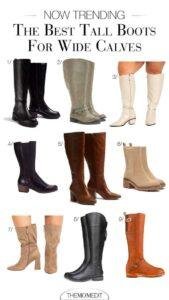
Yes. Wide calf boots are in style in the United States, and they are not limited to one look or age group. You can find wide-calf versions of riding boots, Western boots, cowboy boots, tall dress boots, moto boots, and casual flat boots.
The key change is simple: shoppers no longer have to choose between a current boot shape and a comfortable fit. Many US brands now offer wide-calf options with stretch panels, adjustable buckles, pull tabs, and multiple shaft widths.
Style trends change, but a good pair of boots does not need to follow every trend. The best choice combines a current shape with enough room for your calf, ankle, and clothing layers.

What Does “Wide Calf” Mean in Boots?
A wide-calf boot has a larger shaft opening than a standard boot. The shaft is the part that covers your lower leg, above the ankle.
The term does not have one universal measurement. One brand may call a 16-inch opening “wide,” while another may use that term for a 17-inch or larger opening. The measurement can also change with the boot size and design.
A wide-calf boot may include:
- A wider fixed shaft
- Elastic panels at the back
- Adjustable buckles or straps
- Stretch leather or synthetic fabric
- A full-length zipper
- Extra room through the ankle as well as the calf
This last point matters. Some boots have a wide upper shaft but a narrow ankle. They may fit over the calf but still feel loose, stiff, or awkward near the foot.
How to measure your calf
Measure both legs while standing. Your calves may not be exactly the same size.
- Wear the socks or pants you plan to wear with the boots.
- Sit or stand in a relaxed position.
- Wrap a soft tape around the widest part of your calf.
- Keep the tape level and snug, but do not pull it tight.
- Write down the larger measurement.
- Compare it with the brand’s shaft circumference chart.
Add a small amount of room for comfort. The amount depends on the boot material and your clothing. A firm leather boot may need more ease than a stretchy fabric boot.
Do not rely on your shoe size alone. Foot size and calf size are separate measurements.
Why Are Wide Calf Boots Still in Style?
Wide calf boots remain stylish because they work with many popular boot shapes. The wider fit changes the measurement, not the basic design.
Tall boots with a clean shaft and low heel can look polished with jeans, skirts, or office clothes. Western and cowboy styles add stitching, pointed toes, and angled heels. Moto boots bring buckles and heavier soles. Minimal flat boots offer a simple look for daily wear.
Wide-calf boots also support a broader shift in US fashion: people want clothing and shoes that fit real bodies. A boot that feels good and closes without strain is more useful than a narrow boot chosen only because it is labeled fashionable.
Current styles that work well with a wide calf
| Boot style | Overall look | Best outfit matches |
|---|---|---|
| Riding boots | Classic and neat | leggings, jeans, shirt dresses |
| Western boots | Casual and distinctive | Denim, midi skirts, simple dresses |
| Moto boots | Tough and relaxed | Straight-leg jeans, leather jackets, knit dresses |
| Dress boots | Refined and structured | Workwear, trousers, skirts |
| Slouch boots | Soft and relaxed | Sweater dresses, leggings, casual skirts |
| Flat tall boots | Practical and easy | Everyday jeans, tunics, long coats |
The most versatile choice is often a simple tall boot in black, brown, or dark tan. A pointed toe can look dressier, while a round toe tends to feel more casual.
What makes a wide-calf boot look modern?
A few design details often create a current look:
- A clean shaft without too much extra fabric
- A simple almond, round, or softly pointed toe
- A low block heel or flat sole
- A moderate platform
- A useful buckle or strap rather than heavy decoration
- A shaft that ends below the knee or at a deliberate tall-boot height
- Matte leather, suede, or a fabric finish that suits the outfit
The most flattering boot is not always the widest one. Excess material can bunch around the calf and make the boot look oversized. Look for room where you need it, then choose the shape that matches your wardrobe.
How to Choose Stylish Wide Calf Boots That Fit
Start with measurements, then check the boot’s construction. A stylish boot that pinches your calf, slides down, or strains the zipper will not become more comfortable with wear.
1. Check shaft circumference
Find the shaft measurement on the product page. Check whether the measurement applies to your shoe size or to one sample size.
Some brands increase the shaft circumference as shoe size increases. Others list one measurement for the full size range. That difference can affect the fit.
2. Check shaft height
Shaft height tells you how high the boot reaches on your leg. A tall boot may reach just below the knee, while a shorter boot may stop at mid-calf.
A boot that hits at the widest part of your calf can feel tighter and may create a horizontal line across the leg. A slightly shorter or taller shaft may look and feel better.
3. Look for stretch in the right place
A stretch panel can improve comfort, especially at the back of the boot. However, stretch does not mean unlimited room.
Check the material description. Leather, suede, neoprene, and elastic fabric behave differently. A small elastic panel may add flexibility, but it may not solve a major size mismatch.
4. Check the ankle and foot shape
A boot can have enough calf room and still feel wrong at the ankle or instep. Look for reviews that mention:
- Narrow or wide ankles
- High insteps
- Difficult zippers
- Footbed comfort
- Toe-box space
- Heel movement
If your heel lifts slightly, an insole may help. If your toes feel cramped or your foot slides forward, the boot may have the wrong shape or size.
5. Consider how you will wear the boots
Try to match the boot opening with your usual clothes. If you wear thick jeans, fleece-lined leggings, or wool socks, measure with those layers in place.
For dresses and skirts, a close-fitting shaft may look polished. For jeans, you may prefer a little extra room so the fabric does not bunch.
A simple fit decision table
| What you notice | Likely cause | What to try |
|---|---|---|
| Zipper stops near the widest part | Shaft is too small | Choose a larger calf size or adjustable style |
| Boot closes but feels painful | Too little ease | Try more room or a stretch panel |
| Boot fits calf but slips at ankle | Shaft and ankle proportions differ | Try a structured ankle, lace-up, or different brand |
| Boot wrinkles heavily | Shaft is too wide or soft | Choose a closer shaft or firmer material |
| Jeans will not fit inside | Not enough layering room | Measure with jeans and select a larger opening |
| Boot cuts into the leg | Top edge is too firm or tight | Try a softer edge or more calf room |
Do not force a zipper. Pressure can damage the zipper and may cause skin irritation or numbness. If the boot leaves deep marks, causes pain, or restricts movement, it is not a good fit.
How to Wear Wide Calf Boots
Wide calf boots are easy to style when the outfit has a clear line. You can match the boot to the rest of the outfit or use it as the main visual detail.
With jeans
Straight-leg and slim jeans usually work well inside tall boots. Choose jeans with enough stretch to fold smoothly around the leg.
For a relaxed look, wear wide-leg or bootcut jeans over the boots. The hem should fall cleanly over the shaft without dragging on the ground.
With leggings
Leggings create a simple base for tall boots. Add a long sweater, tunic, blazer, or coat that reaches past the widest part of the hips.
Black boots and black leggings create one long line. Brown boots can add contrast and work well with cream, olive, denim, rust, and camel tones.
With skirts and dresses
Tall boots pair well with midi skirts, sweater dresses, and casual shirt dresses. A small amount of space between the boot top and hem can show the leg, but a full-length skirt can also cover the boot shaft.
For a balanced outfit, consider the proportions:
- Tall boots with a short dress create a stronger contrast.
- Tall boots with a midi skirt create a softer, longer line.
- Flat boots make a dress feel casual.
- Heeled boots make the same dress look more polished.
With trousers
Wide calf boots can work under wide-leg trousers if the boot has a slim enough foot and heel. The trouser hem should cover the shaft without catching on the boot.
For a work outfit, try a simple dress boot with tailored trousers and a structured jacket. For casual wear, pair flat boots with relaxed denim and a fitted top.
With shorts
In the United States, tall boots with shorts can create a casual festival, Western, or streetwear look. Keep the rest of the outfit simple so the boots do not compete with several bold pieces at once.
Are Wide Calf Boots Flattering?
Yes, but “flattering” depends on the boot shape, outfit, and your comfort. No single shaft width or heel height suits every person.
A few styling choices can help create the look you want:
- Match the boot color to your pants for a longer visual line.
- Choose a shaft that sits smoothly instead of cutting into the calf.
- Use a pointed or almond toe for a dressier effect.
- Choose a round toe for a softer, casual appearance.
- Select a block heel for height with more stability.
- Use a shorter shaft if a tall boot feels visually heavy.
- Pick a structured boot if you dislike slouching or bunching.
You do not need to hide your calves. The goal is a balanced outfit and a comfortable fit, not making one body part appear smaller.
Common Mistakes When Buying Wide Calf Boots
The most common mistake is buying from the label rather than the measurements. “Wide calf” is a useful starting point, but it is not a standard size across all US brands.
Other mistakes include:
- Measuring while seated
- Measuring only one calf
- Ignoring socks and clothing layers
- Checking calf width but not ankle width
- Assuming leather will stretch enough to fix a poor fit
- Choosing a tall shaft that hits at an uncomfortable point
- Ignoring return rules
- Judging comfort from a short indoor try-on only
- Pulling hard on a zipper
- Buying a dramatic style that does not suit the rest of your wardrobe
Try boots on indoors, on a clean surface, until you know the fit works. Walk, bend your knee, sit, and check whether the shaft stays in place.
Leather may soften with wear, but it does not always expand enough to correct a boot that is clearly too small. Synthetic materials may soften less. Elastic can lose tension over time if it is stretched beyond its design.
Wide Calf Boots vs. Extra-Wide Calf Boots
“Wide calf” and “extra-wide calf” are not fixed industry terms. They describe relative room within a brand’s own size system.
If a wide-calf boot is still tight, look for:
- An extra-wide option
- A larger shaft circumference
- An adjustable gusset
- A lace-up back
- A full elastic shaft
- A custom or extended-calf option
A larger shoe size is not always the right fix. It may create too much space around the foot while leaving the shaft unchanged or only slightly wider.
For a major difference between your calf measurement and the listed shaft size, choose a boot designed for that difference rather than relying on stretch.
FAQ About Wide Calf Boots
Are wide calf boots only for winter?
No. Lightweight Western boots, riding boots, and dress boots can work in spring and fall. For warm weather, choose breathable materials, shorter shafts, or outfits that leave the leg less covered.
Can wide calf boots be worn with skinny jeans?
Yes. Skinny jeans, leggings, and slim trousers are among the easiest pieces to wear inside tall boots. Make sure the jeans are not gathered tightly at the knee or ankle.
Do wide calf boots make legs look wider?
Any boot that ends at the widest point of the calf can draw attention to that area. A smoother shaft, a clean vertical line, and a boot color close to your pants can create a more continuous look. The effect depends on the full outfit.
Can a cobbler make regular boots wider?
Sometimes. A shoe repair professional may be able to add a gusset or modify certain materials. The result depends on the boot’s construction, lining, zipper, seams, and available material. Ask for an assessment before buying a regular-width boot with the plan to alter it.
Should wide calf boots be loose?
They should have enough room for comfortable movement without falling down or creating deep pressure marks. A small amount of ease is helpful, especially when you wear pants or thicker socks. Excess room can cause rubbing and bunching.
Key Takeaways
- Wide calf boots are in style in the United States.
- The category includes riding, Western, moto, dress, flat, and slouch boots.
- Measure your calf while standing and compare it with the brand’s shaft chart.
- Check shaft height, ankle width, foot shape, and clothing layers.
- Stretch can improve comfort, but it cannot fix every size problem.
- Choose a simple color and clean shape if you want the most outfit options.
- Comfort and fit are part of good style, not a compromise.
Conclusion
Wide calf boots are a practical and fashionable choice for US shoppers. Their style depends less on the calf measurement and more on the boot’s shape, material, color, and how you wear it.
For the safest choice, measure both calves, check the exact product measurements, and select a design that matches your daily clothes. A well-fitting tall boot should close without force, allow normal movement, and feel comfortable when you walk, sit, and wear your usual layers.
If you are buying your first pair, start with a simple black or brown boot in a structured shape. It will give you more outfit options and make it easier to judge what shaft width and construction work best for you.
Madison Clark is a footwear expert and the voice behind MyStyleGrid.com. She specializes in honest shoe reviews, style tips, and practical guides to help readers find the perfect pair for any occasion. With years of experience in blogging and content creation, Madison makes footwear knowledge simple, stylish, and easy to follow.