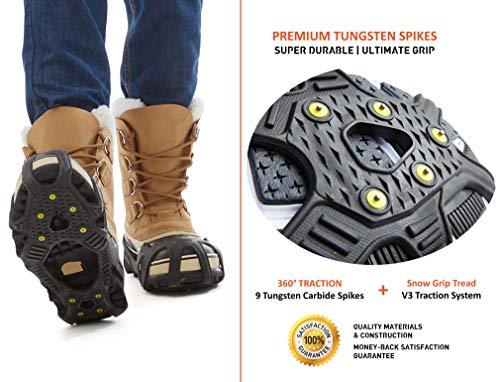
Best shoes for black ice: choose aggressive crampons or studded traction cleats for safe footing.
You step out, thinking a short walk will be fine, then your foot slips on unseen black ice. That hidden glaze is slick, thin, and deadly for shoes without true traction. I’ve tested gear over a decade in real winter conditions. The right traction—spikes, tungsten studs, or a diamond-pattern gripper—turns a risky walk into a confident stride. Below I break down top options so you can pick the best shoes for black ice and stay upright.
ICETRAX V3 Tungsten Crampons
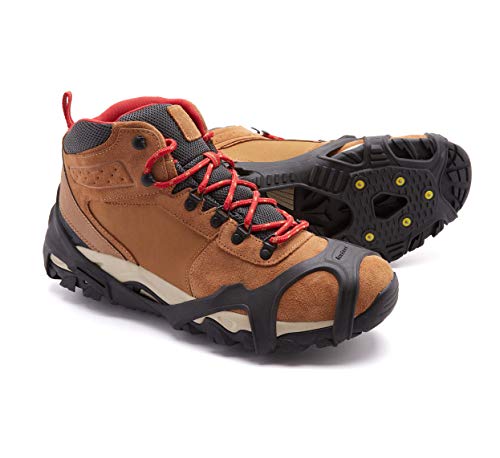
I used ICETRAX V3 on packed snow and thin black ice and felt immediate grip. The tungsten studs bite hard and the flexible frame fits many boot soles. Setup is fast and the reflective heel helps low-light visibility. I found traction steady on small slopes and icy sidewalks.
The straps hold tight without over-tightening the shoe. I could walk on mixed surfaces without feeling clunky. These are not a substitute for mountaineering crampons on vertical ice, but they are excellent for daily winter use. They pack flat and last through multiple seasons when maintained.
Pros:
- Tungsten studs provide aggressive bite on hard ice
- Flexible frame fits boots and many shoes
- Reflective heel improves night visibility
- Lightweight for all-day wear around town
- Easy to install and remove in minutes
Cons:
- Can feel stiff on bare pavement
- Not ideal for technical mountaineering
- Straps may wear over years of heavy use
My Recommendation
I recommend ICETRAX V3 for urban commuters and postal workers who need reliable bite on slick black ice. I found them ideal when I sprinted for a bus on icy mornings. They suit hikers who want low-profile studded traction for sidewalks and light trails. If you want robust anti-slip performance without full crampons, these are a top pick for the best shoes for black ice.
| Best for | Why |
| City commuters | High bite studs for short walks on black ice |
| Light trail hikers | Flexible fit and durable studs for mixed terrain |
| Night walkers | Reflective heel adds safety in low light |
19-Spike Stainless Steel Crampons

This 19-spike model uses stainless steel spikes spaced under the foot. I wore them on slushy sidewalks and thin black ice patches. The spike pattern gives consistent traction during starts and stops. They stretch to fit a wide range of shoe sizes and hold up well to repeated use.
The build favors sturdiness over low weight. I felt a secure base when crossing parking lots and getting in and out of cars. They can be noisier on hard pavement, so I reserve them for icy days. Overall, they deliver steady, reliable grip when the ground is mirror-slick.
Pros:
- 19 spikes for broad contact and grip
- Durable stainless steel resists rust
- Universal fit stretches over many shoes
- Ideal for fishing, hiking, and general outdoor work
- Simple strap system is quick to use
Cons:
- Heavier than minimalist cleats
- Can be loud on bare pavement
- Less comfortable for long runs
My Recommendation
I recommend the 19-spike stainless steel crampons for outdoor workers and anglers who need reliable traction on black ice. I appreciated their build when I stood on slippery ramps and docks. They suit people who prioritize durability and broad contact over minimal weight. For anyone aiming to make winter walking safer, these are a solid tool among the best shoes for black ice.
| Best for | Why |
| Outdoor workers | Stainless spikes for long-lasting performance |
| Fishing & hunting | Secure footing on wet, icy surfaces |
| General winter use | Broad spike coverage for steady balance |
Yaktrax Walk Cleats

Yaktrax Walk uses coiled steel wires to create a diamond grip pattern. I liked how quietly they move across hard snow and ice. They are softer and more flexible than rigid crampons. I found them excellent for everyday walking where comfort and grip matter.
The trade-off is less bite on smooth, glassy black ice compared to studded cleats. I still used them for slushy sidewalks and compacted snow. They fit easily over sneakers and light boots, and pack small in a backpack for travel days.
Pros:
- Comfortable, flexible diamond-pattern traction
- Lightweight and easy to pack
- Quiet on hard surfaces compared to studs
- Fits many shoe styles including sneakers
- Good for mixed snow and ice conditions
Cons:
- Less effective on smooth black ice
- Wires can wear on rough pavement over time
- Not for steep icy slopes
My Recommendation
I suggest Yaktrax Walk cleats for city walkers and travelers who face mixed snow and ice, but not extreme black ice. I use them when I want traction and comfort for errands or light hikes. They’re a portable, low-profile choice among the best shoes for black ice for everyday use when deep studs aren’t needed.
| Best for | Why |
| Daily walkers | Comfortable fit for errands and strolls |
| Travelers | Packable and lightweight |
| Mixed conditions | Works well on snow and slush |
7-Point Crampon Spikes
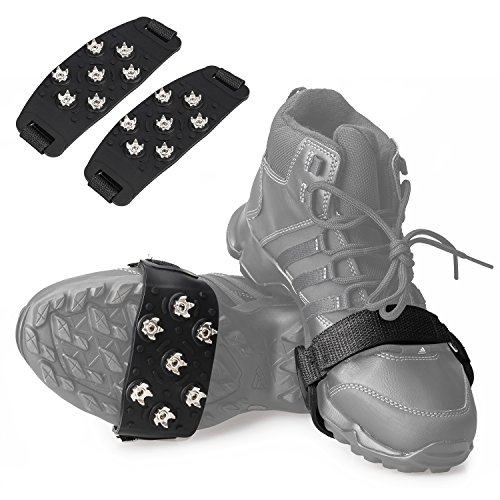
These 7-point cleats focus spikes where you need them most: toe and heel. I tested them on urban steps and they delivered decisive traction for short bursts. They are lightweight and designed for walking, jogging, and quick maneuvers. I liked how unobtrusive they felt in sneakers.
They lack broad surface coverage for long hikes, so I avoid them on steep ice fields. For errands, jogs, and quick outdoor chores they shine. I keep a pair in my work bag for sudden icy patches when moving between job sites.
Pros:
- Targeted spike placement for toe and heel grip
- Light and minimal underfoot feel
- Good for joggers and quick movements
- Easy to pull on and off quickly
- Affordable option for basic traction
Cons:
- Not suitable for long hikes or technical routes
- Lesser coverage on broad ice surfaces
- May slip on polished black ice compared to tungsten studs
My Recommendation
I recommend the 7-point crampon spikes for runners and quick-stride walkers who want the lightest traction that still manages black ice in short bursts. I use them for quick school runs and brief outdoor tasks when I need immediate grip. They’re a practical, low-weight option among the best shoes for black ice for short-distance movement.
| Best for | Why |
| Runners | Minimal weight with targeted traction |
| Short errands | Quick on/off convenience |
| Light hikers | Good for brief trail stretches |
Yaktrax Diamond Grip

Yaktrax Diamond Grip combines elastomer harnesses and steel coils for a broad diamond traction pattern. I tested them on uneven winter sidewalks and liked the balance of comfort and hold. They grip packed snow well and perform respectably on thin black ice. The fit is secure on many shoe types.
They are not as aggressive as studded cleats on glassy ice. I prefer them for daily walking and commuting where you encounter mixed patches. Their low-profile design makes them less awkward indoors when removed briefly at doorways.
Pros:
- Diamond coil pattern gives wide contact and stability
- Comfortable and low-profile underfoot
- Quick to deploy and remove
- Fits a variety of footwear
- Good compromise between studs and flexible grips
Cons:
- Limited bite on polished black ice
- Coils can fray with heavy pavement use
My Recommendation
I recommend Yaktrax Diamond Grip for commuters who want balanced traction for snow and light ice. I carry them for city walks and find them comfortable for long wear. If your main worry is mirror-like black ice, you may still prefer studded options, but these remain a top everyday pick among the best shoes for black ice for mixed urban use.
| Best for | Why |
| Office commuters | Low-profile and comfortable for all-day wear |
| Long walkers | Balanced traction with comfort |
| Mixed terrain | Performs well on snow and packed ice |
Sfee Rotating Tungsten Cleats
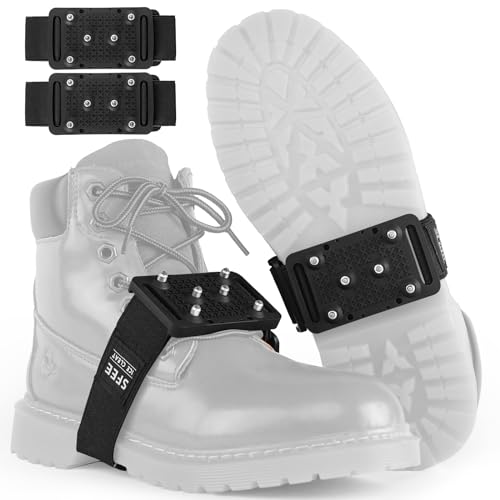
Sfee’s rotating tungsten studs let you flip the spikes out for icy days and tuck them away on pavement. I used them across mixed urban surfaces and appreciated the quick-switch feature. Tungsten provides superior hardness and a deeper bite on black ice. The straps and adjustable fit stay snug during active use.
These perform especially well during icy commutes where I transition between street and indoor spaces. I like being able to rotate studs when needed and avoid dragging metal indoors. For frequent indoor/outdoor transitions, these are a clever modern solution.
Pros:
- Rotating tungsten studs for on-demand bite
- Adjustable straps for a secure fit
- Good for frequent indoor/outdoor transitions
- Durable materials for multi-season use
- Easy to flip studs without tools
Cons:
- Mechanism adds complexity that may wear
- Slightly pricier than fixed-stud alternatives
My Recommendation
I recommend Sfee rotating tungsten cleats for commuters and delivery drivers who move inside and outside repeatedly. I depend on their quick stud rotation to avoid dragging metal into buildings. For those who prioritize convenience and aggressive bite on black ice, these rank high among the best shoes for black ice.
| Best for | Why |
| Delivery drivers | Flip studs for indoor stops and outdoor grip |
| Frequent commuters | On-demand traction without removing cleats |
| Urban pros | Durable tungsten for true bite on black ice |
Alternate 19-Spike Snow Grips
This alternate 19-spike model mirrors the other stainless option but with slightly different straps and fit. I tested it against the first 19-spike pair and noticed marginal differences in strap comfort. The spikes are robust and give confident footing on mirror ice. They are sturdy for long field days outdoors.
The fit leans a bit larger, so I size down if you’re on the border. Their performance on black ice matches other full-spike designs. For heavy use, these are a cost-effective way to make ordinary shoes act like the best shoes for black ice.
Pros:
- Full 19-spike coverage for reliable traction
- Sturdy build great for long shifts outdoors
- Secure straps hold even in wet conditions
- Budget-friendly compared to branded studs
- Good for a variety of winter boots
Cons:
- Tends to fit large—size cautiously
- Heavier underfoot for long walks
My Recommendation
I recommend this alternate 19-spike snow grip for budget-conscious users who spend long hours outside. I used them on job sites and found them dependable on black ice. If you want full-spike coverage without a big price tag, they are a pragmatic option among the best shoes for black ice.
| Best for | Why |
| Budget buyers | Full spike traction at lower cost |
| Long-shift workers | Durable for extended outdoor use |
| Boot wearers | Fits a range of winter boots |
WIN.MAX 19-Spike Traction Cleats

WIN.MAX offers another 19-spike alternative with a focus on strap comfort and fit. I wore them during late-season ice storms, and the spikes held steady on very thin black ice. The rubber harness resists cold cracking and the spikes resist rust. They feel like a heavy-duty commuter cleat.
They are slightly bulkier but trade weight for longevity. I recommend them for people who want no-nonsense traction without fiddly parts. Overall, they are a dependable addition to the list of the best shoes for black ice.
Pros:
- Robust strap design resists cold wear
- 19 stainless spikes for full coverage
- Long-lasting rubber harness
- Good stability for work and hiking
- Consistent performance in low temps
Cons:
- Bulkier underfoot than minimalist options
- Not ideal for long road runs
My Recommendation
I recommend WIN.MAX 19-spike cleats for users who value durability and steady traction on black ice. I use them for heavy-duty winter tasks where reliability matters more than weight. For daily dependable performance, they stand out among the best shoes for black ice options.
| Best for | Why |
| Durability seekers | Built to last in cold conditions |
| Work boots | Secure fit for active tasks |
| Winter hikers | Full spike coverage for steady footing |
Yaktrax Pro Traction Cleats

Yaktrax Pro uses steel coil traction but with a more robust harness for boots. I wore them for longer winter hikes and found them comfortable. The coils spread pressure and reduce hot spots on the sole. They’re better for longer walks than the Walk model.
They aren’t as aggressive as studs on glassy black ice, yet they offer a balance of comfort and grip for extended outings. I recommend them when you expect mixed ice and snow for long durations. They’re a dependable mid-range option for seasonal use.
Pros:
- Stronger harness suited for boots and long walks
- Even pressure distribution from steel coils
- Comfortable for extended wear
- Good traction on packed snow and softer ice
- Durable construction for multi-season use
Cons:
- Less effective on polished black ice than studs
- Coils wear with heavy pavement exposure
My Recommendation
I recommend Yaktrax Pro for hikers and long-distance walkers who need comfort and reliable grip in mixed winter conditions. I often choose them when I plan long routes with variable surfaces. While not the most aggressive on mirror ice, they rank as some of the best shoes for black ice for longer treks where comfort matters.
| Best for | Why |
| Long hikers | Comfortable for long hours on foot |
| Boot wearers | Stronger harness fits larger soles |
| Seasonal trekkers | Balanced traction for mixed ice |
STABILicers Walk Cleats

STABILicers Walk uses an innovative blade and lug system underfoot for reliable grip on ice and snow. I appreciated how well they stabilized me on steep, iced steps. The design avoids dragging and stays put once fitted. They feel secure underfoot for short to moderate walks.
They’re not the most aggressive on polished black ice, but they add a layer of safety that most shoes lack. I use them for neighborhood walks and errands when temperatures drop. They’re a practical, steady choice among the best shoes for black ice for everyday stability.
Pros:
- Blade-and-lug design gives stable traction
- Secure fit and low-profile feel
- Good on steep, icy steps
- Durable for regular winter use
- Easy to clean after slushy walks
Cons:
- Less aggressive on perfectly smooth black ice
- Can be firm underfoot for long wear
My Recommendation
I recommend STABILicers Walk for seniors and anyone walking hilly sidewalks who needs steady stability on icy steps. I found them especially helpful on steep neighborhood routes. They are a sensible pick among the best shoes for black ice for people who want a dependable balance of grip and comfort.
| Best for | Why |
| Seniors | Stable blades for safe steps |
| Hilly walkers | Good performance on steep sidewalks |
| Errand runners | Reliable for short daily trips |
FAQs Of best shoes for black ice
What features make shoes good for black ice?
Shoes themselves rarely beat black ice. Traction devices—tungsten studs, stainless spikes, or diamond coils—are key. I look for hardened studs, solid attachment systems, and low-profile fit so you can walk naturally. Reflective elements and durable straps add safety and longevity.
Are studded cleats better than coil grips?
Yes for pure glassy black ice, studs (tungsten or stainless) bite deeper and will stop slips faster. Coils and diamond grips perform better on mixed snow and are more comfortable. I choose studs for extreme slickness and coils for all-day comfort.
Can I keep traction devices on indoors?
Most devices will scratch floors and are uncomfortable indoors. Some rotating-stud or tuck-away designs allow partial indoor tolerance. I remove cleats at doorways when possible to protect surfaces and avoid tripping hazards.
How should I care for traction cleats?
Rinse salt and grit after use, dry fully, and store in a cool place. Check straps and studs for wear each season. I lightly oil moving parts on rotating designs and replace studs that flatten over time for consistent performance.
Do these work for running on ice?
Some models are designed for jogging—lightweight 7-point spikes and certain pro cleats. For running on glassy black ice, choose studded running-specific models. I avoid fast runs on pure black ice; walking with studded traction is safer.
Final Verdict: Which Should You Buy?
For the purest grip on mirror-like black ice, I favor tungsten or stainless studded cleats like ICETRAX V3 and the 19-spike models. They provide the deepest bite and the confidence to walk on glassy surfaces.
For everyday mixed conditions, Yaktrax Diamond or Yaktrax Pro offer a comfortable balance. Overall, choose the best shoes for black ice based on how icy your routes get and how often you switch between indoors and out.

Madison Clark is a footwear expert and the voice behind MyStyleGrid.com. She specializes in honest shoe reviews, style tips, and practical guides to help readers find the perfect pair for any occasion. With years of experience in blogging and content creation, Madison makes footwear knowledge simple, stylish, and easy to follow.