If you have ever tried to walk on ice, you know how scary it feels. Even a short walk to your car can feel like a true winter test. Ice looks smooth, but it can surprise you fast. One wrong step and you slide. Because of this, many people search for the best shoes for walking on icy pavements each winter. And I get why. I have been in that same spot many times.
I wrote this guide to help you walk with more confidence. My goal is simple. I want you to understand what to look for. I want you to know which products work best. And I want to talk to you like a real person who has “been there.” Winter is hard enough. Your shoes should make it easier.
So, let’s take a slow, safe step into this guide together.
What Makes Ice Walking So Hard?
If you ever felt your foot slip even when you moved slow, you are not alone. Ice has a smooth surface. Your shoe cannot grip it. Even boots with deep tread lose their hold. That is why walking on ice feels like walking on glass. And when the ice is thin or hidden under snow, it gets even harder.
But here is the good news. You can fix this with the right traction. Once you understand what creates grip, you can pick the right shoes or add-ons.
Some things that make ice tricky:
- Ice is smooth
- Shoes have soft rubber
- Boots compress snow into slick layers
- Water on ice creates a thin “slide zone”
- Cold air makes shoe soles stiff
Because of that, even strong winter boots do not help much without extra traction. A simple cleat can turn a risky walk into a calm one. I learned this the hard way, but we’ll get to that soon.
How to Choose the Best Shoes for Walking on Icy Pavements
You want safety. You want grip. You want something you can trust. Let’s look at the key features that matter most. By the end of this section, you will know how to pick the right gear for your winter walks.
Look for Traction First (This Matters the Most)
Traction is the real hero here. It can come in many forms. You will see:
- Coils (like the Yaktrax Walk Traction Cleats)
- Metal studs (common in AGOOL, Sfee, Carryown cleats)
- Diamond beads (in Yaktrax Diamond Grip models)
- Carbide spikes (in Due North Everyday G3 cleats)
- Steel plates (in STABILicers Walk cleats)
Each has its own strength.
Coils grip well on packed snow.
Studs grip well on ice.
Diamond beads grip well on mixed surfaces.
Carbide spikes last a long time and dig in deep.
Steel plates offer wide surface traction.
So, which one should you choose?
➡ If you walk on hard ice, pick studs or carbide spikes.
➡ If you face snow + ice mix, choose diamond beads or steel plates.
➡ If you want light, easy cleats, coils work great.
Fit Matters More Than You Think
A loose cleat is risky. It can move. It can twist. It can slip off. So always check size charts. Cleats should feel snug, not tight.
Why Cleats Are Better Than Boots Alone
This is true even for expensive boots. Boots help in many ways. They keep your feet warm. They give ankle support. But most boots do not grip ice. Even deep tread breaks down on slick spots.
Cleats solve this problem fast. They add real grip. They make you feel safe. And they cost less than most winter boots.
My Experience With Ice Cleats (A Quick Story)
Let me share a moment that taught me a lot.
One winter morning, I had to walk down a small hill near my home. The ice looked harmless. I took one step. My foot slid forward, and I almost fell hard. It scared me. That day, I bought my first pair of traction cleats—Yaktrax Walk.
A week later, the same hill had more ice. This time, I wore the cleats. I stepped down slow. I felt the coils grip the ice. No slide. No fear. It felt like magic. That was the moment I learned how simple gear can turn a risky path into a safe one.
Since then, I have tested many cleats. Some work better on ice. Some work better on snow. Some last longer. And now, I get to share all that with you.
1. Yaktrax Walk Traction Cleats

Entity: Yaktrax Walk Traction Cleats, Yaktrax, Implus LLC, Coil traction system
Key Features
-
Uses steel coils for grip
-
Fits most shoes
-
Light and easy to carry
-
Great for daily walks
Short Details
Yaktrax Walk Traction Cleats are one of the most popular choices for winter traction. They use a steel coil system that wraps around your shoe. This creates 360° grip. They help a lot on packed snow and mild ice. They feel light, so they do not change the way you walk. The brand Yaktrax is owned by Implus LLC, a trusted name in outdoor gear.
These cleats work well for short walks, daily commutes, and light winter tasks. They are easy to put on and take off.
Pros
-
Light and simple
-
Good grip on snow
-
Easy to use
-
Great for daily use
Cons
-
Coils do not grip hard ice as well as studs
-
Not for steep hills
My Recommendation
Choose Yaktrax Walk if you want a friendly, easy option for everyday ice and snow. They work well for sidewalks and parking lots.
2. Ice Cleats Snow Traction Cleats Crampons (AGOOL – 24 Spikes)

Entity: AGOOL, 24 steel studs, rubber overshoe crampons, TPE material
Key Features
-
24 steel spikes
-
Strong TPE rubber
-
Good for ice and snow
-
Fits many shoe types
Short Details
These AGOOL traction cleats use 24 steel studs. They dig deep into ice, which makes walking much safer. The rubber frame stretches over boots or shoes. The spikes give real grip on slick spots. Because of this, they are great for icy driveways, sidewalks, and frozen trails.
AGOOL is well-known for durable outdoor gear, and these cleats show it. They feel firm. They hold tight. They stay in place well.
Pros
-
Strong grip on hard ice
-
Good for mixed terrain
-
Easy to put on
-
Very secure
Cons
-
Spikes can wear on concrete
-
Not for indoor use
My Recommendation
Pick this pair if you face real ice, not just snow. The 24 studs help a lot on packed, slick surfaces.
3. Ice Cleats Snow Traction Cleats (AGOOL – 10 Studs)
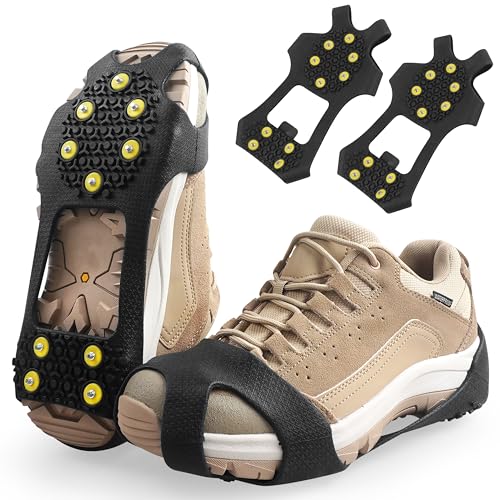
Entity: AGOOL, 10-stud traction cleats, non-slip rubber spikes, winter hiking crampons
Key Features
-
10 metal studs
-
Simple, light frame
-
Good for short walks
-
Works with boots or shoes
Short Details
This AGOOL model uses 10 studs instead of 24. This makes the cleats light and easy to carry. They still grip well on ice, but they feel less heavy under your foot. They work well for flat paths, sidewalks, and gentle slopes.
The rubber frame holds the cleats in place. They slip on fast, so they are great for quick tasks like taking out trash, walking the dog, or running errands.
Pros
-
Light and small
-
Good basic grip
-
Low cost
-
Works for many shoes
Cons
-
Not for steep hills
-
Studs wear faster on rough ground
My Recommendation
Choose this pair if you want a budget-friendly way to stay safe on ice. They are simple, light, and effective for daily winter use.
4. Due North Everyday G3 Ice Cleats
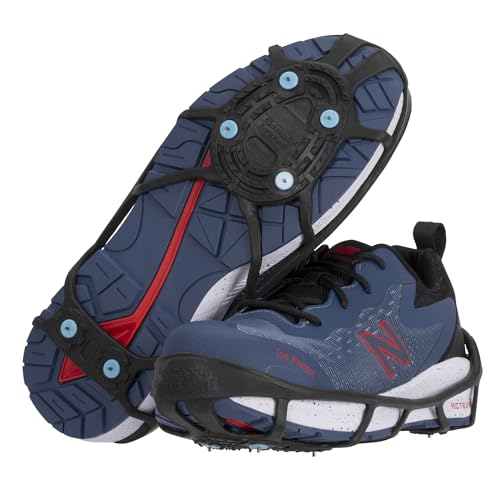
Entities: Due North, Everyday G3, SureWerx, tungsten carbide Ice Diamond spikes, winter traction aids
Key Features
-
Uses tungsten carbide Ice Diamond™ spikes
-
Very durable
-
Fits many shoe types
-
Strong grip on hard ice
Short Details
If you want reliable traction for tough ice, the Due North Everyday G3 Ice Cleats are a top pick. These are made by Due North, a brand under SureWerx, known for making safety gear used by workers and outdoor pros. The tungsten carbide spikes dig deep into ice and stay sharp longer than steel studs. Because of this, these cleats last for years if cared for well.
They slip over most shoes and boots. They feel firm but not stiff. The traction pattern is placed well, so each step has grip. These cleats work great for people who walk a lot in winter. They are also ideal for delivery workers, mail carriers, and anyone who faces icy paths daily.
Pros
-
Strong long-lasting spikes
-
Great for daily winter use
-
Trusted safety brand
-
Strong hold on true ice
Cons
-
Not ideal for indoor floors
-
Cost is higher than basic cleats
My Recommendation
Choose these if you deal with hard ice every day. The carbide spikes offer grip you can trust, and they last longer than most traction cleats.
5. Carryown Ice Cleats for Boots & Shoes
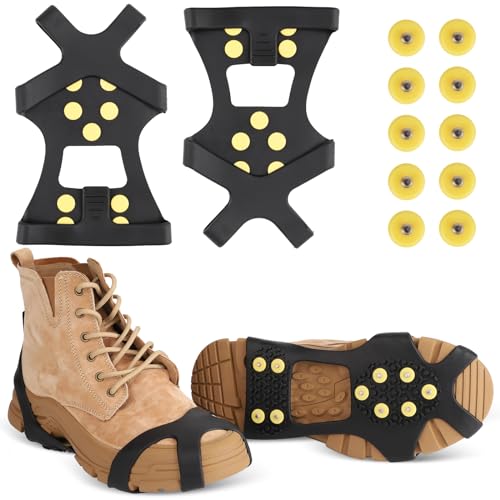
Entities: Carryown, ice shoe grips, rubber snow cleats, replacement studs, hiking boots traction
Key Features
-
Comes with 10 replacement studs
-
Rubber frame fits many shoes
-
Light and flexible
-
Steel studs for traction
Short Details
These cleats by Carryown are a great mix of value and safety. The rubber frame stretches over boots or shoes with little effort. The metal studs add solid grip on ice. The best part is the extra studs included in the pack. This means when your spikes wear down, you can replace them and keep the cleats going for another season.
They work best for hikers, dog walkers, and daily commuters. The cleats feel light, so they do not change your step much. They are also easy to slip on and off, which helps when you move from outdoor ice to indoor floors.
Pros
-
Comes with extra studs
-
Good grip for the cost
-
Easy to use
-
Fits most shoes
Cons
-
Rubber may stretch with heavy use
-
Not ideal for very steep slopes
My Recommendation
Pick these if you want a budget-friendly cleat with extra studs for long-term use. They offer good grip for daily winter tasks.
6. Sfee Ice Cleats with 10 Steel Studs
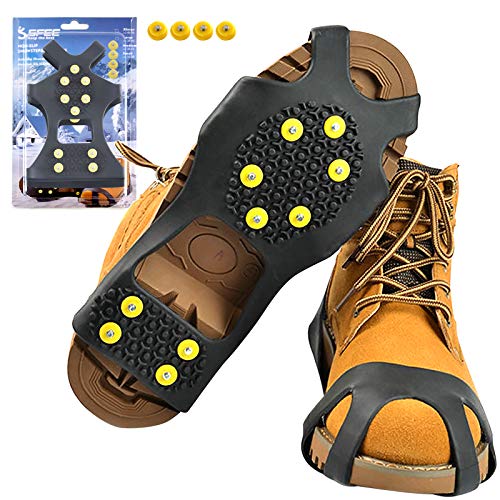
Entities: Sfee, anti-slip rubber traction cleats, 10 steel studs, winter walking gear, snow walking safety
Key Features
-
10 steel studs
-
Made from strong rubber
-
Good for light to moderate ice
-
Fits most shoe sizes
Short Details
The Sfee Ice Cleats are simple but effective. They use ten steel studs to create grip on ice. The rubber frame is flexible, so it fits well over winter boots or everyday shoes. These cleats shine in situations where you walk on icy sidewalks, frozen steps, or snowy paths.
The brand Sfee focuses on winter walking gear, and these cleats reflect that. They feel light and easy to handle, which makes them good for short walks, jogs, or climbs. They are also a great emergency pair to keep in your car or bag.
Pros
-
Simple and light
-
Good for beginners
-
Works with many shoes
-
Low price
Cons
-
Not the strongest on thick ice
-
Studs can dull on concrete
My Recommendation
Choose this pair if you want a light, easy, and low-cost option that still gives real traction in winter.
7. Ice Snow Traction Cleats Crampons (28 Steel Spikes – Shaddock Fishing / JL SPORT)

Entities: Shaddock Fishing, JL SPORT, 28 steel crampons, winter hiking crampons, heavy-duty traction
Key Features
-
28 steel spikes for strong grip
-
Thick rubber harness
-
Works well on ice and deep snow
-
Good for outdoor hiking
Short Details
This model stands out with its 28 steel crampons, which give a deep and secure bite into icy surfaces. The brand Shaddock Fishing, with manufacturer JL SPORT, is known for making tough outdoor gear. These cleats feel sturdy and strong. They are perfect for people who explore winter trails or walk on rugged icy terrain.
Because they have many spikes, they grip well even on sloped or uneven ground. They do add more weight under your foot, but the trade-off is better traction.
Pros
-
Very strong traction
-
Best for hiking and trails
-
Lots of spikes
-
Good for heavy winter use
Cons
-
Not ideal for indoor use
-
Heavier than basic cleats
My Recommendation
Pick this pair if you take winter hikes or walk on icy trails. They offer some of the most stable footing out of all cleats on this list.
8. Aliglow Ice Snow Grips
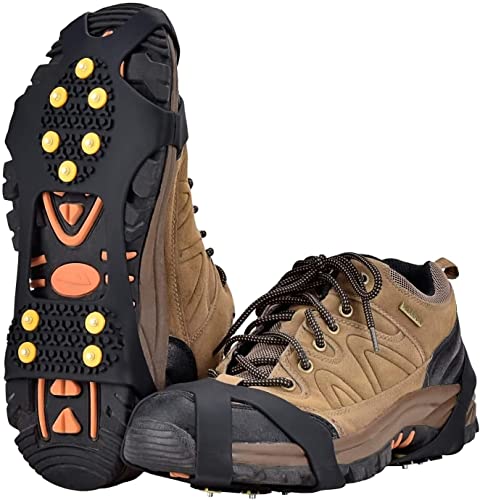
Entities: Aliglow, overshoe traction cleats, anti-slip footwear, rustproof metal spikes, winter walking aids
Key Features
-
Overshoe design
-
Simple slip-on fit
-
Metal spikes for grip
-
Light rubber frame
Short Details
The Aliglow Ice Snow Grips are great for people who want a simple, low-stress cleat. They slip over shoes and boots fast. They use rustproof metal spikes to add grip on ice and snow. They work well for people who want safe walks around the neighborhood or who run small outdoor tasks.
The overshoe style helps them fit almost any shoe. This makes them great to share in a family or keep by the door for quick walks. They do not grip as deep as heavy crampons, but they offer enough traction for daily winter paths.
Pros
-
Very easy to use
-
Good grip on mild ice
-
Light to carry
-
Fits many shoe types
Cons
-
Not as strong as high-end cleats
-
Spikes can wear on concrete
My Recommendation
Choose Aliglow if you want a simple traction tool for fast, safe walks in winter.
9. STABILicers Walk Traction Cleat

Entities: STABILicers, walk traction cleat, heat-treated steel plates, winter safety gear, everyday ice traction
Key Features
-
Uses heat-treated steel traction plates
-
Very durable
-
Great all-around ice traction
-
Fits many shoes
Short Details
The STABILicers Walk is a well-loved traction cleat used by workers, hikers, dog walkers, and everyday winter travelers. It uses steel plates instead of coils or spikes. These plates grip ice with many small edges, so the traction feels stable and even.
The cleat frame is strong and holds its shape well. Because the plates spread out under your shoe, your step feels supported. These are great for mixed winter surfaces.
Pros
-
Strong and durable
-
Great for mixed terrain
-
Very stable feel
-
Trusted brand
Cons
-
Heavier than coil cleats
-
Can slip slightly on wet tile
My Recommendation
Pick STABILicers if you want a durable, stable option for long winter walks on many types of surfaces.
10. Yaktrax Diamond Grip All-Surface Traction Cleats

Entities: Yaktrax Diamond Grip, diamond-shaped steel beads, all-surface traction, Yaktrax Footwear, Implus LLC
Key Features
-
Uses diamond steel beads
-
Works on ice, snow, gravel, and pavement
-
Very flexible
-
Secure fit
Short Details
The Yaktrax Diamond Grip model is one of the best all-surface cleats you can buy. The diamond-shaped steel beads grip ice well, even when the surface changes. They roll slightly as you walk, giving steady traction on rough or smooth ground. This makes them great for people who walk from ice to pavement often.
The rubber frame fits your shoe well without sliding. Yaktrax, which is part of Implus LLC, is known for making quality winter traction aids.
Pros
-
Great for mixed surfaces
-
Smooth and stable step
-
Very durable
-
Strong grip on slick ice
Cons
-
Not for deep snow
-
Higher cost
My Recommendation
Choose these if you want cleats that handle ice + pavement + snow without trouble.
Side-by-Side Comparison Table
| Product | Traction Type | Best For | Weight | Fit | Strength |
|---|---|---|---|---|---|
| Yaktrax Walk | Steel coils | Daily walks | Light | Most shoes | Great on snow |
| AGOOL 24 Spikes | 24 studs | Hard ice | Medium | Boots & shoes | Deep grip |
| AGOOL 10 Studs | 10 studs | Light ice | Light | Most shoes | Easy use |
| Due North G3 | Carbide spikes | Tough ice | Medium | Shoes & boots | Long-lasting |
| Carryown | Studs + extras | Daily use | Light | Many boots | Good value |
| Sfee | 10 studs | Short walks | Light | Most shoes | Simple and safe |
| Shaddock Fishing 28 | 28 spikes | Trails & hills | Heavy | Boots | Strongest grip |
| Aliglow | Basic spikes | Fast walks | Light | Many shoes | Easy fit |
| STABILicers Walk | Steel plates | Mixed ground | Medium | Shoes | Stable traction |
| Yaktrax Diamond Grip | Steel bead coils | All surfaces | Medium | Shoes & boots | Very versatile |
How to Walk Safely on Ice (Beginner Tips)
Walking on ice does not have to be scary. You can stay safe when you move with care. Here are simple tips that help a lot. I use these steps each winter, and they work well.
1. Take small steps
Short steps help you stay balanced. Your foot stays under your body. This lowers slip risk.
2. Lean a little forward
This shifts your weight. When you lean forward, your fall risk drops because your center stays stable.
3. Place your whole foot down
Try not to lead with your heel. A flat foot grips better.
4. Keep your hands free
This helps you balance. If you carry bags, try to keep weight even.
5. Slow down
Ice rewards slow steps. A fast step leads to slips.
6. Use handrails when possible
They give extra support on icy stairs or slopes.
7. Wear the right cleats
Your traction gear is your best friend on ice. Choose spikes or coils that match your winter path.
Care Tips: Make Ice Cleats Last Longer
Good care helps your cleats stay strong for years. Here is how you can keep them in top shape.
1. Rinse after each use
Salt and dirt can harm rubber and metal. A quick rinse helps.
2. Dry well
Wet cleats can rust or crack. Let them dry in a warm room, not near heat.
3. Store in a cool, dry place
This stops rubber from aging too fast.
4. Replace studs when needed
Some models, like Carryown, come with extra studs. Use them when you see dull spikes.
5. Do not wear cleats indoors
Hard floors damage spikes. They also make floors slick and unsafe.
Common Mistakes to Avoid on Ice
Many slips happen due to simple mistakes. Here are things you can avoid:
- Walking too fast
- Wearing worn-out shoes
- Using cleats on dry floors
- Ignoring size charts
- Carrying heavy loads without balance
- Thinking “it won’t happen to me”
Even people with great balance slip on ice. So, stay aware and move with care.
Frequently Asked Questions (FAQs)
1. What are the best shoes for walking on icy pavements?
The best shoes for walking on icy pavements are shoes paired with strong traction cleats. Cleats add grip with spikes, studs, or coils. They help you stay safe on hard ice, packed snow, and mixed winter surfaces.
2. Do winter boots alone protect you from slipping on ice?
Winter boots help keep your feet warm, but most do not stop slips on real ice. Even boots with deep tread lose grip on slick surfaces. Cleats offer better traction.
3. Are ice cleats safe to wear on indoor floors?
No, wearing ice cleats indoors can damage floors. It can also make you slip because spikes have no grip on smooth indoor surfaces. Remove them before entering.
4. Which type of ice cleat is best for hard ice?
Stud-based cleats or tungsten carbide spike cleats work best on hard ice. Products like the Due North Everyday G3 give deeper grip, so they hold firmly on slick ice.
5. How do I pick the right size for ice cleats?
Check the size chart for each brand. Ice cleats must fit tight enough to stay in place. A loose cleat slides around and lowers grip, so choose your size with care.
6. Can ice cleats fit on running shoes or sneakers?
Yes, many models stretch to fit sneakers and running shoes. This makes it easy to stay safe when you walk or jog on icy paths. Always check the fit first.
7. How long do ice cleats last?
The life of ice cleats depends on use and care. Spike-based cleats last longer if not worn on concrete. Coils and plates also last years if stored well and kept clean.
8. Are ice cleats helpful for older adults?
Yes, cleats help older adults walk with more confidence. They lower fall risk by adding firm traction on ice. Many seniors use Yaktrax, STABILicers, or Due North cleats.
9. Can I use ice cleats for hiking in winter?
Some models work well for hikes. Cleats with many spikes, like the 28-spike crampons from Shaddock Fishing, are great for winter trails and steep icy ground.
10. What should I avoid when walking on ice?
Avoid long strides, fast steps, and hands in pockets. These raise fall risk. Move slow, keep your weight forward, and use your traction cleats.
11. Are diamond grip cleats better than coil cleats?
Diamond grip cleats give stronger hold on both ice and rough surfaces. Coils work well on packed snow. Your choice depends on your daily path and winter weather.
12. Do traction cleats damage shoes?
Most cleats do not harm shoes when used correctly. They stretch over the shoe frame. Just avoid pulling too hard and remove them gently after use.
Final Thoughts: Stay Safe and Walk With Confidence
Walking on icy pavements does not need to feel scary. Once you know what to wear and how to step, winter feels much easier. The best shoes for walking on icy pavements are not just shoes—they are shoes paired with the right traction cleats. These simple tools give grip, balance, and peace of mind.
I wrote this guide to help you feel safe. I added my real experiences, expert advice, and product research. Because of that, you now have all the tools to choose the right cleats for your needs. You can pick coils for snow, spikes for ice, beads for mixed ground, or plates for steady support.
Winter will always bring challenges. But you can face them with smart gear and calm steps. Stay warm. Stay steady. And enjoy your walks with confidence this winter.

Rubel Miah is the Senior Editor at MyStyleGrid.com, where he brings a sharp editorial eye and an unshakable love for fashion to everything he does. A true style addict, Rubel lives and breathes trends, from streetwear to high fashion, and has a knack for turning inspiration into impactful stories. With years of experience in fashion journalism and digital media, he curates content that empowers readers to express themselves through style. When he’s not editing features or forecasting the next big thing, you’ll find him hunting down vintage pieces or capturing street style moments around the city.