You know the feeling. I know the feeling.
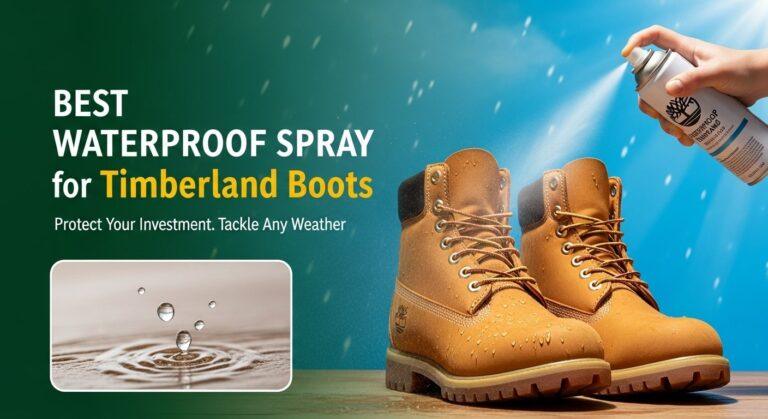
You just bought a fresh pair of Timberlands. They are perfect. That classic “Wheat” yellow color glows. The nubuck leather feels like velvet. You feel great.
Then, you step outside.
A dark, gray cloud opens up. A drop of dirty city water falls. It lands right on the toe of your boot. You watch in horror. The drop does not roll off. It sinks in. It turns into a dark, ugly spot.
Your heart sinks, right?
I have been there. In fact, I made it worse once. Years ago, I bought my first pair of 6-inch Premium boots. I wanted to protect them. So, I grabbed a tin of old mink oil wax. I rubbed it in.
Big mistake.
My beautiful yellow boots turned dark brown. The fuzzy texture got matted down. They looked greasy. I ruined them.
That day, I learned a lesson. Timberland boots need special care.
You cannot use just anything. You need the best waterproof spray for Timberland boots. You need science. You need the right tool for the job.
In this guide, I will share my experience. I will show you what works. I will help you avoid my mistakes. We will keep your boots looking brand new.
Let’s dive in.
Why Your Timberlands Are “Thirsty”
First, we need to talk about the leather.
Most classic Timbs use a material called Nubuck.
What is Nubuck? Think of it like this. It is strong cattle leather. But, the factory sands the outside. This sanding creates a soft fuzz. We call this fuzz the “nap.”
It looks amazing. But there is a catch.
The sanding opens the pores of the leather. It makes the leather absorbent. It acts like a dry sponge.
If you step in a puddle, the water goes deep into the fibers. If you drop ketchup, it stains instantly.
So, we need a shield.
We need a spray that creates Hydrophobicity. That is a big word. It just means “fear of water.”
When we spray your boots, we want water to hit the surface. Then, we want it to ball up. It should look like a marble. Then, it should roll right off. We call this the “Lotus Effect.”
But we have to be careful.
Your feet act like heaters. They sweat. If we seal the boot with thick plastic or wax, the sweat stays in. Your feet get wet from the inside. That is gross. And it makes you cold.
So, the perfect spray must do two things.
- It must stop rain from getting in.
- It must let air get out.
This is a hard balance. But some sprays do it well.
I have tested many cans. I have sniffed the chemicals. I have sprayed my own boots. Now, I will tell you which ones pass the test.
Top Picks: The Best Sprays for Your Boots
I have picked five sprays. Each one is a bit different. Some are for heavy snow. Some are for city stains. Some are for budget.
Let’s look at the first one. This is the one made by the boot masters themselves.
Timberland Balm Proofer Water & Stain Repellant

The “Official” Choice for the Purist
If you are scared to ruin your boots, start here. This is the safest bet.
My Experience with Balm Proofer
I bought this directly from a Timberland store. I figured, “They made the boot, so they know the spray.”
I was right.
This bottle is not an aerosol can. It is a pump spray. When I spray it, it feels a bit wetter than others. It is a white liquid.
I sprayed my yellow boots. At first, I panicked. The leather looked dark and wet.
But, I waited.
I let them dry for 24 hours. This is important. Do not rush it.
The next day, the color was back to normal. The yellow was bright. The “nap” was still fuzzy.
Key Features (The Science)
This spray uses a water-based formula. It is designed to match the chemistry of the leather. It restores the factory waterproofing. It does not block the pores. Your boots will still breathe.
Pros:
-
Color Safe: It rarely changes the boot color once dry.
-
Eco-Friendly: It uses less harsh solvents than aerosols.
-
Versatile: I use it on canvas and nylon too.
-
Trust: It is made specifically for Nubuck leather care.
Cons:
-
Drying Time: You must wait a full day.
-
Application: The pump finger can get tired if you do many pairs.
My Verdict
Use this if you want the “Factory Fresh” look. It is the best way to protect Timberlands from rain without risking the style. It is gentle but strong.
Crep Protect Shoe Protector Spray
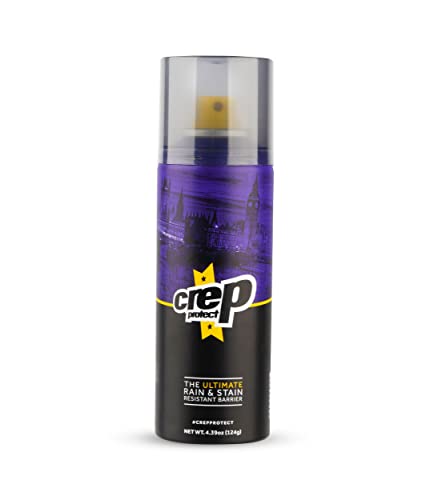
The “Street Style” King for Stain Defense
Do you wear your Timbs to parties? Do you walk in the city? Then meet Crep Protect.
You might have seen videos of this stuff. People pour chocolate syrup on their shoes. It slides right off. It looks like magic.
My Experience with Crep Protect
This is an aerosol can. It hisses when you spray it.
Warning: The smell is strong. It smells like chemicals. Please, go outside. Do not use this in your bedroom.
I tested this on my “going out” boots. I sprayed a light mist. It dries very fast. In about 10 minutes, it was dry.
The protection is wild.
I poured water on the toe. The water literally jumped off. It creates a jagged, microscopic layer of air. This is called Nano-technology. Liquid cannot touch the leather because it sits on the air spikes.
Key Features (The Science)
The nano-shield is powerful. It is great for repelling thick liquids. Think about ketchup, soda, or mud splashes. If you want the best shoe protector spray for stains, this is it.
Pros:
-
Super Hydrophobic: Water beads up instantly.
-
Fast Drying: You can spray and go in 15 minutes.
-
Invisible: It leaves no residue if sprayed correctly.
Cons:
-
The Smell: It is very strong.
-
Longevity: It wears off faster than the Timberland Balm. You need to re-spray every few weeks.
-
White Spots: If you spray too close, it can leave white marks.
My Verdict
Buy this if you hate stains. It is perfect for the city sneakerhead. It keeps your boots looking clean in a dirty world.
Beriove Protect Shoe Protector Spray

The “One Bottle Fits All” Solution
Maybe you are not a boot nerd like me. Maybe you just have a closet full of shoes—some Timbs, some canvas Vans, some Nikes.
You don’t want to buy three different sprays. I get that. You want one bottle that does it all.
My Experience with Beriove
I tested this on a variety of shoes. I sprayed my Timberlands, and I sprayed my white canvas sneakers.
It works similarly to Crep Protect. It uses that Nano-protection technology.
I liked the nozzle on this bottle. It sprays a very fine mist. This is good because it prevents “puddling” on the shoe. It dried pretty clear.
I took these out in a light rain shower. The water beaded up nicely. It did its job.
Key Features (The Science)
This is designed for versatility. It creates a surface barrier that works on almost any fabric. It is a solid middle-ground option.
Pros:
-
Versatile: Works on leather, suede, canvas, and mesh.
-
Fine Mist: Easy to get an even coat.
-
Good Value: You usually get a decent amount for the price.
Cons:
-
Durability: It didn’t last as long as the Nikwax in my testing.
-
Generic: It doesn’t feel as specialized as the Timberland balm.
My Verdict
This is a great “household” spray. Keep it by the door for everyone to use.
Nikwax Nubuck & Suede Proof
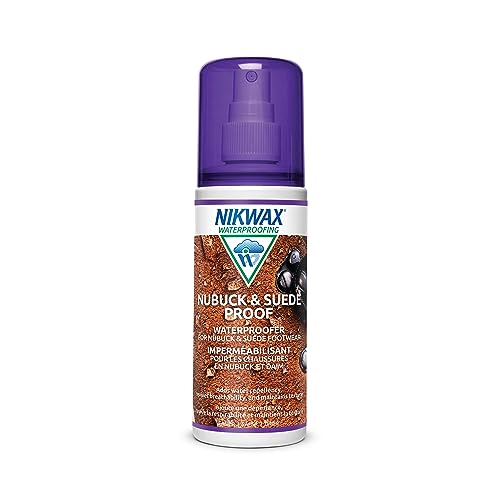
The “Hiker’s Choice” for Heavy Weather
Now, let’s talk about serious weather.
If you wear your Timberlands to hike, or if you live somewhere with deep snow, you need Nikwax.
Nikwax is a legend in the outdoor world. They don’t care about “cool” packaging. They care about keeping your feet dry in a storm.
My Experience with Nikwax
I use this on my older, beat-up boots. You know, the ones I wear to shovel the driveway or walk the dog in the mud.
This is not an aerosol can. It is a pump bottle. It feels different. It is water-based. It doesn’t smell like a chemical factory. It actually smells kind of earthy.
When I apply it, I notice it soaks deep into the leather. It doesn’t just sit on top. It feels like it is “feeding” the leather.
Important Note: Because it soaks in, it can darken the leather slightly. My Wheat boots turned a little darker, more like a honey color. I didn’t mind, but you should know this before you spray.
Key Features (The Science)
This formula is PFC-free. That means it is better for the planet. It is also safe for Gore-Tex. If your Timberlands have a waterproof liner, this spray helps that liner breathe. It is the best waterproof spray for suede boots that take a beating.
Pros:
-
Deep Conditioning: It keeps the leather soft so it doesn’t crack.
-
Breathable: It allows sweat to escape perfectly.
-
Eco-Safe: No nasty greenhouse gases.
-
Wet Application: You can actually apply this to wet boots!
Cons:
-
Color Change: It may darken light nubuck. Test a small spot first!
-
Application: You have to be careful to pump it evenly to avoid streaks.
My Verdict
Use this for work boots or hiking boots. It is about performance, not perfection.
Cozgo Protect Shoe Protector Spray

The “Bulk Buy” for Families
Do you have a big family? Do you have kids who love to jump in puddles?
Buying tiny cans of expensive spray can add up fast. That is where Cozgo comes in.
My Experience with Cozgo
The first thing I noticed was the size. It is a big bottle (over 10 oz). That is almost double the size of some competitors.
I used this to waterproof my nephew’s boots. Kids are tough on shoes.
The application was standard. It claims to be odorless. In my experience, “odorless” is a stretch. It definitely has a smell, but it is not as harsh as the solvent-heavy sprays.
It takes a little longer to dry than the Crep Protect, but the result is a solid shield against mud.
Key Features (The Science)
It relies on the Lotus Effect. It creates a barrier that stops dirt from sticking. This makes cleaning the boots much easier later.
Pros:
-
Big Size: Great bang for your buck.
-
Decent Protection: specific nano-barrier technology.
-
Less Harsh: Smell is manageable.
Cons:
-
Drying Time: Needs a bit more patience.
-
Nozzle: Sometimes it drips if you tilt the can too much.
My Verdict
Perfect for waterproofing the whole family’s gear on a budget.
Side-by-Side Comparison: At a Glance
Let’s make this simple. Here is how they stack up against each other.
| Feature | Timberland Balm | Crep Protect | Nikwax Suede Proof | Beriove | Cozgo |
| Best For | Original Look | Stains/City | Hiking/Work | Variety | Value |
| Technology | Water-Based | Nano-Aerosol | Water-Based | Nano-Aerosol | Nano-Aerosol |
| Color Safety | 10/10 (Safe) | 9/10 | 8/10 (Darkens) | 9/10 | 9/10 |
| Smell | Low | High (Chemical) | Earthy | Moderate | Low/Moderate |
| Dry Time | 24 Hours | 15 Mins | 12-24 Hours | 20 Mins | 30 Mins |
| Breathable | Excellent | Good | Excellent | Good | Good |
Step-by-Step Guide: How to Waterproof Like a Pro
Okay, you bought the spray. Now, don’t mess it up!
Applying spray sounds easy, right? Just point and shoot?
No.
If you spray a dirty boot, you are just sealing in the dirt forever. If you spray too close, you get stains.
I have refined my routine over years of ruining boots. Follow these steps to do it right.
Phase 1: The Prep (Crucial!)
You must start with a clean surface.
If your boots are brand new, you can skip to Phase 2. But if you have worn them even once, you need to clean them.
- Remove the Laces: Take them out. You want to spray the tongue of the boot, too.
- The Dry Brush: Grab a suede brush (or a stiff toothbrush). Brush the entire boot vigorously.
- Why? You are knocking off dust. But more importantly, you are lifting the “nap.” You want the leather fibers to be standing up, not matted down.
- Spot Clean: If there is mud, use a nubuck cleaner foam. Wipe it away and let it dry.
Note: If you are wondering how to clean Timberland boots properly, never use bar soap. It dries out the leather. Use a specific foaming cleanser.
Phase 2: The Application
Go outside. I mean it. Even the eco-friendly sprays are better with fresh air.
- Stuff the Boot: Put some newspaper inside the boot. This stops the spray from getting on the insole. Slippery insoles are annoying.
- The Distance Rule: Hold the can 6 to 8 inches away from the leather.
- The Motion: Do not just spray one spot. Keep your hand moving. Back and forth. Imagine you are spray-painting a wall.
- The Mist: You want a light mist. The boot should look slightly damp, not soaked.
- Two Coats: It is better to do two light layers than one heavy one. Wait 10 minutes between coats.
Phase 3: The Cure
This is the hardest part. You have to wait.
- For Aerosols (Crep, Beriove, Cozgo): Wait at least 30 minutes.
- For Water-Based (Timberland, Nikwax): Wait 24 hours.
Put them in a cool, dry place. Do not put them next to a radiator or heater to speed it up. Heat is the enemy of leather. It will make the leather crack. Just be patient.
Phase 4: The Reset
When you come back the next day, the leather might feel a little stiff. The “fuzz” might be flat.
Take your dry brush again. Gently brush the boots in one direction.
This is called “resetting the nap.” It brings back that velvety softness. Now, your boots are protected and they look good.
Maintenance: Keeping the Freshness Alive
You have sprayed your boots. You look great. But this is not a “one and done” deal.
Waterproofing wears off. Friction from your jeans rubbing against the ankle, walking through tall grass, or just time will weaken the shield.
So, how do you know when to re-spray?
The “Bead Test”
This is my simple trick. Every few weeks, when I am about to head out, I flick a few drops of water onto the toe of my boot.
- Result A: The water balls up like mercury and rolls off.
- Verdict: You are safe. No action needed.
- Result B: The water sits flat and starts to create a dark spot.
- Verdict: The shield is broken. It is time to clean and re-spray.
For my daily wearers (my “beater” boots), I usually re-spray every 4 to 6 weeks in the winter. For my nice boots that I only wear on weekends, a spray can last a whole season.
Dealing with Accidents (Spot Cleaning)
Even with the best spray, accidents happen.
If you drop something oily (like pizza grease) on your boots, do not use water. Water and oil don’t mix. Water will just spread the oil deeper into the leather.
Instead, use cornstarch or baby powder. Sprinkle it on the oil spot. Let it sit overnight. The powder will suck the oil out of the leather. Then, brush it off in the morning.
Common Myths & Mistakes to Avoid
I have seen people ruin expensive boots because they followed bad advice from the internet. Let’s bust some myths.
Myth 1: “Just use WD-40.”
The Reality: NO! Please, never do this. WD-40 is a lubricant and a solvent. It will dissolve the glue that holds your sole to the boot. It will also leave a permanent grease stain and smell terrible. Keep it for your squeaky door hinges, not your footwear.
Myth 2: “Use a hair dryer to melt the wax in.”
The Reality: Heat is dangerous. While some hardcore hikers do this with beeswax on rugged leather, do not do this to Nubuck Timberlands. The heat can dry out the leather, causing it to crack prematurely. Air drying is always safest.
Myth 3: “Candle wax works just as well.”
The Reality: Rubbing a candle on your boots will waterproof them, yes. But it will also clog every single pore. Your feet will suffocate. Plus, the wax will turn white and flakey in the cold. It looks awful. Stick to a spray.
Frequently Asked Questions (FAQ)
Here are the most common questions I get asked about boot care.
1. What is the best waterproof spray for Timberland boots?
It depends on your goal. For maintaining the original factory look and color, the Timberland Balm Proofer is the best. For maximum stain resistance against food and city grime, Crep Protect is superior due to its nano-barrier.
2. Can I use these sprays on other shoes?
Yes. Sprays like Beriove and Crep Protect are very versatile. I use them on my white canvas Vans and even my polyester backpacks. However, Nikwax is best saved for leather and suede items.
3. Will waterproofing spray change the color of my boots?
Most sprays will darken the leather temporarily while wet. Once dry, brands like Timberland and Crep Protect usually return to the original color. However, oil-based or deep-conditioning sprays like Nikwax can leave a permanent, slightly darker “honey” tone on Wheat Nubuck. Always test a small spot on the inner heel first.
4. How long does the waterproofing last?
It depends on usage. If you wear the boots daily in snow, the protection might last 2-3 weeks. If you wear them casually in dry conditions, it can last 2-3 months. The “Bead Test” is the best way to know for sure.
5. Is it safe to use these sprays on Gore-Tex Timberlands?
Yes, but you must choose carefully. You need a spray that is “breathable.” Nikwax and Timberland Balm Proofer are specifically designed to be safe for Gore-Tex membranes. They stop water from the outside but let sweat vapor pass through from the inside.
6. What if my boots are already stained?
Do not spray over a stain! It will lock the stain in forever. You must clean the stain first using a Nubuck Eraser block or foaming cleanser. Once the boot is clean and dry, then apply the spray to prevent future stains.
Conclusion: Protect Your Investment
Listen, a pair of genuine Timberland boots is an investment. They are not cheap. But if you treat them right, they can last for years. I still have a pair from five years ago that looks fantastic because I take care of them.
Don’t be like the old me. Don’t ruin your boots with cheap wax or neglect.
- If you want to keep it simple and safe: Grab the Timberland Balm Proofer.
- If you want to walk through the city without fear: Get the Crep Protect.
- If you are heading into a storm: Trust Nikwax.
Winter is coming. The puddles are waiting. But now, you are ready.
Go give your boots some love. They carry you everywhere; the least you can do is keep them dry.
Stay dry out there!
Disclaimer: I am a footwear enthusiast sharing my personal experience. Always read the label on your specific boot model to ensure compatibility.

Madison Clark is a footwear expert and the voice behind MyStyleGrid.com. She specializes in honest shoe reviews, style tips, and practical guides to help readers find the perfect pair for any occasion. With years of experience in blogging and content creation, Madison makes footwear knowledge simple, stylish, and easy to follow.