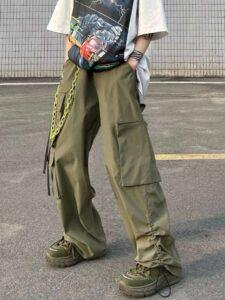
Yes, you can hem cargo pants. Most cargo pants can be shortened with a sewing machine, by hand, or by a tailor in the United States. The main challenge is working around the thick fabric, side pockets, zippers, drawcords, and reinforced stitching found on many cargo styles.
For the best result, wash and dry the pants according to the care label before measuring. Then mark the new length while wearing the shoes you plan to use with them. A basic straight hem works well for simple cargo pants, while pants with ankle zippers or drawcords may need a more careful alteration.

Can cargo pants be shortened?
Cargo pants can be shortened if the new hem does not cut through a pocket, zipper, snap, or other feature near the ankle. The usual process is to remove the old hem, mark the new length, cut away extra fabric, fold the edge, and sew it in place.
Cargo pants are often made from cotton twill, canvas, ripstop, or a cotton blend. These fabrics are usually suitable for hemming, but they may be thicker than dress pants. Use a strong needle, durable thread, and a longer stitch if you sew them at home.
The design of the pant leg affects the method:
- Plain straight-leg cargo pants: Usually easy to hem.
- Cargo pants with ankle zippers: The zipper may need to be moved or removed.
- Cargo pants with drawcords: The cord may need to be shortened or repositioned.
- Elastic-cuff cargo pants: The elastic casing may need to be rebuilt.
- Pants with a special original hem: Keeping the original finish may require a tailor.
The safest rule is simple: if the hem area contains only fabric, you can usually shorten the pants without changing the design. If it contains hardware or a functional detail, plan the alteration before cutting.
What you need before hemming cargo pants
Gather the tools before you begin. A clean setup helps you measure accurately and prevents rushed cuts.
You will need:
- The cargo pants
- The shoes you will wear with them
- A measuring tape or ruler
- Sewing pins or fabric clips
- Tailor’s chalk or a washable fabric marker
- Sharp fabric scissors
- A seam ripper
- Matching or contrasting thread
- A sewing machine or hand-sewing needle
- An iron
- A denim or heavy-fabric sewing needle
- A flat work surface
Check the care label first. The Federal Trade Commission’s clothing care-label rules require covered garments sold in the United States to include care information. Follow that label when washing and drying the pants before altering them.
Prewashing matters because some fabrics may change size after washing. If you hem unwashed pants and they shrink later, the finished length may become too short. Do not use high heat unless the care label permits it.
Choosing the thread and needle
For medium-weight cargo pants, a universal needle may work. For thick twill, canvas, or several folded layers, a jeans or heavy-fabric needle is a better choice.
Use:
- All-purpose polyester thread for most cargo pants
- Heavy-duty thread only when the fabric and sewing machine can handle it
- A thread color that blends with the existing hem for a low-key repair
- Matching thread for a factory-style look
- Contrasting thread if visible stitching is part of the design
Avoid forcing thick fabric under a home sewing machine. If the machine struggles, skips stitches, or makes a loud knocking sound, stop and inspect the needle and fabric layers.
How to measure cargo pants for a new hem
Measure the pants while wearing them. Measuring them flat on a table can give a different result because the body, shoes, and natural stance affect where the hem sits.
Follow these steps:
- Put on the pants and shoes. Use the footwear you expect to wear with the pants most often.
- Stand in a relaxed position. Keep your feet about shoulder-width apart.
- Fold the hem upward. Turn the fabric inside or use pins to test the new length.
- Check both legs. One leg may appear slightly longer because of posture or the existing cut.
- Walk and sit down. Make sure the proposed length still feels comfortable.
- Mark the desired finished edge. Use chalk or a washable marker.
- Remove the pants and lay them flat. Smooth the legs without stretching them.
- Compare the marks. Adjust them so both legs match.
A useful target is the point where the pants meet the top of the shoe without dragging on the floor. The ideal length depends on the cut and your preference. A relaxed cargo pant may sit lower than a tapered cargo pant.
How much fabric should you remove?
The amount removed depends on the difference between the current length and the desired finished length.
For example, if the pants are 2 inches too long and you want a 1-inch double-fold hem, mark the cut line about 3 inches above the finished edge:
- Extra length to remove: 2 inches
- Hem allowance: 1 inch
- Distance from the finished edge to the cut line: 3 inches
This example assumes a 1-inch total hem allowance. Use the same calculation on both legs.
Do not cut exactly at the new finished length. Fabric must remain below the cut line so you can fold and sew the hem.
How to hem cargo pants with a sewing machine
A sewing machine gives the most even and durable result for most cargo pants. Use a slow speed when sewing through thick seams.
Step 1: Remove the original hem
Turn the pants inside out. Use a seam ripper to open the stitches around the existing hem. Remove loose threads as you work.
If the original hem is simple, you may be able to sew a new hem without fully removing it. Removing it first usually makes the leg easier to measure and prevents an uneven ridge.
Step 2: Mark the finished length
Turn the pants right side out and mark the finished edge around each leg. Measure from the same point on both legs, such as the side seam or the original bottom edge.
Use several marks rather than one long line. This reduces the chance of shifting the fabric while cutting.
Step 3: Add the hem allowance
Mark a second line below the finished edge. This is the cutting line.
For a common double-fold hem:
- Finished edge to first fold: about ½ inch
- First fold to cut edge: about ½ inch
- Total allowance: about 1 inch
Thick cargo fabric may need a slightly wider or narrower allowance depending on the original hem. The key is to leave enough fabric for a secure fold without creating a bulky lump.
Step 4: Cut the excess fabric
Cut slowly with sharp fabric scissors. Keep the leg flat and avoid pulling the fabric as you cut.
Before cutting, inspect the area for:
- Hidden drawcords
- Elastic
- Zipper tape
- Rivets
- Decorative stitching
- Internal reinforcement
If you find any of these features, stop and reconsider the alteration. Cutting through a drawcord or zipper can make the pants difficult to repair.
Step 5: Press the hem
Fold the raw edge upward by about ½ inch and press it. Fold it again so the raw edge is hidden, then press it once more.
Use the heat setting recommended on the care label. Test the iron on an inside area if you are unsure how the fabric will react.
Step 6: Sew around the leg
Sew close to the upper fold, using a straight stitch. Backstitch at the beginning and end so the seam does not unravel.
A stitch length around 2.5 to 3 millimeters often works for medium-weight woven fabric, but adjust it to the fabric and your machine. Test on a scrap or hidden section first.
When you reach a thick side seam:
- Slow the machine
- Use the hand wheel if needed
- Avoid pulling the pants
- Use a fabric hump jumper or folded scrap behind the presser foot if the foot tilts
Step 7: Check the finished hem
Turn the pants right side out and inspect both legs. The hem should sit flat, feel secure, and match the original stitching as closely as possible.
Try the pants on again. Walk, sit, and bend your knees. If the hem twists or feels tight, unpick the affected section and adjust it.
Other ways to hem cargo pants
A sewing machine is not the only option. The best method depends on the fabric, the design, and how permanent you want the change to be.
Hand-sewing cargo pants
Hand sewing works well when you need a quiet repair or only have one pair to alter. Use a strong needle and small, even stitches.
A slip stitch can make the hem less visible from the outside. A whipstitch is quicker but may show more clearly. Keep the stitches loose enough that the fabric does not pucker.
Hand sewing may take longer, but it gives you more control around thick seams and pocket details.
Using iron-on hem tape
Iron-on hem tape can shorten some cargo pants without sewing. It works best on light- or medium-weight fabric with a clean, simple hem.
Follow the tape package instructions and use a pressing cloth when recommended. Do not place a hot iron directly on fabric that may melt, shine, or discolor.
Hem tape is less suitable when:
- The pants are very thick
- The hem receives heavy daily stress
- The fabric is stretchy
- The pants have a bulky side seam
- You may need to remove the alteration later
Treat hem tape as a practical option for a temporary or low-stress hem, not a universal replacement for stitching.
Keeping the original hem
A tailor can sometimes shorten cargo pants while preserving the original bottom edge. This is useful when the hem has:
- Distressing
- Fading
- Decorative stitching
- A special wash effect
- A zipper or drawcord
- A branded finish
This method may cost more because it requires careful removal and reattachment. It is often worth considering when the original hem is part of the pants’ appearance.
Rolling or cuffing the pants
A roll-up cuff is fast and reversible. It can work with casual cargo pants, but it changes the look and may add bulk around the ankle.
Use a cuff when:
- You are still deciding on the final length
- You want a temporary change
- The pants have details that make cutting risky
- You like the style of a visible cuff
Do not rely on a cuff if the fabric keeps unfolding or catches on your shoes.
How to hem cargo pants with zippers, drawcords, or elastic
Cargo pants with ankle features need more planning than plain pants. Shortening the leg can change how the feature works.
Cargo pants with ankle zippers
If a zipper runs through the area you need to remove, do not cut across it. The zipper may need to be shortened, moved, or removed.
A tailor is often the best choice because the zipper tape must remain aligned. A poorly altered zipper can catch, separate, or make one leg look different from the other.
Cargo pants with drawcords
Some cargo pants have a drawcord near the ankle. If you shorten the pants below the cord, the cord may disappear or become too long for the new opening.
You may need to:
- Open the casing carefully.
- Remove or shorten the cord.
- Reposition the cord channel.
- Sew the casing closed without trapping the cord.
Use a safety pin to guide the cord through the casing. Never sew over the cord.
Cargo pants with elastic cuffs
Elastic-cuff pants require more than a standard fold. You need to preserve the elastic channel and ensure the elastic still fits comfortably around the ankle.
If the elastic is removed or cut, the cuff may lose its shape. This type of alteration is usually easier for a tailor unless you have experience sewing casings.
Cargo pants with gussets or articulated knees
Some utility-style pants use shaped panels or gussets to improve movement. Shortening the leg below the knee is usually easier than changing the knee area.
Do not cut through a shaped panel unless you understand how the seams join. Altering the wrong section can affect mobility and cause the leg to twist.
Common mistakes when hemming cargo pants
Most poor results come from measuring or cutting too quickly. Avoid these common errors.
Cutting before trying on the pants
The hem may look right on a table but sit too high when worn. Always measure with the correct shoes.
Removing too much fabric
Once fabric is cut away, it is difficult to restore the original length. Mark the pants, pin the fold, and try them on again before cutting.
Forgetting the hem allowance
If you cut at the finished line, you may not have enough fabric to fold and sew. Mark the finished line and cutting line separately.
Ignoring pocket placement
A low cargo pocket may extend close to the hem. Shortening the pants can cut into the pocket or make it difficult to use.
Check the inside and outside of the leg before cutting. Cargo pockets are functional parts of the garment, not just decoration.
Using a weak needle
A regular, worn needle may bend or break on thick fabric. Replace it with a suitable heavy-fabric or jeans needle.
Keep your fingers away from the needle as you sew. If the machine jams, turn it off before removing fabric or thread.
Making one leg shorter than the other
Measure both legs from the same reference point. Lay the pants flat and compare the inseams and outer seams before finishing.
Creating a bulky hem
Too much folded fabric can feel stiff and make the leg opening look narrow. Use a hem allowance that suits the fabric weight and original design.
Skipping the final fitting
The hem is not finished until you wear the pants and move in them. Check the length while walking, sitting, and climbing stairs.
When should you take cargo pants to a tailor?
Take cargo pants to a tailor when the alteration involves hardware, thick construction, or a special original hem. A professional can also help when the pants are expensive, difficult to replace, or made from fabric that is hard to sew.
A tailor is especially useful for:
- Cargo pants with ankle zippers
- Elastic cuffs
- Drawcord channels
- Multiple layers of canvas
- Waterproof or coated fabric
- Uneven legs
- Pocket damage
- Preserving a distressed hem
- Alterations of more than a few inches
Bring the shoes you plan to wear with the pants. Explain whether you want the hem to touch the shoe, sit above it, or leave room for a cuff.
Ask whether the tailor will preserve the original hem and whether the altered pocket or zipper will remain functional. Those questions matter more than simply asking for the pants to be “shortened.”
How to care for newly hemmed cargo pants
Care for the finished pants according to the label. Avoid washing them in a way that conflicts with the fabric instructions, especially if the pants contain a coating, stretch fiber, or special finish.
After washing:
- Check the hem for loose threads
- Trim loose threads instead of pulling them
- Press the hem if it becomes wavy
- Repair small openings before they grow
- Avoid overloading the side pockets
- Store the pants without forcing the hem into a sharp crease
A new hem should not unravel during normal wear. If the stitches pull apart, the thread may be too weak, the seam allowance may be too small, or the fabric may need a stronger finishing method.
Key takeaways
- Yes, cargo pants can be hemmed.
- Measure them while wearing the shoes you will use with them.
- Wash and dry the pants according to the care label before measuring.
- Leave enough fabric for a folded hem.
- Inspect the hem area for pockets, zippers, drawcords, and elastic.
- Use a strong needle and durable thread for thick fabric.
- Ask a tailor to preserve a special hem or alter ankle hardware.
- Try on the pants again after sewing to check comfort and balance.
FAQs
Can you hem cargo pants without a sewing machine?
Yes. You can hand-sew the hem, use iron-on hem tape, or wear the pants with a temporary cuff. Hand sewing is the most durable of these options when done with strong thread and even stitches.
How much does it cost to hem cargo pants?
The price varies by tailor, region, fabric, and design. A plain hem usually costs less than an alteration involving zippers, elastic, drawcords, or a preserved original hem. Ask for a quote before the work begins.
Can you hem cargo pants with side pockets?
Yes, if the side pockets end well above the area being shortened. If the new hem would cut through a pocket or its lower stitching, the pocket may need to be moved or redesigned.
Can a tailor shorten cargo pants with ankle zippers?
Often, yes, but the zipper may need to be shortened or repositioned. The tailor should inspect the zipper before cutting so the finished leg still opens and closes correctly.
Can you hem cargo pants that are several inches too long?
Usually, but the result depends on where the pockets and knee panels sit. Removing too much fabric can change the proportions of the pants or place the hem too close to a pocket. Try on a pinned version before cutting.
Is it better to cuff or hem cargo pants?
Hemming gives a cleaner, more permanent result. Cuffing is faster and reversible, but it adds bulk and may not stay in place. Choose a hem for regular wear and a cuff for a temporary change or casual look.
Conclusion
You can hem most cargo pants at home if they have a plain lower leg. The key steps are to prewash the pants, measure them with your shoes on, leave a proper hem allowance, and inspect the leg for pockets or hardware before cutting.
For cargo pants with zippers, elastic, drawcords, thick canvas, or a special original hem, a tailor can reduce the risk of damage. If you are unsure, pin the new length first and wear the pants before making a permanent cut.
Rubel Miah is the Senior Editor at MyStyleGrid.com, where he brings a sharp editorial eye and an unshakable love for fashion to everything he does. A true style addict, Rubel lives and breathes trends, from streetwear to high fashion, and has a knack for turning inspiration into impactful stories. With years of experience in fashion journalism and digital media, he curates content that empowers readers to express themselves through style. When he’s not editing features or forecasting the next big thing, you’ll find him hunting down vintage pieces or capturing street style moments around the city.