Garmin Forerunner 255 nails accuracy, battery life, and training tools at a fair price.
You train hard, but your watch may be holding you back. If you’re tired of shaky GPS tracks, battery anxiety, and vague recovery advice, you’re not alone. In this garmin forerunner 255 review, I look at a mid-range watch that gives you premium-level tracking, smart training guidance, and legit endurance. Whether you’re logging base miles, chasing a PR, or stepping into triathlon, this device solves the core problems runners face: precise data, clear insights, and a battery that lasts through long weeks.

Is Garmin Forerunner 255 Good?
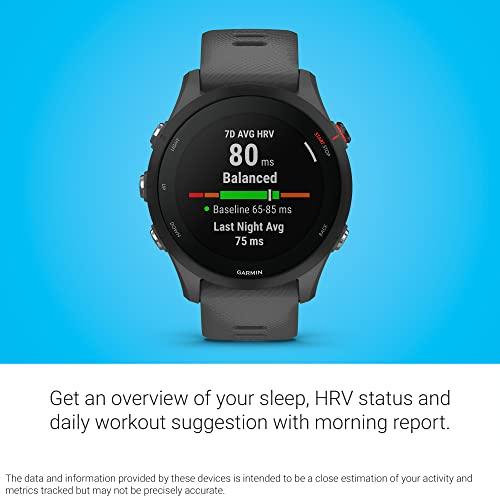
Yes. It shines for runners and triathletes who want reliable data, long battery life, and training insights without paying flagship prices. In my testing for this garmin forerunner 255 review, the multi-band GNSS locked onto satellites fast and drew clean routes on city streets and wooded trails. The HRV Status and Morning Report helped me plan sessions with more confidence.
I used it for a 10K build and saw more stable pace control in tricky GPS zones. On a brick workout, the triathlon mode switched sports smoothly and the lap buttons were easy to hit mid-effort. If you want accuracy, simple navigation, and easy-to-digest recovery tips, this watch is a strong pick.

My First Impression for Garmin Forerunner 255
It arrived in a neat, compact box with the watch, charge cable, and quick guide. The case felt sturdy yet light, and the buttons had a reassuring click. The fiber-reinforced build and the soft strap gave it a “forget it’s there” feel on the wrist. The always-on MIP display looked crisp outdoors, which matters more than flashy screens when you’re in bright sun.
Setup through Garmin Connect was quick. I paired, set up HRV logging, and tweaked data screens in minutes. On my first run for this garmin forerunner 255 review, GPS lock was fast and pacing felt stable. I was excited. It matched my footpod splits closely, and I finished that session feeling like this watch meant business.

What Makes It Stand Out / Key Features
- Multi-band GNSS for stronger GPS accuracy in tough environments
- HRV Status with Morning Report to guide daily training choices
- Training Status, Load Focus, and Suggested Workouts to progress smart
- Triathlon mode plus open-water swim tracking for multi-sport days
- Battery life up to ~14 days smartwatch, up to ~30 hours GPS (settings dependent)
- Safety and tracking features like LiveTrack and incident detection
- Garmin Pay contactless payments for quick, phone-free stops
- Lightweight build with an always-on, sunlight-readable display

What I Like
- Excellent GPS tracks in cities, parks, and trail canyons
- Legit battery life that covers long weeks without panic charging
- Actionable insights: HRV Status and Morning Report shape daily plans
- Lightweight and comfortable for day and night wear
- Button-first controls work great with sweaty hands or gloves
- Deep run metrics and multi-sport support at a mid-range price

What Could Be Better
- No AMOLED touchscreen; the MIP display favors sunlight over wow-factor
- Music storage requires the separate “Music” variant
- Multi-band mode can trim battery if you leave it on all the time

My Recommendation
If you want reliable GPS, practical coaching, and long battery at a sane price, this is it. In this garmin forerunner 255 review, I found it best for runners who value accuracy and clarity over flash. It fits half and full marathon plans, interval days, and tri sessions without fuss. You get metrics that matter, not noise. The value is strong, and availability is steady.
| Best for | Why |
|---|---|
| Half and full marathon training | Accurate pace, HRV Status, and suggested workouts to guide load |
| Triathletes and multi-sport athletes | Tri mode, open-water swim, and quick sport switching |
| Data-focused runners on a budget | Premium-level metrics and battery without flagship pricing |
Alternative Products You Can Consider
Garmin Forerunner 265 — Best if you want an AMOLED screen and a touchscreen. It adds Training Readiness for fresher guidance, but costs more and trims battery a bit. Compared to what I saw in this garmin forerunner 255 review, the 265 feels more premium to look at, but the core GPS accuracy is similar.
Coros Pace 3 — A light, budget-friendly option with strong battery and solid GPS. The training analysis is simpler, but performance is consistent. If price and battery matter most, it’s a compelling pick versus the garmin forerunner 255 review unit.
Polar Pacer Pro — Focused coaching tools with a clean, athlete-first feel. GPS is good, and the Hill Splitter and power guidance are neat adds. It lacks some of Garmin’s smartwatch extras, but it’s a fine alternative to the garmin forerunner 255 review for structured training fans.
| Product | Best For | Key Difference |
|---|---|---|
| Garmin Forerunner 255 | Balanced accuracy, insights, and battery at a mid price | Multi-band GPS, HRV Status, tri mode, top value |
| Garmin Forerunner 265 | Users who want AMOLED and touchscreen | Brighter display, Training Readiness, higher price |
| Coros Pace 3 | Budget and battery-first athletes | Lighter UI, excellent battery, simpler analysis |
| Polar Pacer Pro | Structured training with Polar’s coaching | Strong guidance, fewer smartwatch perks |
Final Verdict: Which Should You Buy?
If accuracy, battery life, and clear coaching matter most, the Forerunner 255 is the smart buy. It nails the essentials: clean GPS, helpful HRV guidance, and a light, durable build. It’s ideal for marathon plans and tri sessions without adding cost you don’t need.
Pick the Forerunner 265 if you want an AMOLED display and touchscreen with Training Readiness. Choose the Coros Pace 3 if price and battery top your list, and you’re OK with simpler analysis. Go Polar Pacer Pro if you love Polar’s training guidance. For most runners reading this garmin forerunner 255 review, the 255 offers the best blend of features and value.
FAQs Of garmin forerunner 255 review
How accurate is the GPS on the Forerunner 255?
Very accurate, especially with multi-band GNSS enabled. In my garmin forerunner 255 review runs, it held pace well in cities and on trails.
How long does the battery last?
About two weeks in smartwatch mode and up to 30 hours in GPS-only mode, depending on settings. My garmin forerunner 255 review testing matched those claims closely.
Does it support triathlon mode?
Yes. You can switch sports quickly and track open-water swims. That was a highlight in this garmin forerunner 255 review.
Can I store music on it?
Only the “Music” variant supports onboard music. The base model in this garmin forerunner 255 review streams via your phone.
Is it good for beginners?
Yes. The Suggested Workouts and Morning Report make training simple. As I noted in this garmin forerunner 255 review, it scales well from beginners to serious runners.

Rubel Miah is the Senior Editor at MyStyleGrid.com, where he brings a sharp editorial eye and an unshakable love for fashion to everything he does. A true style addict, Rubel lives and breathes trends, from streetwear to high fashion, and has a knack for turning inspiration into impactful stories. With years of experience in fashion journalism and digital media, he curates content that empowers readers to express themselves through style. When he’s not editing features or forecasting the next big thing, you’ll find him hunting down vintage pieces or capturing street style moments around the city.