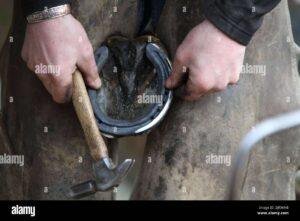
A horse is shod by a trained farrier who checks the hoof, removes the old shoe, trims and balances the hoof, shapes a new shoe, fits it, and secures it with nails. The process protects the hoof and improves traction, but poor trimming or misplaced nails can cause pain or lameness. In the United States, most owners should hire a qualified farrier rather than try to shoe a horse without hands-on training.
Shoeing is not needed for every horse. Some horses stay sound barefoot, while others need shoes for protection, traction, correction, or medical support. The right choice depends on the horse’s workload, hoof quality, terrain, movement, and veterinary needs.

What does shoeing a horse do?
A horseshoe supports the hoof wall and helps reduce wear when the hoof wears faster than it grows. It can also add traction on certain surfaces or help a farrier protect a damaged hoof.


The shoe does not support the horse by pressing on the sole. Instead, a properly fitted shoe rests mainly on the hoof wall, which is similar to a thick fingernail. The sensitive tissues inside the hoof must remain protected.
A horse may need shoes for several reasons:
- Frequent work on hard or rough ground
- Hoof wear that causes soreness
- Weak, cracked, or damaged hoof walls
- A need for more traction
- Uneven hoof growth
- A veterinary treatment plan
- Recovery from certain hoof injuries
- Support for a horse with a conformational or movement problem
A horse may not need shoes if it stays comfortable, maintains healthy feet, and works on suitable ground. Going barefoot is not automatically better or worse. The useful question is whether the horse can move comfortably and safely with the chosen hoof-care plan.
Who should shoe a horse?
A qualified farrier should shoe the horse. Farriery requires skill in hoof anatomy, balance, trimming, shoe selection, metal shaping, nail placement, and horse handling.
Look for a farrier who:
- Has formal training or an apprenticeship
- Can explain the reason for each shoeing choice
- Works calmly and safely around horses
- Uses clean, well-maintained tools
- Communicates with your veterinarian when the horse is lame or under treatment
- Has experience with your horse’s work and hoof condition
- Can provide references from local horse owners
In the United States, farrier credentials vary. Some farriers hold certification from organizations such as the American Farrier’s Association, while others build experience through apprenticeships and private training. Certification alone does not guarantee a perfect result, but education, sound judgment, and clear communication matter.
Do not ask a farrier to shoe a horse that is suddenly lame without first finding out why. A shoe can hide a problem or make it worse if the underlying cause is not addressed.
What tools are used for horse shoeing?
A farrier uses specialized tools to inspect, trim, shape, fit, and attach the shoe. The exact setup changes with the type of work.
Common tools include:
- Hoof pick for cleaning the foot
- Hoof knife for removing loose sole and frog material
- Nippers for shortening the hoof wall
- Rasp for leveling and smoothing the hoof
- Hoof gauges or a hoof-leveling tool
- clinchers for folding nail ends into the hoof wall
- Driving hammer for setting nails
- Nail pullers for removing old shoes
- Pritchel and pritchel punch for shaping nail holes
- Anvil for forming the shoe
- Forge and tongs for hot shoeing
- Hoof testers for checking areas of tenderness
- Safety equipment such as gloves, eye protection, and a leather apron
A forge is not required for cold shoeing. In hot shoeing, the farrier heats the shoe so it can be shaped more precisely. The hot shoe may briefly touch the trimmed hoof wall to show where it sits, but this should be controlled and should not burn sensitive tissue.


How do you shoe a horse step by step?
The basic shoeing process follows a set order, but the farrier may change the plan for an injured, young, difficult, or medically managed horse.
1. Prepare the horse and work area
The farrier places the horse on a firm, level surface with good light and enough room to work. The horse should stand quietly and give up each foot without fighting.
Before lifting a foot, the farrier checks the horse’s posture, movement, and overall condition. A sudden change in stance or movement may point to pain.
The handler should wear sturdy shoes and stay alert. Never wrap a lead rope around a hand, and do not stand directly behind the horse.
2. Examine the hoof
The farrier cleans the foot and examines the sole, frog, bars, hoof wall, heel, and existing shoe. They look for:
- Cracks
- Bruising
- Thrush
- Abscess drainage
- Loose nails
- Sole pressure
- Uneven wear
- Flare in the hoof wall
- Changes from the last visit
The farrier may also compare the hoof with the opposite foot. A horse’s feet do not always have identical shape or growth.
If the horse shows strong pain during the exam, the farrier may stop and recommend a veterinarian. Shoeing should not continue simply because an appointment has started.
3. Remove the old shoe
The farrier loosens the clinches, or folded nail ends, with a clincher or buffer. They then pull the shoe away with a shoe puller or crease nail puller.
Good technique removes the shoe without tearing the hoof wall. Pulling a shoe off carelessly can remove pieces of wall and reduce the farrier’s options for the next shoe.
4. Trim the hoof
The farrier removes excess hoof wall and loose sole material. The goal is not to cut the foot as short as possible. The goal is to create a balanced, functional surface while protecting healthy structures.
The trim considers:
- The horse’s natural hoof shape
- The position of the coffin bone
- Heel height
- Toe length
- Medial-lateral balance, or side-to-side balance
- The horse’s movement
- Existing damage
- The type of shoe being used
The farrier uses nippers for major length and a rasp for fine shaping. The sole and frog should not be aggressively cut just to make the hoof look neat.
5. Select and shape the shoe
The farrier chooses a shoe that fits the hoof and suits the horse’s needs. Common options include plain keg shoes, rim shoes, bar shoes, and specialty shoes used under veterinary direction.
A shoe should generally follow the trimmed hoof without squeezing the heels or extending so far that it catches on another foot. The exact fit depends on the horse and the shoe design.
With cold shoeing, the farrier shapes the shoe without heating it. With hot shoeing, the farrier heats the shoe in a forge and shapes it on an anvil. Hot shoeing can help the farrier make precise changes, but it is not automatically better for every horse.


6. Check the fit
The farrier places the shoe against the hoof and checks its position from several angles. They look at the toe, heels, branches, nail holes, and the amount of support behind the widest part of the foot.
The shoe should:
- Sit evenly on the hoof wall
- Match the intended breakover point
- Avoid pressing into the sole
- Leave room for normal heel expansion
- Provide enough support without excessive length
- Align with the horse’s balanced trim
Fit is one of the most important parts of shoeing. A shoe can look neat from above and still be wrong if it creates sole pressure or does not support the heel.
7. Nail on the shoe
The farrier drives horseshoe nails through the shoe and into the lower part of the hoof wall. The nails should exit the wall at an appropriate height and angle.
The farrier uses only enough nails to hold the shoe securely. More nails do not automatically make a shoe safer. Too many holes can weaken the wall, especially in a horse with poor hoof quality.
The sensitive structures inside the hoof must not be struck. If a nail enters the sensitive tissue, the horse may react at once or become lame later.
8. Clinch and finish the nails
After the nails are driven, the farrier bends and folds the ends into the hoof wall. These folded ends are called clinches.
The farrier then rasp-checks the wall and removes sharp edges. They may also smooth the clinches so they do not snag blankets, brushes, or the horse’s other leg.
The finished hoof should look balanced, and the horse should stand and walk comfortably. A neat finish is useful, but comfort and function matter more than appearance.
How often does a horse need new shoes?
Most shod horses need a farrier visit about every four to eight weeks. This is a general range, not a fixed rule.
The schedule may be shorter when:
- The horse grows hoof quickly
- The shoe loosens early
- The horse has a corrective or therapeutic shoe
- The hoof wall is weak
- The horse works heavily
- The horse has an uneven gait or hoof imbalance
The schedule may be longer in some horses, but allowing shoes to stay on too long can lead to long toes, underrun heels, imbalance, loose shoes, and cracks.
Do not wait for a shoe to fall off before calling the farrier. A loose shoe can twist, pull away hoof wall, or injure the other leg.
How much does it cost to shoe a horse?
The cost varies by region, farrier experience, travel distance, shoe type, and whether the horse needs corrective or therapeutic work. A routine trim costs less than a full set of standard shoes, while custom or veterinary shoeing costs more.


Ask the farrier:
- Whether the price is per foot or per visit
- Whether regular shoes are included
- Whether replacement shoes cost extra
- What happens if the horse loses a shoe
- Whether travel fees apply
- How much notice is needed to cancel
- Whether a veterinary consultation changes the fee
Because prices vary widely across the United States, a local quote is more useful than a national average. The cheapest option may not be the safest if the farrier lacks the needed skill or cannot provide regular follow-up.
How can you tell if a horse was shod correctly?
A correctly shod horse should remain comfortable and move normally after the visit. The shoe should stay secure, and the hoof should not show new signs of damage.
Watch for:
- Normal walking after shoeing
- No marked increase in digital pulse
- No heat or swelling that concerns you
- No repeated pointing of the foot
- No reluctance to turn
- No new short-strided movement
- No loose or twisted shoe
- No nails sticking out or sharp edges
A horse may walk carefully for a short time after a major trim, but clear lameness is not normal. Call the farrier and veterinarian if the horse becomes lame, especially if the problem is severe or gets worse.
A short video of the horse walking can help the farrier and veterinarian assess a change. Do not force the horse to exercise to “test” the shoe.
What should you do if a horse loses a shoe?
If a horse loses a shoe, place the horse in a clean, dry area and inspect the hoof. Remove or secure any loose shoe only if you can do so safely without tearing the wall.
Do not ride the horse until the hoof is checked. A missing shoe can expose a thin sole or leave nails that may cause injury.
Call the farrier and describe:
- Which foot lost the shoe
- Whether any hoof wall came off
- Whether nails remain
- Whether the horse is lame
- Whether the horse stepped on the shoe
- Whether the horse has a history of hoof problems
A temporary hoof boot may protect the foot, but it must fit correctly and stay clean. A boot that rubs, traps moisture, or twists can create another problem.
Common horse-shoeing mistakes
Several mistakes can lead to soreness or poor hoof health.
Trimming for appearance instead of function
A hoof does not need to look perfectly symmetrical to be healthy. Cutting too much sole or wall can reduce protection and cause pain.
Using the same shoe for every horse
A draft horse, barrel horse, trail horse, and retired pasture horse may need different care. Work, terrain, hoof shape, and movement all affect the choice.
Driving nails too high or too far inward
Nails must stay in the safe part of the hoof wall. A misplaced nail can cause immediate pain or create an infection.


Leaving a shoe on too long
Long toes and shifted shoes can change how the horse loads the limb. Regular appointments help the farrier correct small changes before they become larger problems.
Treating lameness as a shoeing problem only
Lameness may come from the hoof, limb, joints, muscles, infection, injury, or another condition. A farrier is an important part of the care team, but a veterinarian should assess unexplained or persistent lameness.
Trying to shoe a horse without training
Using nippers, knives, hammers, and nails around a moving horse is dangerous. A poor trim can take months to grow out, and an incorrect nail can cause severe pain.
Can you shoe a horse yourself?
A beginner should not shoe a horse alone. Watching videos can explain the terms, but it does not teach safe restraint, hoof balance, nail placement, or how to respond when the horse moves.
A safer way to learn is to:
- Take a basic horse-handling course.
- Learn hoof anatomy from a qualified instructor.
- Watch an experienced farrier work.
- Practice tool handling on a model or discarded hoof.
- Study under supervision.
- Begin with simple maintenance tasks only when instructed.
Owners can learn to pick out feet, recognize a loose shoe, monitor hoof changes, and communicate useful observations. Full shoeing should be left to a trained professional unless the owner has completed serious practical training.
Barefoot or shod: which is better?
Neither option is right for every horse. Barefoot care may work when the hoof can handle the horse’s workload and surfaces without soreness. Shoes may help when the horse has excessive wear, needs traction, or requires support during treatment.
| Factor | Barefoot may work when | Shoes may help when |
|---|---|---|
| Ground | Soft or varied ground | Hard, rocky, or abrasive ground |
| Work | Light work | Frequent or demanding work |
| Hoof wall | Strong and stable | Weak, cracked, or poorly protected |
| Comfort | Horse stays sound | Horse becomes sore without protection |
| Traction | Natural grip is enough | Extra grip is needed for the job |
| Medical care | No special support is needed | A veterinarian and farrier recommend support |
The decision should be reviewed over time. A horse can move from barefoot to shod care, or from shoes to barefoot care, as workload, season, injury, or hoof condition changes.
When should a veterinarian be involved?
Contact a veterinarian when the horse has sudden or severe lameness, heat in the hoof, a strong digital pulse, swelling, a deep crack, a penetrating injury, or pain that does not improve.
A veterinarian should also be involved when the horse needs therapeutic shoeing. The farrier applies the shoe, but the veterinarian may diagnose the condition and recommend the treatment goal.
Do not remove a deeply embedded object from the hoof unless a veterinarian directs you. Keep the horse still and seek urgent veterinary advice.
Useful records include:
- Dates of farrier visits
- Photos of each hoof
- Shoe type and size
- Notes about work and terrain
- Episodes of lameness
- Veterinary findings
- How long each shoe stayed secure
These records help the farrier see trends instead of treating each visit as an isolated event.
Frequently asked questions
Does shoeing hurt a horse?
Proper shoeing should not hurt because the nails pass through the insensitive hoof wall. Pain can occur if the hoof is trimmed too far, the shoe presses on sensitive tissue, or a nail is placed incorrectly. A horse that becomes lame after shoeing needs prompt attention.


How long does it take to shoe a horse?
A routine visit often takes about 30 to 60 minutes per horse, but the time varies with the horse’s behavior, the number of feet being shod, the shoe type, and any hoof problems. Therapeutic or custom work may take longer.
Do horses need shoes on all four feet?
No. Some horses wear shoes only on the front feet, some wear shoes on all four, and some remain barefoot. The choice depends on where protection or traction is needed and how the horse moves.
Is hot shoeing better than cold shoeing?
Neither method is automatically better. Hot shoeing lets the farrier shape a heated shoe and may improve fit in some cases. Cold shoeing can work well for many routine jobs and does not require a forge. The farrier’s skill and the horse’s needs matter more than the method’s name.
Can a horse wear shoes in winter?
Yes, but winter shoeing may require extra planning. Snow can pack into the hoof and create painful “snowballs,” while ice can reduce traction. A farrier may recommend a suitable winter setup based on the horse’s work, climate, and footing.
What is the difference between a regular shoe and a therapeutic shoe?
A regular shoe mainly protects the hoof or improves traction. A therapeutic shoe is selected or modified to support a specific hoof or limb problem. Therapeutic shoeing should follow a clear veterinary or farrier assessment.
Final answer: how do you shoe a horse safely?
To shoe a horse safely, a trained farrier examines the hoof, removes the old shoe, trims and balances the foot, shapes and fits the new shoe, drives nails through the insensitive hoof wall, clinches the nails, and checks the horse’s comfort.
The most important step is not the nail or the shoe. It is the assessment that comes before them. If the horse is lame, has damaged hoof tissue, or needs therapeutic support, involve a veterinarian and farrier before changing the shoeing plan. For routine care, schedule regular visits, monitor the horse after each appointment, and call promptly if a shoe becomes loose or the horse shows pain.
Further reading
- American Association of Equine Practitioners: Horse Health Topics
- American Farrier’s Association
- Merck Veterinary Manual: Diseases of the Hoof
- University of Minnesota Extension: Horse Hoof Care
Rubel Miah is the Senior Editor at MyStyleGrid.com, where he brings a sharp editorial eye and an unshakable love for fashion to everything he does. A true style addict, Rubel lives and breathes trends, from streetwear to high fashion, and has a knack for turning inspiration into impactful stories. With years of experience in fashion journalism and digital media, he curates content that empowers readers to express themselves through style. When he’s not editing features or forecasting the next big thing, you’ll find him hunting down vintage pieces or capturing street style moments around the city.