Introduction
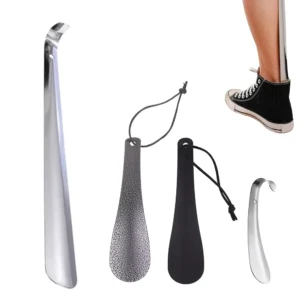
A shoe horn helps you put on shoes without crushing the heel. In the United States, people use shoe horns with dress shoes, work shoes, sneakers, boots, and other closed-back footwear.
To use one, place the curved end inside the shoe at the heel. Slide your foot along the shoe horn as you guide your foot into the shoe. Once your heel is in, remove the shoe horn before walking.

What Is a Shoe Horn?
A shoe horn is a slim tool that guides your heel into a shoe. It creates a smooth surface between your heel and the back of the shoe.


Most shoe horns have three parts:
- Scoop or curved end: This sits inside the shoe.
- Shaft: This connects the scoop to the handle.
- Handle: This gives you a firm grip.
Shoe horns may be made from plastic, metal, wood, leather, or other firm materials. Some are short and fit in a drawer or travel bag. Others have long handles so you can put on shoes while standing.
A shoe horn does not make a shoe larger. It also does not correct a shoe that is too tight, too short, or poorly shaped. Its main job is to protect the heel area and help your foot slide in.
How Do You Use a Shoe Horn?
Use a shoe horn while seated when possible. Sitting gives you better control and lowers the chance of losing your balance.
Step 1: Loosen the shoe
Open the laces, straps, or zipper enough to make room for your foot. For lace-up shoes, loosen the laces from the top down if the opening feels tight.
A shoe horn works best when the shoe opening is wide enough for your foot. Do not force your foot through a narrow opening.
Step 2: Hold the shoe horn correctly
Hold the handle in one hand. Place the curved end inside the shoe.
The scoop should face the front of the shoe. Its outer surface should rest against the inside of the heel. Keep the shoe horn upright or at a slight angle.
Step 3: Place your heel against the shoe horn
Put your toes into the front of the shoe. Then move your heel toward the shoe horn.
Your heel should touch the smooth surface of the horn. Do not place the horn under your toes or under the sole of your foot.
Step 4: Slide your foot into the shoe
Gently press your heel down and forward. Let your foot slide along the shoe horn and into the shoe.


Use slow, even pressure. If your heel catches, stop and adjust the laces or the position of the shoe horn. Do not stomp your foot into the shoe.
Step 5: Remove the shoe horn
Once your heel is fully inside, pull the shoe horn straight up and out. Move it slowly so it does not catch on the shoe lining or pull your heel back out.
Step 6: Secure the shoe
Tie the laces, fasten the strap, or close the zipper. Stand only after the shoe feels secure.
Repeat the same steps for the other shoe.
Signs that you used it correctly
the process should feel smooth and controlled. Your heel should enter without rubbing hard against the back of the shoe.
The shoe horn should not bend sharply, scrape your skin, or get stuck. After you remove it, the heel counter—the firm part around the back of the shoe—should keep its shape.
How to Use a Long-Handled Shoe Horn
A long-handled shoe horn is useful if bending is difficult or if you prefer to put shoes on while standing. It can also help people with limited reach or reduced flexibility.
Follow these steps:
- Place the shoe on a stable floor.
- Loosen the shoe opening.
- Insert the curved end into the heel.
- Hold the handle in an upright position.
- Place your toes into the shoe.
- Slide your heel down the horn.
- Pull the shoe horn out once your heel is in.
- Check the fit before walking.
For better balance, hold a stable surface with your free hand. Do not lean on a lightweight table, rolling chair, or unstable object.
A long shoe horn can make the motion easier, but it does not remove the need for a good shoe fit. If the shoe is too tight, the horn may only hide the problem for a short time.
How to Use a Shoe Horn With Different Types of Shoes
The basic method stays the same, but the shoe opening changes how you use the horn.
Dress shoes
Dress shoes often have a firm heel counter and a narrow opening. Loosen the laces well before inserting your foot.
A metal, wood, or firm plastic shoe horn may work well for this type of shoe. Keep the horn centered along the back of the shoe to avoid bending the heel collar.


Sneakers
Sneakers often have a softer heel. Loosen the laces and open the tongue before using the shoe horn.
A flexible plastic horn may work for casual shoes. Still, avoid forcing it if the heel collar folds down. A crushed heel collar can make the shoe less comfortable.
Work boots
Work boots can have stiff leather, thick lining, and a high shaft. Open the laces as far as needed.
A long shoe horn may help with tall boots, but it may not reach the full heel area. For very tall boots, a boot jack may be more suitable for removing the boot. A shoe horn helps put footwear on; it does not replace a boot jack.
Slip-on shoes
Slip-on shoes may not need a shoe horn every time. If the heel folds or rubs when you put the shoe on, a short shoe horn can guide your foot inside.
Do not use the horn as a reason to leave the shoe loose. Your heel should remain secure during normal walking.
Shoes with zippers or straps
Open the zipper or strap as far as the design allows. Insert the shoe horn at the heel, then guide your foot into the shoe.
Close the zipper or strap only after your heel is fully seated. If the fastener must be forced, the shoe may be too small or the opening may be too narrow.
How to Choose the Right Shoe Horn
Choose a shoe horn based on the shoe, your reach, and where you plan to use it.
| Shoe horn type | Best for | Main trade-off |
|---|---|---|
| Short shoe horn | Home drawers, travel, seated use | Requires more bending |
| Long shoe horn | Standing use, limited reach | Takes more space |
| Plastic shoe horn | Light use and travel | May bend or break under force |
| Metal shoe horn | Stiff shoes and frequent use | Can scratch footwear if used poorly |
| Wooden shoe horn | Firm shoes and home use | May need care to prevent splitting |
| Flexible shoe horn | Soft shoes and small openings | May not guide a stiff heel well |
A shoe horn should be long enough to reach the heel without making you bend too far. For standing use, select a length that lets you keep a steady posture.
The edges should be smooth. The scoop should be wide enough to support your heel but narrow enough to fit inside the shoe. Avoid a horn with cracks, sharp edges, rough seams, or a loose handle.
Common Shoe Horn Mistakes
Most problems come from the shoe opening, the horn angle, or excessive force.
Using the shoe horn under the foot
The horn belongs behind the heel. If you place it under the sole, it may slide or bend. It will not guide your heel into the shoe correctly.
Keeping the laces too tight
A shoe horn cannot replace a wide shoe opening. Loosen the laces before you start.


Pushing too hard
Strong force can damage the shoe horn, heel counter, lining, or your foot. Stop if the horn bends or your heel will not move.
Pulling the horn out too soon
Remove the horn only after your heel is inside the shoe. Taking it out too early can cause the heel to catch on the back of the shoe.
Walking with the shoe horn inside
Always remove the horn before standing or walking. It is a tool, not part of the shoe.
Using a damaged horn
Replace a shoe horn if it has a sharp edge, crack, split, bent shaft, or loose handle. A damaged tool can catch on the shoe or scrape your skin.
What to Do If the Shoe Horn Does Not Work
If your foot will not slide in, check the problem in this order:
- Open the shoe more. Loosen laces or open the strap and zipper.
- Check the horn position. Make sure the curved end is behind your heel.
- Center the shoe horn. Keep it aligned with the back of the shoe.
- Check the shoe size. Your toes should have room, and the shoe should not squeeze the sides of your foot.
- Try a different horn. A longer or wider model may fit the shoe better.
- Stop if there is pain. Do not force your foot into the shoe.
A shoe horn may fail when the shoe is too small, the heel counter is collapsed, the opening is too narrow, or the horn is too short. It may also fail when the shoe has a stiff design that needs more loosening.
If the back of the shoe folds down each time you put it on, the shoe may not fit your heel well. If the problem continues, try a different size, width, or shoe shape.
Pain, numbness, blisters, or repeated rubbing are signs to stop and reassess the footwear. A shoe horn can reduce friction during entry, but it cannot treat a foot problem or make unsafe footwear safe.
How to Care for a Shoe Horn
Keep the shoe horn clean and dry. Wipe plastic or metal models with a damp cloth, then dry them. Follow the maker’s care advice for wood or leather.
Store the horn where it will not bend. Do not leave a plastic horn in a hot car, since high heat may deform it.
Check the tool from time to time. Replace it if the surface becomes rough or the handle becomes loose. A smooth, intact shoe horn is less likely to damage the shoe lining.
Key Takeaways
- Place the curved end behind your heel.
- Loosen the shoe before using the horn.
- Slide your heel into the shoe with gentle pressure.
- Remove the horn before walking.
- Use a long-handled model if bending or reaching is difficult.
- Do not use a shoe horn to force a shoe that does not fit.
- Replace any horn with cracks, sharp edges, or a loose handle.
Frequently Asked Questions
Should you use a shoe horn while sitting or standing?
Sitting is usually safer and gives you more control. Standing can work with a long-handled shoe horn, but use a stable surface for balance.


Can a shoe horn damage shoes?
A shoe horn can damage a shoe if you force it, use a sharp or cracked tool, or place it at the wrong angle. Keep the horn centered and use gentle pressure.
Can you use a shoe horn with sneakers?
Yes. Loosen the laces, open the tongue, and place the horn behind your heel. A flexible or medium-width horn often works well with sneakers.
Why does my heel still catch when I use a shoe horn?
The shoe may not be open enough, the horn may be too short, or the shoe may be too small. Loosen the fasteners and check the horn position. If the problem remains, reassess the shoe’s size and shape.
Is a shoe horn the same as a boot jack?
No. A shoe horn helps you put footwear on. A boot jack helps you pull certain boots off. They serve different purposes.
Can children use a shoe horn?
Children can use one with supervision. Choose a smooth, sturdy model and teach the child to use it while seated. Do not let a child swing or play with the tool.
Conclusion
To use a shoe horn, loosen the shoe, place the curved end behind your heel, and slide your foot in with gentle pressure. Remove the horn once your heel is seated, then secure the shoe before walking.
If the process takes force or causes pain, stop. The issue may be the shoe’s fit rather than your technique.
Rubel Miah is the Senior Editor at MyStyleGrid.com, where he brings a sharp editorial eye and an unshakable love for fashion to everything he does. A true style addict, Rubel lives and breathes trends, from streetwear to high fashion, and has a knack for turning inspiration into impactful stories. With years of experience in fashion journalism and digital media, he curates content that empowers readers to express themselves through style. When he’s not editing features or forecasting the next big thing, you’ll find him hunting down vintage pieces or capturing street style moments around the city.