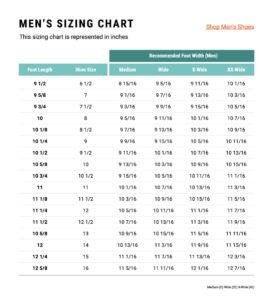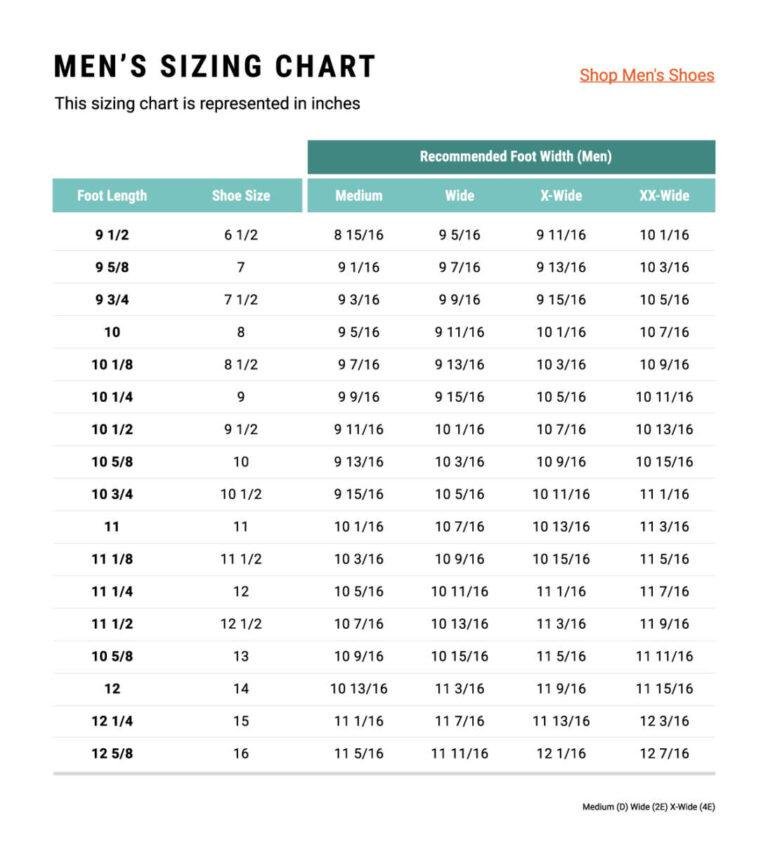
A men’s US size 13 shoe usually fits a foot about 12.5 inches long, or roughly 31.8 centimeters. However, this is a starting point—not an exact measurement for every brand or shoe.
Shoe size charts can vary. A men’s size 13 from one brand may fit slightly differently from a size 13 made by another brand. Shoe width, shape, materials, and intended use also affect the fit.

Men’s Size 13 Shoe Length at a Glance
The table below gives common US men’s size 13 measurements and nearby sizes.
| US men’s size | Approximate foot length | Approximate length in centimeters |
|---|---|---|
| 11 | 11.5 inches | 29.2 cm |
| 12 | 12.0 inches | 30.5 cm |
| 13 | 12.5 inches | 31.8 cm |
| 14 | 13.0 inches | 33.0 cm |
| 15 | 13.5 inches | 34.3 cm |
These figures are general estimates based on common US footwear charts. Some brands list a men’s size 13 for a foot between about 12.3 and 12.6 inches long.
The key point is simple: a US men’s size 13 is commonly designed for a foot around 12½ inches long. It does not mean that every size 13 shoe has an inside length of exactly 12½ inches.
Is a Men’s Size 13 Shoe Exactly 12.5 Inches Long?
No. The 12.5-inch figure usually describes the recommended foot length, not the shoe’s exact internal length.
A shoe needs extra space in front of the toes. This space helps your foot move as you walk and allows room for normal swelling during the day. The inside length may also change because of the shoe’s toe shape, padding, lining, and construction.
For example:
- A running shoe may have a longer, more flexible toe area.
- A dress shoe may have a narrower or pointed toe.
- A work boot may use thicker materials and a roomier shape.
- A basketball shoe may hold the heel firmly while leaving less usable space near the toes.
Because of these differences, two shoes marked US men’s 13 may not feel the same.

How to Measure Your Foot in Inches
Measuring your foot is more reliable than relying on the number printed inside an old shoe. Use this simple method at home.
What you need
- A sheet of paper larger than your foot
- A pencil or pen
- A ruler or tape measure
- The socks you plan to wear with the shoes
- A flat wall or hard floor
Measurement steps
- Place the paper on a hard, flat floor with one edge against a wall.
- Stand on the paper with your heel lightly touching the wall.
- Keep your weight evenly placed on both feet.
- Mark the end of your longest toe. Your longest toe may be the big toe or the second toe.
- Measure from the edge of the paper at the wall to the toe mark.
- Repeat the process for your other foot.
- Use the measurement of the longer foot when choosing a shoe size.
Measure both feet because they are often slightly different. A small difference is common. If one foot measures 12.5 inches and the other measures 12.3 inches, choose a shoe based on the longer foot.
Measure later in the day if possible. Feet may expand after standing and walking, so an evening measurement can give a more useful fit.


What Size Should You Buy for a 12.5-Inch Foot?
A foot that measures about 12.5 inches will often start with a US men’s size 13. Still, check the brand’s own chart before ordering.
Use this process:
- Measure both feet in inches.
- Find the brand’s men’s size chart.
- Match your longer foot to the chart’s foot-length measurement.
- Check the width options.
- Read the return policy before buying online.
- Try the shoes on while wearing the socks you expect to use.
Do not automatically move up to a size 14 just because a size 13 feels short. The problem could be the shoe’s width, toe shape, or internal design. A wider size 13 may fit better than a longer size 14.
Men’s Size 13 Width Options
Length is only one part of shoe fit. Width can make a shoe feel too small even when the length is correct.
Common US men’s width labels include:
| Width label | General meaning |
|---|---|
| B | Narrow |
| D | Standard or medium |
| 2E | Wide |
| 4E | Extra wide |
| 6E | Very extra wide in some brands |
The exact width label and measurement can differ between manufacturers. Some brands use letters, while others use words such as medium, wide, or extra wide.
A shoe may be long enough but still feel tight across the ball of the foot. Signs of a width problem include:
- Pressure on the sides of the foot
- Toes that feel squeezed together
- Red marks after wearing the shoe
- Numbness or tingling
- A noticeable bulge over the sides of the upper material
Do not solve every width problem by buying a longer shoe. Extra length can cause your heel to slip and may make walking less stable.

Men’s Size 13 in Different Shoe Types
A men’s size 13 does not fit identically across all footwear categories.
Running shoes
Many runners prefer a little extra room in front of the toes. Feet can swell during long runs, and the foot may slide forward on hills. A running shoe may fit better with about a thumb’s width of space between the longest toe and the front of the shoe.
The exact amount depends on your foot, running style, and the shoe. The heel should remain secure without painful pressure.
Work boots
Work boots often use thick socks and firm materials. You may need a wider size rather than a longer size. Safety toe boots can also feel different because the protective toe cap limits the space available near the toes.
Make sure your toes do not touch the safety toe cap. Follow the boot maker’s sizing instructions.
Dress shoes
Dress shoes often have a firmer upper and a more shaped toe box. A pointed or narrow style can feel shorter even when the stated size is the same.


For dress shoes, focus on both length and the amount of space around the toes. Your toes should not press against the front or sides.
Basketball shoes
Basketball shoes usually need a secure heel and midfoot fit. Too much extra length may allow the foot to slide during quick stops. The shoe should feel snug but should not cause numbness or sharp pressure.

Why Brand Size Charts Do Not Always Match
US shoe sizing is not perfectly uniform across brands. Manufacturers may use different lasts, which are forms used to shape shoes. A last affects the shoe’s length, width, toe height, and overall shape.
Other factors include:
- Different sizing standards
- Men’s, women’s, and unisex design systems
- Rounded, square, or pointed toe shapes
- Thick or thin insoles
- Stretchy or rigid upper materials
- Different width grading
- The intended use of the shoe
- Manufacturing tolerances
For this reason, a size conversion chart should be treated as a guide. The brand’s current chart is usually more useful than a general chart found elsewhere.
Some companies list foot length in inches or centimeters. Others list the internal length of the shoe or use a size number without a detailed measurement. Check which measurement the chart describes before comparing numbers.

Men’s Size 13 Compared With Women’s Sizes
A US men’s size 13 is not the same as a US women’s size 13.
As a broad conversion, a men’s US size is often about 1.5 sizes smaller than the equivalent women’s US size. Using that rule, a men’s 13 may compare roughly with a women’s 14.5.
This conversion is not exact. Men’s and women’s shoes may differ in width, heel shape, arch shape, and overall construction. A women’s shoe in the converted size may still not fit like a men’s shoe.
When buying a unisex model, use the specific size chart for that product. Some brands list the men’s size first and provide the women’s equivalent separately.

Common Mistakes When Buying a Men’s Size 13
Mistake 1: Treating size 13 as a universal measurement
A size label is not a precise ruler. Always check the brand’s chart when switching brands or shoe types.
Mistake 2: Measuring only one foot
Your feet may differ in length or width. Measure both and use the larger measurement.


Mistake 3: Measuring while sitting
Your foot may spread slightly when you stand. Measure while standing with your weight evenly placed.
Mistake 4: Measuring in the morning only
Feet can become larger after hours of standing or walking. A later-day measurement may better reflect the fit you need.
Mistake 5: Ignoring width
A shoe can have the right length but the wrong width. Check wide and extra-wide options if the sides feel tight.
Mistake 6: Assuming more room is always better
A shoe that is too long may cause heel movement, rubbing, blisters, and poor control. Aim for enough toe room without allowing the foot to slide.
Mistake 7: Comparing shoe length with foot length as if they are identical
The shoe must be longer than the foot in some areas. The amount of extra space varies by design and activity.

How Much Toe Room Should a Size 13 Shoe Have?
Most people need a small amount of space between the longest toe and the front of the shoe. A practical check is to stand in the shoe and confirm that your longest toe does not touch the end.
For walking and everyday shoes, a modest gap is usually enough. Running shoes may need slightly more room, especially for long distances or downhill routes.
The fit should also meet these checks:
- Your heel stays in place while walking.
- Your toes can move without hitting the upper.
- The widest part of your foot sits near the shoe’s widest part.
- The sides do not pinch or create strong pressure.
- The shoe does not slip excessively.
- You can walk without pain or rubbing.
If the shoe causes persistent pain, numbness, or skin damage, stop wearing it and try a different size, width, or style. If you have a foot condition or ongoing pain, a qualified health professional or trained shoe-fitting specialist can help assess the cause.

Frequently Asked Questions
How many centimeters is a men’s size 13 shoe?
A US men’s size 13 generally fits a foot about 31.8 centimeters long, or approximately 12.5 inches. Brand charts may list a slightly different value.
Is a men’s size 13 considered a large shoe size?
Yes. A US men’s size 13 is larger than the average men’s shoe size in the United States. However, the label alone does not determine fit. Foot width and shoe shape matter just as much as length.
Is a men’s size 13 the same as a European size 47?
Not always. A US men’s 13 commonly converts to about EU 47 or EU 48, depending on the brand and conversion system. Use the European brand’s own chart rather than relying on a single conversion.
What is a men’s size 13 in UK sizing?
A US men’s size 13 commonly converts to about a UK men’s size 12. Conversion can vary, so check the manufacturer’s chart for the exact model.


Should I buy a size 13 or 14 if my foot is 12.5 inches long?
Start with a US men’s 13, then check the brand’s chart and width options. Choose a 14 only if the chart recommends it or the size 13 is clearly too short. If the shoe feels tight on the sides, try a wider size before adding length.
The Bottom Line
A US men’s size 13 usually fits a foot about 12.5 inches long, or 31.8 centimeters. That number is an estimate, not a universal inside-shoe measurement.
For the best fit, measure both feet while standing, use the longer foot, check the brand’s current chart, and consider width as well as length. If you are ordering online, compare the chart with the seller’s return policy before purchasing.


Madison Clark is a footwear expert and the voice behind MyStyleGrid.com. She specializes in honest shoe reviews, style tips, and practical guides to help readers find the perfect pair for any occasion. With years of experience in blogging and content creation, Madison makes footwear knowledge simple, stylish, and easy to follow.