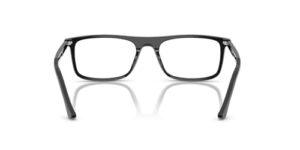
Get your RX and PD, then have a lab cut lenses to your frames.
If you want clear, sharp vision in your favorite frames, you can do it. This guide shows how to add prescription to glasses the right way. I will walk you through each step with real tips and simple checks. You will learn what to ask for, what to avoid, and how to save money without losing quality.
What “adding a prescription to glasses” really means
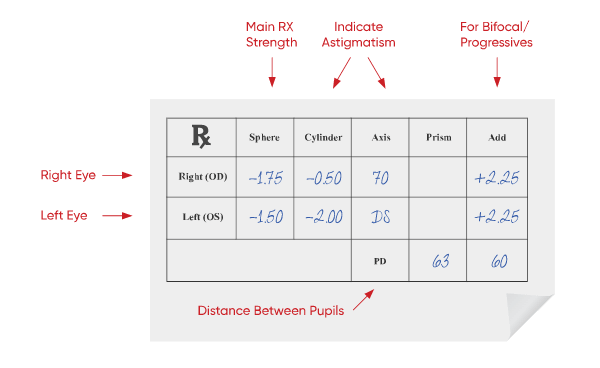
Adding a prescription is not a clip-on hack. It means a lab makes new lenses to match your RX and fits them to your frames. The lab uses your prescription, pupillary distance, and measurements from the frame. Then they cut and edge lenses so they sit in the frame at the right angle.
There are three ways to do it. You can re-lens an existing frame. You can buy new frames and add lenses at once. Or you can use lens inserts for goggles or shields. In each case, the lab must match the power, axis, and optical center. That is how to add prescription to glasses without blur or strain.
I have helped many readers upgrade old frames. The best results come from good data and a trusted lab. When you know how to add prescription to glasses with a clear plan, the process is smooth and fast.
Step-by-step: how to add prescription to glasses
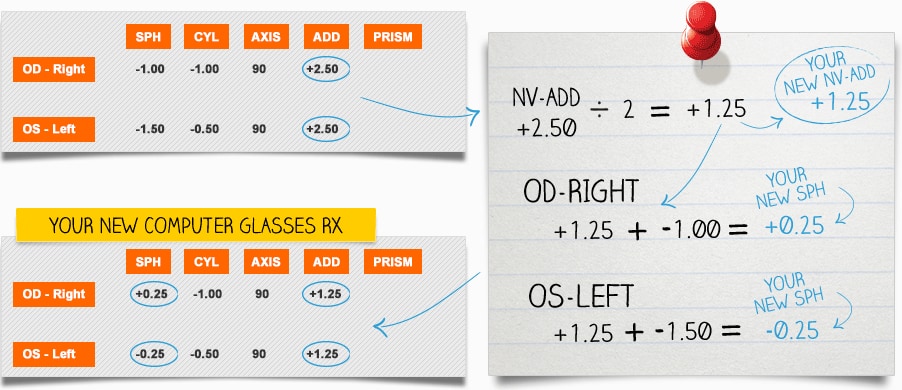
Follow these steps to keep it simple and safe.
-
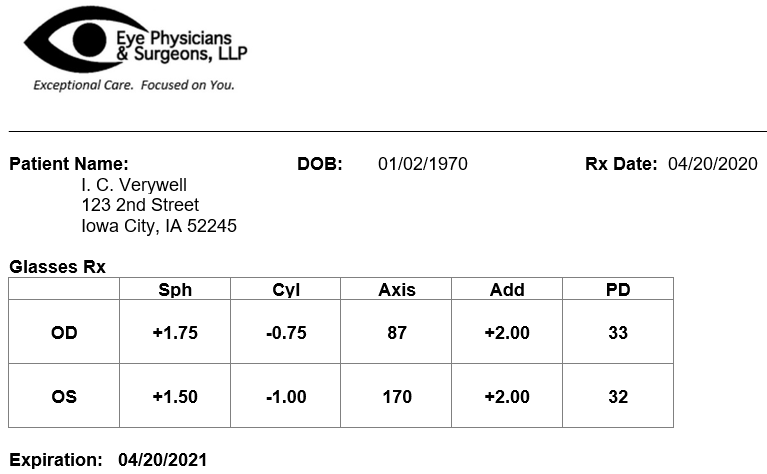
Get a current eye exam
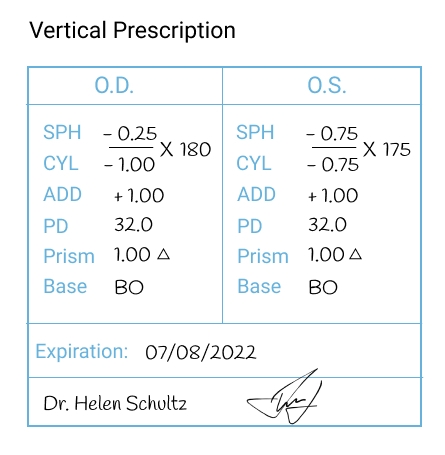
- Ask for a copy of your RX with sphere, cylinder, axis, add, and prism if any.
- Check the expiration date. Most RXs are valid for one to two years.
-
Measure or confirm your PD
- Ask your provider for monocular PDs. If not available, measure at home (see the next section).
-
Check frame condition
- Look for cracks, loose hinges, or warped shape.
- Old acetate or brittle plastic can break during edging.
-
Choose a lens type
- Single-vision, bifocal, or progressive based on your needs.
- Ask about your work distance if you use screens a lot.
-
Pick lens material
- Polycarbonate or Trivex for impact resistance and kids.
- High-index for strong prescriptions to keep lenses thin.
-
Select coatings and extras
- Anti-reflective for night driving and screens.
- Scratch resistance is a must. UV is standard on many materials.
-
Place your order
- Give the lab your RX, PD, frame, and choices.
- If shipping your frames, use a hard case and padding.
-
Quality check on arrival
- Look through the center of each lens. Vision should feel calm and clear.
- Check alignment, nose pad fit, and temple tension.
-
Adjust fit
- Small tweaks matter. Ask for a free fit at a local optical shop.
This is how to add prescription to glasses with less guesswork. Keep each step clean and you will love the result.

How to measure your PD at home
Your PD tells the lab where to center the lenses. Bad PD can cause eyestrain, headache, and blur. Here is how to add prescription to glasses with a PD you can trust.
Try this simple method:
- Stand in good light. Face a mirror at arm’s length.
- Hold a ruler against your brow. Close your right eye.
- Look at your left pupil and note the millimeter mark at its center.
- Switch eyes. Now look at your right pupil. Note the new mark.
- The distance between marks is your PD. Do this three times and average.
Monocular PDs are even better:
- Have a friend measure from nose bridge center to each pupil center.
- Write both numbers. Example: 31 mm / 32 mm.
Apps can help, but they vary. I prefer a friend and a rigid ruler. That is how to add prescription to glasses with fewer remakes.

Choosing the right lenses and features
Picking lenses is where comfort and clarity happen. Keep it simple, but make smart choices.
Lens types
- Single-vision: For distance or for near. Clean, light, and clear.
- Bifocal: A visible line with two zones. Good for simple near adds.
- Progressive: No line, smooth vision at all ranges. Needs precise fitting.
Materials
- CR-39: Clear optics. Thicker. Good for low RX and budget.
- Polycarbonate: Light, tough, UV blocking. Slightly softer surface.
- Trivex: Light, tough, sharp optics. Great for drill mounts.
- High-index (1.67, 1.74): Thinner for strong RX. Can reflect more without AR.
Coatings and add-ons
- Anti-reflective: Less glare. Better night driving. Cleaner look.
- Scratch-resistant: Extends lens life. A must in daily wear.
- UV protection: Built-in on most poly and high-index.
- Photochromic: Darkens outside. Great if you move in and out a lot.
- Blue-light filters: Can cut screen glare. Choose if you work on screens long hours.
Tints and sun options
- Solid or gradient tints for style and sun.
- Polarized for strong sun and water glare.
- Mirror coats for sports and snow.
Tell the provider your job, hobbies, and screen hours. That is how to add prescription to glasses that match real life.

Special cases you should plan for
Some prescriptions need extra care. Plan ahead to avoid issues.
High prescriptions
- Use high-index or Trivex to reduce thickness.
- Choose smaller, rounder frames to cut edge thickness.
- Ask for aspheric designs to improve edge clarity.
Astigmatism
- Accurate axis is key. A small error can cause swim.
- Progressive users with strong cylinder need expert fitting.
Prism
- Use a lab with prism experience. Ask for a verification sheet.
- Prism needs stable frames and good nose pad support.
Wrap or sporty frames
- Ask for a wrapped lens design and compensated RX.
- Use labs that handle base curve and tilt well.
Sunglasses and safety glasses
- Use polarized or tinted with AR on the back.
- For safety, request impact-rated materials that meet standards.
If any of these fit you, tell your provider up front. That is how to add prescription to glasses without surprises.

Costs, insurance, and timing
Prices vary by material, design, and add-ons. Here is a simple view.
Typical costs:
- Basic single-vision lenses: 30 to 100 dollars.
- Premium progressives: 120 to 400 dollars or more.
- AR, scratch, and extra coatings: 20 to 120 dollars combined.
- High-index upgrades: 40 to 150 dollars.
Insurance can lower costs on lenses and coatings. Many plans cover one pair per year. Ask about out-of-network claims if buying online.
Turnaround time is often 3 to 14 days. Complex jobs can take longer. Shipping frames adds time. Fast is nice, but accuracy matters more. That mindset is how to add prescription to glasses with less stress.
Common mistakes to avoid
I see the same errors again and again. Skip these traps.
- Using an expired RX. Vision shifts. Fresh data wins.
- Guessing your PD. Bad PD leads to strain and remakes.
- Re-lensing damaged frames. Breakage risk is high.
- Oversized frames with high RX. Thick edges and distortion appear.
- Skipping AR. Glare and ghost images can be rough at night.
- Not checking return or remake policies. Things happen.
Avoiding these is how to add prescription to glasses with fewer headaches and hidden costs.
Care and maintenance that protect your lenses
Good care keeps vision crisp and lenses clear.
- Rinse with lukewarm water before wiping. Dust can scratch.
- Use a mild soap or lens cleaner. Avoid harsh chemicals.
- Dry with a clean microfiber cloth. Wash the cloth often.
- Store in a hard case. Do not leave in hot cars.
- Get a yearly fit and screw check.
Care is a habit. Keep it simple. This is how to add prescription to glasses and make them last.
My personal checklist and pro tips
This is the quick list I rely on for clean orders and happy eyes.
- Confirm RX details, including add and prism if any.
- Get monocular PD and fitting height for progressives.
- Match lens tech to lifestyle, not hype.
- Keep frames modest in size for high RX.
- Ask the lab to thin and polish edges when needed.
- Request a verification sheet for complex orders.
- Save your frame model, lens brand, and coatings for next time.
Follow this, and how to add prescription to glasses becomes easy and repeatable.
Frequently Asked Questions of how to add prescription to glasses
Can I add a prescription to any frames I own?
Most frames can be re-lensed if they are in good shape. Very old, brittle, or warped frames may crack during edging.
Is it safe to buy prescription lenses online?
Yes, if you use a trusted provider and give accurate data. Check remake policies, and verify the lenses when they arrive.
Do I need my PD to order lenses?
Yes. PD centers the optics to your eyes. A small PD error can cause strain or blur.
How long does it take to add lenses to my frames?
Simple jobs can take a few days. Complex lenses, like progressives or high index, can take one to two weeks.
What is the best lens material for kids?
Polycarbonate or Trivex are light and impact resistant. They also block UV and hold up well for active use.
Will anti-reflective coating really help?
Yes. AR reduces glare, boosts clarity, and looks better in photos. It is great for night driving and screens.
Can I add a prescription to sunglasses?
Yes. You can add tint, polarization, and mirror coats. Choose frames that fit your RX and lens curve needs.
Conclusion
You now know how to add prescription to glasses with skill and confidence. Get a current RX, lock in your PD, pick the right lenses, and check your frames. Choose features that match your day, not just the label.
Take the next step today. Gather your RX and PD, choose a frame that fits your needs, and place a well-planned order. If this helped, share it with a friend, subscribe for more tips, or drop a question in the comments.

Rubel Miah is the Senior Editor at MyStyleGrid.com, where he brings a sharp editorial eye and an unshakable love for fashion to everything he does. A true style addict, Rubel lives and breathes trends, from streetwear to high fashion, and has a knack for turning inspiration into impactful stories. With years of experience in fashion journalism and digital media, he curates content that empowers readers to express themselves through style. When he’s not editing features or forecasting the next big thing, you’ll find him hunting down vintage pieces or capturing street style moments around the city.