Gently warm the frames, bend little by little, and use basic tools — patience prevents cracks.
I’ve spent years fixing sunglasses for friends and clients, and I know how easy it is to snap a plastic frame when you rush adjustments. This guide breaks down safe, proven ways to adjust plastic sunglasses without breaking them. You’ll learn why frames warp, which tools to use, step-by-step methods for common fixes, safety checks, and when to stop and see a pro. Read on and get comfortable doing precise tweaks that keep your lenses intact and your sunglasses feeling custom-made.
Why plastic sunglasses need adjustment
Plastic sunglasses often come as one-size or with only minor factory shaping. Wear changes how they sit on your face. Heat, tight storage, or bending to fit a new nose shape can make fit worse. Lenses can pop out if a hinge is loose or a frame is bent. Small adjustments improve comfort and keep the frames from cracking over time.
Common fit problems
- Temples pinch the head or slip off the ears.
- Nose bridge sits too high or low, causing sliding or pressure.
- One arm is shorter or twisted, tilting the frame.
- Screws loosen, making hinges wobbly.
Recognize what you can fix and what needs a pro. Many fixes are simple and low-risk if you move slow and follow safety steps. Plastic sunglasses react to heat and force differently than metal frames. Treat them gently.
Tools and supplies you should have
Good results start with the right tools. Use simple items you likely already own.
- Clean microfiber cloth for protection and grip.
- Hairdryer or a bowl of warm water to soften plastic.
- Soft-jawed pliers or needle-nose pliers wrapped in cloth.
- Small screwdriver set for eyeglass screws.
- Extra tiny screws, clear thread-lock, or screw-tightening solution.
- Plastic spacers or tape for temporary fixes.
- Ruler or small mirror to check symmetry.
Keep everything organized on a felt mat. Use two hands and take your time. Missing tools or rushing is the main reason people break plastic sunglasses while trying to adjust them.

Step-by-step adjustments that work (safe methods)
General rules before you start
- Work on a clean, flat surface.
- Warm frames slowly. Never use boiling water.
- Bend a little, test, repeat.
- Protect lenses with tape if you lean on them.
Heat shaping the frame curve
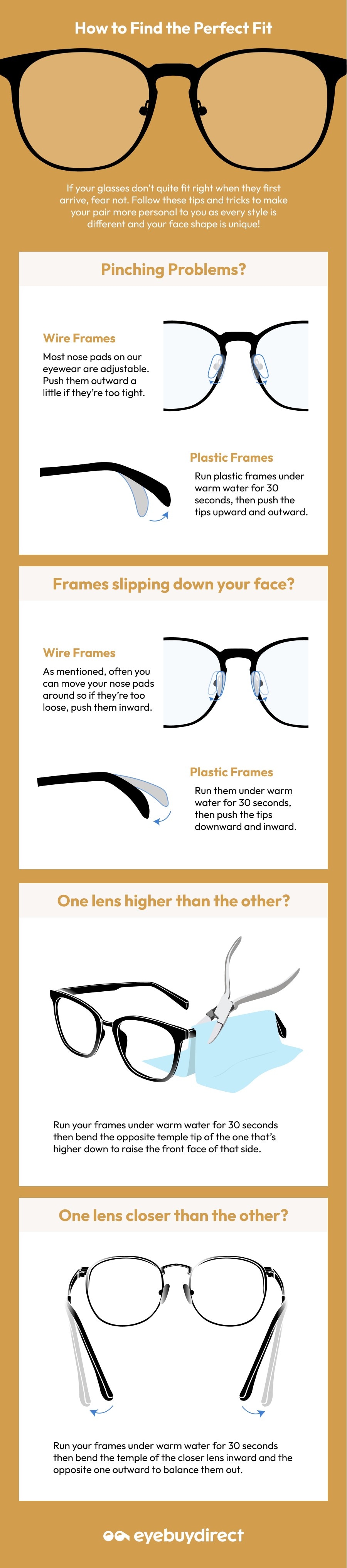
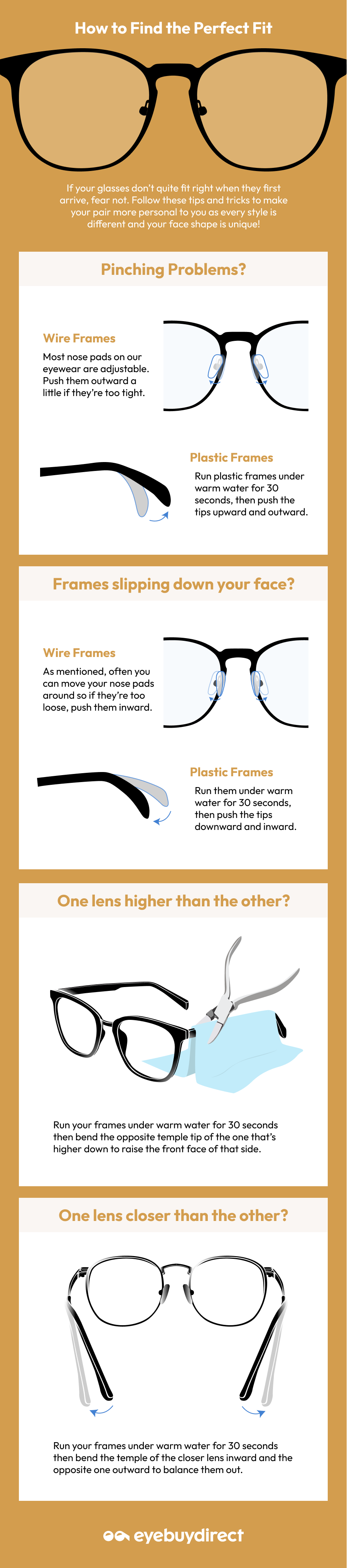
- Warm the frame with a hairdryer on low for 20 to 40 seconds. Keep the dryer moving.
- Check the plastic: it should feel warm, not hot.
- Gently bend the part you want to reshape, using your thumbs and small, even pressure.
- Hold the new shape until cool, then test fit.
Widening or tightening temple arms
- For minor tweaks, warm the temple near the hinge and bend outward or inward a few degrees.
- If a temple is loose at the hinge, tighten the screw. Use thread-lock sparingly to stop loosening.
- For temple tips that hurt behind the ear, bend the tip slightly outward after warming.
Fixing molded nose bridges
- Molded nose bridges can be adjusted by heating the nose area and very gently reshaping the bridge with thumbs.
- If reshaping won’t help, add soft nose pads or adhesive foam pads to improve comfort.
Shortening or trimming temple tips
- Only trim a small amount at a time and sand edges smooth.
- Consider heat-shrinking tubing slipped over the temple for added grip instead of cutting.
Replacing or tightening hardware
- Use a matched tiny screwdriver. Keep screws and springs in a small dish.
- Replace stripped screws with slightly larger ones only when necessary.
- Avoid overtightening; this stresses the plastic.
Test frequently. Small moves go a long way. Each time you adjust plastic sunglasses, try them on and wear them for a few minutes to see how they settle. If something feels wrong, reverse the last change.
People also ask
Q: Can I adjust plastic sunglasses at home?
A: Yes. Many simple adjustments can be done at home with basic tools and careful heating. Avoid forcing cold plastic and take small steps.
Q: Will heat damage lenses?
A: Excess heat can warp lenses or damage coatings. Protect lenses by keeping heat focused on the frame and using low heat settings.
Q: How do I make sunglasses less tight on my ears?
A: Warm the temple tips, bend them outward slightly, and test fit. Repeat in tiny increments.

Safety tips and mistakes to avoid
Safety matters more than speed. Follow these tips.
- Never use boiling water. Use warm water or a low hairdryer setting.
- Don’t bend near screws or thin sections. Thin parts break first.
- Avoid metal tools directly on plastic. Wrap pliers in cloth to prevent scratches.
- Don’t try to force a snapped frame back together; glues rarely restore strength.
- Test fit gradually. A small bend is safer than one big move.
Common mistakes
- Overheating frames, which softens lenses or kills coatings.
- Overtightening screws, causing cracks.
- Using pliers with bare jaws that leave marks or chips.
- Ignoring asymmetry — always compare both sides while adjusting.
If you are unsure about a fix, stop. A local optician or eyewear repair shop can often fix problems safely.
When to seek professional help or replace frames
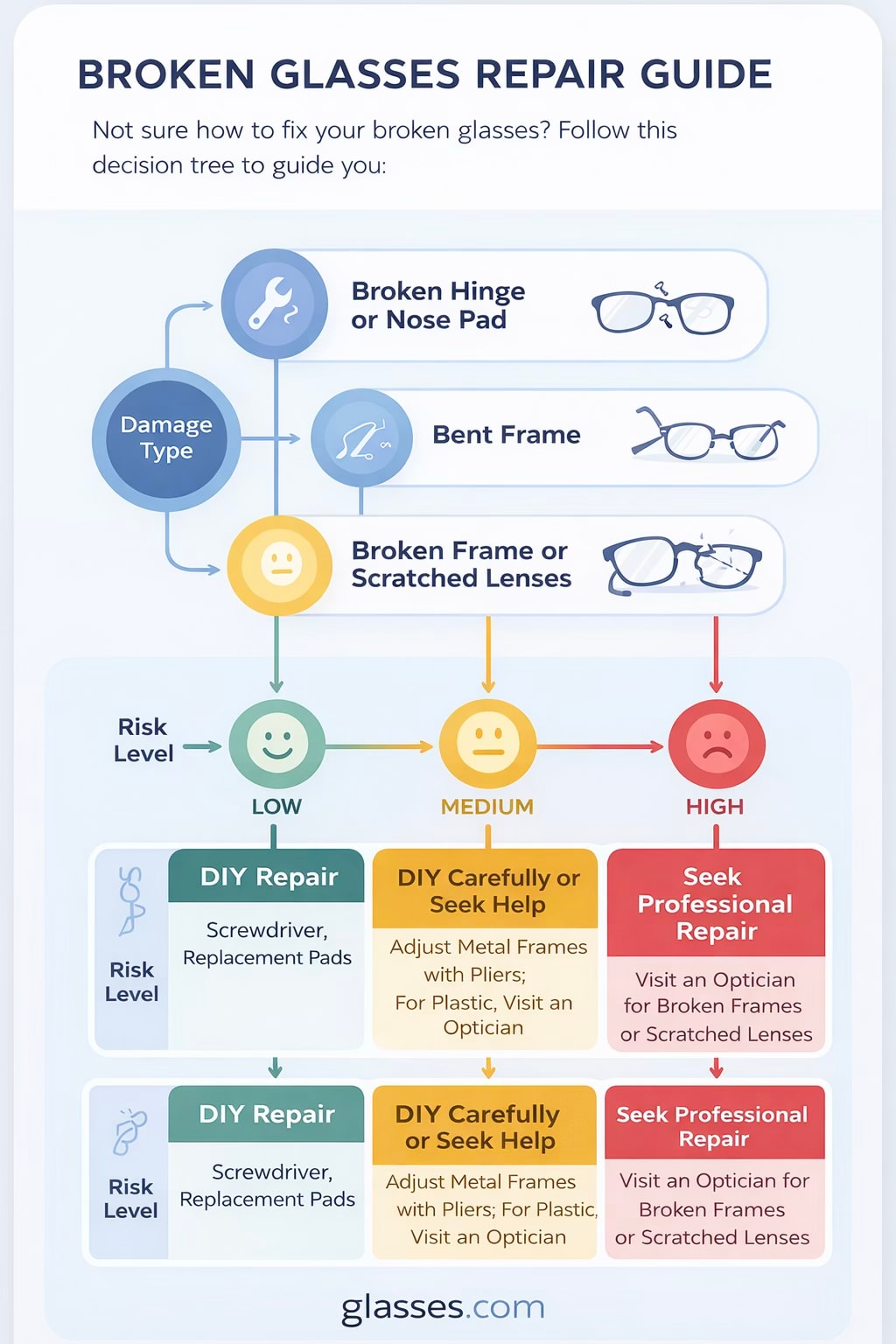
Some problems need a pro. Visit an optician if:
- Frames are cracked or severely warped.
- Lenses popped out and are scratched or misaligned.
- Hinges are broken or missing parts.
- You need precise optical realignment.
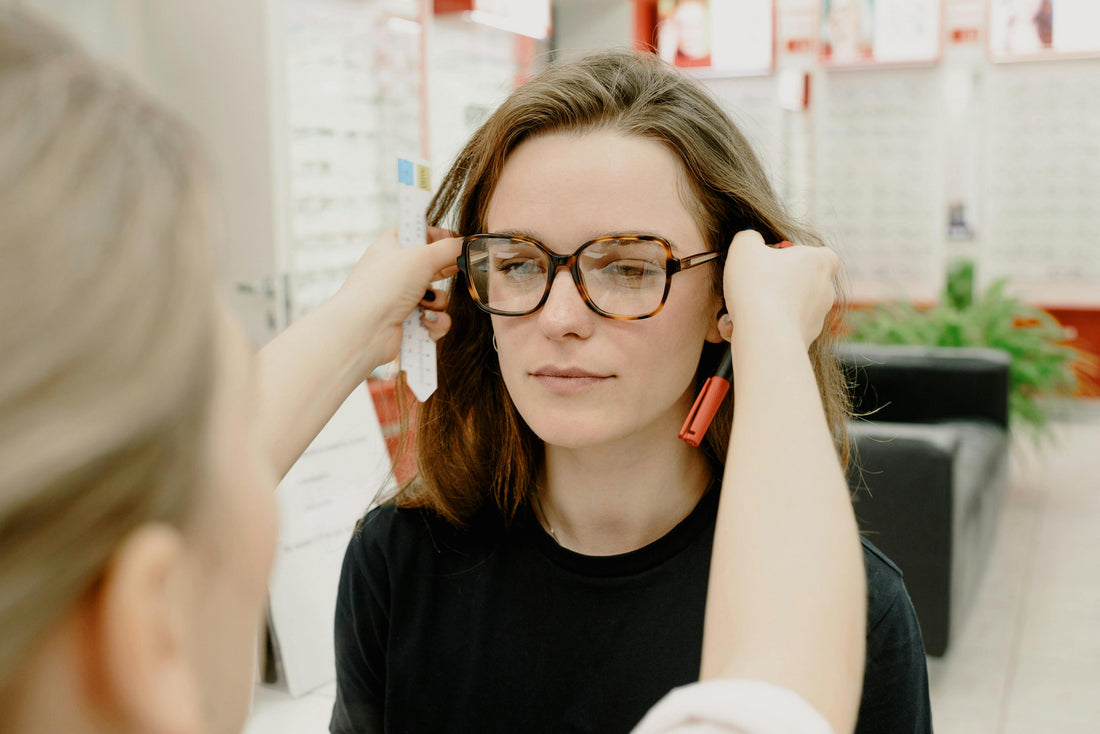
Replacement may be better when the frame is old and brittle. Professionals have heat tanks, frame stretchers, and replacement parts that keep your sunglasses safe.
My experience: what I learned from fixing sunglasses
I’ve adjusted dozens of plastic sunglasses over the years. I once ruined a vintage pair by using boiling water. Lesson learned: slow, low heat works. Another time I fixed a pair by adding small adhesive foam pads to the bridge instead of reshaping the plastic; the result was more comfortable and reversible.
Practical tips from real jobs
- Warm only the small area you plan to bend.
- Always protect lenses with tape or a cloth.
- Keep spare screws and a tiny screwdriver on hand.
- When in doubt, add a soft pad rather than reshape fragile plastic.
These small habits have saved many pairs from permanent damage and kept lenses safe.
Frequently Asked Questions of how to adjust plastic sunglasses without breaking them(make it h2 tag)
How hot should I warm plastic sunglasses before bending?
Warm them enough to be comfortable to touch. Use a low hairdryer setting for 20–40 seconds or warm tap water. Avoid scalding temperatures and long exposure.
Can I fix a cracked plastic frame at home?
Minor surface cracks are sometimes stabilized with specialty glues, but structural cracks usually need professional repair or replacement. Home fixes often don’t restore full strength.
Are there alternatives to reshaping the frame if it’s uncomfortable?
Yes. Add adhesive nose pads, foam pads, or temple sleeves to change the fit without bending the plastic. These fixes are reversible and low risk.
Will repeated adjustments weaken plastic sunglasses?
Each adjustment adds minor stress. Small, careful changes are fine, but repeated heavy bending can weaken the frame over time. Stop if the frame shows white stress lines.
Is it safe to tighten hinge screws on plastic frames?
Yes, but use the correct small screwdriver and don’t overtighten. Tighten just until the hinge is snug and moves smoothly.
Can heat ruin polarized lenses?
Excessive heat can damage lens coatings, including polarization. Keep heat focused on the frame and avoid direct hot air or boiling water on lenses.
Conclusion
Adjusting plastic sunglasses safely is about patience, the right tools, and small steps. Warm the frame gently, protect lenses, bend in tiny increments, and test often. If you follow these tips, you’ll avoid cracks and extend the life of your sunglasses. Try the methods above on an old or inexpensive pair first to build confidence, then move to your favorites.
Ready to try a careful adjustment? Share your results or questions in the comments, or subscribe for more step-by-step eyewear tips.

Rubel Miah is the Senior Editor at MyStyleGrid.com, where he brings a sharp editorial eye and an unshakable love for fashion to everything he does. A true style addict, Rubel lives and breathes trends, from streetwear to high fashion, and has a knack for turning inspiration into impactful stories. With years of experience in fashion journalism and digital media, he curates content that empowers readers to express themselves through style. When he’s not editing features or forecasting the next big thing, you’ll find him hunting down vintage pieces or capturing street style moments around the city.