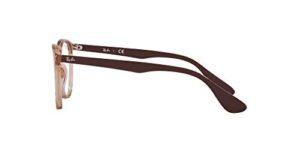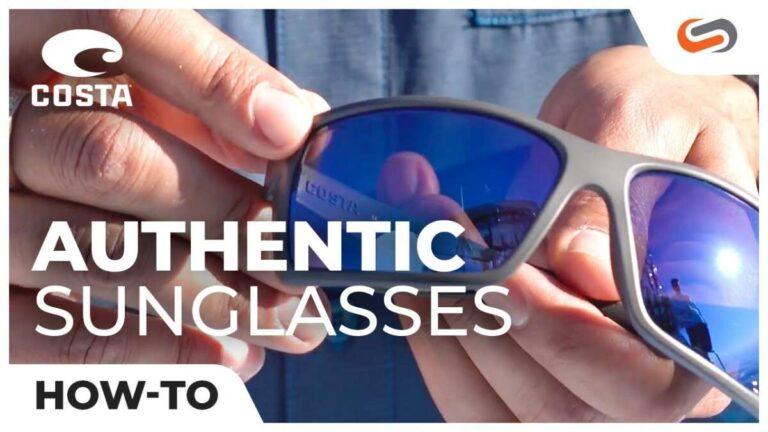
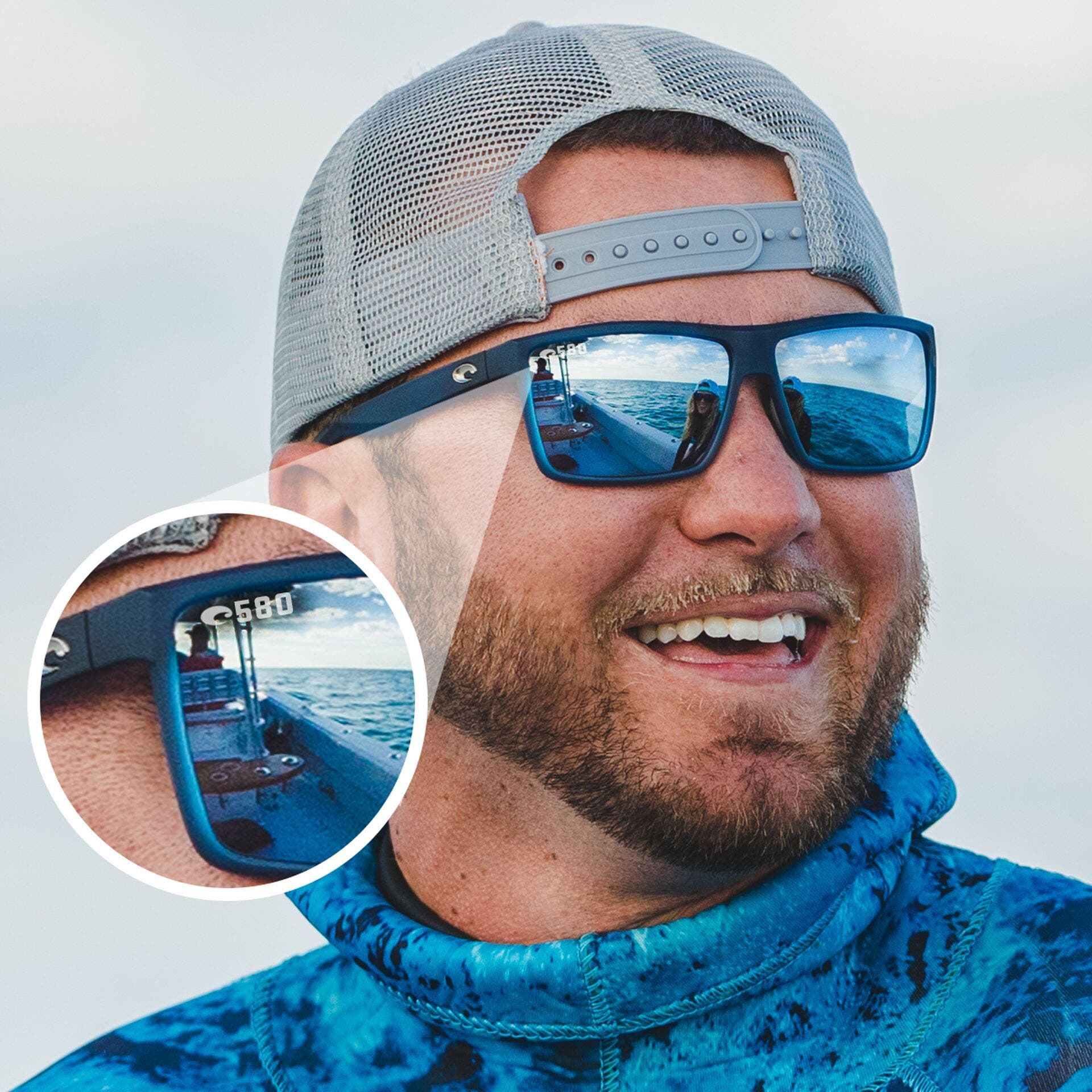
Genuine Costa sunglasses show 580 lens etching, crisp logos, matching model codes.
If you want to know how to tell if costa sunglasses are real, you’re in the right place. I’ve handled, sold, and verified dozens of pairs for clients and friends. In this guide, I’ll show clear, simple steps and tests that work. You’ll learn how to tell if costa sunglasses are real using markings, packaging, and quick at‑home checks that I use myself.

Why authenticity matters
Counterfeit sunglasses are not just a bad deal. They can put your eyes at risk. Real Costa lenses block 100% of UVA/UVB and cut glare with strong polarization. I’ve seen fakes that scratched in days and let in way too much UV. That is not worth the savings.
You also lose the brand’s support. Genuine pairs come with quality control, a real warranty, and parts access. If you care about fit, clarity, and long-term value, learning how to tell if costa sunglasses are real is essential.
Quick checklist: how to tell if costa sunglasses are real
Use this fast pass before the deep dive. This is how to tell if costa sunglasses are real in minutes.
- Look for micro-etching on a lens. Most genuine 580 lenses have a tiny 580P or 580G etch near a corner. It should be crisp, not printed.
- Check polarization with your phone. Rotate the lenses over an LCD screen. Real polarized lenses dim or black out at certain angles.
- Match model codes. The style name, color, lens type, and size on the temple must match the box sticker exactly.
- Inspect the Costa logo. The C logo on the temples should be sharp and inlaid or cleanly applied, never sloppy or raised glue.
- Feel the weight. 580G glass feels noticeably heavier than 580P polycarbonate. Fakes often get this wrong.
- Look at mirror and base color. Blue mirror uses a gray base. Green mirror uses a copper base. Off base colors are a red flag.
- Check AR coating. Real lenses show a subtle blue/green flash on the back surface under light.
- Examine hinges and screws. Smooth action, no wobble, clean machining. Cheap hinges scream fake.
- Review packaging. Sturdy branded case, microfiber cloth, info booklet, and a box with a clean UPC label.
- Verify the seller. Buy from authorized dealers and beware of huge discounts or stock photos only.
This simple checklist covers how to tell if costa sunglasses are real fast. Keep reading for the full breakdown that I use when I authenticate for clients.

Lens markings and performance
Lenses are the heart of the product. This is where I start when I check how to tell if costa sunglasses are real.
- 580 etching. Many Costa 580 lenses carry a tiny 580P or 580G laser etch. It does not rub off. On fakes, the mark can look printed, thick, or uneven.
- Polarization behavior. Rotate the lens over a laptop or phone. A real polarized lens will dim to near black at about 60–90 degrees. Do this with each lens.
- Back-side coatings. Tilt the glasses under bright light. You should see a subtle anti-reflective hue on the inner surface.
- Optical clarity. Look through the lens at a straight door frame. Real lenses keep lines straight across the view. Wavy lines suggest cheap optics.
- Base color check. Blue mirror pairs should look gray from behind. Green mirror should look copper/amber. If the base color is wrong, I dig deeper.
If you still wonder how to tell if costa sunglasses are real from lenses alone, combine these steps. One mismatch can be a defect. Many mismatches likely mean fake.

Frame and build quality
Frames tell their own story. I run my fingers along every edge.
- Temple logos. The C logo should be clean and aligned. No glue overflow, no rough edges.
- Molding and finish. High-end nylon or acetate feels smooth and even. Seams should be hard to see and well finished.
- Hinges. Many models use corrosion-resistant hinges. The action should be firm and even. Loose or gritty hinges are a bad sign.
- Rubber contact points. Nose pads and temple tips should feel secure, not oily. Cheap rubber peels fast.
- Printed text. Inside the temple you should see the style name, color, lens type (580P or 580G), and size. Text should be sharp and consistent.
This hands-on scan is a reliable way for how to tell if costa sunglasses are real without tools.

Packaging, case, and paperwork
Genuine sets arrive with thought-out packaging. I check it all before I even try them on.
- Outer box. Expect a clean, sturdy box with a quality UPC label. No smudges, typos, or poor cuts.
- Case. Real cases feel solid with a precise Costa logo and quality zipper. Stitching should be even.
- Cloth. The microfiber cloth is soft, with neat printing. Loose threads or thin fabric are suspect.
- Booklet and materials. You should find brand info, care tips, and warranty terms. The tone and printing quality should be professional.
Packaging alone won’t prove anything. But it adds weight to the rest. When I’m teaching how to tell if costa sunglasses are real, I always include a packaging check.

Model codes and numbers: match arms and box
Model codes are a gold mine. This is how to tell if costa sunglasses are real using pure data.
- Style and color. The style name and color on the inside temple must match the box sticker.
- Lens material. 580P vs 580G should match both the lens etch and the box label.
- Size. Numbers like 60–18 120 (lens width, bridge, temple) should be present and consistent.
- Region marks. You may see marks like CE or country of origin. These can vary by batch and market, so use them as context, not proof.
If any field does not match, pause. One mismatch can happen. Several mismatches are a strong sign you need to return the pair.

Price, seller, and red flags
Fakes often hide behind tempting prices. Here is how to tell if costa sunglasses are real by reading the listing.
- Too-cheap pricing. A new pair at a tiny fraction of retail is rarely real.
- No real photos. If a seller only uses stock images, ask for live photos of lens etch and temple text.
- Vague details. Listings that skip lens material, base color, or size are suspect.
- Poor policies. No returns, cash-only, or off-platform payment requests are red flags.
- Check authorization. Use the brand’s dealer locator to confirm the store.
The seller story matters. When I authenticate, I weigh the seller’s credibility as much as any single feature.

At-home tests you can do in 10 minutes
You do not need lab gear. These quick tests help with how to tell if costa sunglasses are real.
- LCD polarization test. Rotate over a phone screen. Look for blackout at angles.
- Weight compare. Glass lenses are heavier. If a “580G” feels super light, I get suspicious.
- Water bead test. Drip clean water on the lens. Hydrophobic coatings bead and roll off fast.
- UV meter check. Many opticians will test UV for free or cheap. You want full UV protection.
- Distortion scan. Move the lens over fine text. Lines should stay crisp and straight.
Use two or more tests. Together they give you a clear answer.

Already bought them? How to resolve uncertainty
If you still wonder how to tell if costa sunglasses are real after buying, here’s my playbook.
- Document everything. Take sharp photos of lens etch, temple text, hinges, case, and box label.
- Contact the seller. Request proof of purchase or dealer info. Good sellers respond fast.
- Ask the brand. Share photos and codes with customer support. They can confirm details.
- Visit an optician. Get a UV and polarization check. It is quick and objective.
- Use buyer protections. If things look wrong, return the item or open a claim.
This calm, step-by-step approach has saved my clients time and money.
Frequently Asked Questions of how to tell if costa sunglasses are real
Do all Costa sunglasses have a 580 etch on the lens?
Many 580 lenses have a small 580P or 580G etch. Some special runs or older batches may differ, so use all checks together.
Are genuine Costa sunglasses always made in one country?
Production locations can vary by model and year. Country of origin alone does not prove real or fake.
Can I verify a serial number online?
There is no universal public serial checker. Your best move is to match all codes and ask customer support if you’re unsure.
Are all Costa sunglasses polarized?
Costa sunglasses are known for polarized 580 lenses. If a pair does not behave like polarized in the LCD test, be cautious.
What base colors do blue mirror and green mirror use?
Blue mirror should have a gray base. Green mirror should have a copper base when viewed from behind.
My pair has no paperwork. Is it fake?
Missing paperwork is a red flag, but not final proof. Check lens etch, temple codes, and seller history.
Do real Costas have anti-reflective coating on the back?
Yes, you should see a subtle blue or green flash on the inner lens surface. A dead, flat inner surface can be a warning sign.
Does the warranty cover scratches?
Scratches are usually not covered. Review the current warranty terms and consider repair options through the brand.
How often do fakes get the lens color wrong?
Very often. Mirror shade, base color, and tint uniformity are common tells.
What is the single best step for how to tell if costa sunglasses are real?
Match the temple codes, box label, and lens etch, then run the polarization and base color checks. Together, these answer most cases fast.
Conclusion
You now have a clear plan for how to tell if costa sunglasses are real. Start with the lens etch and polarization test. Match every code on the temple with the box. Check finish, logos, and packaging. Then weigh price and seller history.
Use two or three checks every time you shop. If something feels off, pause and verify. Your eyes, wallet, and time are worth the extra minutes. Want more gear guides like this? Subscribe, share your questions, or drop a comment with what you want tested next.

Rubel Miah is the Senior Editor at MyStyleGrid.com, where he brings a sharp editorial eye and an unshakable love for fashion to everything he does. A true style addict, Rubel lives and breathes trends, from streetwear to high fashion, and has a knack for turning inspiration into impactful stories. With years of experience in fashion journalism and digital media, he curates content that empowers readers to express themselves through style. When he’s not editing features or forecasting the next big thing, you’ll find him hunting down vintage pieces or capturing street style moments around the city.