Most polarized lenses block horizontal glare and make reflections fade or darken quickly.
I’ve tested dozens of sunglasses and worked with eyewear pros, so I’ll show you clear, simple ways to check how to tell if sunglasses lenses are polarized. Read on to learn fast tests you can do at home, what to trust on labels, limits to watch for, and real tips from my own gear tests that save time and money.
How polarized lenses work and why it matters
Polarized lenses cut glare by blocking horizontal light waves that bounce off flat surfaces. This makes wet roads, water, and snow look clearer. Polarized lenses also help reduce eye strain and improve contrast in bright scenes.
Knowing how to tell if sunglasses lenses are polarized helps you pick the right pair for driving, fishing, or everyday wear. Polarization is a lens filter, not just a tint. That difference matters when glare is the real problem.

Quick tests you can do in-store or at home
These tests show how to tell if sunglasses lenses are polarized without special tools. Try a couple to be sure.
- Look at a reflective surface while wearing the sunglasses. Move your head up and down. If glare fades or changes, the lenses are likely polarized.
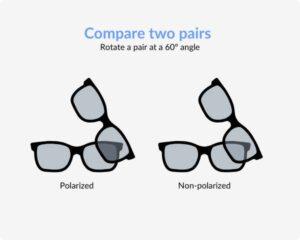
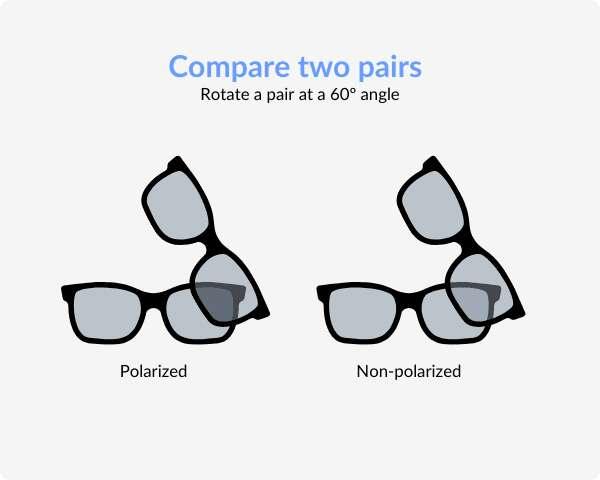
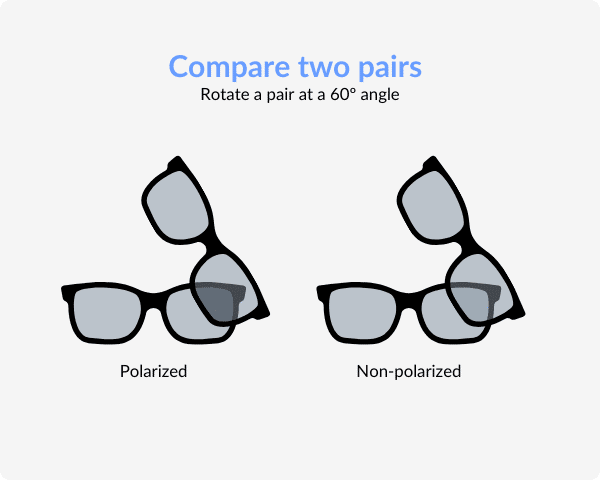
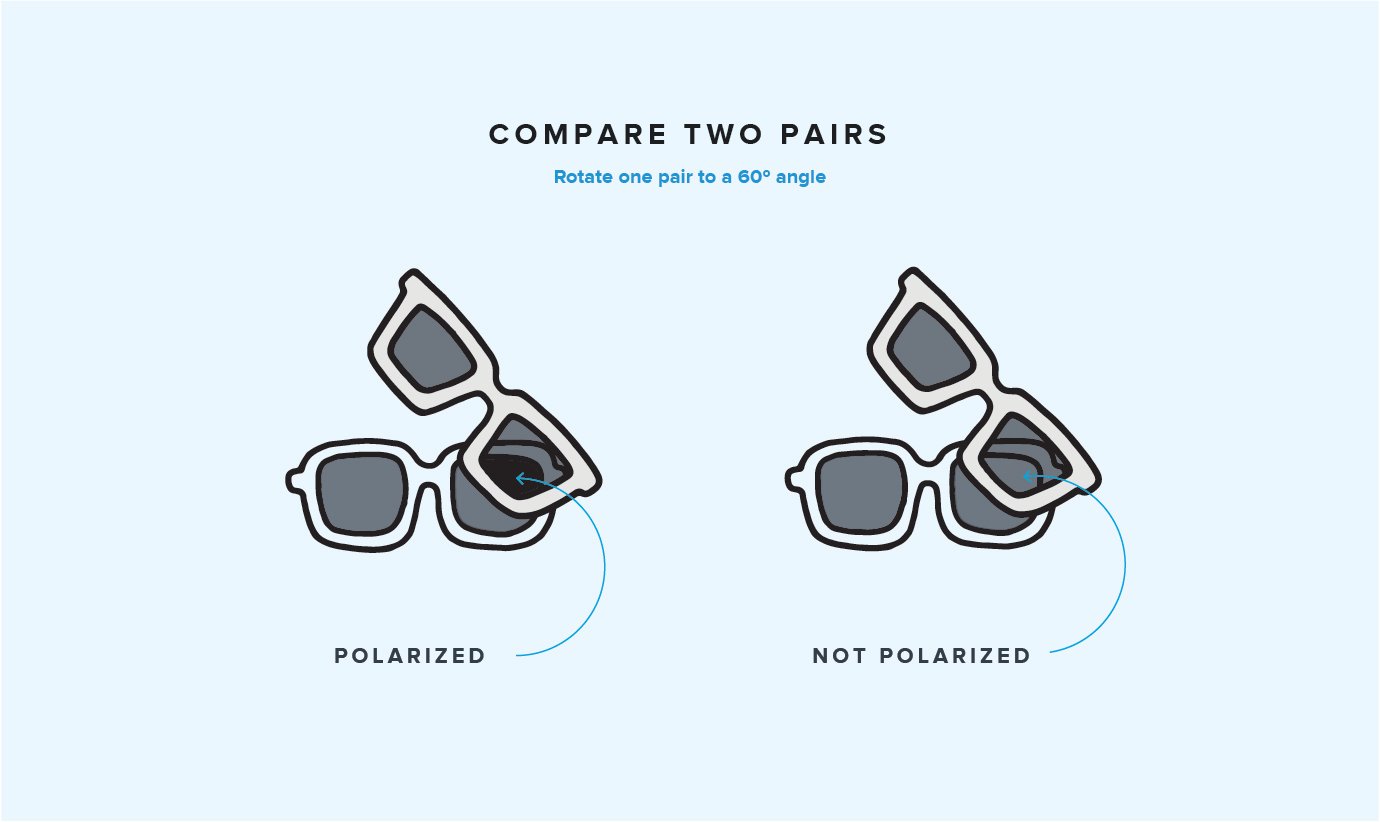
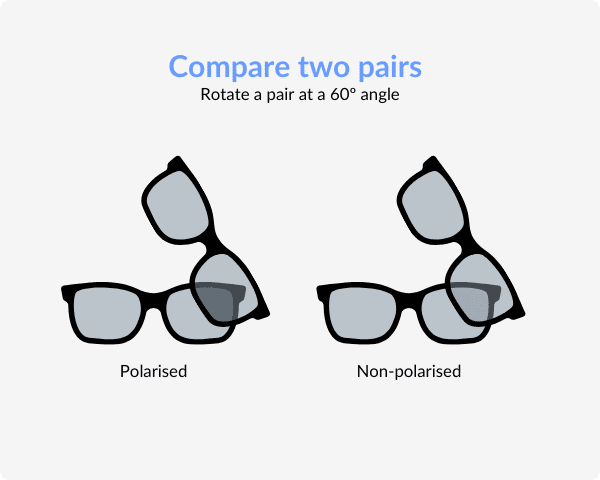
- Use another known polarized lens. Hold the two lenses at a 90-degree angle to each other. If the view goes dark, one or both are polarized.
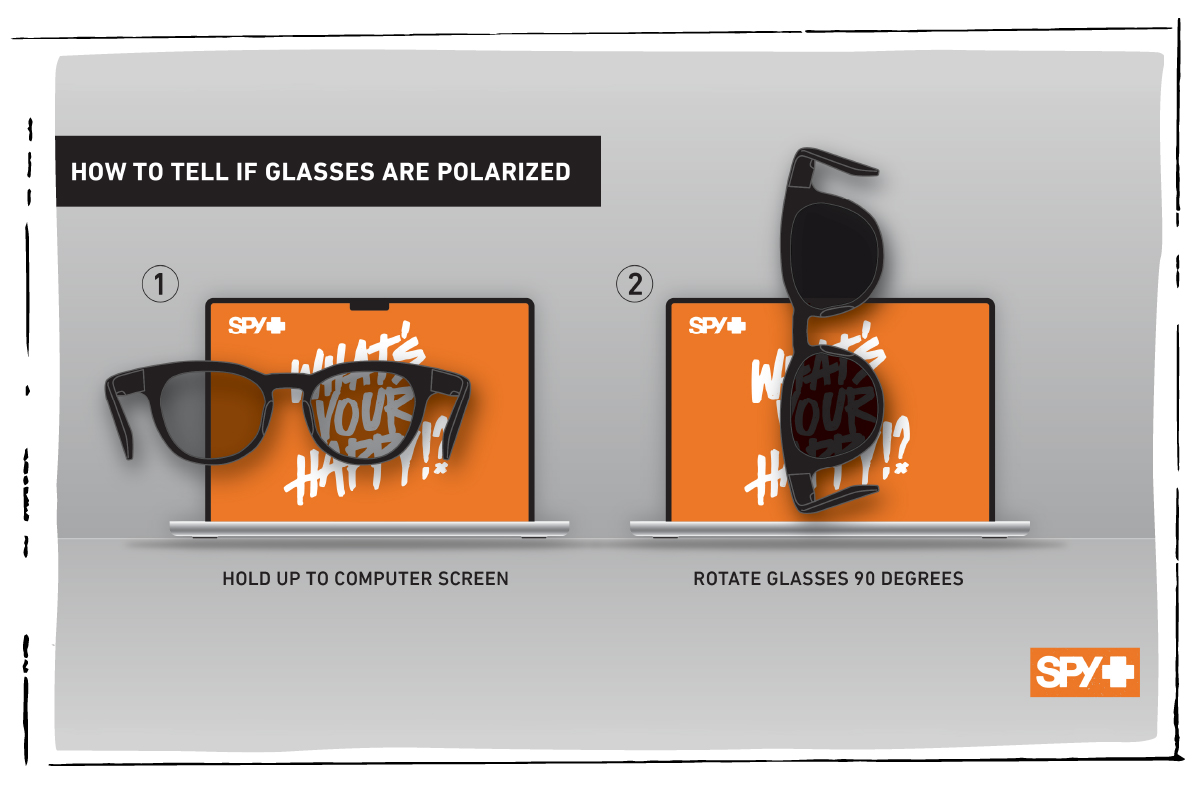
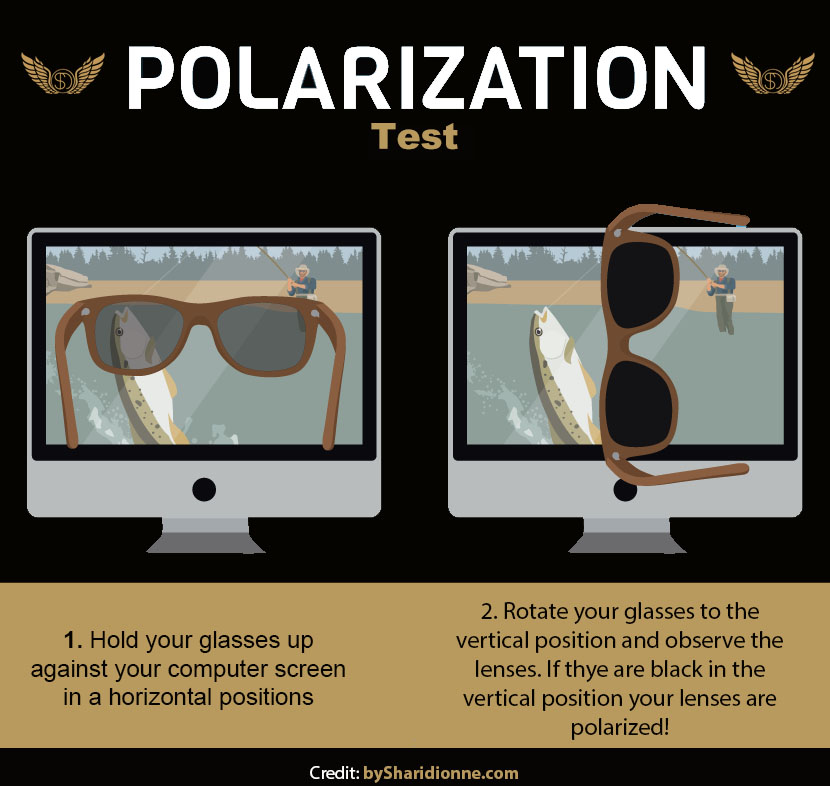
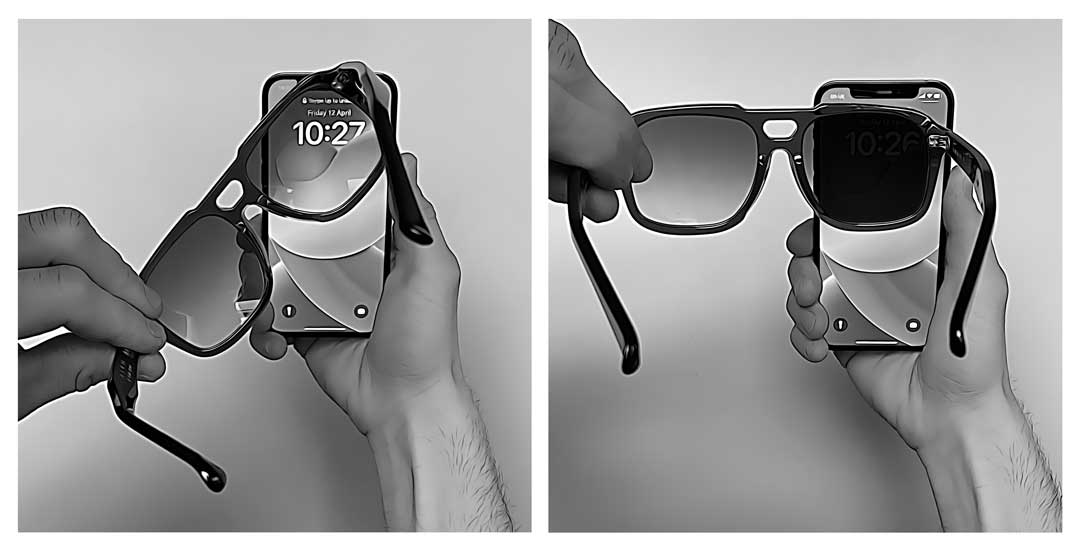
- Check an LCD screen. Put the sunglasses in front of a phone or laptop screen and rotate the glasses slowly. Polarized lenses often make the screen dim or invert at certain angles.
- The coin or water test. Look at the reflection on a coin or a puddle while rotating the glasses. A big change in brightness usually means polarization.
Doing two different tests increases your confidence in how to tell if sunglasses lenses are polarized.
Using a phone or screen to test polarization
A phone screen is the easiest tool you already own. Follow these steps to confirm polarization.
- Turn on a white or bright image on your phone.
- Hold the sunglasses in front of the screen at arm’s length.
- Rotate the sunglasses slowly. If the screen darkens or shifts, the lenses are polarized.
Some screens and older phones react differently, so try rotating the sunglasses while tilting the phone. This method is one of the fastest ways to learn how to tell if sunglasses lenses are polarized.
What labels, retailers, and apps can tell you
Labels and seller info can help, but they are not always perfect. Use these checks when buying.
- Look for a clear “polarized” label on the lens or tag.
- Ask the retailer to show the sunglasses with an LCD or reflection test.
- Use a polarization tester card or a simple app that displays a bright white or striped image.
Don’t rely only on glossy tags. Confirm with a real test so you know how to tell if sunglasses lenses are polarized for sure.
Benefits and limits of polarized lenses
Polarized lenses bring clear wins and a few trade-offs. Know both before you buy.
- Benefits
- Cuts glare and reduces eye strain.
- Improves contrast for water sports and driving.
- Makes colors appear cleaner in bright light.
- Limits
- Can make some LCD displays hard to read.
- May interfere with pilot instruments or car HUDs.
- Not a substitute for UV protection unless the lens also blocks UV.
Understanding limits helps you use polarization well. It also keeps you from blaming polarization for other problems.
My real-world tests and lessons learned
I’ve used the phone test and a lens-pair cross-check across many sunglasses. I once bought an expensive pair labeled polarized but found no change in glare during the phone test. The label was wrong.
Lesson learned
- Always test on the spot. A quick screen or reflection check takes 30 seconds.
- Don’t confuse darker tint with polarization. Tints can look similar but do not cut horizontal glare.
- If you need polarization for work—driving, fishing—verify the feature before you buy.
These habits saved me time and a few bad purchases. They can help you too when learning how to tell if sunglasses lenses are polarized.
Troubleshooting common pitfalls
Here are quick fixes for problems that can make test results confusing.
- If the phone screen does not darken, try rotating the sunglasses at different angles. Some coating orientations need different angles to show effect.
- If you see little change with any test, the lens is probably not polarized.
- Photochromic or mirrored coatings can mask polarization effects. Test in bright outdoor light for best results.
Keep tests simple and repeat one or two methods to confirm how to tell if sunglasses lenses are polarized.
Frequently Asked Questions of how to tell if sunglasses lenses are polarized
How quickly will I notice polarization when I try a screen test?
You should see the screen dim within a few degrees of rotation. If nothing changes, the lenses are likely not polarized.
Can polarized lenses block UV rays too?
Polarization and UV protection are separate. Good polarized lenses usually also block UV, but always check the UV rating.
Will polarization affect my phone or car display?
Yes. Polarized lenses can make some LCD or OLED displays dim or hard to read at certain angles.
Are polarized lenses better for driving?
Polarized lenses reduce glare from wet roads and bright surfaces, making driving more comfortable in many conditions.
Can I fake a polarized label?
Some sellers mislabel lenses. Always test with a phone screen or a known polarized lens to be sure.
Does lens darkness mean polarization?
No. Dark tint only reduces brightness. Polarization specifically cuts horizontal glare; you need tests to confirm it.
Conclusion
You can learn how to tell if sunglasses lenses are polarized with simple tests: use a phone screen, compare with a known polarized lens, or watch reflections while rotating the glasses. Test before you buy, trust real checks over tags, and remember that polarization and UV protection are different needs. Try the quick screen test next time you shop and leave a note below about what you find—your experience helps others decide.

Rubel Miah is the Senior Editor at MyStyleGrid.com, where he brings a sharp editorial eye and an unshakable love for fashion to everything he does. A true style addict, Rubel lives and breathes trends, from streetwear to high fashion, and has a knack for turning inspiration into impactful stories. With years of experience in fashion journalism and digital media, he curates content that empowers readers to express themselves through style. When he’s not editing features or forecasting the next big thing, you’ll find him hunting down vintage pieces or capturing street style moments around the city.