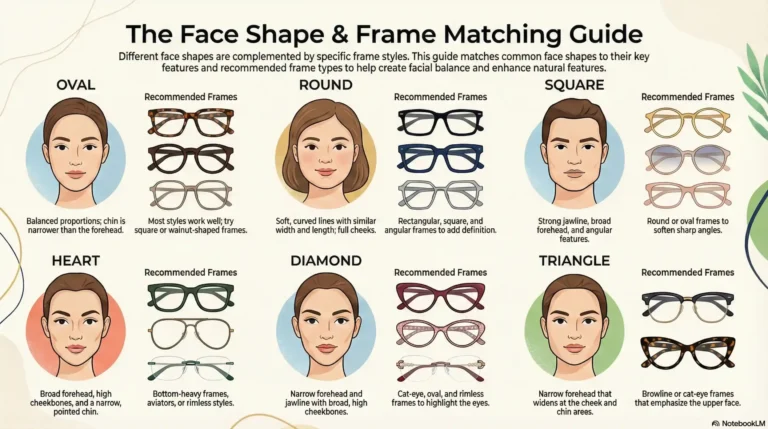
The best glasses match your face shape by balancing its natural lines, angles, width, and length.
choosing frames becomes much easier when you know how your face is shaped and what visual balance you want. The right pair can soften sharp features, add structure to soft curves, or make a long face look more even. This guide explains what glasses for my face shape really means, how to identify your shape, and how to choose frames that feel comfortable and look natural.
Why face shape matters when choosing glasses
Your face shape is the general outline created by your forehead, cheekbones, jaw, and chin. It is not a strict label. Most people have a blend of shapes, and features such as a broad forehead, high cheekbones, or a narrow chin can affect how frames look.
When people ask, “What glasses for my face shape?” they usually want one simple answer. In reality, the best choice depends on three things:
• The shape and proportions of your face
• The size and color of the frames
• Your personal style and comfort
A common styling rule is to choose frames that contrast with your face. Round faces often suit angular frames, while square faces may look balanced with softer, rounded designs. This is a useful starting point, not a fixed law.
Frame fit also matters more than shape alone. A beautiful frame will not look right if it slides down, presses behind your ears, or extends too far beyond your cheeks.
How to identify your face shape
You can identify your face shape at home in a few minutes. Pull your hair away from your face and look straight into a mirror. Use a washable marker on the mirror to trace the outer outline of your face, or take a straight-on photo with your phone.
Look at these four areas:
• Forehead width: Is it wider than your jaw, or about the same?
• Cheekbones: Are they the widest part of your face?
• Jawline: Is it soft, rounded, sharp, or broad?
• Face length: Is your face longer than it is wide?
Your face may fit one main group, but mixed shapes are normal. For example, you may have an oval face with a strong square jaw or a heart-shaped face with a narrow chin.
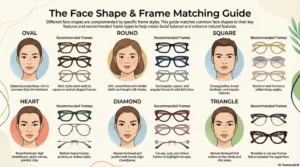
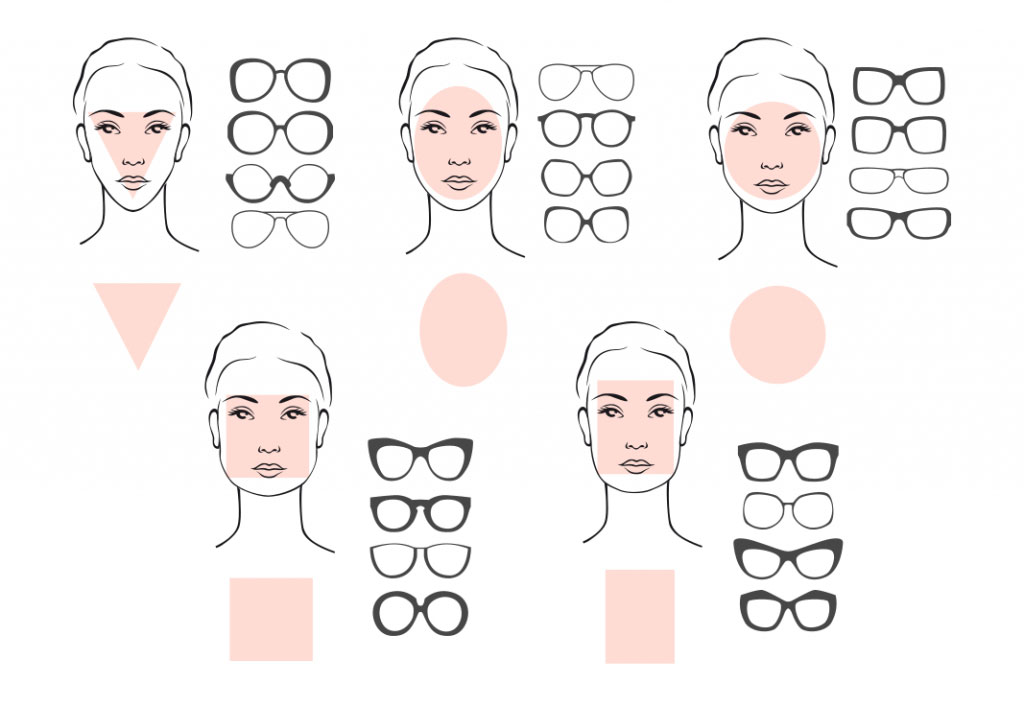
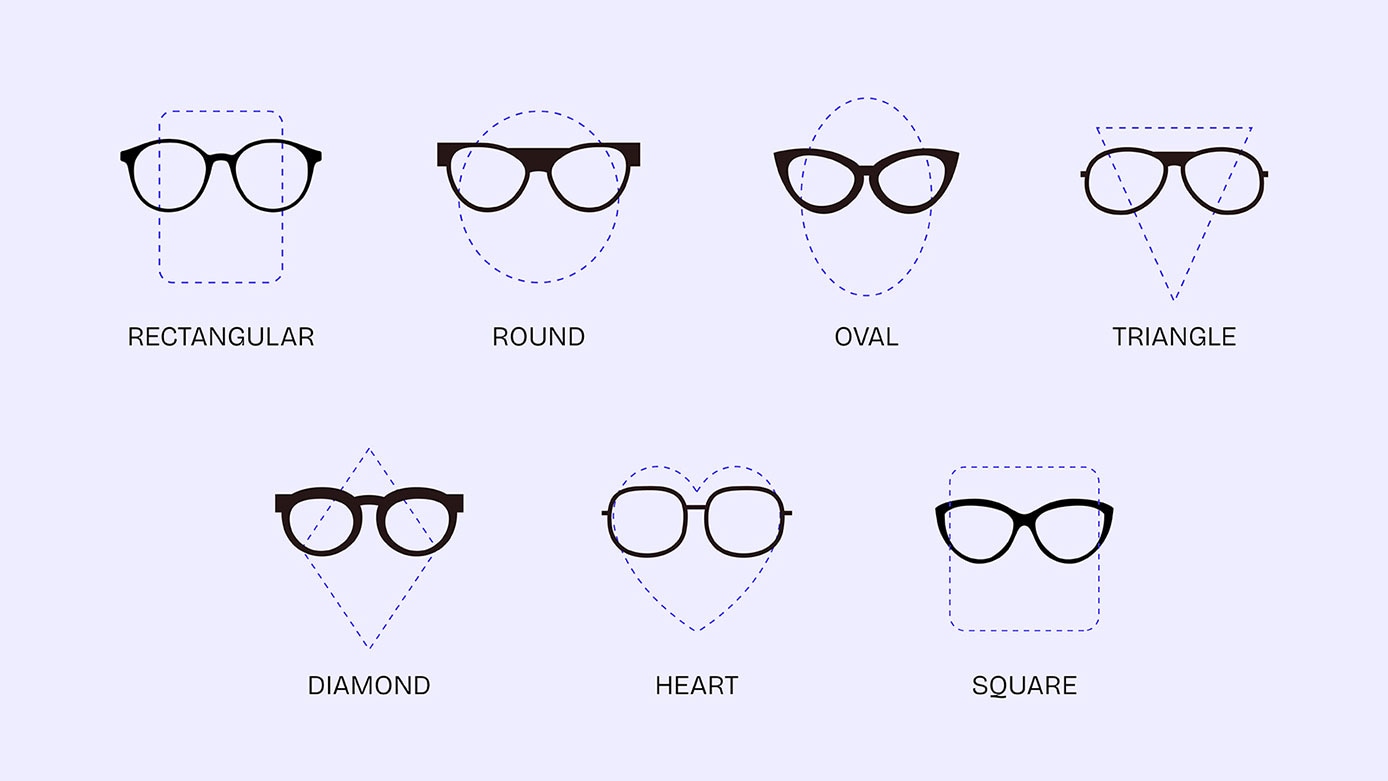
The main face shapes used in eyewear styling are:
• Oval: Longer than wide, with gently curved lines
• Round: Similar width and length, with soft cheeks and a curved jaw
• Square: Similar width and length, with a strong forehead and jaw
• Rectangle: Longer than wide, with straighter sides
• Heart: Wider forehead and cheekbones with a narrower chin
• Diamond: Narrow forehead and jaw with prominent cheekbones

What glasses for my face shape if I have an oval face?
Oval faces are slightly longer than they are wide. The forehead is often a little wider than the jaw, and the face has smooth, balanced lines.
If you have an oval face, you can wear many frame shapes. The goal is to keep your natural balance without choosing frames that are too narrow or too oversized.
Good options include:
• Square frames
• Rectangular frames
• Soft cat-eye frames
• Aviator frames
• Geometric frames
• Medium-size round frames
Look for frames that are as wide as, or slightly wider than, the broadest part of your face. Very small frames can make the face look longer. Very large frames may hide your natural proportions.
A useful fitting test is to check the frame width at your temples. Your eyes should sit near the center of each lens, and the frame should not pinch your nose or cheeks.
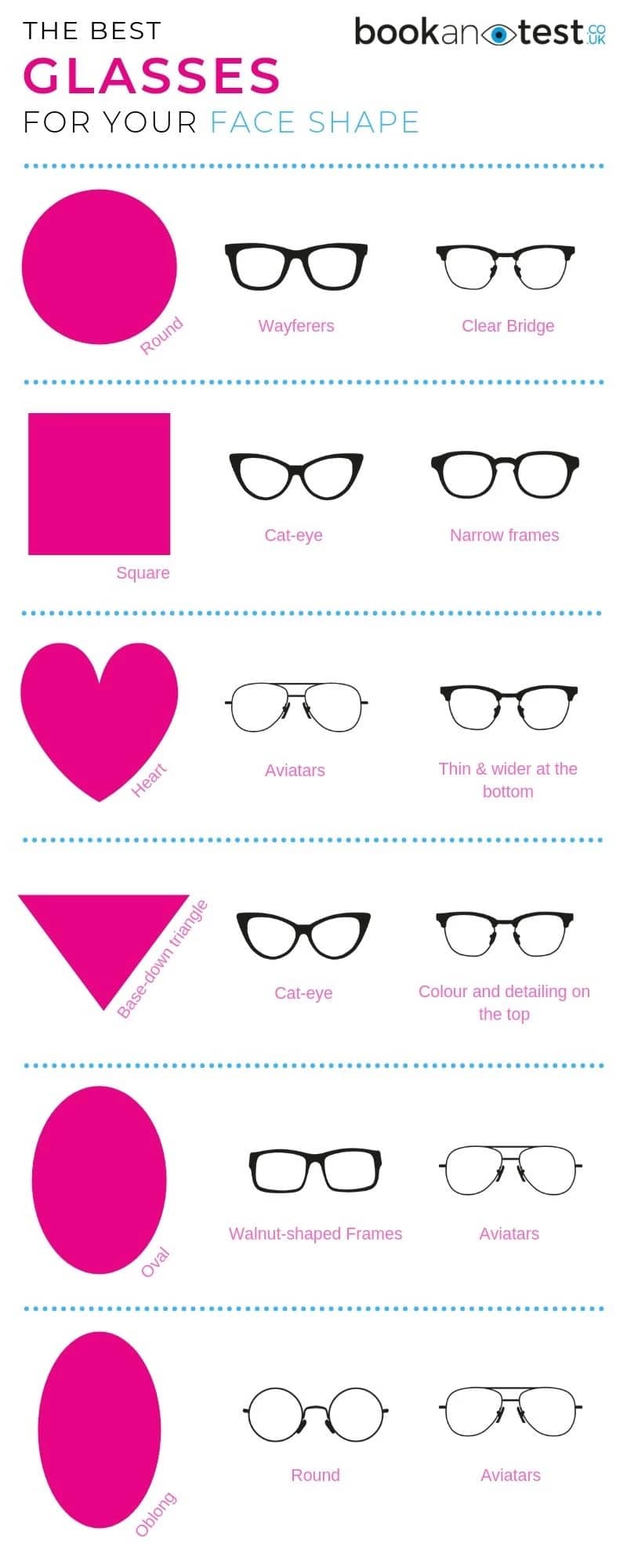
What glasses for my face shape if I have a round face?
A round face has soft curves, fuller cheeks, and a similar width and length. The jawline is usually smooth rather than sharply angled.
Angular frames can add structure and make the face appear longer. Look for frames with clear corners or a taller lens shape.
Try these styles:
• Rectangular frames
• Square frames
• Browline frames
• Wayfarer-style frames
• Geometric frames
• Clear frames with sharp edges
Avoid frames that are very small or extremely round if you want more definition. Round frames are not forbidden, though. A larger round frame can create a relaxed, artistic look if that matches your style.
Frame height can also help. A taller lens may visually lengthen the face, while a narrow lens can make the cheeks appear fuller. The best answer to “What glasses for my face shape?” depends on whether you want contrast or harmony.

What glasses for my face shape if I have a square face?
A square face usually has a broad forehead, a strong jaw, and fairly straight sides. The width and length may be similar.
Rounded frames can soften the appearance of strong angles. Oval and softly curved designs create a gentle contrast without making the face look wider.
Consider:
• Round frames
• Oval frames
• Soft cat-eye frames
• Thin metal frames
• Rimless or semi-rimless frames
• Narrow aviator frames
If you prefer rectangular glasses, choose styles with rounded corners. Thick, boxy frames can emphasize the jaw and forehead, especially when they are very dark or wide.
A frame with a slightly higher bridge can draw attention upward. This can be helpful if you want to balance a broad lower face.

What glasses for my face shape if I have a rectangular face?
A rectangular face is longer than it is wide. It often has a straight forehead, long cheeks, and a defined jaw.
The best frames usually add width and visual height. Taller lenses can make the face look more balanced, while a strong top rim can shorten the appearance of a long face.
Try:
• Oversized rounded frames
• Square frames with curved edges
• Browline frames
• Large wayfarer frames
• Aviators
• Bold frames with a low bridge
Avoid very narrow frames with short lenses. They may make the face look even longer.
A frame that sits comfortably across the cheek area can add balance. However, it should not touch your cheeks when you smile. This is one of the most common fit mistakes I see when people choose large frames.
What glasses for my face shape if I have a heart-shaped face?
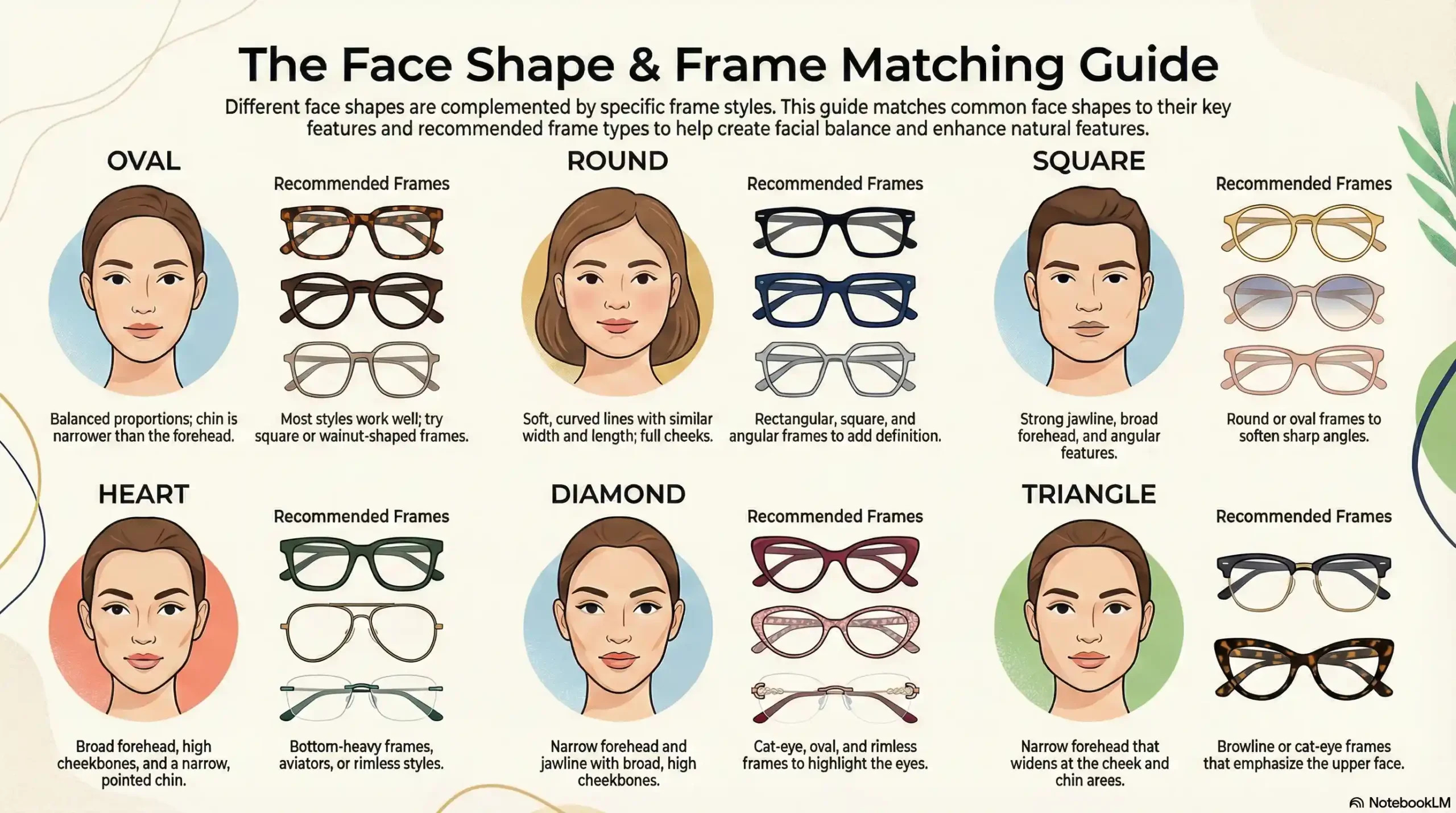
A heart-shaped face is often wider at the forehead and cheekbones, then narrows toward the chin. Some people also have a widow’s peak or a more pointed chin.
The aim is to balance the upper face and add gentle visual weight near the lower half. Frames with a light top or wider lower edge can work well.
Good choices include:
• Thin metal frames
• Light-colored frames
• Rounded frames
• Oval frames
• Bottom-heavy frames
• Soft cat-eye frames
Avoid frames that are very thick at the brow if you do not want extra focus on the forehead. A delicate frame can create a softer, more even look.
For heart-shaped faces, frame color matters as much as shape. Clear, gold, light tortoiseshell, and soft brown frames often feel less heavy than thick black frames.
What glasses for my face shape if I have a diamond face?
A diamond face is narrower at the forehead and jaw, with wider cheekbones. The eyes and cheek area often become the natural focus.
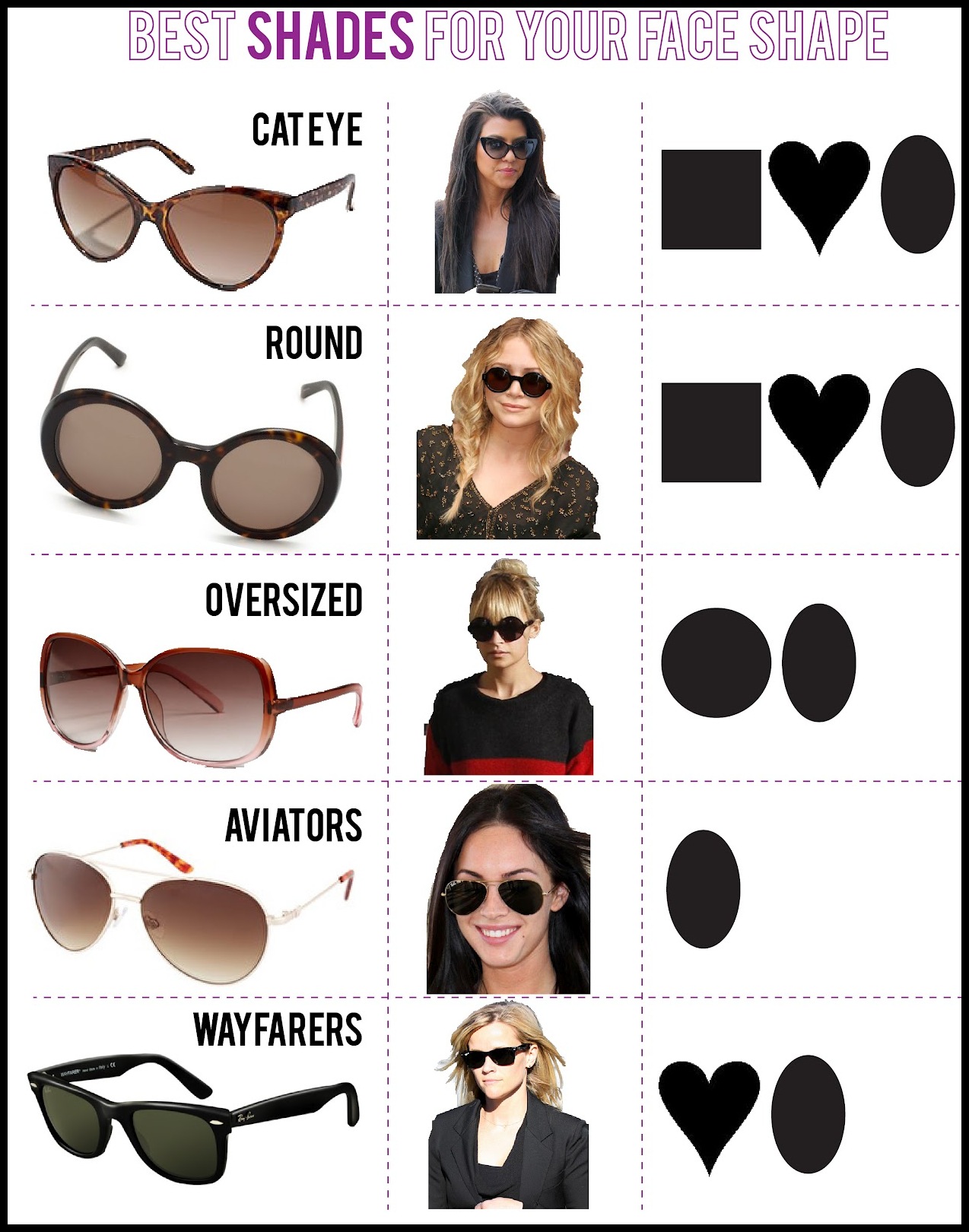
The best frames can soften the cheekbones and add width to the forehead or jaw. Curved designs usually work well.
Consider:
• Oval frames
• Cat-eye frames
• Rimless frames
• Browline frames
• Soft rectangle frames
• Frames with detailed temples
Cat-eye glasses can be especially flattering because their upper corners add shape near the forehead. Rimless styles keep the face open and avoid adding too much width around the cheeks.
Very narrow frames may make the cheekbones look more prominent. Very wide frames can overwhelm the narrower forehead and jaw, so check the width carefully.
How frame details change your look
Face shape is only one part of the answer to “What glasses for my face shape?” Small frame details can change the balance of your face.
Frame color
Dark frames create a stronger outline. Light and clear frames appear softer. Bright colors draw attention to the eyes and upper face.
Think about your everyday clothes and skin undertone. Warm tortoiseshell, brown, gold, and olive often suit warm coloring. Silver, gray, black, blue, and clear frames can suit cool coloring. These are style guides, not rules.
Frame thickness
Thick frames make a bold statement and can add structure. Thin frames look light and understated.
If your features are delicate, very thick frames may dominate your face. If your features are strong, a bold frame may look balanced rather than overwhelming.
Bridge style
The bridge is the part that rests across your nose. A well-fitted bridge keeps the glasses stable and helps your eyes sit in the center of the lenses.
If glasses slide down, ask an optician about adjustable nose pads, a narrower bridge, or a different frame material. Do not judge fit by appearance alone.
Lens height
Tall lenses can add visual length and softness. Short lenses can look sleek and modern but may emphasize a longer face.
Progressive lenses often need enough vertical space for clear viewing zones. If you need progressives, ask an eye-care professional about the minimum lens height before choosing a very shallow frame.
How to choose the right glasses size
The right size improves both comfort and appearance. Most frames include three numbers printed inside the temple, such as 52-18-140.
These numbers usually refer to:
• Lens width: 52 millimeters
• Bridge width: 18 millimeters
• Temple length: 140 millimeters
You do not need to match these numbers perfectly. Use them as a helpful guide when replacing a pair that already fits well.
Check these points in a mirror:
• Your pupils sit close to the center of each lens
• The frame does not touch your cheeks when you smile
• Your eyebrows are not completely hidden unless that is your style
• The temples rest smoothly without squeezing
• The frame does not slide when you look down
• The lenses do not create pressure near your nose
Prescription strength can affect lens thickness and weight. High prescriptions may need thinner lens materials or smaller frames for better comfort. An optician can explain the best options for your prescription.
Common mistakes to avoid
Many people focus on face shape and forget everyday use. A frame may look perfect in a photo but feel wrong after eight hours at work.
Avoid these mistakes:
• Choosing a frame only because it is trendy
• Ignoring nose fit and temple pressure
• Buying frames that are too wide
• Covering your eyebrows without checking the overall balance
• Selecting a color that clashes with your usual wardrobe
• Forgetting that prescription lenses can change the final look
• Judging glasses under poor lighting
• Ordering online without checking the return policy
I once saw a shopper choose a dramatic oversized frame because it looked great from the front. The frame was too wide, though, and kept slipping during normal movement. A slightly smaller version created the same bold effect and stayed in place.
That is a useful lesson: the best glasses are not only attractive. They should also feel secure, suit your routine, and support clear vision.
How to test glasses before buying
Try on at least three different shapes. Include one frame that follows your face shape and two that contrast with it.
Use this simple process:
- Stand in natural light if possible.
- Look straight ahead, then turn your head from side to side.
- Smile and check whether the frame touches your cheeks.
- Look down to see whether the glasses slide.
- Check your eyes in the center of the lenses.
- Take a photo from the front and at a slight angle.
- Wear the frame for several minutes before deciding.
If you buy online, use a virtual try-on tool as a guide, not a final answer. Digital tools can misread your face width, nose position, or lens height. Confirm the listed measurements and choose a retailer with easy returns.
Your optician can also adjust many frames after purchase. Small changes to the nose pads, temple arms, or frame angle can make a major difference.
Glasses for face shape and personal style
The question “What glasses for my face shape?” should never erase your personality. Face-shape advice is a tool, not a rulebook.
Choose frames based on the image you want to create:
• Classic: Try tortoiseshell, soft rectangles, or thin metal frames.
• Creative: Consider geometric shapes, bright colors, or translucent acetate.
• Minimal: Look at rimless, clear, or fine wire frames.
• Bold: Choose thick acetate, strong color, or a dramatic cat-eye.
• Professional: Select clean lines, neutral colors, and a balanced size.
• Casual: Try rounded frames, soft browlines, or lightweight plastic.
Your glasses sit in the center of your face, so they can become part of your signature look. The right pair should feel like an extension of your style, not a costume.
When face-shape advice has limits
Face-shape guides are based on visual balance, not medical science. They cannot determine which frame will fit your prescription, nose, temples, or visual needs.
Some people have facial asymmetry, low bridges, deep-set eyes, or sensitive skin. These factors may matter more than whether the face is oval or square.
An eye-care professional should help with:
• Prescription accuracy
• Pupillary distance
• Progressive lens measurements
• High-prescription lens options
• Frame adjustments
• Eye health concerns
A style guide can help you narrow your choices. An optician helps make sure the final pair works safely and comfortably.
Frequently asked questions about what glasses for my face shape
What glasses for my face shape are best for an oval face?
Oval faces suit many styles, including square, rectangular, aviator, and soft cat-eye frames. Choose a size that matches the widest part of your face and avoids looking too narrow or oversized.
What glasses for my face shape work best for a round face?
Angular frames, such as rectangular or square glasses, can add structure to a round face. Taller lenses may also create the appearance of more length.
What glasses for my face shape suit a square jaw?
Round, oval, and softly curved frames can balance a strong square jaw. Frames with rounded corners are a good choice if you prefer a more modern shape.
Can I wear round glasses with a round face?
Yes, you can wear round glasses with a round face. Choose a larger or more structured round frame if you want contrast, and focus on comfort and correct sizing.
Should glasses cover my eyebrows?
There is no single rule. Many frames sit below the eyebrows, but a bold browline may overlap them slightly; the key is that the frame looks balanced and does not block your natural expression.
How do I know if my glasses are too wide?
Your eyes should sit near the center of the lenses, and the temples should not angle sharply outward. If the frame slides or extends far beyond your cheeks, it may be too wide.
Is face shape more important than glasses fit?
Fit is more important than face shape. A frame that suits your face but slips, pinches, or distorts your vision will not be a good everyday choice.
Conclusion
Finding what glasses for my face shape is easier when you combine face balance, frame size, color, comfort, and personal style. Round faces often pair well with angular frames, square faces can suit soft curves, and oval faces have the widest range of options. Heart and diamond shapes often benefit from lighter frames and gentle curves.
Use face shape as a starting point, then test several sizes in real lighting. Check your eye position, nose fit, temple comfort, and prescription needs before you buy. Explore different styles, ask an optician for an adjustment, and share your favorite frame shape in the comments.

Rubel Miah is the Senior Editor at MyStyleGrid.com, where he brings a sharp editorial eye and an unshakable love for fashion to everything he does. A true style addict, Rubel lives and breathes trends, from streetwear to high fashion, and has a knack for turning inspiration into impactful stories. With years of experience in fashion journalism and digital media, he curates content that empowers readers to express themselves through style. When he’s not editing features or forecasting the next big thing, you’ll find him hunting down vintage pieces or capturing street style moments around the city.