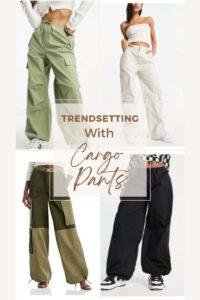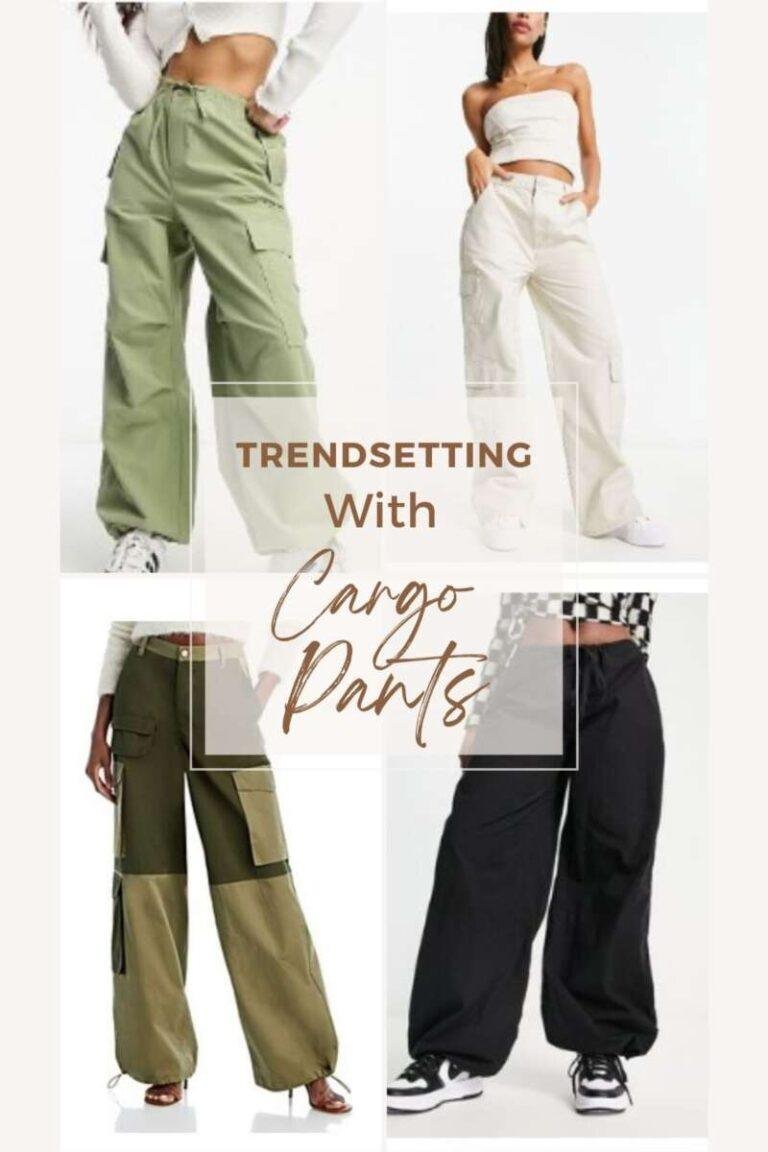
Cargo pants are trousers with large utility pockets attached to the outside of the legs, usually around the thighs. These pockets often have flaps, snaps, buttons, or hook-and-loop closures. The pockets give cargo pants more storage than jeans, chinos, or standard trousers.
In the United States, the term cargo pants usually means full-length pants with at least one roomy thigh pocket on each leg. The style may be loose, straight, tapered, stretchy, or made for work. The cut can change, but the external utility pockets are the key feature.

The Basic Definition of Cargo Pants
Cargo pants are defined by their pocket design, not by one exact fabric, color, or fit.
A typical pair has:
- Two front pockets
- Two back pockets
- One large pocket on each outer thigh
- A flap or closure over each thigh pocket
- Extra seams, pleats, or panels that allow the pockets to hold more items
The thigh pockets are often called cargo pockets or utility pockets. They sit outside the main body of the pants. This sets them apart from normal front pockets, which are cut into the pants at the hips.
There is no single rule that states how large a pocket must be before pants become cargo pants. A small side pocket may add utility, but it does not always make the garment a true cargo style. The overall design must clearly use external leg pockets as a main feature.
The dictionary definition from Merriam-Webster also centers on pants with cargo pockets. In practical clothing terms, that is the most useful test.
Key Features That Make Pants Cargo Pants
The strongest sign is a large pocket mounted on the outside of the thigh. Other details support the style but do not define it alone.
1. External thigh pockets
Cargo pockets are sewn onto the outside of the pant leg. They are not hidden inside the front or back panel.
This pocket may be:
- Box-shaped
- Bellows-style, with extra folds
- Flat and streamlined
- Slanted
- Split into smaller sections
A bellows pocket has folds that expand when filled. This design can hold more than a flat patch pocket.
2. A pocket flap or closure
Most cargo pockets have a flap. The flap may close with:
- Buttons
- Snaps
- Zippers
- Hook-and-loop tape
- Magnets
- No closure at all
A closure helps keep small items inside while walking, working, or sitting. It is common, but it is not required. Pants can still be cargo pants if their thigh pockets remain open.
3. Extra storage
Cargo pants are made to carry more than ordinary pants. The pockets may hold items such as:


- A phone
- Keys
- A wallet
- Work gloves
- Small tools
- A notebook
- Trail or travel items
Pocket capacity varies widely. A pocket that looks large may taper near the bottom or have a narrow opening. Check the actual opening and depth if storage matters.
4. A visible utility look
Many cargo pants have visible stitching, reinforced panels, fabric tabs, or pleats. These details can give the pants a workwear or military-inspired look.
Still, appearance alone is not enough. Pants do not become cargo pants simply because they are olive, tan, black, or made from ripstop fabric. The pocket layout matters most.

What Cargo Pants Are not
several pants styles look similar to cargo pants but use different pocket systems.
| Style | Main pocket feature | Usually cargo pants? |
|---|---|---|
| Cargo pants | Large external thigh pockets | Yes |
| Carpenter pants | Tool loops, hammer loops, and utility pockets | Not always |
| Tactical pants | Many reinforced pockets and performance features | Sometimes |
| Hiking pants | Lightweight fabric and travel or trail pockets | Sometimes |
| Work pants | Durable fabric and tool storage | Sometimes |
| Chinos | Slanted front pockets and welt back pockets | No |
| Jeans | Front scoop pockets and small coin pocket | No |
| Joggers | Elastic cuffs and casual fit | Only if they have cargo pockets |
| Parachute pants | Loose shape and gathered details | Only if they also have cargo pockets |
The line can be flexible. A pair of hiking pants with large external thigh pockets may reasonably be sold as cargo hiking pants. A pair with only a small zip pocket on the thigh may be better described as utility or hiking pants.
Cargo pants vs. tactical pants
Tactical pants are built around movement, durability, and equipment access. They may include reinforced knees, magazine pockets, stretch panels, and tool loops.
Some tactical pants are cargo pants. Not all are. The word tactical describes the intended use and features. The word cargo mainly describes the pocket style.
Cargo pants vs. carpenter pants
Carpenter pants often include a hammer loop, ruler pocket, or long tool pocket along the side of the leg. They may not have a large flap-covered thigh pocket.
Some work pants combine both designs. In that case, the garment may be called cargo work pants.
Cargo pants vs. cargo joggers
Cargo joggers have cargo pockets but use a jogger shape. They usually have:
- An elastic waistband
- Drawcords
- A tapered leg
- Elastic cuffs at the ankle
- Stretch fabric
The ankle cuff does not disqualify them. If the pants have clear external thigh pockets, cargo joggers is an accurate description.

A Simple Test: Are These Cargo Pants?
Use this three-part test when a clothing label is unclear.
Step 1: Look at the outer thigh
Check whether the pants have one or more pockets attached to the outside of the thigh. A pocket inside the front seam does not count as a cargo pocket.


Step 2: Check the pocket’s purpose
Ask whether the pocket adds meaningful storage. It does not need to hold tools, but it should be more than a small decorative zipper.
Step 3: Check the overall design
Look at the full garment. If the pants combine external thigh pockets with a normal trouser, jeans, workwear, or jogger cut, they can usually be described as a cargo version of that style.
Examples:
- Loose pants with two large flap pockets on the thighs: cargo pants
- Slim pants with zipped thigh pockets: slim cargo pants
- Joggers with two large side pockets: cargo joggers
- Jeans with one tiny coin pocket near the thigh: not cargo pants
- Hiking pants with one small hidden zip pocket: usually not cargo pants
- Work pants with a large external thigh pocket and tool loop: cargo work pants
The best label describes the main design. A minor pocket should not control the entire category.

Common Types of Cargo Pants
Cargo pants now appear in several forms. The fabric, fit, and purpose may differ, but each type uses external utility pockets.
Classic cargo pants
Classic cargo pants have a relaxed or straight fit and large flap-covered pockets. Cotton, cotton blends, and ripstop fabrics are common.
They often have a rugged look and work well for casual clothing, outdoor tasks, and travel.
Slim cargo pants
Slim cargo pants narrow through the leg. They keep the cargo pocket layout but use less fabric around the seat and thigh.
The pocket size may be smaller. A slim cut can also make a full cargo pocket look more discreet.
Cargo joggers
Cargo joggers combine cargo pockets with an elastic waist and ankle cuffs. They are common in casual and athletic-inspired clothing.
They may be comfortable for daily wear, but their stretch fabric and trim fit can limit how much the pockets hold without changing the shape of the pants.
Cargo shorts
Cargo shorts use the same pocket idea on a shorter leg. They normally have large external pockets on the lower thigh.
They are cargo shorts rather than cargo pants because the legs stop above the ankle.
Tactical or performance cargo pants
These pants may use nylon, stretch woven fabric, water-resistant finishes, or reinforced panels. They can include zip pockets and knee articulation.


The name does not guarantee a certain level of strength or protection. Read the garment specifications before using the pants for demanding work.

Materials and Features to Check
Cargo pants can be made from many materials. Fabric affects comfort, weight, care, and durability.
Cotton
Cotton cargo pants feel soft and breathe well. They may be comfortable for casual wear, but untreated cotton can absorb water and dry slowly.
Ripstop fabric
Ripstop fabric uses a stronger woven grid. If a small tear starts, the weave may help limit its spread. Ripstop does not mean the pants cannot tear, and it does not prove that they are suitable for protective work.
Nylon and polyester blends
These fabrics often dry faster than cotton. They may also resist abrasion well, depending on the weave and finish.
Stretch blends
A small amount of elastane or another stretch fiber can improve comfort when bending or sitting. Too much stretch may reduce the firm support of a pocket when it is loaded.
Pocket construction
Look for reinforced stitching at pocket corners and stress points. Check whether the closure is easy to use with one hand. A deep pocket is not useful if its opening is too narrow.
For work, fit and movement matter as much as pocket count. A crowded pocket can swing, press against the leg, or catch on equipment. Keep heavy tools in a tool belt or approved holder when the job requires it.

How Cargo Pants Should Fit
The right fit depends on how you plan to use the pants.
For daily wear, the waistband should sit securely without pinching. The thigh pockets should lie fairly flat when empty. When filled, they should not pull the leg sharply to one side.
For outdoor use, allow enough room to walk, climb, sit, and bend. A very tight pair may restrict movement. A very loose pair may snag more easily.
Pay attention to the pocket position. A pocket that sits too low can hit the knee when you walk. A pocket that sits too high may feel awkward when you sit.
Before buying, check:


- Waist measurement
- Inseam length
- Thigh room
- Leg opening
- Pocket depth
- Pocket opening
- Closure type
- Fabric stretch
- Care instructions
Sizing is not consistent across US brands. Use the brand’s own size chart instead of assuming that the same labeled size will fit the same way everywhere.

Are Cargo Pants Appropriate for Work or Uniforms?
Cargo pants may be suitable for work, but the garment must meet the rules of that workplace.
A private employer may require a certain color, fabric, logo policy, or safety rating. A uniformed service may specify exact garments, approved patterns, and permitted wear. Fashion cargo pants are not automatically approved workwear or uniform wear.
For hazardous jobs, pocket style is only one concern. Check for the required protection, such as:
- High-visibility design
- Flame-resistant fabric
- Arc-rating requirements
- Chemical resistance
- Knee protection
- Slip-resistant footwear compatibility
- Employer or agency approval
Do not treat a cargo pocket as proof of safety. The Occupational Safety and Health Administration explains that personal protective equipment must be selected for the workplace hazard. Ordinary cargo pants do not replace required protective equipment.

Common Mistakes When Identifying Cargo Pants
Mistaking any side pocket for a cargo pocket
A small zip pocket on the leg may be useful, but it does not always create a cargo style. Consider the size, placement, and role of the pocket in the whole design.
Assuming all cargo pants are loose
Cargo pants can be relaxed, straight, slim, tapered, or jogger-style. Fit does not decide the category.
Assuming cargo pants must be military green
Olive drab is common, but cargo pants also come in black, navy, khaki, gray, denim, camouflage, and many other colors.
Assuming more pockets means better cargo pants
More pockets can add weight and bulk. They can also make it harder to sit or move. Choose pocket placement based on what you actually carry.
Confusing a decorative pocket with a useful one
Some fashion pants use false flaps or shallow pockets. If storage matters, open each pocket and check its depth before buying.

Frequently Asked Questions
Do cargo pants have to be loose?
No. Cargo pants can have a slim, straight, tapered, or relaxed fit. The defining feature is the external utility pocket, not the width of the leg.
Can jeans be cargo pants?
Yes, if the jeans have large external cargo pockets on the thighs. Standard jeans with only front, back, and coin pockets are not cargo pants.
Do cargo pants need two thigh pockets?
No. Two thigh pockets are common, but one substantial external utility pocket may still support a cargo-pants description. A pair with several small pockets may be better called utility pants.
Are cargo pants and tactical pants the same?
No. Some tactical pants are cargo pants, but the terms describe different things. Cargo refers mainly to the pocket design. Tactical refers to a broader set of performance, equipment, and durability features.
Can cargo pants be formal?
Usually not. The visible pockets create a casual or workwear appearance. A refined, slim pair in a dark fabric may look polished, but it will still read as casual rather than formal business wear.
Final Answer
Cargo pants are pants with large, external utility pockets attached to the outer thigh. Flaps, closures, pleats, durable fabric, and a relaxed fit are common, but none is required by itself.
When in doubt, look at the pocket layout. If the pants use clear, roomy thigh pockets as a major part of their design, calling them cargo pants is reasonable. If they have only small or hidden pockets, terms such as utility pants, hiking pants, or work pants may be more accurate.
For the next step, check the thigh-pocket size, closure, fabric, and fit against the way you plan to wear the pants.

Rubel Miah is the Senior Editor at MyStyleGrid.com, where he brings a sharp editorial eye and an unshakable love for fashion to everything he does. A true style addict, Rubel lives and breathes trends, from streetwear to high fashion, and has a knack for turning inspiration into impactful stories. With years of experience in fashion journalism and digital media, he curates content that empowers readers to express themselves through style. When he’s not editing features or forecasting the next big thing, you’ll find him hunting down vintage pieces or capturing street style moments around the city.