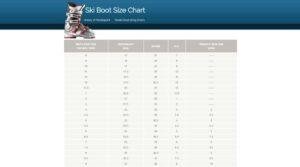
Most skiers need a ski boot sized in Mondopoint, which is based on foot length in centimeters. Measure both feet, then choose a ski boot close to your longer foot’s length. For example, a foot that measures 26.3 cm will usually start with a 26.5 ski boot.
Do not choose ski boots by your usual U.S. shoe size alone. Ski boot brands use different lasts, widths, and shell shapes. A boot that looks right on a size chart can still feel wrong if the shell is too wide, too narrow, or the wrong shape for your foot.
This guide explains how to measure your feet, read ski boot sizing charts, check shell fit, and know when you need help from a professional boot fitter.

What Is Mondopoint Ski Boot Sizing?
Mondopoint, often written as Mondo, is the standard ski boot size system. The number represents foot length in millimeters or centimeters.
A Mondo 26.5 boot is designed around a foot length of about 26.5 centimeters, or 265 millimeters. Many adult ski boots use half sizes, such as 25.5, 26.5, and 27.5, even though the half sizes may share the same shell with the whole size below them.
A U.S. shoe size is less useful because it measures a different sizing system. A men’s U.S. 9 shoe does not always equal the same ski boot size across brands. Women’s footwear also uses a separate U.S. scale, which makes direct conversion less reliable.
The best starting point is:
Your ski boot size in Mondo should be close to the length of your longer foot in centimeters.
Ski boots also have other measurements that affect fit:
- Last width: The width of the boot shell at the forefoot, usually measured in millimeters.
- Volume: The overall space inside the boot, including the instep and heel area.
- Flex: How much force the boot needs to bend forward.
- Shell shape: The length, width, height, and contour of the hard plastic shell.
- Liner: The padded inner boot that surrounds your foot and lower leg.
Length is only the first step. A ski boot can have the correct Mondo length but still be too loose in the heel or too tight across the toes.
How to Measure Your Feet for Ski Boots
Measure your feet at home before you visit a store or compare ski boot size charts. You need paper, a pencil, a ruler or tape measure, and the ski socks you plan to wear.
Follow these steps:
- Place a sheet of paper on a hard floor with one edge against a wall.
- Stand on the paper with your heel lightly touching the wall.
- Wear thin or medium ski socks, not thick winter socks.
- Keep your weight evenly spread across both feet.
- Ask someone to mark the end of your longest toe.
- Measure from the wall edge to the mark in millimeters.
- Repeat the process for the other foot.
- Use the longer measurement as your starting Mondo size.
Do not measure while sitting. Your foot becomes longer and wider when you stand on it. This change matters because ski boots hold your foot in a standing, weight-bearing position.
Measure later in the day if possible. Feet often swell slightly after walking or standing. This can provide a more realistic measurement for a full day on the mountain.
How to handle different foot lengths
It is normal for one foot to be slightly longer than the other. Size for the longer foot rather than averaging both measurements.
For example:
- Left foot: 25.8 cm
- Right foot: 26.2 cm
- Starting size: Mondo 26.5
The shorter foot can often be managed with footbeds, boot-fitting adjustments, or small fit pads. Choosing a boot that fits the shorter foot may leave the longer foot cramped.
How to handle a long toe
Your longest toe may be your big toe, second toe, or another toe. Measure to the toe that reaches farthest forward.
Do not press your toes flat or curl them during the measurement. Use your natural standing position.
Ski Boot Size Chart: Foot Length to Mondo Size
Use the table below as a starting guide. It shows approximate foot length and the nearest common Mondo size.
| Longer foot length | Starting Mondo size | Typical fit approach |
|---|---|---|
| 22.0–22.4 cm | 22.5 | Youth or small adult fit |
| 22.5–22.9 cm | 23.0 | Confirm width and shell shape |
| 23.0–23.4 cm | 23.5 | Common small adult size |
| 23.5–23.9 cm | 24.0 | Check heel hold carefully |
| 24.0–24.4 cm | 24.5 | Start with a snug shell fit |
| 24.5–24.9 cm | 25.0 | Compare the brand’s chart |
| 25.0–25.4 cm | 25.5 | Common adult starting size |
| 25.5–25.9 cm | 26.0 | Check toe contact and heel lift |
| 26.0–26.4 cm | 26.5 | Common adult starting size |
| 26.5–26.9 cm | 27.0 | Verify shell length |
| 27.0–27.4 cm | 27.5 | Compare volume and width |
| 27.5–27.9 cm | 28.0 | Check whether the shell is too large |
| 28.0–28.4 cm | 28.5 | Use a professional fitting if unsure |
| 28.5–28.9 cm | 29.0 | Check heel retention |
| 29.0–29.4 cm | 29.5 | Confirm the brand’s available shells |
| 29.5–30.0 cm | 30.0 | Check shell fit, not just liner comfort |
This table is not a substitute for a manufacturer’s chart or an in-person fitting. Brands can shape the same nominal size differently. A 26.5 boot from one brand may feel longer, narrower, lower, or higher-volume than another brand’s 26.5.
Should you round up or down?
If your measured foot falls between sizes, start with the next half size up. For example, a 26.3 cm foot usually starts in a 26.5 boot.
However, an experienced boot fitter may choose a smaller shell for an advanced skier, a narrow foot, or a performance fit. Ski boot liners compress with use, so a brand-new boot should feel snug rather than roomy.
Do not automatically round up because you want extra comfort. A boot that is too large can cause:
- Heel lift
- Poor edge control
- Foot fatigue
- Cold feet from reduced circulation caused by over-tightening
- Toes hitting the front when skiing downhill
- Excess movement inside the liner
How Should a New Ski Boot Fit?
A correctly sized ski boot should feel snug, secure, and even, with firm heel hold and light toe contact when you stand upright.
When you first put the boot on:
- Your toes may lightly touch the front of the liner.
- Your heel should stay near the back of the boot.
- Your foot should not slide side to side.
- The shell should not create sharp pressure points.
- You should be able to flex your ankle forward.
- Your toes should not curl to find space.
Stand upright for a few minutes. Then bend your knees into a skiing stance. When you flex forward, your heel should settle back and your toes should pull slightly away from the front.
This change is normal. Ski boots often feel longer when you stand upright because your foot moves forward. A boot that feels slightly short while standing may fit correctly once you flex into a skiing position.
The toe-touch test
With the buckles open, stand upright and slide your foot forward until your toes touch the front of the liner. You should usually be able to place roughly one to two fingers behind your heel in a shell-fit check, depending on the skier and the boot’s intended use.
This is only a rough home check. Finger size varies, and the liner can hide the true shell length. A boot fitter can remove the liner and check the space inside the hard shell more accurately.
A recreational skier may prefer a little more room than a racer. An advanced skier often accepts a closer fit for better control. The boot should never cause severe pain, numbness, or loss of circulation.
What a good fit feels like after buckling
With the boot buckled at a moderate tension:
- Your heel should remain mostly in place.
- Your ankle should feel supported.
- Your toes should remain relaxed.
- The top of your foot should not feel crushed.
- You should not need to overtighten the buckles to stop movement.
If you must tighten every buckle aggressively, the boot may be too large or the shape may not match your foot.
How Do Width, Volume, and Flex Change Your Ski Boot Size?
Foot length does not tell you whether a boot will fit across the foot or around the ankle. Width and volume often decide whether the same Mondo size feels comfortable.
Last width
Last width describes the approximate forefoot width of the shell. Ski boots commonly range from narrow performance shapes to wider comfort-oriented shapes, but the exact range varies by brand and model.
A narrow last may suit a slim foot with a low-volume heel. A wider last may suit a broad forefoot or a skier who needs more room across the toes.
Do not buy a longer boot to solve a width problem. Extra length can create heel lift and reduce control. Choose the correct length first, then find a shell with the right width.
Instep height and volume
The instep is the top-middle part of your foot. A tall instep may feel compressed in a low-volume boot. A low instep may leave too much empty space in a high-volume boot.
Signs of excessive volume include:
- Your heel lifts when you flex.
- Your foot moves inside the liner.
- You tighten the buckles very hard.
- You feel pressure from the buckle area but still lack control.
- Your toes go numb because the buckles are overtightened.
A boot fitter can sometimes improve volume with footbeds, pads, or liner work. These changes cannot always fix a shell that is fundamentally the wrong shape.
Flex rating
Flex describes how resistant a boot is to forward bending. It is not a direct size measurement, but it changes how the boot feels.
A very stiff boot may feel difficult to flex, especially for a lighter skier or someone with limited strength. A very soft boot may feel unstable or fold too easily for a heavier, faster, or more advanced skier.
Manufacturers do not use one universal flex scale. A flex rating of 100 from one brand may not feel the same as a 100 from another. Treat the number as a rough guide, not a regulated standard.
Should Men and Women Choose Different Ski Boot Sizes?
Men and women do not need separate Mondo sizing systems. The correct starting size still comes from foot length in centimeters.
Women’s ski boots often differ in shape rather than basic length. Many women-specific models have changes such as:
- A lower cuff height
- A different cuff shape
- A narrower or more tapered heel area
- A different liner design
- A flex pattern intended for the target skier
These features are not universal. Some women fit men’s boots well, and some men fit women’s boots well. The foot shape, lower-leg shape, skiing ability, and comfort needs matter more than the label.
Use your measured Mondo length, then compare the brand’s width and volume information. Do not add a fixed number to your U.S. women’s shoe size and assume the result will be correct.
What size ski boots do kids need?
Children need ski boots that fit securely without excessive extra room. Avoid buying several sizes too large so a child can “grow into” them.
An oversized boot can make it hard for a child to control the skis. It may also require tight buckling, which can create pressure and cold feet.
Measure the child while standing in ski socks. Leave enough room for normal growth only when the manufacturer or a qualified boot fitter confirms that the fit remains secure. For young children, a rental shop may be more practical because their feet can change quickly.
How to Check Ski Boot Fit at Home
You can perform a basic fit check at home, but do it before skiing outdoors and before modifying the shell.
Step 1: Use the right socks
Wear the socks you will ski in. Thin technical ski socks usually work better than thick cotton socks. Thick socks can create pressure, hold moisture, and make a boot seem smaller than it is.
Do not wear two pairs of socks to fix a loose boot. This often creates folds and pressure points.
Step 2: Put the liner and shell on correctly
Open the buckles and power strap. Pull the tongue forward. Slide your foot into the liner without forcing your toes.
Tap your heel gently on the floor to help it settle into place. Do not slam the heel hard against the ground.
Step 3: Buckle from the ankle upward
Start with moderate tension around the ankle and instep. The lower buckles should not need extreme force. Secure the power strap and upper buckles so the cuff supports your lower leg.
Step 4: Stand, walk, and flex
Stand upright, bend your knees, and flex forward as if skiing. Walk around for 10 to 15 minutes if the boots are new and safe to walk in.
Look for these signs of success:
- The heel stays mostly planted.
- The toes remain relaxed.
- The foot does not slide side to side.
- Pressure feels firm but not sharp.
- You can flex the cuff.
- No area becomes numb.
New liners may feel firm. They often soften and shape around the foot after use. That does not mean you should accept severe pain or numbness while waiting for a break-in period.
Common Ski Boot Sizing Mistakes
The most common mistake is choosing ski boots by regular shoe size. U.S. shoe sizes vary by brand and do not show the shell’s width or volume.
Other frequent errors include:
Buying too large for comfort
A roomy boot may feel pleasant in the store but become difficult to control on snow. The liner compresses with use, which can make a slightly loose boot feel much looser later.
Wearing thick socks
Thick socks can create pressure and reduce circulation. Use one pair of smooth ski socks instead.
Ignoring heel lift
A small amount of movement can become tiring after hours of skiing. Heel lift may indicate excess shell volume, poor shape match, or a boot that is too long.
Tightening every buckle
Over-tightening often hides a sizing or shape problem. It can restrict blood flow and create pressure on the top of the foot.
Assuming pain is normal
A snug boot is normal. Sharp pain, persistent numbness, tingling, discoloration, or loss of feeling is not a normal break-in problem. Remove the boot and seek a fit adjustment.
Buying based only on brand
A brand name does not guarantee that every model fits your foot. Compare the actual shell shape, last width, volume, and flex.
When Should You See a Professional Ski Boot Fitter?
See a professional boot fitter if you are buying expensive boots, have unusual foot shapes, experience pain, or cannot keep your heel secure.
Professional help is especially useful when:
- One foot is much larger than the other.
- You have bunions, a high instep, or a prominent ankle bone.
- Your toes go numb.
- Your heel lifts even in the correct length.
- You have tried more than one shell shape.
- You need custom footbeds or shell modifications.
- You are an advanced skier who wants a close performance fit.
- You are returning to skiing after a foot or ankle injury.
A fitter can measure your feet, assess stance and alignment, compare shells, and make controlled adjustments. Possible changes include liner molding, shell punching, grinding, padding, and footbed work.
Do not attempt to heat, cut, grind, or punch a ski boot shell at home. A poor modification can damage the boot or create a dangerous fit.
Key Takeaways
- Measure both feet while standing in ski socks.
- Use the longer foot to choose your starting Mondo size.
- A 26.3 cm foot will usually start around Mondo 26.5.
- Do not rely on your U.S. shoe size alone.
- Correct length is only part of the fit; width, volume, heel hold, and flex also matter.
- A new boot should feel snug, not painfully tight.
- Do not size up to solve a width or shape problem.
- See a professional boot fitter for pain, numbness, major heel lift, or custom adjustments.
FAQs
Is my ski boot size the same as my shoe size?
No. Ski boots use Mondo sizing, which is based on foot length in centimeters. Your U.S. shoe size can provide a rough comparison, but it should not determine the final ski boot size.
Should my toes touch the end of ski boots?
Your toes may lightly touch the front when you stand upright with the boots unbuckled. When you bend your knees into a skiing stance, your toes should pull back slightly. Constant hard pressure at the front usually means the boot is too short or the shape is wrong.
Should I buy ski boots one size bigger?
Usually not. A boot that is too large can cause heel lift, poor control, foot fatigue, and cold feet. Start with a Mondo size close to your longer foot measurement and adjust the model or shell shape if the fit feels too narrow.
How much room should be in a ski boot?
The correct amount depends on the boot, skier, and intended fit. A shell check with the liner removed can help, but finger measurements are only a rough home guide. A performance boot is generally snugger than a comfort-focused recreational fit.
Why do my ski boots hurt the tops of my feet?
Pressure on the top of the foot can come from a low-volume shell, a tall instep, an incorrect liner position, or buckles that are too tight. Loosen the buckles and check your foot placement. If the pressure continues, have a boot fitter assess the shell and liner.
Can I use thick socks if my ski boots feel loose?
Thick socks are not a reliable fix. They can bunch, create pressure, and reduce circulation. A better solution is to check the shell size, footbed, liner, and overall boot volume.
Conclusion
The right ski boot size starts with your longer foot’s length in centimeters, not your usual U.S. shoe size. Measure both feet while standing, use the result to find a Mondo starting size, and then check heel hold, toe position, width, and volume.
For most skiers, the best next step is to try the correct Mondo size in several shell shapes. If the boot causes pain, numbness, or major movement, stop sizing by guesswork and visit a qualified ski boot fitter.
Madison Clark is a footwear expert and the voice behind MyStyleGrid.com. She specializes in honest shoe reviews, style tips, and practical guides to help readers find the perfect pair for any occasion. With years of experience in blogging and content creation, Madison makes footwear knowledge simple, stylish, and easy to follow.