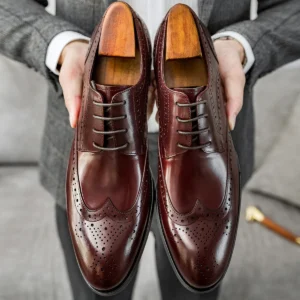
You can buy business shoes from specialty shoe stores, department stores, brand websites, and trusted online retailers.
Knowing where to buy business shoes can save you money, improve comfort, and help you choose a pair that suits your work. The best place depends on your dress code, budget, foot shape, and need for expert fitting. This guide explains the most reliable options, what to look for, and how to avoid common buying mistakes.

The Best Places to Buy Business Shoes
The best place to buy business shoes depends on the balance you want between service, price, choice, and convenience. A local shoe store may offer expert fitting, while an online retailer may provide more brands and lower prices.


Consider these main options:
• Specialty shoe stores offer fitting help, comfort advice, and quality materials.
• Department stores carry many styles at different price points.
• Brand stores provide the best access to a brand’s full size range and warranty policy.
• Online retailers offer broad selection, customer reviews, and easy price comparison.
• Outlet stores can provide strong value, but sizes and styles may be limited.
• Custom or made-to-measure shops offer a more personal fit at a higher cost.
For most shoppers, a specialty shoe store is the safest starting point. You can try several shapes, walk on different surfaces, and ask questions before spending money.
If you already know your size and preferred brand, online shopping can work very well. Still, check the return policy before ordering. A shoe that feels fine for two minutes may feel painful after a full workday.
Where to Buy Business Shoes Online
Online shopping is one of the easiest answers to where to buy business shoes. It gives you access to classic leather oxfords, derby shoes, loafers, monk straps, and modern dress sneakers from many brands.


Look for retailers with:
• Clear size charts
• Free or low-cost returns
• Customer reviews with fit details
• Photos from several angles
• Information about leather, soles, and construction
• Secure payment options
• A clear warranty or defect policy
Read reviews with care. Pay close attention to comments about width, heel slip, arch support, and whether the shoe runs large or small. Reviews that mention real wear over several weeks are often more useful than short comments about appearance.
Online stores are also helpful when you need wide or narrow sizes. Many local shops carry only standard widths, while larger websites may offer several width options. This can make a major difference for people with bunions, high arches, flat feet, or one foot that is slightly larger than the other.
A practical method is to order two sizes only when the retailer allows free returns. Keep the pair that fits best and return the other promptly. Do not wear new shoes outside until you are sure you will keep them.
Where to Buy Business Shoes in a Physical Store
A physical store remains one of the best places to buy business shoes when fit and comfort matter most. You can feel the leather, test the sole, and see how the shoe moves with your foot.
Visit a store later in the day if possible. Feet often swell after hours of standing and walking. A shoe that fits in the morning may feel tight by late afternoon.
Wear the type of socks you plan to use at work. Thick dress socks can change the fit. Also, try both shoes and walk for several minutes. Your feet are not always the same size, so one shoe may feel tighter than the other.


Ask the salesperson about:
• Width options
• Arch support
• Sole materials
• Break-in time
• Care products
• Resoling options
• The store’s return policy
A skilled salesperson should ask about your job and daily routine. Someone who stands all day may need a different shoe from someone who spends most of the day at a desk. The best business shoes should match your real life, not just your office dress code.
Where to Buy Affordable Business Shoes
If you need a low-cost pair, department stores, discount retailers, and outlet shops are useful places to look. You can often find polished styles for less than the price of premium footwear.
However, low price does not always mean good value. A cheap shoe may use thin synthetic material, a stiff sole, or weak glue. It may look smart at first but wear out quickly.
When shopping on a budget, check these details:
• The upper should bend near the toe, not in the middle of the arch.
• The heel should feel secure without rubbing.


• The sole should offer enough grip for wet floors.
• The lining should feel smooth against your socks.
• The stitching should look even and clean.
• The shoe should not pinch your toes when you stand.
A moderately priced shoe with a replaceable sole can offer better value than a very cheap shoe that must be replaced every few months. Think of the purchase as a cost-per-wear decision. A $150 pair worn three times a week for two years may cost less per use than a $50 pair that fails after one season.
Sales can also help. Shop during seasonal changes, holiday events, or end-of-season clearance periods. Make sure the discount is real, and never ignore fit just because the price looks attractive.
Where to Buy Premium Business Shoes
Premium business shoes are available from established shoe brands, luxury department stores, independent retailers, and specialist websites. These shoes often cost more because of better leather, careful construction, skilled finishing, and repairable components.
Common signs of premium construction include:
• Full-grain or high-quality calfskin leather
• Leather or durable rubber soles
• A welted or stitched construction
• Replaceable heels
• Strong internal support
• A comfortable leather or quality fabric lining


Goodyear welted shoes are known for their repairable construction. Blake-stitched shoes can feel lighter and more flexible. Cemented shoes may be less expensive and can still be comfortable, but they are often harder to resole.
Premium does not mean perfect for every person. Some high-end shoes have narrow lasts or firm leather that needs a break-in period. Others may look beautiful but lack the cushioning needed for long commutes.
When deciding where to buy business shoes at the premium level, choose a retailer with fitting knowledge and after-sales service. A good shop can explain the shape of the last, the leather type, and the repair options. That guidance can protect a large investment.
How to Choose the Right Business Shoe Store
The right store should make the buying process clear and comfortable. It should not pressure you to buy a shoe that does not fit.
Use this checklist when comparing retailers:
-
Check the range of sizes and widths.
-
Read the return and exchange rules.
-
Look for product details, not just attractive photos.
-
Review customer comments about long-term wear.
-
Confirm whether the retailer sells authentic products.
-
Ask whether repairs or resoling are available.
-
Compare the final price, including shipping and taxes.
Trustworthy stores are open about materials and construction. Be cautious when a listing uses vague terms such as “genuine leather” without explaining the leather quality. Genuine leather is a broad label. It does not automatically mean the shoe is durable or well made.
Be careful with marketplaces that mix products from many sellers. Some listings may use brand photos but ship a different item. Check the seller’s identity, return address, review history, and warranty information before ordering.


What to Look for in Business Shoes
Knowing where to buy business shoes matters, but knowing what to buy matters just as much. A well-made shoe should look professional, fit securely, and support your normal workday.
Shape and fit
Your toes should have room to move. They should not press against the front or sides of the shoe. The widest part of your foot should sit over the widest part of the shoe.
The heel should stay mostly in place when you walk. A little movement is normal in a new leather shoe, but strong slipping can cause blisters.
Materials
Leather can mold to your foot over time and often develops a refined appearance. Suede can look stylish but needs more care and may not suit formal offices. Synthetic materials may lower the price, but they can feel less breathable.
Sole and grip
Leather soles look formal and can feel smooth on indoor floors. Rubber soles offer more grip and may handle rain better. Hybrid soles can provide a useful balance for commuters.
Style
Oxfords are usually the most formal option. Derby shoes have an open lacing system and often give more room across the instep. Loafers are easy to wear and can suit business-casual offices. Plain-toe styles are simple and versatile, while cap-toe shoes add a traditional professional detail.
Black works well with formal gray, charcoal, and black suits. Dark brown, burgundy, and tan can add variety to navy, khaki, and lighter business outfits.
Business Shoe Buying Mistakes to Avoid
Many shoppers focus on color and price but overlook fit and construction. That can lead to sore feet, wasted money, and shoes that stay in the closet.
Avoid these common mistakes:
• Buying a shoe that is too small because leather may stretch.
• Assuming every brand uses the same size.
• Shopping only in the morning.
• Ignoring width and focusing only on length.
• Wearing new shoes for a full workday immediately.
• Choosing style over walking comfort.
• Skipping shoe trees and basic care.
• Buying from a store with a poor return policy.
Leather may soften, but it will not reliably stretch enough to fix a painful fit. If your toes feel compressed in the store, choose another size, width, or shape.
Another common error is wearing the same pair every day. Shoes need time to dry and recover. Rotating two or three pairs can reduce odor and help the uppers and soles last longer.
How Much Should Business Shoes Cost?
Business shoes can cost less than $50 or more than $500. The right budget depends on how often you wear them, how formal your workplace is, and whether you value repairability.
A simple guide looks like this:
• Under $75: Suitable for occasional use, but inspect materials and comfort closely.
• $75 to $175: Often a strong range for regular office wear.
• $175 to $350: More options for better leather, construction, and durability.
• Above $350: Usually aimed at premium materials, skilled work, or luxury branding.
Price alone does not prove quality. A well-designed mid-priced shoe may outperform a poorly made expensive shoe. Look at construction, fit, comfort, and the retailer’s support.
If you wear business shoes four or five days a week, spending more on one reliable pair may make sense. If you attend formal events only a few times each year, a comfortable mid-range shoe may be enough.
How to Care for Business Shoes
The best place to buy business shoes will not matter much if you neglect them after purchase. Good care protects the leather, reduces creasing, and helps the shoes keep their shape.
Follow these basic steps:
-
Use cedar shoe trees after wearing the shoes.
-
Brush away dust with a soft brush.
-
Apply a suitable conditioner when the leather looks dry.
-
Use polish to maintain color and shine.
-
Let wet shoes dry at room temperature.
-
Never place leather shoes beside a heater.
-
Replace worn heels before they damage the rest of the sole.
Shoe trees are especially useful. They hold the shoe in shape and absorb some moisture from normal wear. Do not use them as a way to force a shoe that is too small to fit.
For rain, use a protector made for the shoe’s material. Test any product on a hidden area first. Suede, polished leather, and synthetic materials may need different care.
How to Buy Business Shoes for a Specific Workplace
Your workplace should guide your choice. A law office, hotel, bank, construction company, and creative agency may all have different expectations.
For a formal office, choose black or dark brown oxfords, cap-toe shoes, or refined derby shoes. Keep the design clean and avoid large logos or bright details.
For a business-casual office, loafers, brogues, derbies, and simple leather sneakers may work. The key is to match the shoe with tailored trousers, chinos, or dark jeans when allowed.
For a job that requires standing, prioritize cushioning, support, breathability, and grip. A formal-looking shoe is not useful if it leaves you limping by lunch.
When deciding where to buy business shoes for work, check your employer’s dress policy first. A short conversation with a manager can prevent an expensive mistake.
A Simple Method for Buying Business Shoes
Use this process whether you shop online or in a store:
-
Identify your workplace dress code.
-
Set a realistic budget.
-
Measure both feet.
-
Decide whether you need a standard, wide, or narrow width.
-
Choose a versatile color.
-
Try the shoes with work socks.
-
Walk for several minutes.
-
Check the return policy.
-
Wear the shoes indoors before your first full workday.
-
Add care items such as shoe trees and polish.
This method keeps the decision practical. You are not only buying a nice-looking object. You are choosing something that may support thousands of steps each month.
One useful lesson from comparing many styles is that comfort often appears in small details. A smooth lining, stable heel, flexible forefoot, and correct width can matter more than a famous logo.
Frequently Asked Questions About Where to Buy Business Shoes
Where is the best place to buy business shoes?
A specialty shoe store is often the best choice for first-time buyers because you can receive fitting help and try several widths. Online retailers are useful when you know your size and want more brands or styles.
Can I buy good business shoes online?
Yes, you can buy good business shoes online if the retailer provides accurate details, customer reviews, and easy returns. Measure your feet and compare the brand’s size chart before ordering.
How much should I spend on business shoes?
Many people can find reliable business shoes between $75 and $175. Frequent wearers may benefit from spending more on durable materials and repairable construction.
Are leather business shoes better than synthetic shoes?
Leather often offers better breathability, flexibility, and long-term appearance, but quality varies. A well-made synthetic shoe can still be useful for occasional wear or wet conditions.
Should business shoes be tight at first?
Business shoes should feel secure but never painful or cramped. Leather may soften with wear, but it should not be expected to correct a shoe that is too short or narrow.
How many pairs of business shoes should I own?
Two or three pairs allow you to rotate them and give each pair time to dry between wears. A basic rotation might include black oxfords, dark brown derbies, and versatile loafers.
What is the best business shoe color?
Black is the safest choice for formal workplaces and dark suits. Brown, burgundy, and tan offer more flexibility with navy, gray, and business-casual clothing.
Conclusion
The best answer to where to buy business shoes depends on your fit needs, budget, workplace, and shopping habits. Specialty stores offer personal service, department stores provide variety, and online retailers make comparison easy. Wherever you shop, focus on comfort, construction, return policies, and long-term value.
Measure your feet, try shoes with work socks, and choose a style you can wear often. Start with one versatile pair, care for it well, and build your collection over time. Explore trusted retailers today, compare your options, and share your own business shoe buying tips in the comments.
Madison Clark is a footwear expert and the voice behind MyStyleGrid.com. She specializes in honest shoe reviews, style tips, and practical guides to help readers find the perfect pair for any occasion. With years of experience in blogging and content creation, Madison makes footwear knowledge simple, stylish, and easy to follow.