Why are my shoes so squeaky? Moisture, friction, loose parts, or smooth soles often create the annoying sound.
If you are wondering why are my shoes so squeaky, the answer usually depends on where the noise starts. It may come from the sole touching the floor, the insole rubbing inside the shoe, or two shoe parts moving against each other. This guide explains how to find the source, fix the problem safely, and stop squeaky shoes from returning.

Why Are My Shoes So Squeaky?
Squeaky shoes make noise when two surfaces rub, slide, or bend against each other. The sound is much like a finger moving across a clean window. Small changes in pressure create vibrations, and your ears hear those vibrations as a squeak.
The most common causes include:
• Moisture trapped under the insole
• Rubber soles rubbing against smooth floors
• Leather or synthetic panels rubbing together
• Loose insoles, heels, or sole layers
• New materials that have not softened yet
• Poor traction on polished floors
The type of sound can offer a useful clue. A sharp squeak during each step often points to the outsole. A softer creak may come from the upper, tongue, or insole. If the noise happens when you twist the shoe in your hand, the problem is likely inside the shoe rather than on the floor.
Knowing why are my shoes so squeaky helps you choose the right fix. Sprinkling powder under an insole will not solve a loose heel. Likewise, roughing up a sole will not fix a wet lining.

Common Reasons Shoes Squeak
Moisture inside the shoe
Sweat, rain, spilled drinks, and damp storage can cause squeaking. Moisture creates a thin layer between surfaces. When those surfaces move, they stick and release again, producing sound.
This is common with sneakers, work shoes, and shoes with removable foam insoles. Even a small amount of moisture can make a loud noise in a quiet room.
Friction between the insole and footbed
A removable insole may slide against the footbed with each step. This often happens when the insole is smooth, slightly loose, or made from foam.
The sound may seem to come from the bottom of the shoe. In fact, it may be coming from the hidden space beneath your foot.
Smooth soles on smooth floors
Rubber soles can squeak on tile, vinyl, sealed wood, and polished concrete. This is not always a defect. It can mean the sole has good grip on a clean surface.
The noise may disappear on carpet or rough pavement. If that happens, the floor and outsole are likely interacting to create the sound.
New shoe materials
New leather, rubber, plastic, and synthetic fabrics can rub until they soften. Stiff panels may press against one another as the shoe bends.
New athletic shoes can also squeak because their foam layers and rubber compounds are still settling. The noise may fade after several wears, but not always.
Loose or damaged shoe parts
A loose heel, separating sole, or detached insole can create repeated noise. A broken shank, which supports the middle of some shoes, may also cause a creak.
These problems need more care than a simple powder fix. Continuing to wear a damaged shoe can make the repair harder and may affect your balance.
Shoe design and material
Some shoes are more likely to squeak because of their design. Dress shoes with leather soles, basketball shoes with soft rubber, and waterproof boots can all make noise for different reasons.
Waterproof membranes can trap moisture. Leather soles can grip smooth floors. Thick foam soles can rub against inner layers. This is another reason why are my shoes so squeaky does not have one answer for everyone.

How to Find the Source of the Squeak
Before applying any product, locate the exact source. This step saves time and prevents damage.
Use this simple test:
- Remove the laces if they block access to the shoe.
- Walk on carpet, tile, and concrete.
- Press the toe, heel, and sides of the shoe by hand.
- Twist the shoe gently from side to side.
- Remove the insole, if it is removable, and walk a few steps.
- Listen for whether the noise comes from inside or beneath the shoe.
If the squeak disappears without the insole, the insole is likely rubbing against the footbed. If the sound remains, inspect the outsole and upper.
You can also ask someone to watch you walk. A second person may notice whether the heel lifts, the sole bends unevenly, or one shoe makes the sound more often.
Do not bend a shoe sharply or pull at glued parts. A gentle test is enough. Excess force can turn a small issue into a broken sole.
How to Stop Squeaky Shoes at Home
The best solution depends on the source. Try one method at a time so you know what works.
Dry the shoes fully
If moisture is the cause, remove the insoles and laces. Let the shoes dry in a well-ventilated room for 24 hours.
You can place dry paper inside the shoes to absorb water. Replace the paper when it feels damp.
Avoid placing leather or glued shoes on a heater. High heat can shrink leather, weaken adhesives, and warp foam. A fan at room temperature is safer.
Use a small amount of powder
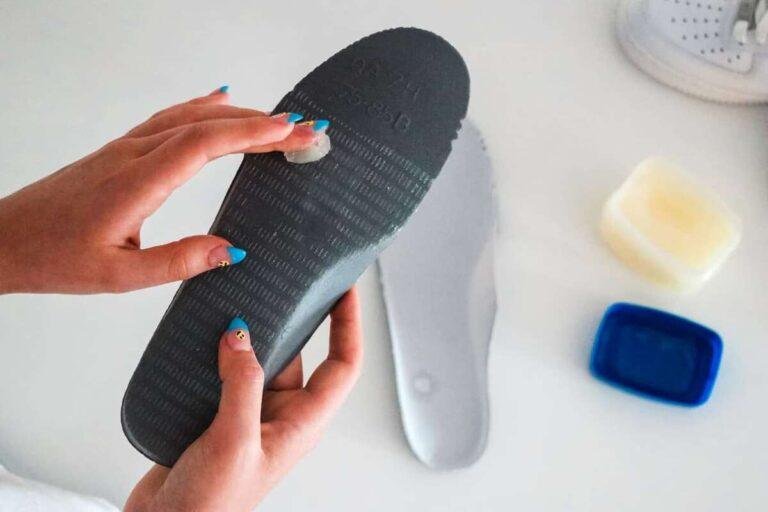
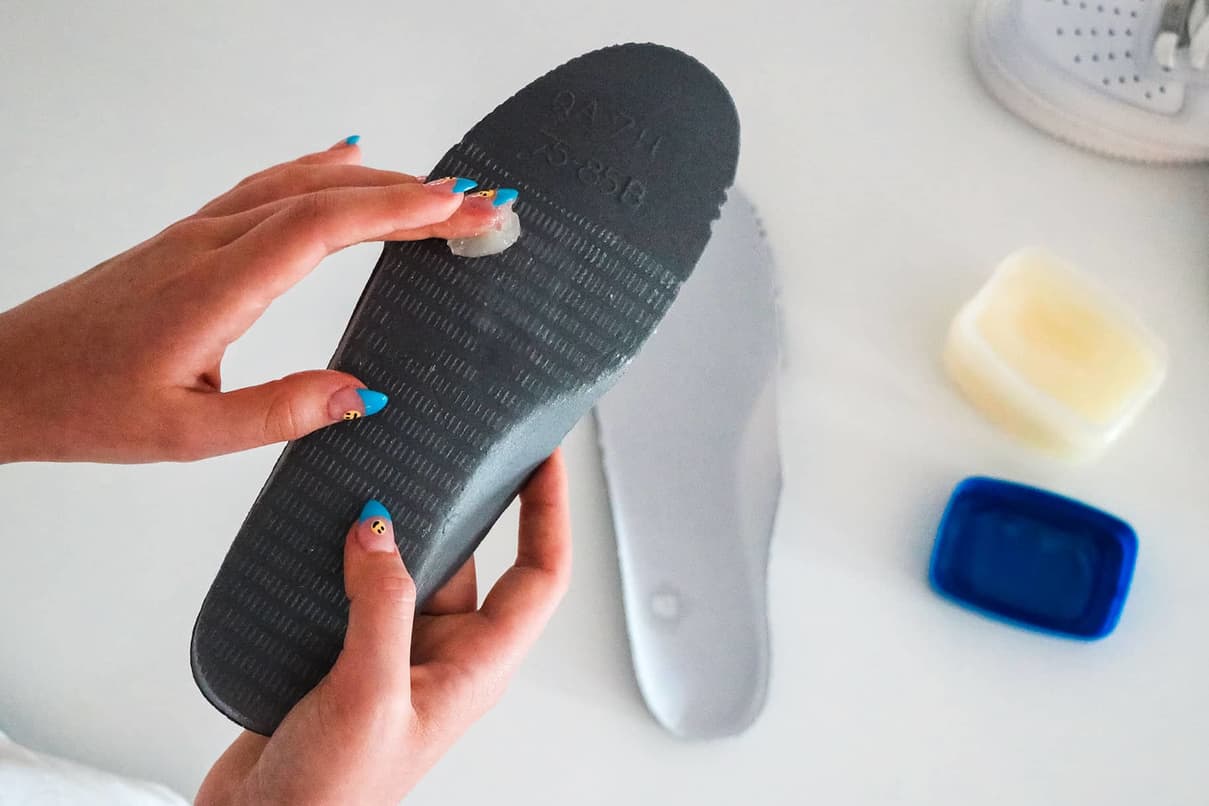
For friction under a removable insole, apply a thin layer of cornstarch or talc-free foot powder to the footbed. Then replace the insole and test the shoe.
Powder reduces moisture and friction. Use only a small amount. Too much powder can clump and create an uneven surface.
Do not use powder on a wet shoe as a substitute for drying. Dry the shoe first.
Secure a loose insole
If the insole shifts, use a thin shoe-safe adhesive or double-sided shoe tape. Make sure the insole sits flat before securing it.
Avoid household super glue. It can harden into sharp spots and may damage foam, fabric, or leather.
If the insole is badly worn, replacement is often better than repair. A new insole can improve comfort as well as reduce noise.
Clean the outsole
Dirt and residue can change how a sole grips the floor. Wipe the outsole with a damp cloth and mild soap. Allow it to dry fully before wearing the shoes.
For stubborn dirt, use a soft brush. Do not soak shoes unless the care instructions allow it.
Clean soles are safer and often quieter. However, a squeak on a polished floor may still remain because of the rubber compound.
Add light traction
If the outsole squeaks only on smooth floors, lightly rub it with fine-grit sandpaper. Use gentle strokes across the surface.
The goal is to remove a very smooth film, not to wear down the tread. This method may help on casual shoes, but it can damage delicate soles or reduce their life.
Never sand a sole if doing so could affect slip resistance, a warranty, or a safety rating. For work shoes, follow the manufacturer’s care instructions.
Condition leather carefully
Leather panels may squeak as they rub while the shoe bends. A small amount of leather conditioner can soften dry leather.
Test the product on a hidden area first. Some conditioners darken leather or change its finish.
Do not use oil on suede, nubuck, or fabric shoes. These materials need products made for their specific surface.

Fixes for Different Types of Shoes
Squeaky sneakers
Sneakers often squeak because of moisture, foam insoles, or rubber soles. Start by removing and drying the insole.
Then clean the outsole and test the shoes on several floor types. If the noise stays inside the shoe, add a small amount of powder beneath the insole.
Squeaky leather dress shoes
Dress shoes may squeak at the sole, heel, tongue, or leather panels. Check whether the heel moves when you press it down.
Use a suitable leather conditioner on dry leather. If the sole or heel is loose, take the shoes to a cobbler. A professional can reattach the part without damaging the upper.
Squeaky work boots
Work boots can trap sweat and water. Remove the footbeds after work and let the boots dry overnight.
Do not use heat to dry safety boots. Heat can damage adhesives and protective materials. If the boot has a safety toe or electrical rating, use approved care methods.
Squeaky basketball shoes
Basketball shoes often squeak on indoor courts because of their rubber outsoles. This can be normal and may show that the sole is gripping the floor.
Clean the outsole with a damp cloth before play. Avoid sticky sprays and household cleaners. They may leave residue or change traction.
Squeaky sandals and flip-flops
Sandals may squeak when wet skin moves against rubber or plastic. Dry both your feet and the sandals.
If the strap rubs against the footbed, clean the area and check for loose material. Replace sandals if the footbed is cracked or the strap is failing.
What Not to Do When Fixing Squeaky Shoes
Some popular fixes can create new problems. Avoid these common mistakes:
• Do not pour large amounts of oil into a shoe. It can stain materials and weaken adhesives.
• Do not use cooking spray. It can leave a slippery film and attract dirt.
• Do not soak leather, suede, or glued shoes.
• Do not use super glue on flexible areas.
• Do not sand deep into the outsole.
• Do not ignore a loose heel or separating sole.
• Do not use strong chemicals without checking the care label.
A shoe should stay flexible, stable, and safe after repair. If a fix makes the shoe slippery, stiff, stained, or uneven, stop using that method.

When to See a Cobbler or Replace the Shoes
Home care works well for moisture, loose insoles, and mild surface friction. It may not solve structural damage.
See a professional shoe repairer if:
• The heel moves from side to side
• The sole is separating
• The shoe creaks when twisted
• The noise started after a fall or impact
• The shoe feels unstable
• The same repair keeps failing
A cobbler can inspect the heel block, shank, welt, insole, and outsole. These parts are difficult to assess from the outside.
Replacement may be the best option when the sole is worn smooth, the midsole is cracked, or the upper no longer supports your foot. Noise is annoying, but instability and pain matter more.
How to Prevent Squeaky Shoes
Prevention starts with moisture control and regular checks. Let shoes dry between wears instead of wearing the same pair every day.
Follow these habits:
• Remove insoles after heavy use.
• Store shoes in a dry, ventilated area.
• Keep shoes away from direct heat.
• Clean dirt from the outsole.
• Rotate between two or more pairs.
• Replace worn insoles.
• Check heels and soles for movement.
• Follow the care label for leather, suede, and technical fabrics.
I have found that drying shoes overnight prevents many cases of why are my shoes so squeaky. A short drying routine is easier than trying to repair a shoe after moisture has reached its inner layers.
A simple shoe-care kit can help. Keep a soft brush, clean cloth, mild soap, replacement insoles, and material-safe conditioner nearby.
A Simple Squeaky Shoe Troubleshooting Plan
Use this order when you need a fast, safe solution:
- Identify whether the noise comes from the sole, upper, heel, or insole.
- Test the shoe on different floors.
- Remove and dry the insole.
- Clean the outsole.
- Apply a small amount of suitable powder if friction is inside.
- Condition leather only when the material needs it.
- Check for loose or damaged parts.
- Visit a cobbler if the shoe is unstable or structurally damaged.
This plan avoids random fixes. It also helps you understand why are my shoes so squeaky before you spend money on products or repairs.
Keep a note of what changed after each step. If the sound disappears after removing the insole, you have found the cause. If it appears only on tile, focus on the outsole and floor instead.
Frequently Asked Questions About Why Are My Shoes So Squeaky
Why are my shoes so squeaky when I walk on tile?
Tile is smooth, so rubber soles can grip and release against it in a repeated pattern. Clean the outsole, dry the shoe, and test it on another surface to confirm the cause.
Can baby powder stop squeaky shoes?
Powder may reduce friction and moisture under a removable insole. Use a small amount, and choose a product that is safe for the shoe material and your skin.
Why are my shoes squeaky after getting wet?
Water can sit between the insole, footbed, and lining. Remove the insole, dry the shoes at room temperature, and avoid direct heat.
Are squeaky shoes a sign that they are damaged?
Not always. A squeak may come from normal rubber traction or new materials, but a loose heel, separating sole, or creaking structure can signal damage.
How long does it take for new squeaky shoes to stop?
Some new shoes become quieter after several wears as their materials soften. If the noise continues or the shoe feels unstable, inspect it or ask a shoe repair professional for help.
Should I return squeaky shoes?
Return them if they squeak from a structural defect, feel unstable, or remain noisy after basic care. Check the store’s return policy before altering the sole or applying any product.
Conclusion
Squeaky shoes usually result from moisture, friction, smooth floors, new materials, or loose parts. The best fix begins with finding the exact source instead of applying a random product.
Dry the shoe, inspect the insole, clean the outsole, and use material-safe care. If the heel or sole is loose, choose professional repair or replacement over a temporary home fix.
Now that you know why are my shoes so squeaky, try the troubleshooting steps on one pair at a time. Share your experience in the comments, and explore more shoe-care guides for practical ways to keep your footwear quiet, comfortable, and safe.

Rubel Miah is the Senior Editor at MyStyleGrid.com, where he brings a sharp editorial eye and an unshakable love for fashion to everything he does. A true style addict, Rubel lives and breathes trends, from streetwear to high fashion, and has a knack for turning inspiration into impactful stories. With years of experience in fashion journalism and digital media, he curates content that empowers readers to express themselves through style. When he’s not editing features or forecasting the next big thing, you’ll find him hunting down vintage pieces or capturing street style moments around the city.