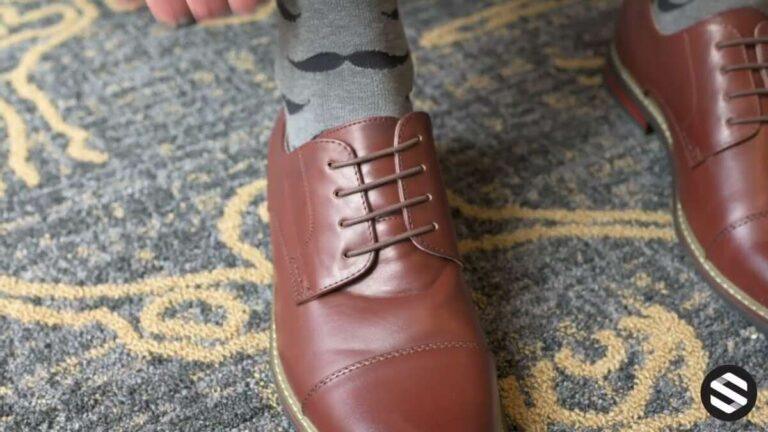
Tuck the knot under the tongue, use straight-bar lacing or elastic no-tie laces for a clean look.
I’ve tied hundreds of dress shoes for clients and on my own feet. In this guide I’ll show practical, step-by-step ways to achieve a neat finish and explain why each option works. If you want to learn how to tie dress shoes without laces showing, you’ll get clear methods, materials, and real-life tips that produce sharp results every time.

Why hide laces? Practical reasons and style benefits
Hiding laces makes dress shoes look cleaner, more formal, and longer-lasting. The hidden look suits tuxedos, business suits, minimalist styles, and anyone who dislikes bulky bows. Knowing how to tie dress shoes without laces showing gives you options for comfort, safety, and a polished silhouette.
Benefits at a glance
- Cleaner toe line for formal wear.
- Lower risk of loose bows catching on objects.
- Less wear on exposed lace tips.
- A sleeker visual for minimalist or modern shoes.
Common scenarios to hide laces
- Weddings, black-tie, and interviews.
- When wearing slip-on style with laces for fit.
- For photos and events where appearance is key.

Source: youtube.com
Tools and materials you’ll need
A few simple tools will make the job easier. Choose items that are common and affordable.
Essential items
- Thin round waxed or dress laces for a tidy look.
- A small pair of pliers or a lace hook for pulling laces.
- A blunt tool or awl to lift the tongue slightly when tucking.
- Optional elastic no-tie laces and lace anchors for a permanent clean finish.
Material tips
- Use shorter laces for less bulk; measure from top eyelet to top eyelet.
- Prefer waxed cotton or leather laces: they stay put and look formal.
- Elastic no-tie laces give a slip-on feel with no visible knots.
Why the right materials matter: matched lace weight and shoe construction keep the tucked lace stable and avoid bulges across the vamp.

Proven methods to tie dress shoes without laces showing
Below are reliable methods I use and recommend. Each solves the same goal in a different way.
Hidden internal knot method
- Description: Tie a small knot and push it under the tongue or into the shoe body.
- Ideal for classic oxfords and derby shoes with roomy tongues.
- This is one of the simplest ways to learn how to tie dress shoes without laces showing.
Straight-bar lacing with inner knot
- Description: Use straight-bar (fashion) lacing across the vamp and secure the knot inside the shoe.
- Works well on closed-lace shoes with even eyelets.
Elastic no-tie replacement
- Description: Replace traditional laces with elastic no-tie laces and hide the ends under the tongue.
- Best when you want comfort, slip-on convenience, and a permanently hidden look.
Lace anchor or lace lock
- Description: Attach a small lace anchor under the insole or heel and pull lace ends inside.
- Good for low-profile shoes where tongue space is limited.
Heel tuck (inside heel tuck)
- Description: Tuck the bow and excess lace into the back of the shoe behind the heel counter.
- Useful when tongue space is tight or when you prefer no change in lacing pattern.
People also ask
- Will hidden knots come loose? A small internal knot with waxed laces rarely slips. Add a dab of clear fabric glue for extra hold.
- Are elastic no-tie laces formal enough? High-quality elastic laces can be very discreet and suit many dress shoes.

Source: genetox-bolivia.com
Step-by-step: hidden internal knot (most versatile method)
This method answers how to tie dress shoes without laces showing while keeping traditional laces.
What you need
- Regular dress laces (waxed recommended)
- A small awl or blunt tool
- Optional: clear fabric glue or a tiny stitch
Steps
- Lace shoes normally using your preferred pattern.
- Tie a small, tight knot close to the top eyelets. Keep it low and compact.
- Loosen the tongue slightly by pulling the top edge up with your hand or the awl.
- Push the knot under the tongue. Use the awl or a lace hook to feed the knot into the shoe cavity.
- Tuck any excess lace ends alongside the insole or under the vamp lining.
- Test fit: walk and flex to ensure no pressure or rubbing. Adjust knot position if needed.
- Optional: apply a tiny drop of clear fabric glue on the knot to prevent drift.
Why this works
- The tongue hides the knot and smooths the vamp. Waxed laces hold shape and resist slipping. This method preserves the shoe’s original look and allows easy reversal.

Source: youtube.com
Step-by-step: straight-bar lacing with inner knot (clean formal look)
This lacing gives a clean top while leaving the knot hidden.
What you need
- Shorter dress laces or laces trimmed to avoid excess
- Patience for precise alignment
Steps
- Start lacing from the bottom eyelets with a straight-bar pattern.
- Keep each bar parallel and even in tension.
- When you reach the top, tie a small knot inside the shoe behind the tongue.
- Tuck the bow ends into the shoe cavity or under the tongue.
- Check for even tension across the vamp for comfort and symmetry.
Tip: If bars gap, loosen and retension for a flat look. This method is especially good when you want visible horizontal bars and no bow on the outside.

Elastic no-tie laces and lace anchors: modern solutions
If you want a permanent or semi-permanent tidy finish, consider these options.
Elastic no-tie laces
- Swap laces for elastic ones sized to your shoe.
- Tighten and trim excess, then tuck leftover ends under the tongue.
- Pros: comfort, slip-on ease. Cons: changes shoe stretch, may alter fit slightly.
Lace anchors
- Insert tiny anchors under the insole or adhesive anchors on the shoe tongue.
- Anchor the laces and hide the knot inside the shoe.
- Pros: secure and low-profile. Cons: small modification may be needed.
Both solutions answer how to tie dress shoes without laces showing with minimal visible work on the outside.

Troubleshooting and common mistakes
Avoid these common errors to keep the hidden look neat.
Bulging tongue
- Cause: large knot or bulky laces.
- Fix: use thinner laces, tie a smaller knot, or trim lace length.
Lace slipping out
- Cause: slick laces or poor knot placement.
- Fix: use waxed laces, move knot deeper, or add a small stitch or glue.
Discomfort or rubbing
- Cause: knot pressing on the top of your foot.
- Fix: reposition knot further back, or use elastic laces to redistribute pressure.
Loss of formal look
- Cause: mismatched lace style or visible elastic.
- Fix: choose dress-appropriate elastic or hide elastic ends carefully.
My experience, tips, and mistakes to avoid
I’ve hidden laces for clients in weddings and photo shoots. Here’s what I learned.
What worked best
- Waxed round laces hide and hold better than flat cotton.
- A very small knot tucked deep behind the tongue rarely moves.
- For long days, elastic no-tie laces improved comfort without sacrificing style.
Mistakes I made
- Using too-short laces and then forcing a knot that bulged the tongue.
- Not testing a full walk before an event, which left a small pressure point.
- Over-tightening and causing creases on the vamp.
Quick tips
- Always test with movement before stepping out.
- Keep spare thin laces in your kit.
- If you need a reversible change, avoid glues and use stitching or tucks instead.
People also ask — short answers
Q: Can hiding laces damage my shoes?
A: No, if you use slim knots and avoid sharp tools. Avoid forcing knots into tight seams.
Q: Are there professional services to hide laces?
A: Yes, cobblers and stylists often hide laces for events or shoe alterations.
Q: Will hiding laces change fit?
A: Slightly, if you use elastic laces or trim length. Test walk and adjust tension as needed.
Q: Is hidden lacing suitable for all leather types?
A: Mostly yes, but very stiff leathers may show bulges more. Use flat laces or anchors for stiff shoes.
Q: How long does the hidden look last?
A: With proper materials it lasts indefinitely; check glue or elastic periodically.
(Note: This section provides quick answers to common search queries.)
Frequently Asked Questions of how to tie dress shoes without laces showing
How tight should the hidden knot be?
Tie the knot snug but not overly tight. It should secure the laces without creating pressure on the top of the foot.
Can I hide laces in safety or work dress shoes?
Yes, but ensure tucking doesn’t interfere with foot protection or shoe safety features. Keep knots low and secure.
What lace type hides best in dress shoes?
Thin, waxed round laces hide best. They compress well and resist slipping under the tongue.
Will trimming excess lace cause fraying?
Trimmed synthetic laces can be sealed with a tiny drop of clear glue or heat-sealed (if safe for material) to prevent fray.
Is a cobbler needed to hide laces professionally?
Not usually. Most methods are DIY. A cobbler can add lace anchors or make permanent alterations if you prefer a pro finish.
What if the knot still shows through the tongue?
Try thinner laces, move the knot deeper, or switch to straight-bar lacing. If persistent, use an insole shim to hide the lump.
Are hidden laces acceptable for black-tie events?
Yes. Hidden laces create a very formal, clean appearance that suits black-tie attire well.
Can I use these methods for boots?
Many methods work for boots, but boot tongues and construction vary. Test fit for comfort and clearance.
How do I maintain the hidden look over time?
Check knots and anchors periodically, replace elastic when it loses tension, and keep laces clean to avoid buildup.
What’s the fastest method for a temporary clean look?
The internal knot or a quick heel tuck is fastest and easily reversible.
Final thoughts and next steps
Hiding laces gives you a refined shoe profile and practical benefits. Try the internal knot first for a low-effort, reversible result. If you want consistent slip-on comfort, experiment with elastic no-tie laces or lace anchors. Small changes—thin waxed laces, correct knot placement, and a test walk—make a big difference.
Take action: pick one method, try it on a pair of shoes, and walk around the house to test for comfort. If this guide helped, leave a comment with your shoe type and I’ll suggest the best method for your needs.

Rubel Miah is the Senior Editor at MyStyleGrid.com, where he brings a sharp editorial eye and an unshakable love for fashion to everything he does. A true style addict, Rubel lives and breathes trends, from streetwear to high fashion, and has a knack for turning inspiration into impactful stories. With years of experience in fashion journalism and digital media, he curates content that empowers readers to express themselves through style. When he’s not editing features or forecasting the next big thing, you’ll find him hunting down vintage pieces or capturing street style moments around the city.