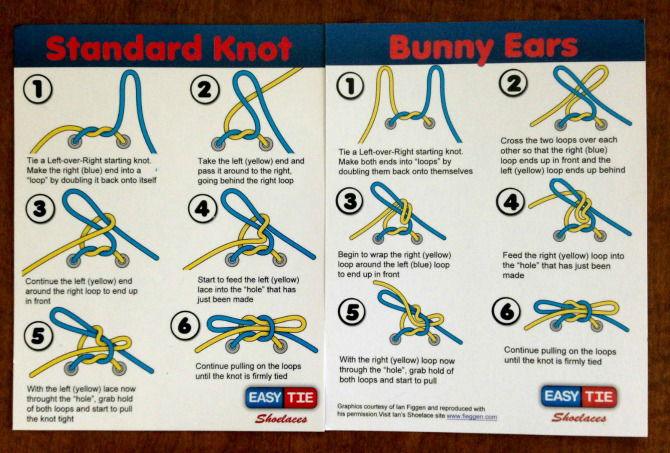
Tie your shoes without bunny ears by looping one lace, wrapping, and pulling a single knot.
I’ve taught kids, coached athletes, and fixed my own shoes in a hurry. This guide shows clear, tested steps on how to tie your shoes without bunny ears. You’ll learn a fast knot that sits flat, stays secure, and looks tidy. I explain why it works, give step-by-step directions, troubleshoot common issues, and share tips from real experience so you can master this skill quickly. Read on to learn simple, practical methods for how to tie your shoes without bunny ears and make your laces work for you.

Why learn how to tie your shoes without bunny ears?
Many people view the bunny ears method as easy. But it makes bulky loops and can come undone more often. Learning how to tie your shoes without bunny ears gives you a flatter, neater knot that lasts longer. It also looks more professional and moves better inside snug shoes.
I’ve used non-bunny methods with runners and dress shoes. They cut down on pressure points and keep laces from flapping. If you want quick speed, less bulk, and a secure hold, learning how to tie your shoes without bunny ears is worth the few minutes it takes to practice.
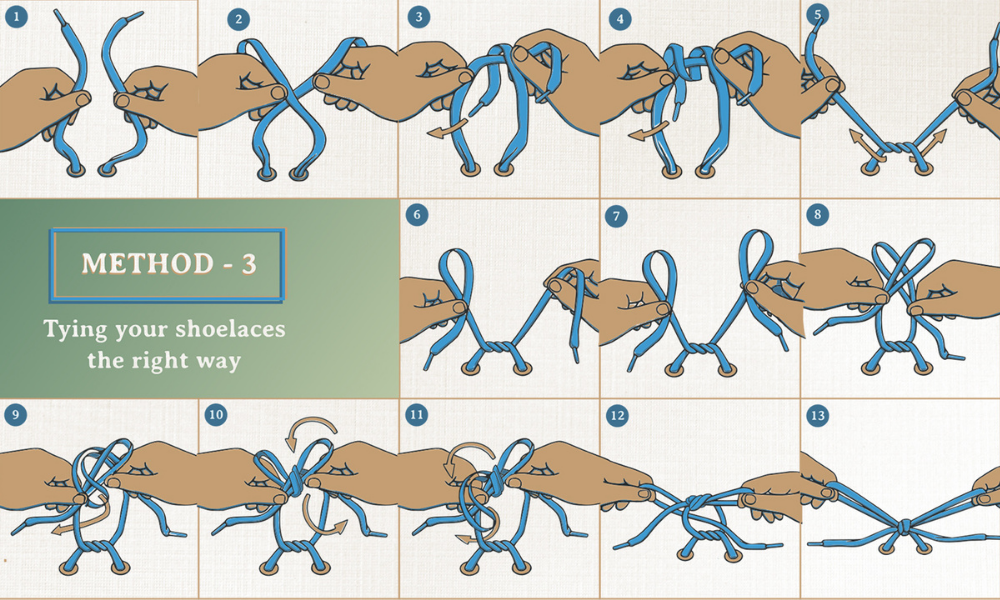
The fastest single-knot method (step-by-step)
This simple method produces a flat bow. It is great for sneakers, casual shoes, and dress shoes. Practice slowly once, then move faster.
- Start with laces even. Hold one lace in each hand.
- Cross the right lace over the left. Pull tight to make a base knot.
- Make a small loop with the left lace by folding it back toward the base.
- Wrap the right lace around that loop once, keeping the wrap tight and low.
- Push the tip of the right lace through the hole created by the wrap.
- Pull both the loop and the loose end to tighten. Dress the knot so the loop sits flat.
Tips for success:
- Keep the loop small for a low-profile knot.
- Wrap close to the base knot; long wraps make a bulky bow.
- Practice slowly until your fingers remember the motion.
This method shows exactly how to tie your shoes without bunny ears in a way that is fast and tidy.
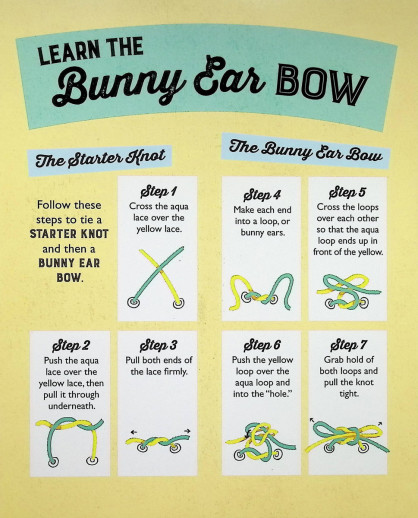
An alternate no-bunny method: the loop, wrap, pull (one-hand friendly)
This variation is helpful if you have less dexterity or need a one-handed option.
- Create a base knot by crossing and pulling laces tight.
- Make a loop with the lace closest to you.
- Use the other lace to wrap around the loop once or twice.
- Feed the wrapping lace’s tip through the small space between loop and wrap.
- Pull tight and adjust.
This version is nearly the same as the main method but focuses on fewer finger moves. It’s useful for kids learning fine motor skills and adults who need a quick fix. Practicing it makes it feel very natural.

Troubleshooting: common problems and fixes
Loose knot that slips
- Cause: wrap too loose or one lace too smooth.
- Fix: tighten the initial base knot and wrap the lace one extra turn.
Bulky loops or awkward shape
- Cause: loops made too large or wrap too far from base knot.
- Fix: keep loops small and wrap close to the base knot.
Knot too tight to untie
- Cause: overtightening or repeated pulls on one side.
- Fix: loosen slightly before pulling ends free, or push a finger under the wrap to release tension.
Lace fraying or slipping in eyelets
- Cause: wrong lace for shoe or thin, slick lace.
- Fix: swap to flat cotton laces or textured laces for better grip.
These fixes come from testing methods on running shoes and everyday sneakers. They help when you first switch from bunny ears to a single-loop approach.
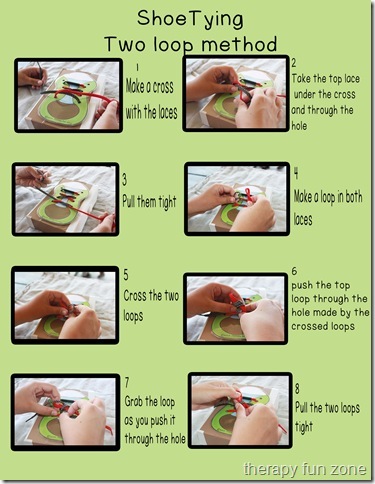
Variations for kids, athletes, and different shoes
Kids
- Start with large loops and slow steps. Make the loop size consistent.
- Use colorful laces to show each step and make practice fun.
Runners and athletes
- Use a runner’s knot (lock lacing) for extra heel hold, then tie the single-loop knot on top.
- Try a double wrap before feeding the end through for a sport-tight hold.
Dress shoes and low-profile sneakers
- Keep loops tiny and neat.
- Use waxed or flat cotton laces for a polished look that stays put.
Boots and high-top shoes
- Use extra wraps or a double knot variation for heavy use.
- Lace up snugly before tying the single-loop knot to reduce movement.
From my coaching work, runners liked the no-bunny method for speed and low bulk. Parents found the loop, wrap, pull easiest to teach small hands.

Benefits and limitations of tying shoes without bunny ears
Benefits
- Flatter knot sits better under pant legs and in shoes.
- Often more secure when wrapped correctly.
- Faster once you build muscle memory.
- Sleeker, more polished look for dress shoes.
Limitations
- Slight learning curve for those used to bunny ears.
- Some children will prefer bunny ears for its visual simplicity.
- People with severe dexterity issues may find two-loop methods easier.
Be honest: switching takes a few tries. But after a week of daily use, you’ll notice speed and neatness improvements. That’s why learning how to tie your shoes without bunny ears is a practical upgrade for many people.
Frequently Asked Questions of how to tie your shoes without bunny ears
What is the easiest no-bunny method for beginners?
Make a base knot, form a small loop, wrap the other lace once around the loop, push its tip through the gap, and pull tight. Practice slowly and keep loop size small to build consistency.
Can I teach kids to tie shoes without bunny ears?
Yes. Start with slow steps and big loops, then shrink the loop size as they gain control. Use fun laces and praise each step to keep them motivated.
Will this knot stay tied during running?
Yes, if you tighten the base knot and wrap close to the base. For extra hold use a runner’s lock or add one more wrap before pulling tight.
Is this method faster than bunny ears?
After a short practice period, most people tie this method faster. The motion becomes fluid and uses fewer large movements than bunny ears.
What laces work best for no-bunny knots?
Flat cotton or waxed laces work best for grip and low bulk. Slick round laces may slip and need extra wraps to stay secure.
Conclusion
You can switch from bunny ears to a smoother, faster knot by learning one easy loop, wrap, and pull method. It stays flat, looks better, and can be more secure once you practice. Try the steps for a week, adjust for your shoe type, and see how much neater your shoes feel. If you found this helpful, practice now and leave a comment with your results, or subscribe for more simple, useful tips on everyday skills.

Rubel Miah is the Senior Editor at MyStyleGrid.com, where he brings a sharp editorial eye and an unshakable love for fashion to everything he does. A true style addict, Rubel lives and breathes trends, from streetwear to high fashion, and has a knack for turning inspiration into impactful stories. With years of experience in fashion journalism and digital media, he curates content that empowers readers to express themselves through style. When he’s not editing features or forecasting the next big thing, you’ll find him hunting down vintage pieces or capturing street style moments around the city.