Short answer: Generally no—most rattlesnakes cannot bite through quality leather boots.
I’ve spent years hiking, guiding, and studying snakes in the field. I’ll explain exactly when and why the question "can a rattlesnake bite through leather boots" matters. This guide breaks down fang anatomy, leather types, real cases, testing, and practical tips. Read on to learn how to pick the right boots, stay safe outdoors, and react correctly if a bite happens.

How rattlesnake fangs and venom delivery work
Rattlesnakes have hollow, hinged fangs. They fold back and swing forward when they strike. Fang length varies by species and age. Venom is pushed through the hollow fang into the wound. A strike can be very fast and precise.
Fang penetration depends on force, angle, and what the fang hits. Thin fabric or soft material rips easily. Dense leather resists puncture. Some young snakes have shorter fangs that may not reach through thick layers.

Can a rattlesnake bite through leather boots?
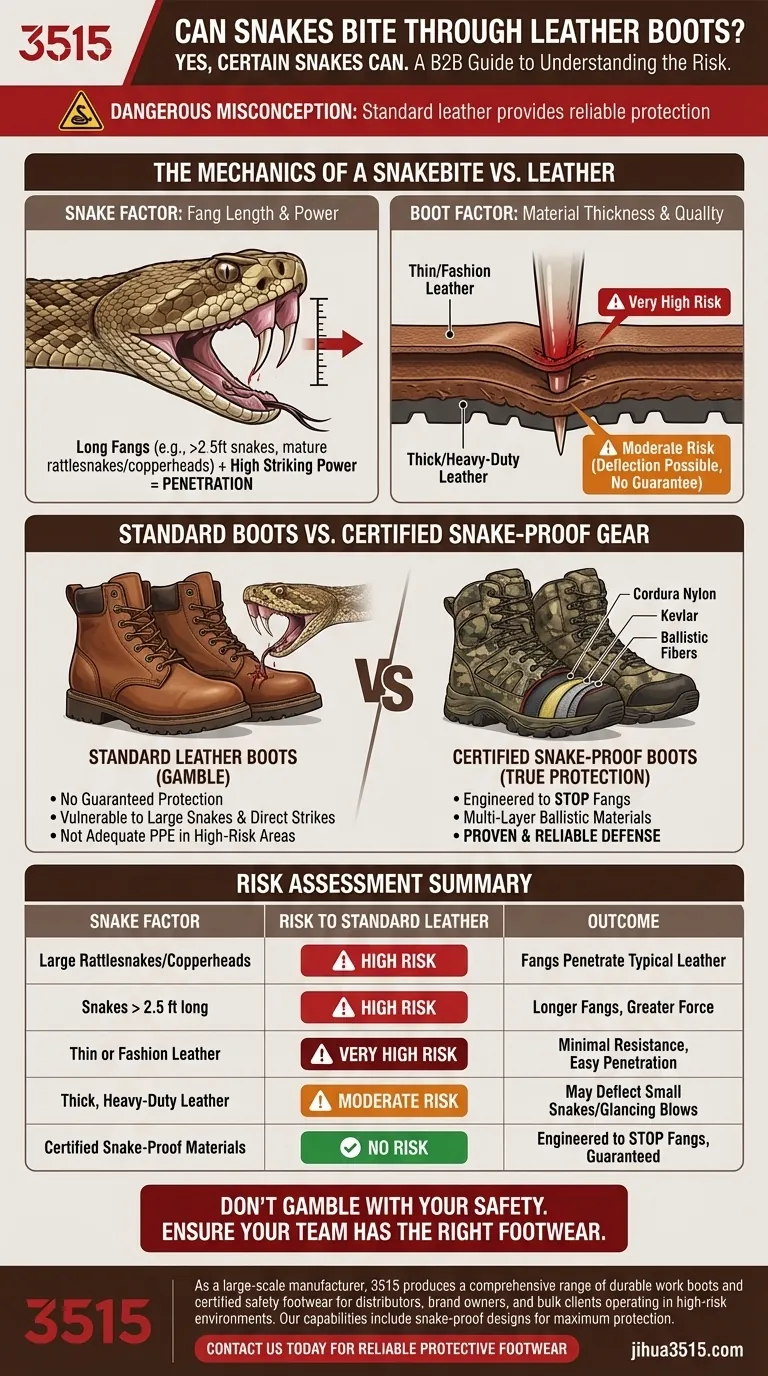
Short answer: it depends on boot type, snake species, and strike conditions. Thick, full-grain leather with a firm midsole is hard for a rattlesnake to penetrate. Thin leather, worn spots, or soft soles raise the risk.
Key factors that determine whether a rattlesnake can bite through leather boots:
- Boot material and thickness — full-grain or double-layer leather offers far more resistance than suede or thin leather.
- Sole and midsole construction — stiff midsoles and thick outsoles reduce fang reach.
- Snake species and fang length — larger species and adults have longer fangs and stronger strikes.
- Angle and pressure — a direct perpendicular strike delivers most force. A grazing strike reduces penetration.
- Wear and damage — cracked or softened leather is easier to penetrate.
When asking "can a rattlesnake bite through leather boots" remember most field cases show bites happen around cuffs, ankles, or through soft fabric. Boots protect better than tennis shoes but are not foolproof.

Real-world evidence and documented cases
Field reports show bites through thin leather and poorly made boots. Verified cases of fangs penetrating heavy, well-made leather are rare. In many incidents, the snake struck the ankle above the boot or found a gap.
I once guided a team where a ranch worker was bitten through a low boot. The boot leather was thin and had scuffs. The wound required antivenom because the venom reached tissue. That taught me that boot condition matters as much as style.
Controlled tests by researchers and manufacturers simulate strikes. Results vary with leather grade and construction. Tests show that layered systems or snake-proof inserts greatly reduce the chance of a full fang penetration.

How to test boot protection and choose safer boots
Choose boots built for snake country. Look for sturdy construction and consider supplemental gear.
What to look for:
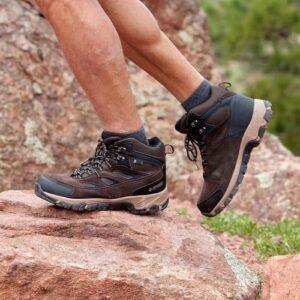
- Material — full-grain leather, thick cowhide, or leather combined with synthetic overlays.
- Sole — stiff midsole and thick outsole to reduce fang reach.
- Height — higher boots (10 inches or more) protect the lower calf and ankle.
- Construction quality — reinforced seams and no thin panels at stress points.
- Certifications — some boots are labeled "snake-proof" or tested for puncture resistance.
Additional protection options:
- Snake gaiters — worn over boots and lower pant leg for added barrier.
- Snake chaps or leggings — heavy fabric or chainmail options for high-risk work.
- Internal inserts — puncture-resistant plates inside the boot can help.
To test at home, inspect boots for thin spots and flex points. Press the leather over a hard surface to feel for softness. If you can easily fold or pierce the leather with a thumbnail, it may offer limited protection.
First aid: what to do if bitten through boots
Act quickly and calmly. Proper action lowers risk and speeds recovery.
Immediate steps:
- Move away from the snake and stay calm to slow venom spread.
- Keep the bitten limb immobilized and at or slightly below heart level.
- Remove tight clothing, jewelry, or boots that may restrict swelling.
- Call emergency services and get to medical care quickly. Antivenom is the proven treatment.
- Do not cut the wound, attempt suction, or use a tourniquet.
If you suspect a fang pierced a boot, tell medical staff exactly what happened and show the boot. That helps with wound assessment and treatment planning.

Prevention tips when hiking, working, or ranching
Good habits prevent most bites. Simple actions give big protection.
Practical tips:
- Wear the right boots — sturdy, high, and well-made leather or snake-rated gear.
- Add gaiters or chaps in high-risk areas.
- Watch where you step — look before putting hands or feet near rocks, logs, and tall grass.
- Use a walking stick to probe ahead on trails and when entering brush.
- Keep camps and work areas clear of rodent attractants and debris that shelter snakes.
- Learn local species behavior and seasonal activity patterns.
Stay aware at dawn and dusk. Rattlesnakes are more active in warm months and at cooler times of day.

Frequently Asked Questions of can a rattlesnake bite through leather boots
Can a rattlesnake bite through hiking boots?
Yes, but it is unlikely with sturdy, full-grain hiking boots. Thin or worn boots are at higher risk.
Are snake gaiters better than leather boots alone?
Gaiters add a strong barrier and are a good complement to boots. They protect gaps at the cuff and lower leg.
Do thicker soles stop rattlesnake fangs?
Thicker soles reduce fang reach and help prevent penetration. They do not guarantee safety if leather above the sole is thin.
Should I remove a boot if bitten through it?
Remove tight footwear if swelling is likely. Do it gently. Let medical staff examine the boot and wound.
Are snake-proof boots worth the cost?
If you work or spend a lot of time in snake country, snake-proof boots or chaps are a wise investment. They reduce risk and add peace of mind.
Conclusion
Most rattlesnakes cannot bite through good-quality leather boots, but no boot is perfect. The best protection combines sturdy boots, gaiters, awareness, and good habits. If you spend time in snake country, invest in proper gear and learn first-aid steps. Take action now: inspect your boots, consider gaiters, and refresh your snake-safety skills. Leave a comment with your experience or subscribe for more practical outdoor safety tips.

Rubel Miah is the Senior Editor at MyStyleGrid.com, where he brings a sharp editorial eye and an unshakable love for fashion to everything he does. A true style addict, Rubel lives and breathes trends, from streetwear to high fashion, and has a knack for turning inspiration into impactful stories. With years of experience in fashion journalism and digital media, he curates content that empowers readers to express themselves through style. When he’s not editing features or forecasting the next big thing, you’ll find him hunting down vintage pieces or capturing street style moments around the city.