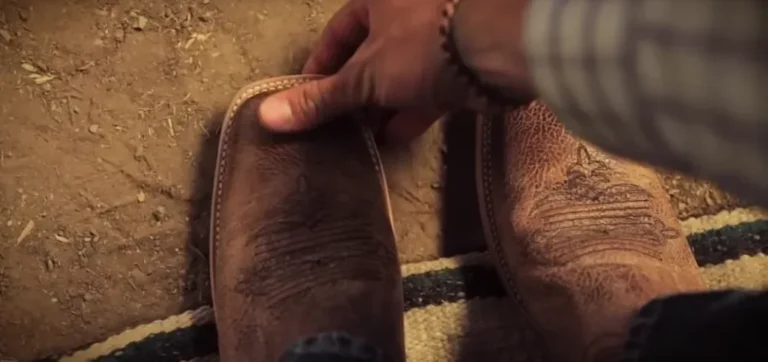
A normal cowboy boot heel slip is about one-quarter to one-half inch while walking.
Knowing how much heel slip is normal in cowboy boots can save you from choosing a painful fit. A little movement is expected in a new pair, but too much slip may cause blisters, rubbing, and poor support. This guide explains how cowboy boots should fit, why heel slip happens, and how to tell whether your boots need more break-in time or a different size.
How Much Heel Slip Is Normal in Cowboy Boots?
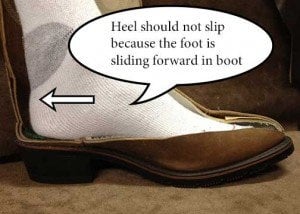
For most new cowboy boots, about one-quarter to one-half inch of heel movement is normal when you walk. Your heel may lift slightly from the insole, then settle back down as your foot moves forward. This is common because cowboy boots have a stiff sole, raised heel, and snug shaft.
The right amount of heel slip should feel noticeable but not painful. Your heel should not lift completely out of the boot, and your foot should not slide forward with every step.
A good fit usually has these signs:
• Your heel lifts slightly as you walk.
• Your toes can move freely without touching the front.
• The ball of your foot rests over the widest part of the boot.
• The instep feels snug but not tight.
• Your heel does not rub hard against the back of the boot.
• The boot stays on without needing excessive force to pull it off.
Many boot fitters describe this early movement as part of the break-in process. As the leather flexes around your foot and the outsole bends under the ball of your foot, heel slip often becomes less noticeable.

Why Do Cowboy Boots Have Heel Slip?
Cowboy boots are built differently from sneakers and lace-up work boots. They use a smooth opening, a snug instep, and a narrow waist to hold the foot in place. Since there are no laces to lock your heel down, a small amount of movement is part of the design.
The boot’s stiff sole also plays a role. When you take a step, the sole may not bend easily at first. Your heel rises slightly while the boot learns to flex with your foot. This is why brand-new boots often show more heel slip than a broken-in pair.


Common causes include:
• Stiff leather that has not shaped to your foot.
• A sole that has not flexed at the ball of the foot.
• A boot shaft that is too loose around the calf or ankle.
• An insole that compresses after several wears.
• The wrong size or width.
• Smooth socks that allow extra movement.
A small amount of heel slip is not automatically a flaw. Think of it like a new leather belt. At first, it feels firm and unfamiliar. With use, it shapes itself to your body.
How to Tell if Heel Slip Is Normal
The best way to judge heel slip is to test the boots while standing and walking. Wear the socks you normally use with cowboy boots. Thick winter socks can make a loose boot feel snug, while thin dress socks can make a fitted boot feel loose.
Walk on a clean indoor surface for several minutes. Take normal steps, climb a few stairs, and bend your knees. Pay attention to your heel, arch, toes, and the ball of your foot.
Normal heel slip usually looks and feels like this:
• Your heel lifts slightly, but the boot stays secure.
• The movement decreases when the sole bends.
• There is no sharp rubbing or burning pain.
• Your toes do not hit the front of the boot.


• Your foot does not slide forward downhill.
• The instep feels snug without causing numbness.
Problem heel slip often feels different:
• Your heel rises more than one-half inch with each step.
• Your foot slides forward inside the boot.
• The back of your heel becomes red or sore.
• You must curl your toes to keep the boot in place.
• The boot makes a loud slapping sound as you walk.
• You can easily pull the boot off without loosening the shaft.
One fitting lesson I have seen repeatedly is that shoppers focus too much on heel movement and ignore the instep. The instep is the main lock in a pull-on cowboy boot. If it holds your foot well, a small amount of heel slip is usually harmless.

How Much Heel Slip Is Too Much?
Heel slip becomes excessive when it interferes with comfort, balance, or walking. More than about one-half inch of repeated movement is a warning sign, especially if the boot feels loose in the instep.
There is no perfect measurement for every foot. A person with a narrow heel may notice more movement than someone with a wide heel. Leather type, boot shape, heel height, and insole design also change how a boot feels.
Look for these warning signs:
• Blisters after a short walk.


• A raw or hot feeling on the back of the heel.
• Your toes pressing into the front.
• Your foot sliding toward the toe box.
• A loose feeling around the instep.
• Pain in the arch or ball of the foot.
• Trouble keeping the boot on during stairs or uneven ground.
Excessive heel slip can create friction. Friction happens when your skin moves against the sock or boot lining. Repeated friction may lead to blisters, calluses, and skin irritation.
Do not assume that wearing thick socks will fix a badly fitting boot. Thick socks may reduce movement for a short time, but they can also create pressure across the instep and toes. A boot that is the wrong size usually needs to be exchanged, not padded heavily.
Do Cowboy Boots Need Heel Slip When New?
Yes, a small amount of heel slip is often expected in new cowboy boots. The leather and sole need time to soften and flex. Many boots feel more secure after several short wears.
However, break-in time does not correct every fit problem. A boot that slips badly on the first day may still slip badly after a month. Leather can mold to your foot, but it cannot make a boot shorter, narrower, or structurally smaller.
Use a gradual break-in plan:
-
Wear the boots indoors for 20 to 30 minutes.
-
Check for hot spots on your heel and instep.
-
Repeat the process over several days.
-
Walk on clean floors until you are sure about the size.
-
Stop if you feel sharp pain or strong rubbing.


A little heel movement should improve as the sole flexes. If it gets worse, your foot may be sliding forward because the boot is too large or too wide.

How Should Cowboy Boots Fit?
A well-fitting cowboy boot should feel snug across the instep and comfortable around the ball of the foot. The widest part of your foot should sit over the widest part of the boot. Your toes should have room to move, but your foot should not swim inside the toe box.
The instep deserves special attention. It should hold your foot firmly without creating pressure, numbness, or tingling. You may feel mild resistance when pulling the boot on, but the boot should not require extreme force.
Check each part of the fit:
Toe box
Your toes should not touch the front of the boot when standing or walking. Pointed boots may feel close to the toes, but the toe box should not squeeze them together.
Ball of the foot
The ball of your foot should line up with the widest part of the outsole. If it sits too far forward or backward, the boot may cause foot fatigue.
Instep
The instep should feel secure. This area keeps a pull-on boot from moving too much.
Heel
Your heel may lift slightly, especially in a new pair. About one-quarter to one-half inch is commonly acceptable.
Shaft
The shaft should feel comfortable around your lower leg. It should not pinch, but it should not flap loosely either.
A useful test is to stand naturally and bend your knees. If the boot stays centered under your foot and your toes remain relaxed, the fit is likely close.
Factors That Affect Cowboy Boot Heel Slip
Heel slip differs from person to person. Two people can wear the same size and experience very different results because foot shape matters as much as length.
Important factors include:
• Foot width: Narrow feet often move more inside wide boots.
• Heel shape: A narrow heel may not fill a broad heel cup.
• Instep height: A low instep may leave extra space in the boot.
• Leather type: Soft leather breaks in quickly, while thick leather stays firm longer.
• Sole material: Leather soles often flex differently from rubber soles.
• Heel height: A taller heel can change how your foot sits inside the boot.
• Toe shape: Square, round, and pointed toes distribute space in different ways.
• Sock thickness: Socks affect volume and friction.
• Insole thickness: A removable insole can change the fit by adding or removing space.
• Brand design: A size 10 in one brand may not match a size 10 in another.
The boot’s last, which is the form used to shape it, also matters. Different lasts create different heel cups, toe boxes, and instep heights. This explains why one brand may fit perfectly while another feels loose in the same labeled size.
How to Reduce Heel Slip in Cowboy Boots
If the boots fit well overall but have mild heel movement, a few simple changes may help. Try one adjustment at a time so you can identify what works.
• Wear socks with a little texture and moderate thickness.
• Add a thin leather or cushioned insole.
• Use a heel grip made for footwear.
• Try a tongue pad if the instep feels loose.
• Wear the boots for short periods while they break in.
• Ask a professional boot repair shop about fit adjustments.
Heel grips can help with minor movement, but they are not a solution for boots that are much too large. They may also peel away in heat or moisture. Choose products that do not push your heel forward into the toe box.
An insole can improve comfort by taking up extra space. It may also change arch support, so check that your foot still rests in the correct position. If the insole creates pressure under the arch, use a thinner option.
Avoid soaking cowboy boots to shrink them. Water can damage leather, weaken adhesives, stain the finish, and create uneven shrinkage. A qualified boot professional is a safer choice for major fit changes.
How to Break In New Cowboy Boots Safely
Breaking in cowboy boots should be gradual. Wearing stiff boots all day on the first day is a common mistake. It can cause blisters and make the boots feel worse than they really are.
Try this routine:
-
Put on the socks you plan to wear most often.
-
Wear the boots indoors for a short period.
-
Flex your feet and take a few easy walks.
-
Remove the boots before your skin becomes sore.
-
Increase wear time slowly.
-
Condition the leather only if the manufacturer allows it.
Leather conditioner may soften some boots, but too much can make leather loose or weak. Follow the care instructions for the specific leather. Exotic skins, suede, and heavily finished leather often require different products.
If you develop a hot spot, stop and protect the area. A blister is easier to prevent than to treat. The goal is for normal heel slip to decrease as the boot flexes, not for your foot to endure pain.

Common Mistakes When Checking Heel Slip
Many fitting problems come from testing boots in the wrong way. A quick try-on while sitting does not show how the boot behaves during movement.
Avoid these mistakes:
• Buying boots that feel loose because you expect thick socks to fill them.
• Choosing a smaller size to eliminate all heel movement.
• Testing boots at the end of a long day without considering foot swelling.
• Walking only on soft carpet.
• Ignoring pressure across the toes.
• Judging the fit by heel movement alone.
• Wearing unfamiliar socks during the fitting.
Feet often swell during the day. Try boots in the afternoon or evening when your feet are closer to their largest size. Stand, walk, and bend before making a decision.
Do not size down just because the heel slips a little. A boot that is too short can damage your toes and create pressure under the ball of your foot. Slight heel slip is safer than cramped toes, provided the boot stays secure elsewhere.
When Should You Return Cowboy Boots?
Return or exchange cowboy boots when heel slip is severe, painful, or paired with other fit problems. Most retailers have different rules for worn boots, so check the return policy before walking outdoors.
Consider an exchange if:
• Your heel lifts more than one-half inch with every step.
• You get blisters during short indoor tests.
• Your toes touch the front.
• The instep feels loose even with normal socks.
• Your foot slides forward on stairs.
• You need several thick inserts to keep the boot secure.
• One foot fits well but the other feels unstable.
Minor differences between your feet are normal. It is common for one foot to be slightly longer or wider. Fit the larger foot first, then adjust the smaller side with a thin insole or heel grip if needed.
A professional boot fitter can help when your foot shape is unusual or when standard sizes fail. This is especially useful for people with narrow heels, high arches, bunions, or different-sized feet.

Frequently Asked Questions About How Much Heel Slip Is Normal in Cowboy Boots
Is one-half inch of heel slip normal in cowboy boots?
Yes, up to about one-half inch can be normal in a new pair. The movement should feel mild, and it should not cause pain, blisters, or forward sliding.
Should cowboy boots slip at the heel when walking?
A small amount of heel slip is expected because pull-on boots do not use laces. The heel should lift slightly while the instep and ball of the foot keep the boot secure.
How long does heel slip last in new cowboy boots?
Heel slip often becomes less noticeable after several short wears as the sole and leather flex. If the boot still slips badly after a gradual break-in period, the size or width may be wrong.
Can thick socks fix too much heel slip?
Thick socks may reduce mild movement, but they cannot properly fix a boot that is too large. They may also make the toes or instep uncomfortably tight.
Should I size down to stop heel slip?
Usually, no. Sizing down can create cramped toes and pressure under the ball of the foot. Focus on a secure instep and correct foot length rather than eliminating every bit of heel movement.
Are cowboy boots supposed to feel tight at first?
They should feel snug across the instep but not painful. Tightness that causes numbness, sharp pressure, or toe crowding is a sign of poor fit, not normal break-in.
Can heel grips help cowboy boots?
Heel grips can help with minor heel movement when the overall boot size is correct. They are not a reliable fix for boots that are much too wide or too long.
Conclusion
A normal amount of heel slip in cowboy boots is usually about one-quarter to one-half inch, especially when the boots are new. The heel should lift slightly, while the instep, ball of the foot, and toe box keep your foot stable.
Give well-fitting boots time to flex, but do not use break-in time to excuse pain or severe movement. Test your boots with normal socks, walk indoors, and return them if your heel rubs, your toes feel cramped, or your foot slides forward.
Use these fitting tips the next time you shop for cowboy boots, and share your own break-in experience or fitting questions in the comments.

Rubel Miah is the Senior Editor at MyStyleGrid.com, where he brings a sharp editorial eye and an unshakable love for fashion to everything he does. A true style addict, Rubel lives and breathes trends, from streetwear to high fashion, and has a knack for turning inspiration into impactful stories. With years of experience in fashion journalism and digital media, he curates content that empowers readers to express themselves through style. When he’s not editing features or forecasting the next big thing, you’ll find him hunting down vintage pieces or capturing street style moments around the city.