Ski boots should feel snug around the calf, with firm support but no pain, numbness, or blocked circulation.
Knowing how tight should ski boots be around the calf can make the difference between a strong, warm day on the mountain and hours of discomfort. A well-fitted boot holds your lower leg in place like a supportive handshake. It should guide your movements without squeezing your calf or forcing you into an awkward stance.
How Tight Should Ski Boots Be Around the Calf?
Ski boots should be snug around the calf, but they should not feel painfully tight. Your lower leg should stay in contact with the boot when you flex forward, yet you should still have normal blood flow and comfortable movement.
The right fit depends on more than the buckle setting. Your calf size, boot height, shell shape, liner thickness, skiing style, and sock choice all affect pressure around the leg.
A properly adjusted ski boot should allow you to:
• Flex your ankle and knee forward
• Keep your heel from lifting
• Feel even pressure around the lower leg
• Maintain warm, comfortable feet
• Ski without sharp pain or tingling
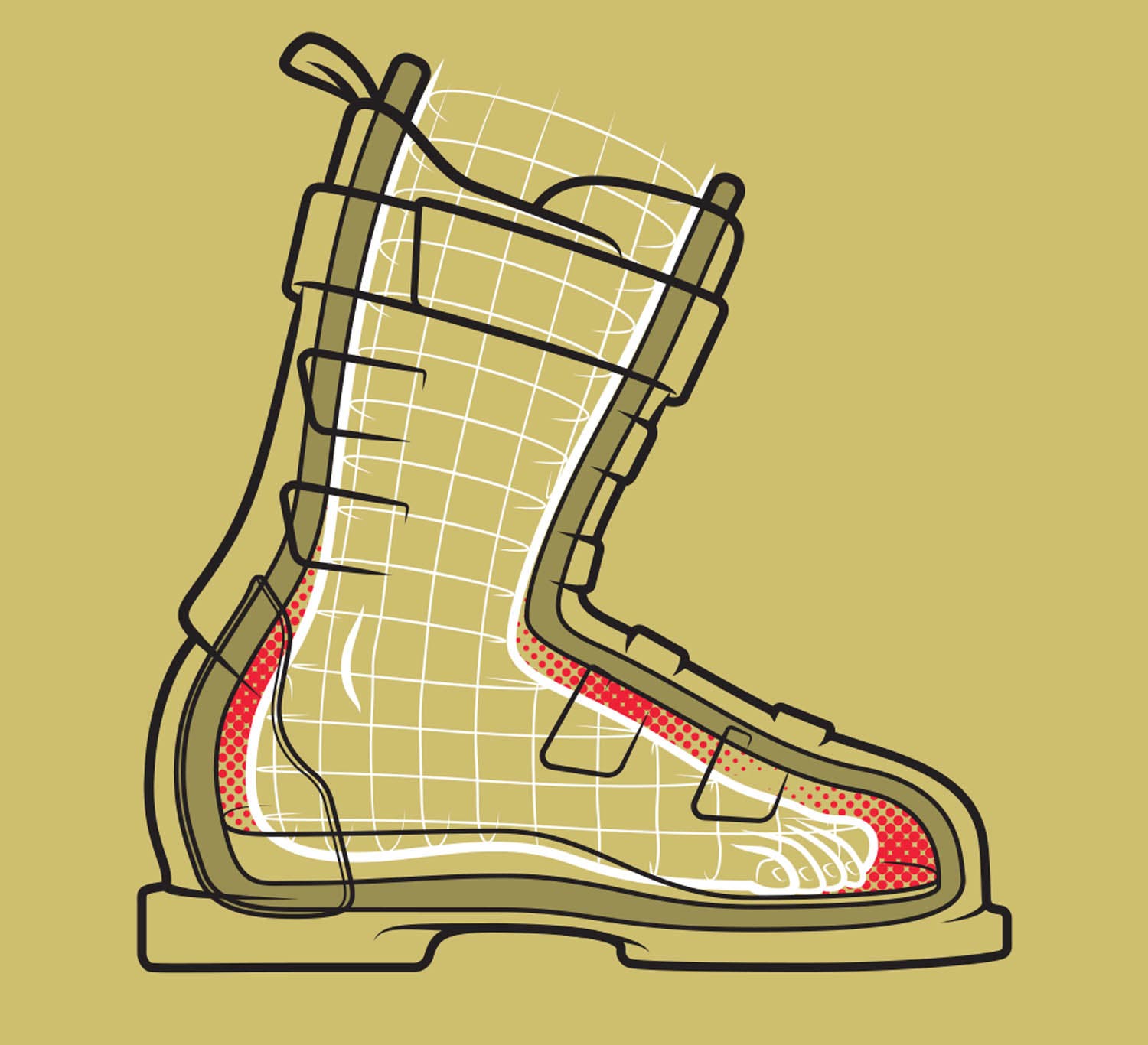
The upper cuff should support your shin and calf without acting like a tourniquet. If you can barely close the buckle, or if your calf becomes numb within a few minutes, the boot is too tight or the boot shape is wrong for your leg.
On the other hand, a loose cuff allows your lower leg to move before the boot responds. This can make turns feel slow and unstable. It may also cause your calf to press hard against the back of the boot as you try to control your skis.

What a Correct Ski Boot Calf Fit Feels Like
The best way to understand how tight should ski boots be around the calf is to focus on pressure, movement, and comfort together. No single sensation gives the full answer.
When you stand upright, the boot may feel firm around your calf. When you bend into a skiing stance, the pressure should become more even. You should feel supported at the shin and lower leg rather than squeezed at one small spot.
Use this simple fit test:
- Put on one thin or medium ski sock.
- Place your foot in the boot and tap your heel firmly on the floor.
- Close the lower buckles until they are secure.
- Close the upper cuff buckle with moderate pressure.
- Attach the power strap if the boot has one.
- Bend your knees as if you are skiing.
- Flex forward several times.
The boot should feel close and secure in both an upright stance and a flexed stance. Your calf should not slide inside the cuff, but you should not feel a sharp edge pressing into the muscle.
A good fit often feels slightly tighter than expected when you first try the boots indoors. Ski boot liners soften and pack out with use. However, a boot should never be painful during the first fitting. Pain usually becomes worse after several hours, not better.
Signs Your Ski Boots Are Too Tight Around the Calf
Many skiers confuse firm support with excessive pressure. The difference is clear when you pay attention to your body.
Your ski boots may be too tight around the calf if you notice:
• Numbness or tingling in the lower leg
• Cold feet caused by restricted circulation
• Red marks that remain for a long time
• Pain behind the knee or at the top of the boot
• A burning sensation in the calf
• Difficulty flexing the ankle
• A feeling that your leg is being squeezed in one spot
• Needing to loosen the boot after only a few runs
Pain at the top of the cuff often means the boot is pressing against the widest part of your calf. It may also mean the cuff is too low, the liner is too thick, or the boot has a narrow upper shape.
Do not solve every pressure problem by loosening the upper buckle. A loose cuff can reduce support while leaving the true pressure point unchanged. The better solution may involve cuff adjustment, liner work, a different boot model, or a professional boot fitting.
A useful rule is simple: firm pressure is acceptable, but pain is not. If your calf feels trapped, your boot needs attention.
Signs Your Ski Boots Are Too Loose Around the Calf
A cuff that is too loose can be just as harmful as one that is too tight. It reduces control and may create more friction inside the boot.
Watch for these signs:
• Your shin moves before the boot responds
• Your calf pulls away from the cuff when you flex
• You need to over-tighten the power strap
• Your skis feel slow from edge to edge
• You feel unstable on steeper terrain
• The boot makes a clunking sound during turns
• Your calf becomes sore from repeated movement
• You have to buckle the upper cuff at its tightest setting
A loose ski boot can also cause shin bang. This happens when your lower leg repeatedly hits the front of the boot while skiing. The problem may come from poor cuff contact, a loose heel, a worn liner, or a stance issue.
The goal is not to make the boot as tight as possible. The goal is to remove unwanted movement while keeping your leg relaxed enough to ski well.
How to Adjust Ski Boot Buckles Around the Calf
Ski boot buckles control fit, but they should not carry the entire job. Use each buckle for its intended purpose.
The upper cuff buckle controls how closely the boot wraps around your calf. The power strap adds support across the top of the cuff and helps connect your shin to the boot tongue.
Try these adjustments:
• Center the buckle over the correct ladder position
• Tighten the cuff until it holds your leg without pain
• Use the power strap for support rather than crushing the cuff
• Keep the lower buckles secure, but avoid excessive force
• Recheck the fit after the liner warms and settles
• Adjust both boots evenly, unless your legs have different shapes
Many skiers make the mistake of tightening the upper buckle first. This can create pressure around the calf while leaving the heel loose. Start by seating your heel, then adjust the lower shell buckles, and finish with the cuff and power strap.
If your buckle is already on the tightest ladder and the boot still feels loose, the boot may be too large or too wide. If the buckle barely closes on the loosest setting, the cuff may be too small for your calf.

Why Calf Shape Matters More Than Boot Size
Ski boot size describes foot length, not calf shape. Two people can wear the same boot size and need very different cuff adjustments.
Some skiers have a high calf muscle. Others have a wide calf, a narrow lower leg, or a short shin. Boot brands also use different cuff shapes, so a boot that fits one skier perfectly may create pressure for another.
Common reasons for calf pressure include:
• A naturally wide calf
• A high calf muscle
• A short lower leg
• A thick or stiff liner
• A boot cuff that is too low
• A boot designed for a narrower leg
• Tight base layers or bulky ski socks
Women’s ski boots often include a different cuff shape and a lower rear spoiler to better match common lower-leg proportions. This does not mean every woman needs a women’s boot or that men cannot use one. The correct choice depends on your anatomy and the boot’s actual fit.
A qualified boot fitter can adjust the cuff height, move the buckle, reshape the liner, or modify the shell. These changes are often more effective than simply buying a larger boot.
How Ski Socks and Base Layers Affect Calf Pressure
Thick socks can make ski boots feel much tighter around the calf. They can also create folds that cause pressure points.
Choose socks made for skiing. They should be thin to medium thickness, smooth, and tall enough to rise above the boot cuff. Avoid cotton because it holds moisture and loses warmth when wet.
Your base layer matters too. A bulky pant cuff or thick thermal layer can bunch behind your knee or under the boot cuff. This creates uneven pressure and can make a properly fitted boot feel too tight.
For the best result:
• Wear the socks you plan to ski in
• Keep the sock flat around the shin and calf
• Avoid folding the sock over the boot
• Keep pant cuffs outside the boot
• Remove extra layers from inside the cuff
• Test the boots at the end of the day when your legs are slightly fuller
When I help skiers troubleshoot calf pressure, the first thing I check is often the sock and pant cuff. A small wrinkle can feel like a major boot-fitting problem after several runs.
How Long Should You Test Ski Boots?
A few minutes in a store can reveal major problems, but a longer test gives a better picture of comfort.
Wear the boots for at least 15 to 20 minutes if possible. Stand, walk carefully, flex forward, and hold a skiing stance. Your feet may feel strange at first because ski boots are stiff, but sharp pain or numbness is a warning sign.
During a test, ask yourself:
• Can I flex forward without fighting the boot?
• Does my heel stay down?
• Is the cuff pressure spread across the calf?
• Do my toes remain warm and mobile?
• Does one leg feel tighter than the other?
• Can I relax my lower leg while standing?
A new liner often feels firm. That is normal. A new shell should not produce intense pressure in one location. Liners pack out over time, but they do not reliably fix a shell that is too narrow or a cuff that is the wrong shape.
If you buy boots from a shop, ask about a short indoor test period. Never heat mold or modify a boot before confirming that the basic shell size and shape are correct.
Can a Boot Fitter Fix Calf Pressure?
In many cases, yes. A professional boot fitter can make several changes to improve calf comfort and control.
Possible adjustments include:
• Moving or replacing the upper buckle
• Adjusting cuff alignment
• Removing or reshaping liner material
• Adding or removing a rear spoiler
• Expanding part of the shell
• Changing the power strap
• Adjusting the boot board
• Heat molding the liner
• Selecting a higher-volume cuff
A boot fitter should first check shell length, width, heel fit, and stance. Calf pressure may be a symptom of a deeper fit problem. For example, a skier with too much room around the heel may over-tighten the cuff to gain control.
Professional fitting is especially helpful for skiers with wide calves, previous leg injuries, unusual foot shapes, or persistent numbness. It can also help advanced skiers who need precise cuff contact for stronger edge control.
The best modification is usually the smallest one that solves the problem. Major changes should be made carefully because they can alter balance and support.
A Practical Fit Routine for Your First Ski Day
Even well-fitted boots may feel different on the mountain. Cold temperatures stiffen plastic, and liners change as they warm.
Use this routine before your first run:
- Put on dry ski socks and smooth your base layer.
- Warm the boots indoors before putting them on.
- Seat your heel by tapping the boot lightly on the ground.
- Close the lower buckles with moderate pressure.
- Set the upper cuff so it feels supportive, not restrictive.
- Tighten the power strap over the tongue.
- Walk and flex for several minutes.
- Check your toes, calf, and shin for pressure.
- Recheck the buckles after one or two runs.
Do not buckle your boots so tightly that you cannot relax your legs. Good skiing comes from controlled movement, not maximum compression.
If your feet become numb, stop and loosen the boot. If the issue continues after you adjust the fit, visit a boot fitter. Continuing to ski through numbness can hide a circulation problem and reduce your ability to control the skis.
Common Mistakes to Avoid
Understanding how tight should ski boots be around the calf also means knowing what not to do. Small fitting mistakes can create big problems during a long ski day.
Avoid these common errors:
• Buying a larger boot to solve calf pressure
• Wearing two pairs of socks
• Tightening every buckle as hard as possible
• Ignoring numbness or cold feet
• Folding socks or pants inside the cuff
• Testing boots only while sitting down
• Assuming all brands have the same cuff shape
• Skipping professional adjustments
• Using pain as proof that the boot is performing well
A larger boot may give your calf more space, but it can also cause heel lift and poor control. A better solution is usually a boot with the correct foot length and a more suitable cuff.
I have seen skiers spend an entire season compensating for boots that were simply too big. They tightened the cuff, blamed their stance, and accepted sore feet as normal. Once the shell and cuff were matched to their legs, their skiing became easier almost at once.
What Is the Ideal Calf Pressure for Different Skiers?
The ideal pressure varies by experience and skiing style, but the basic rule remains the same: secure contact without pain.
Beginners often benefit from a slightly softer, more forgiving cuff. They need comfort and easy flex rather than extreme precision. A cuff that is too stiff or tight can make it difficult to move forward.
Intermediate and advanced skiers may prefer stronger cuff contact. This can improve power transfer and edge response, especially on firm snow. Even aggressive skiers should not accept numbness, sharp pressure, or restricted circulation.
Freeride and powder skiers may choose a boot with more volume and a smoother flex. Racers often use a closer, more precise fit. However, race-level tightness is not automatically better for recreational skiing.
Your boot should match your goals, leg shape, and tolerance for stiffness. Comfort and control should work together, like two sides of the same turn.
Frequently Asked Questions About How Tight Should Ski Boots Be Around the Calf
Should ski boots hurt around the calf?
No. Ski boots should feel firm and supportive, but they should not cause sharp pain, numbness, tingling, or cold feet. Persistent pain usually points to a poor cuff shape, incorrect adjustment, or a need for professional modification.
Should I tighten ski boot buckles as much as possible?
No. Tighten the buckles only enough to remove unwanted movement and create even support. Excessive force can restrict blood flow and make it harder to flex naturally.
How much movement should my calf have inside a ski boot?
Your calf should have very little side-to-side movement, but it should not feel trapped. When you flex forward, your shin and calf should stay in contact with the cuff without harsh pressure.
Can thick ski socks cause calf pain?
Yes. Thick socks can fill extra space and create pressure around the calf and shin. Thin, smooth ski socks usually provide better comfort, warmth, and control.
Should my ski boot cuff touch my calf?
Yes, the cuff should make steady contact with your lower leg. The contact should feel even and supportive rather than concentrated at the back of the calf or behind the knee.
Will ski boot liners loosen around the calf?
Most liners soften and pack out slightly with use, but they cannot fix every fit problem. If the boot is painful before skiing, do not rely on liner packing to solve the issue.
What should I do if one calf is tighter than the other?
Set each boot based on the leg it fits rather than forcing both boots to use identical buckle positions. A boot fitter can also adjust the cuff or liner to account for differences between your legs.
Conclusion
The answer to how tight should ski boots be around the calf is firm, even, and supportive, but never painful. Your calf should stay connected to the cuff while you flex, and your feet should remain warm, comfortable, and free from numbness.
Start with the correct shell size, wear thin ski socks, seat your heel, and adjust the buckles with moderate pressure. If the cuff still pinches or feels loose, seek help from a certified boot fitter instead of simply tightening the boot more.
Take a few minutes to check your fit before your next ski day. Your legs will feel better, your turns will improve, and you can enjoy more time on the mountain.

Madison Clark is a footwear expert and the voice behind MyStyleGrid.com. She specializes in honest shoe reviews, style tips, and practical guides to help readers find the perfect pair for any occasion. With years of experience in blogging and content creation, Madison makes footwear knowledge simple, stylish, and easy to follow.