Wear chunky heel boots with balanced layers, tailored proportions, and enough comfort for confident all-day movement.
Chunky heel boots add height, shape, and a strong finish to almost any outfit. The key is to balance their bold sole and sturdy heel with clean lines, thoughtful colors, and the right hem length. In this guide, you’ll learn how to wear chunky heel boots with jeans, dresses, skirts, leggings, and workwear while avoiding common styling mistakes. You’ll also find practical comfort tips drawn from real outfit testing and everyday styling experience.
Why chunky heel boots are worth wearing
Chunky heel boots have a thick heel and often a thicker sole. Unlike thin stiletto boots, they offer a wider base and a more grounded look. Common styles include ankle boots, Chelsea boots, knee-high boots, combat-inspired boots, and platform boots.
Their appeal goes beyond fashion. A chunky heel can make an outfit look polished without feeling too delicate. It also works well with casual clothing, which makes these boots more useful than many dress shoes.
Chunky heel boots can help you:
• Add height without the sharp feel of a narrow heel
• Create a strong shape with loose or layered clothing
• Transition outfits from day to night
• Balance wide-leg pants and oversized coats
• Add structure to soft dresses and skirts
• Build stylish fall and winter outfits
The main styling rule is simple: let the boots support the outfit rather than compete with every piece. If the boots are tall, bold, or decorated, keep at least one other part of the outfit simple.

How to choose the right chunky heel boots
The best pair depends on your wardrobe, comfort needs, and the outfits you plan to wear. Start with the heel height, shaft length, toe shape, and color.
A medium heel between 2 and 3 inches is a useful choice for daily wear. It gives a lift while remaining easier to walk in than a very tall platform. A block heel also spreads pressure across a wider area, though comfort still depends on the fit and the boot’s construction.
Consider these details before buying:
• Heel height: Choose a height that feels stable when you walk, turn, and use stairs.
• Shaft height: Ankle boots are easy to style, while knee-high boots create more coverage and warmth.
• Toe shape: A rounded or almond toe often gives more room than a sharp pointed toe.
• Material: Leather can soften with wear, while synthetic materials may feel less flexible.
• Sole grip: A textured rubber sole can help on wet or slick sidewalks.
• Color: Black, brown, taupe, and cream are easy to mix with many outfits.
• Closure: Zippers are quick, while elastic panels can make Chelsea boots easier to pull on.
Try boots with the socks or tights you expect to wear. This small step prevents a common mistake: buying a pair that feels comfortable in thin socks but tight with winter layers.
A good boot should hold your heel without rubbing. Your toes should not feel pressed against the front. Walk for several minutes before deciding, because some fit problems appear only after movement.


How to wear chunky heel boots with jeans
Jeans are one of the easiest ways to wear chunky heel boots. The trick is to match the boot shape with the leg opening of the jeans.
With skinny jeans, tuck the hem into ankle or knee-high boots. Make sure the denim sits smoothly instead of bunching around the shaft. A clean tuck makes the legs look longer and keeps the boots visible.
Straight-leg jeans work well with ankle boots. Let the hem fall just above the boot or touch the top of it. A small gap can show a strip of skin in warm weather, while socks or tights can fill the space during colder months.
For wide-leg jeans, choose a boot with enough heel height to keep the hem from dragging. The boots should be visible when you walk, but they do not need to stand out fully. This creates a long line from the waist to the floor.
Try these outfit formulas:
• Black chunky heel boots, straight-leg blue jeans, and a tucked white shirt
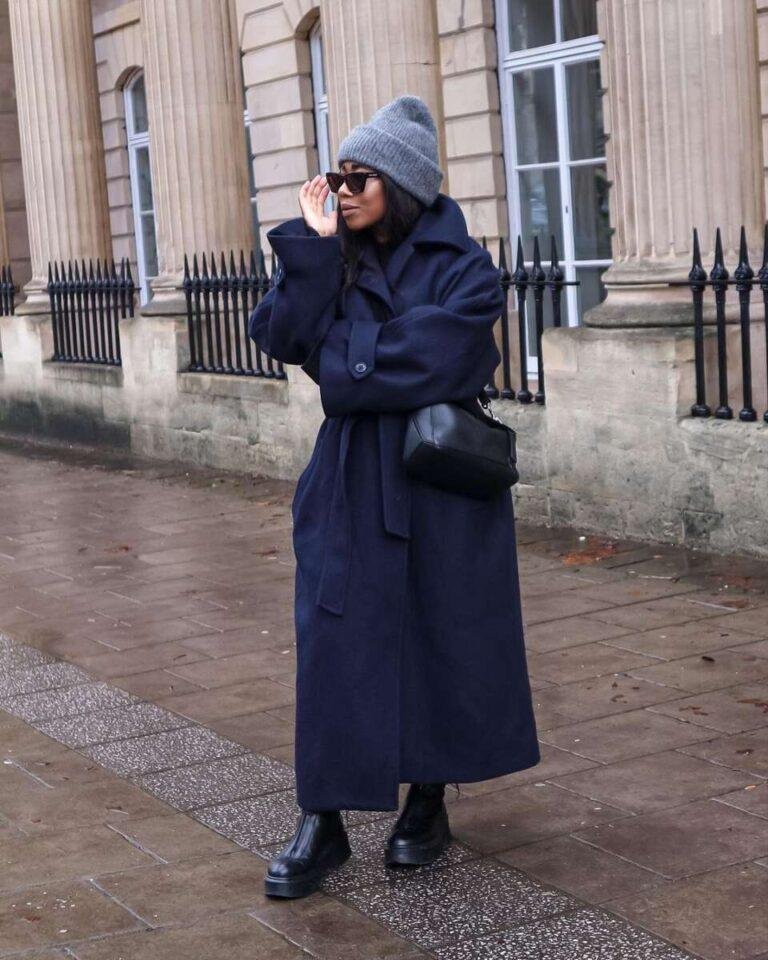
• Brown boots, relaxed jeans, a knit sweater, and a long wool coat
• Cream boots, wide-leg jeans, a fitted top, and a cropped jacket
• Platform Chelsea boots, black jeans, a leather jacket, and a simple tee
One mistake I often see is pairing a very wide jean with a short, heavy boot and no visible ankle or heel. The result can look visually crowded. A higher heel, a cropped hem, or a more streamlined boot can restore balance.

How to wear chunky heel boots with dresses
Chunky heel boots can make a feminine dress feel modern and less formal. They add contrast, much like adding a leather jacket to a soft floral print.
Ankle boots work well with midi dresses because they highlight the lower leg. Choose a dress that moves around the body rather than clings tightly to the boot. This creates an easy line from the hem to the shoe.
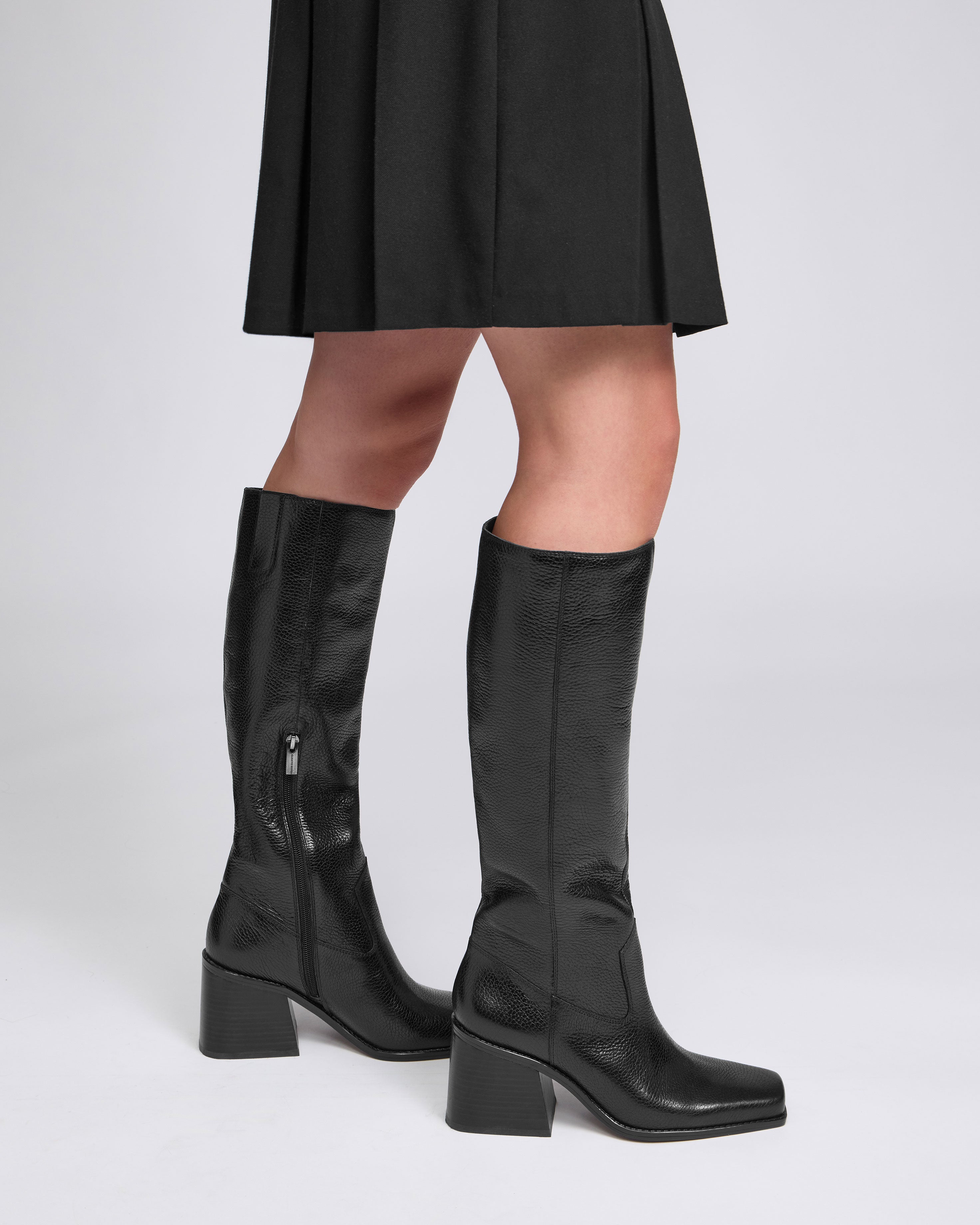
Knee-high boots offer more coverage. Wear them under a midi dress or with a shorter dress and opaque tights. If the dress is loose, define the waist with a belt or choose a jacket that ends near the waist.
For a balanced outfit, think about visual weight:
• A floaty dress pairs well with structured boots.
• A heavy knit dress works with a sleek boot shaft.
• A short dress looks balanced with tights and tall boots.
• A fitted dress can use a wider boot for contrast.
A floral dress with black chunky heel boots is a reliable fall outfit. For a softer effect, try tan boots with a cream, rust, or olive dress.
Pay attention to proportions. If the dress ends at the widest part of your calf and the boot stops below it, the leg can look visually divided. Try changing the hem, adding tights, or selecting a taller boot.


How to wear chunky heel boots with skirts
Chunky heel boots work with mini, midi, and maxi skirts. The best pairing depends on the skirt’s volume and length.
A mini skirt creates a long space above the boot. Add tights for warmth and coverage. Opaque black tights with black boots create one continuous line and can make the legs appear longer.
A midi skirt is especially versatile. Pair a pleated midi skirt with fitted boots to avoid too much volume around the lower half. With a pencil skirt, choose a boot with a clean shape and a moderate heel.
Maxi skirts can cover most of the boot. Choose a heel that gives the skirt enough clearance from the ground. A pointed or almond toe can peek out beneath the hem and add polish.
Helpful combinations include:
• A denim mini skirt, tights, chunky black boots, and an oversized sweater
• A satin midi skirt, fitted knit top, and smooth leather boots
• A pleated skirt, cropped cardigan, and tall block-heel boots
• A straight maxi skirt, tucked shirt, and heeled Chelsea boots
When wearing a chunky boot with a delicate skirt, repeat the boot’s weight somewhere else. A belt, structured bag, or cropped jacket can make the outfit feel intentional.

How to wear chunky heel boots for work
Chunky heel boots can look professional when the design is polished. Choose clean leather, simple hardware, and a moderate heel. Avoid excessively distressed finishes or very large platforms if your workplace has a formal dress code.
Ankle boots pair neatly with tailored trousers. The trouser hem should either rest lightly over the boot or stop above it without creating awkward bunching. A pointed or almond toe can make the outfit look more refined.
Knee-high boots can work under a midi skirt or dress. Keep the boot color close to your tights or skirt for a smooth line. A matching color combination often looks more professional than strong contrast.
Good office outfit ideas include:
• Black boots, charcoal trousers, a white blouse, and a tailored blazer
• Brown boots, navy trousers, a fine-gauge sweater, and a camel coat
• Black knee-high boots, a midi dress, and a simple belt
• Tan boots, straight trousers, and a tucked button-down shirt
Comfort matters during a workday. Test the boots at home while standing, walking, and sitting. If your feet begin to ache quickly, the pair may not be suitable for long office hours, even if the outfit looks excellent.


How to style chunky heel boots casually
Casual outfits are where chunky heel boots feel most natural. Their strong shape works with denim, cargo pants, leggings, sweaters, and casual jackets.
For a simple weekend look, wear black boots with straight jeans, a relaxed tee, and a denim jacket. For colder weather, add a long puffer coat or a wool overshirt.
Leggings need a little care because they show the full shape of the leg. Pair them with a longer sweater, oversized shirt, or tunic jacket. Ankle boots with a close-fitting shaft usually look cleaner than a wide boot that leaves a gap.
Cargo pants and utility trousers can also work. Tuck a slim pant into the boots or let a wider leg fall over the top. Keep the rest of the outfit simple so the look does not become too busy.
A useful casual formula is:
- Start with one fitted piece, such as a slim top or fitted jeans.
- Add one relaxed piece, such as an oversized sweater or jacket.
- Finish with chunky heel boots for structure.
- Repeat one boot color in your bag, belt, or jacket detail.
This formula gives the outfit shape without making it look overly planned.

How to balance proportions and colors
Chunky heel boots are visually heavy. Balance them with the rest of your outfit instead of trying to hide them.
If you wear oversized clothing from head to toe, the boots may make the outfit look bulky. Add a tucked shirt, a cropped jacket, or a visible waistline. This creates contrast and gives the eye a clear shape to follow.
Color also changes the effect. Black boots look sharp and urban. Brown boots feel warmer and more relaxed. White or cream boots can brighten an outfit but usually look best when another light color appears near the face or in an accessory.
Use the color wheel as a simple guide:
• Black works with nearly every neutral and rich color.
• Brown pairs well with denim, cream, olive, rust, and burgundy.
• Tan looks soft with white, beige, blue, and warm prints.
• White works well with light denim, black, gray, and clean color blocks.
Matching the boot to your pants or tights can create a longer visual line. Contrasting the boots with the pants makes the footwear a focal point.
Neither choice is wrong. The best option depends on whether you want the boots to blend in or make a statement.


Comfort and walking tips
Style matters, but comfort determines whether you will wear the boots again. A chunky heel is often more stable than a thin heel, yet it can still cause pressure if the shoe does not fit well.
Wear new boots around the house before taking them outside. This helps you find rubbing points and learn how the heel feels on different surfaces.
Try these comfort steps:
• Wear socks that match the boot’s fit and season.
• Use a thin cushioned insole if the boot has extra room.
• Add heel grips if your heel slips.
• Keep blister patches in your bag during the first few wears.
• Take short breaks if you stand for long periods.
• Replace worn heel caps or damaged soles promptly.
Do not assume a painful boot will always “break in.” Leather may soften, but a narrow toe box or poor heel position will not become healthy through force. Persistent pain, numbness, or pressure is a reason to stop wearing the pair and seek professional advice.
Foot comfort also depends on the surface. Walking on uneven sidewalks, stairs, or wet floors requires more attention, even with a broad heel. A textured sole can help, but it does not remove the need for care.
Common mistakes to avoid
Learning how to wear chunky heel boots often comes down to avoiding small styling and fit errors.
First, do not choose a boot that is too short for the pants or skirt. The wrong shaft height can create a gap that cuts across the leg. Try a different hem, taller boot, or matching tights.
Second, avoid mixing too many heavy details. A platform boot, oversized coat, large bag, and wide-leg pants may overwhelm a smaller frame. Keep one or two pieces streamlined.
Third, do not ignore the boot’s setting. A highly rugged combat boot may not suit a formal event, while a sleek leather boot may look out of place on a muddy trail. Match the design to the activity.
Other common mistakes include:
• Wearing boots that pinch because they look good
• Letting jeans bunch heavily above the boot
• Pairing a wide boot with an overly wide cropped pant
• Forgetting to protect leather from rain and salt
• Choosing a heel height that exceeds your walking comfort
• Wearing a statement boot with several competing statement pieces
The goal is not perfection. It is harmony. Your outfit should feel like a conversation, not several people talking at once.
Seasonal outfit ideas
Chunky heel boots are useful across seasons, though the materials and layers should change.
In fall, wear leather boots with jeans, flannel shirts, knit sweaters, and wool coats. Rich shades such as espresso, burgundy, olive, and camel fit the season well.
In winter, choose insulated boots or styles with weather-resistant materials. Wear them with thick socks, tights, long coats, and warm skirts. Leave enough room for socks so your feet do not feel cramped.
In spring, pair ankle boots with floral dresses, light denim, and trench coats. Lighter colors can make the outfit feel fresh. Avoid heavy layers unless the weather still requires them.
In summer, chunky heel boots can work with short dresses, denim skirts, and linen pieces. Select breathable materials and lighter colors. Avoid wearing warm, lined boots in high heat.
Before wearing a pair in wet weather, check the care label. Water resistance is not the same as waterproofing, and salt or puddles can damage some materials.
Frequently Asked Questions About How to Wear Chunky Heel Boots
Are chunky heel boots easy to walk in?
They are often easier to balance in than narrow heels because the heel has a wider base. Still, comfort depends on the height, fit, sole, and your walking habits.
Can you wear chunky heel boots with skinny jeans?
Yes. Tuck skinny jeans into ankle or knee-high boots for a clean look. Make sure the denim does not bunch around the boot shaft.
What pants look best with chunky heel boots?
Straight-leg, slim, bootcut, and wide-leg pants can all work. Match the boot height to the hem so the pants do not drag or create too much bulk.
Can you wear chunky heel boots with a dress?
Yes. Ankle boots add contrast to casual or floral dresses, while knee-high boots offer more coverage with short and midi dresses. Use tights when you want a smoother and warmer look.
Are chunky heel boots suitable for work?
Polished leather or suede boots with a moderate heel can suit many offices. Choose simple details and check your workplace dress code before wearing platform or heavily distressed styles.
Should chunky heel boots be tight or loose?
They should feel secure without squeezing your toes or calf. Your heel should not slide excessively, and you should have enough room for the socks you plan to wear.
How do you make chunky heel boots look more feminine?
Pair them with a flowing dress, satin skirt, soft knit, or delicate jewelry. The contrast between a sturdy boot and a softer garment creates a balanced outfit.
Can petite people wear chunky heel boots?
Yes. A boot that matches your pants or tights can create a long visual line. A moderate platform or heel can add height without overwhelming your frame.
Conclusion
Learning how to wear chunky heel boots is mostly about balance. Match the boot height to your hem, pair heavy footwear with clear shapes, and choose colors that support the rest of your outfit. Jeans, skirts, dresses, trousers, and casual layers can all work when the proportions feel intentional.
Start with one reliable pair in black or brown. Test it with three outfits you already own, then adjust the hems, layers, and accessories. Wear your boots with confidence, and share your favorite styling combination or explore more practical fashion guides for your next outfit.

Madison Clark is a footwear expert and the voice behind MyStyleGrid.com. She specializes in honest shoe reviews, style tips, and practical guides to help readers find the perfect pair for any occasion. With years of experience in blogging and content creation, Madison makes footwear knowledge simple, stylish, and easy to follow.