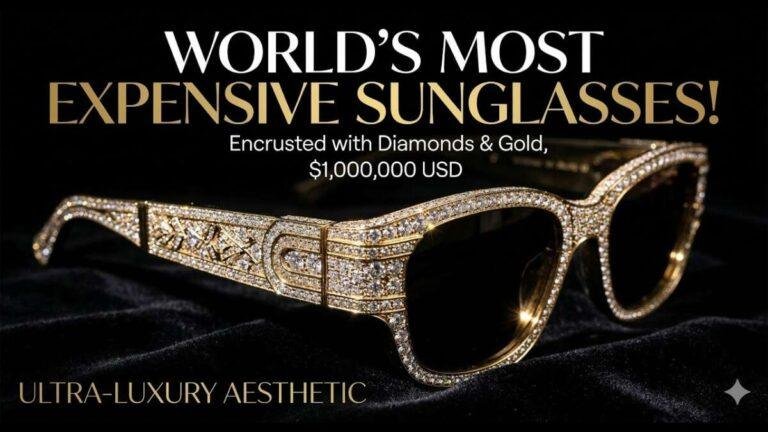
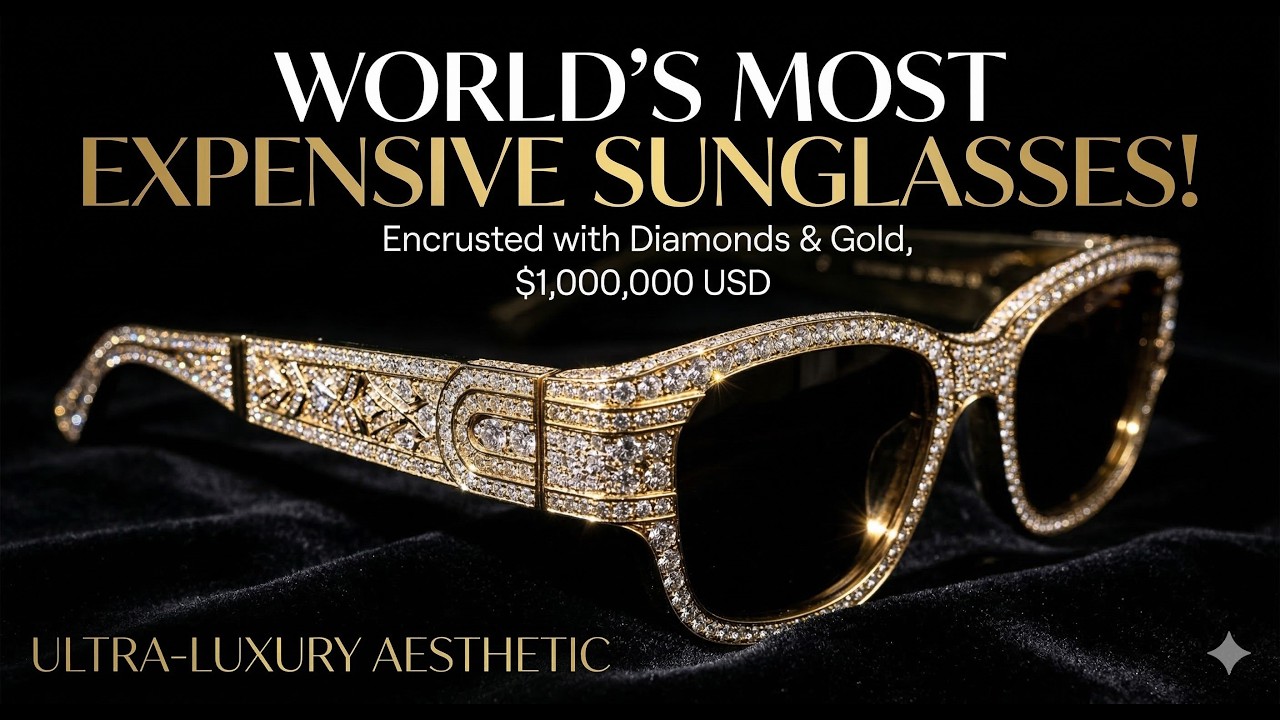
The most expensive sunglasses can cost hundreds of thousands of dollars, often because of rare gems, precious metals, and limited-edition design.
When people ask what are the most expensive sunglasses, they are usually comparing more than lens quality. The price may reflect diamonds, solid gold, handcraft, celebrity history, rarity, and the reputation of a luxury jeweler. This guide explains the highest reported prices, what makes these frames so costly, and how to judge whether a luxury pair is truly worth buying.
What are the most expensive sunglasses?
The most expensive sunglasses are usually jewelry pieces rather than ordinary eyewear. They may use platinum, 18-karat gold, diamonds, rare gemstones, exotic materials, or custom-made parts.
Reported prices can vary for three reasons:
• Some pairs are sold through private deals, so the final price is not public.
• Some brands advertise a suggested value rather than a verified sale price.
• A custom pair may cost more than a standard model because it is made for one buyer.
One of the highest widely reported prices is about $400,000 for a jeweled pair associated with Chopard and De Rigo. Reports describe the sunglasses as using precious metals and dozens of carats of diamonds. Because luxury brands and media outlets may describe these pieces differently, the exact design and sale details should be checked before treating the number as an official auction record.
Other notable luxury sunglasses have reported prices from roughly $25,000 to more than $100,000. These models often come from jewelry houses rather than mainstream eyewear brands.

The 10 most expensive sunglasses in the world
There is no single global list that ranks every private sale. Still, the following examples are among the most expensive sunglasses reported by luxury retailers, designers, and media coverage.
1. Chopard and De Rigo jeweled sunglasses
Reported price: approximately $400,000
These sunglasses are often named when people search for what are the most expensive sunglasses. The design is linked to Chopard, a Swiss luxury jewelry and watch house, and De Rigo, an Italian eyewear manufacturer.
The frame is reported to include a large amount of gold and many diamonds. The stones are the main reason for the price. The lenses are important, but they are not what turns the pair into a six-figure luxury object.
A pair like this is closer to wearable jewelry than sports eyewear. It may be displayed at events or kept in a private collection rather than worn every day.
2. Dolce & Gabbana luxury jeweled sunglasses
Reported price: up to about $383,000 for an exceptional jeweled design
Dolce & Gabbana has released sunglasses with gold details, diamonds, and other luxury finishes. Some reports have placed rare jeweled versions near the $383,000 mark.
The exact price depends on the design, production run, and gemstone setting. A standard Dolce & Gabbana frame may cost a few hundred dollars, while a one-off jewelry version can reach an entirely different market.
This is a useful reminder that brand name alone does not explain the price. Materials and scarcity matter far more.
3. Cartier diamond sunglasses
Reported price: often from tens of thousands of dollars, with rare pieces priced much higher
cartier is known for using precious metals and gemstones in eyewear. Its most expensive sunglasses may feature platinum, gold, diamonds, and detailed handwork.
Cartier sunglasses are often purchased for their design language and jewelry heritage. The frame may use motifs that also appear in the brand’s watches, rings, and bracelets.
When comparing what are the most expensive sunglasses, Cartier pieces stand out because they connect eyewear with high jewelry. The value is not based only on sun protection. It also reflects craftsmanship, provenance, and the brand’s global reputation.
4. Bentley Platinum sunglasses
Reported price: around $45,000 for special editions
Bentley Motors has been linked with luxury sunglasses made with platinum and premium materials. The company’s accessories often reflect the same themes found in its cars: hand finishing, limited production, and status.
A $45,000 pair is still far above the cost of most premium sunglasses. However, it is more practical than some diamond-covered collector pieces.
These models appeal to buyers who want a luxury accessory with a strong automotive connection. The Bentley name can add value, but the materials and limited availability do most of the financial work.
5. Maybach Eyewear limited editions
Reported price: commonly several thousand dollars, with rare versions priced much higher
Maybach Eyewear creates luxury sunglasses using materials such as titanium, gold, leather, and gemstones. Some models are made in small quantities and may include hand-applied details.
The brand is associated with the Maybach luxury automobile name. That connection helps position the sunglasses as status products.
Not every Maybach pair belongs on a list of the most expensive sunglasses. The price depends on the specific collection. A basic luxury frame and a gemstone-encrusted limited edition can sit in very different price brackets.
6. Gold and diamond sunglasses from luxury jewelers
Reported price: from about $10,000 to more than $100,000
Several independent jewelry houses create custom sunglasses with solid gold, platinum, and diamonds. These pieces may not have the same public visibility as Cartier or Chopard, but they can be just as expensive.
Custom work changes the price quickly. A buyer may choose:
• A specific gold purity
• A larger diamond count
• Colored diamonds
• Custom initials or symbols
• A handmade frame shape
The final price usually depends on the weight and quality of the materials. A heavy gold frame with high-grade diamonds can cost more than a famous brand’s standard luxury model.
7. Louis Vuitton limited-edition sunglasses
Reported price: often hundreds to several thousand dollars, with rare collector editions priced higher
Louis Vuitton sunglasses are best known for monogram patterns, premium materials, and seasonal designs. Some special editions include elaborate decoration or unusual frame construction.
Most Louis Vuitton sunglasses are not among the absolute most expensive sunglasses in the world. Still, they can become valuable on the resale market when production is very limited.
Condition is critical. Scratched lenses, bent temples, missing cases, or faded finishes can reduce collector value. A rare pair in its original packaging may be worth much more than the same model without proof of purchase.
8. Gold-plated and solid-gold designer sunglasses
Reported price: roughly $5,000 to $50,000 or more
Gold sunglasses can range from ordinary frames with a gold-colored finish to genuine solid-gold eyewear. These products should not be treated as equal.
Gold plating uses a thin layer over another material. Solid gold uses gold throughout much of the frame. The difference affects weight, durability, repair, and value.
Buyers should ask for clear details about:
• Gold purity, such as 14-karat or 18-karat
• Total gold weight
• Whether the frame is solid, filled, or plated
• Hallmarks and certificates
• The cost of future repairs
9. Handmade Italian and French collector sunglasses
Reported price: about $2,000 to $20,000, depending on materials and rarity
Some handmade sunglasses are expensive because of their craft rather than gemstones. Small workshops may use acetate blocks, titanium, buffalo horn, wood, leather, or hand-polished metal.
These sunglasses may take many hours to produce. Their value comes from low production numbers and skilled labor.
They may not be the most expensive sunglasses by retail price, but they can offer something a diamond-covered pair does not: daily wearability. For many buyers, a carefully made frame is a better investment than a fragile display piece.
10. Vintage celebrity and auction sunglasses
Reported price: highly variable
Vintage sunglasses linked to film stars, musicians, athletes, or political figures may sell for far more than their original retail price. The value comes from documented history.
A normal frame with a clear chain of ownership can become a collector’s item. Without proof, however, a seller’s claim may be impossible to verify.
Auction prices can also be unpredictable. Two similar pairs may sell for very different amounts because of buyer interest, condition, publicity, and timing.

Why are the most expensive sunglasses so costly?
The answer usually involves a mix of materials, labor, rarity, and brand value. No single feature explains every luxury pair.
Precious metals and gemstones
Diamonds can increase the price dramatically. The main factors include:
• Carat weight
• Color
• Clarity
• Cut
• Origin and certification
Platinum and high-karat gold also add value. However, the retail price of a luxury frame may be much higher than the raw material value. Buyers pay for design, setting, labor, marketing, and exclusivity too.
Handmade production
A handmade frame may require many separate steps. These can include cutting, polishing, shaping, engraving, assembling, and quality checking.
Handwork does not always guarantee better optical performance. It does show that the product took more time and skill to make.
Limited production
Scarcity creates demand. A frame made in a run of 10 pieces may become more desirable than a similar model made in thousands.
Limited-edition claims should be checked carefully. A product may be called “limited” without stating the exact number made. Serious buyers should ask for a production number or certificate.
Brand prestige
Luxury brands spend decades building a reputation. A famous name can raise the price because buyers value the design history, service, packaging, and status.
Brand value is real, but it is not the same as optical quality. A $200 pair can protect your eyes as well as a $20,000 pair if both use high-quality, properly tested lenses.
Custom fitting and personal design
Custom sunglasses may be made to match a buyer’s face, prescription, or style. Some luxury jewelers also create unique frames that will never be repeated.
Customization adds time and may make repairs more difficult. It can also increase resale value if the design has strong artistic or historical appeal.

Are the most expensive sunglasses better for your eyes?
Not always. Price and eye protection are separate issues.
A reliable pair should block 99% to 100% of UVA and UVB radiation. In the United States, sunglasses sold with UV claims should meet applicable safety and labeling rules. Buyers should look for clear statements such as “100% UVA and UVB protection” or “UV400.”
Polarized lenses can reduce glare from roads, water, and snow. They are useful for driving, fishing, boating, and outdoor sports. However, polarization does not automatically mean stronger UV protection.
Check for these features:
• Full UVA and UVB protection
• Lenses that meet recognized impact standards when needed
• A comfortable fit that limits light around the edges
• Accurate prescription work if you need corrective lenses
• Durable hinges and secure lens mounting
Luxury decoration does not replace good lens testing. A diamond frame with poor lenses is still poor eyewear.

What is the difference between luxury sunglasses and expensive sunglasses?
Luxury sunglasses are designed to signal quality, exclusivity, or status. Expensive sunglasses are simply sunglasses with a high price.
The two ideas often overlap, but they are not identical.
A luxury frame may offer:
• Better finishing
• Rare materials
• Small-batch production
• Strong customer service
• A recognizable fashion or jewelry brand
An expensive frame may cost more because of a celebrity connection, a resale trend, or a marketing campaign. That does not guarantee better comfort or protection.
The best purchase depends on your goal. A collector may care about rarity. A driver may care about glare control. A fashion buyer may care most about shape and brand identity.

How to buy the most expensive sunglasses safely
Buying high-value eyewear requires more care than buying a normal fashion accessory. Use a clear process.
1. Verify the seller
Buy from the brand, an authorized retailer, or a respected auction house. Be cautious with social media sellers and private listings that offer a rare pair at an unusually low price.
Check the seller’s return policy, business address, reviews, and authentication process.
2. Request documentation
Ask for:
• Original receipt
• Certificate of authenticity
• Gemstone reports
• Material details
• Serial number
• Production number
• Warranty papers
A box alone does not prove authenticity. Packaging can be copied or separated from the original product.
3. Confirm the materials
Ask whether the frame is solid gold, gold-filled, or plated. If diamonds are included, request information about carat weight and grading.
For very costly pieces, an independent jeweler or gemologist can inspect the frame. This extra step may cost money, but it can prevent a much larger loss.
4. Inspect the lenses
Look for scratches, cracks, coating damage, and optical distortion. Hold the sunglasses at arm’s length and view a straight line through each lens. A warped line may signal poor lens quality or damage.
Prescription and replacement lenses may be difficult to obtain for unusual luxury frames. Ask about future servicing before you buy.
5. Consider insurance
Home insurance may have limits for jewelry, collectibles, or luxury accessories. Ask your insurer whether the sunglasses need a separate scheduled-item policy.
Keep photographs, receipts, certificates, and appraisal records in a secure place.
6. Avoid using fragile pieces every day
Some of the most expensive sunglasses are not designed for beaches, sports, or crowded travel. Sand can scratch lenses, salt can damage metal, and heat can warp frames.
For daily use, consider a durable premium pair and reserve the collector piece for controlled settings.

My practical advice for choosing a high-value pair
The biggest mistake buyers make is confusing a high price with personal value. A frame can be famous and still feel heavy, narrow, loose, or awkward on your face.
Before buying, spend time wearing the sunglasses indoors. Check the bridge, temples, nose pads, and field of view. If the frame leaves pressure marks after a few minutes, it may become uncomfortable during a full day outside.
I also recommend separating three budgets:
• The style budget for the frame and design
• The protection budget for safe, tested lenses
• The ownership budget for insurance, cleaning, repairs, and storage
This approach prevents a common problem: spending nearly everything on the frame and then accepting low-quality lenses or poor service.
A useful rule is simple. Buy a very expensive pair only when you would still want it without the logo. That test helps reveal whether you value the craftsmanship or only the status attached to the name.

Are expensive sunglasses a good investment?
Usually, they are better viewed as luxury purchases than financial investments.
Most sunglasses lose value after purchase. Resale prices may fall because of wear, changing fashion, missing documents, or limited demand.
A few categories may perform better:
• Rare vintage designs
• Documented celebrity-owned pieces
• Numbered collaborations
• Jewelry frames with strong material value
• Unworn pieces with complete packaging
Even then, future value is uncertain. Fashion markets can change quickly, and the cost of authentication, insurance, and selling must be considered.
If investment matters to you, buy from a recognized auction channel, preserve every document, and avoid alterations. Replacing original lenses or changing the frame can reduce collector value.
Frequently Asked Questions
What are the most expensive sunglasses ever reported?
A Chopard and De Rigo jeweled design is often cited at about $400,000. Other high-priced examples include rare Dolce & Gabbana, Cartier, and custom jeweler-made sunglasses.
Why do some sunglasses cost hundreds of thousands of dollars?
The price may include diamonds, platinum, gold, custom work, limited production, and brand prestige. In many cases, the sunglasses function more like wearable jewelry than standard protective eyewear.
Do the most expensive sunglasses offer better UV protection?
Not necessarily. A less expensive pair can offer equal or better UV protection if it blocks 100% of UVA and UVB rays and uses properly tested lenses.
Are diamond sunglasses practical for everyday use?
Usually not. They may be heavy, delicate, difficult to repair, and vulnerable to scratches or damage from heat, water, sand, and regular travel.
How can I tell if luxury sunglasses are authentic?
Buy from an authorized seller and check the serial number, receipt, certificates, materials, craftsmanship, and packaging. For a very expensive pair, have an independent jeweler or authentication expert inspect it.
Can expensive sunglasses increase in value?
A small number may rise in value because of rarity, celebrity history, or precious materials. Most pairs lose value, so buyers should treat them as luxury accessories rather than guaranteed investments.
Conclusion
The most expensive sunglasses can cost from several thousand dollars to hundreds of thousands. The highest prices usually come from diamonds, gold, platinum, custom craftsmanship, limited production, and powerful luxury brands.
Still, the most expensive sunglasses are not automatically the best sunglasses for your eyes. Look for certified UV protection, a comfortable fit, reliable documentation, and clear after-sales service before focusing on the price tag.
If you are considering a luxury pair, compare the materials, verify the seller, protect your purchase, and choose a design you will truly enjoy wearing. Explore trusted luxury eyewear collections, and share your favorite high-end sunglasses in the comments.

Rubel Miah is the Senior Editor at MyStyleGrid.com, where he brings a sharp editorial eye and an unshakable love for fashion to everything he does. A true style addict, Rubel lives and breathes trends, from streetwear to high fashion, and has a knack for turning inspiration into impactful stories. With years of experience in fashion journalism and digital media, he curates content that empowers readers to express themselves through style. When he’s not editing features or forecasting the next big thing, you’ll find him hunting down vintage pieces or capturing street style moments around the city.