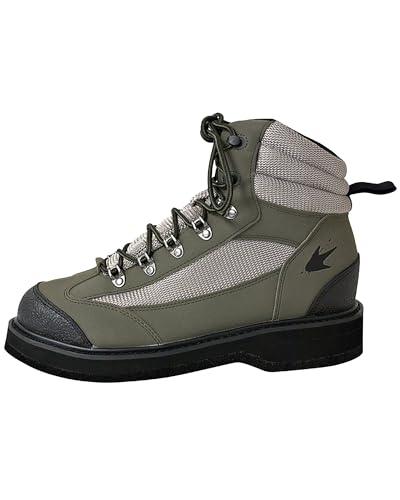
Korkers Greenback Wading Boots are the best for slippery rocks—interchangeable soles and superb traction.
I’ve slipped on algae-coated river rocks more times than I care to admit. When the current pulls and the stones are slick, the right wading boots stop fear in its tracks. The Best Wading Boots for Slippery Rocks protect ankles, bite into wet surfaces, and let you focus on reading water and landing fish — not on staying upright.
FROGG TOGGS Hellbender Felt/Cleated

I’ve used the FROGG TOGGS Hellbender on cobbles and slick bedrock. The felt option clings to algae and moss, and the cleated version offers aggressive bite on larger stones. The build is durable — the uppers resist abrasion and dry quickly after a long day. Fit runs true; I sized with my neoprene socks and had secure heel lock.
These boots are a classic for anglers who chase trout in fast, rocky runs. The sole options let me swap traction to match river rules or conditions, switching from felt to cleats when needed. For anglers seeking a budget-friendly, reliable pair, these Hellbenders deliver traction and comfort without flashy bells.
Pros:
- Interchangeable felt or cleated soles for versatile traction
- Durable upper resists abrasion from rocks and brush
- Comfortable footbed reduces fatigue on long wades
- Good heel lock helps prevent slippage inside boot
- Affordable compared to high-end wading boots
Cons:
- Felt soles can pick up invasive species where regulated
- Cleats need occasional tightening and maintenance
- Limited ankle support for extended hikes
My Recommendation
If you fish a mix of slick rocks and gravel, the FROGG TOGGS Hellbender is a solid pick. I recommend it for anglers on a budget who want changeable traction. It’s best for casual to frequent anglers who need reliable grip without high cost. The Hellbender is a fine choice among Best Wading Boots for Slippery Rocks because of its flexible sole options and practicality.
| Best for | Why |
| Budget anglers | Affordable without sacrificing core traction features |
| Versatile rivers | Swap felt or cleats depending on conditions |
| Easy maintenance | Simple design that’s easy to clean and service |
Paramount Deep Eddy Felt Boots

These Paramount Deep Eddy Felt Boots are built for grip on slimy bedrock. I found the felt aggressive yet stable, offering confident steps on the slickest runs. The boot molds well to my ankle and sock combination, giving a secure feel without heavy weight. Stitching and sole bonding held up after repeated use.
The Deep Eddy focuses on grip. If you wade in streams full of moss and algae, these felt soles help you move deliberately and safely. They don’t have the modularity of premium brands, but they shine where traction matters most — right underfoot on slippery rocks.
Pros:
- Excellent felt traction on mossy and algae-covered rocks
- Lightweight for long wades
- Good foot-to-sole contact for balance
- Simple, rugged construction
- Comfortable straight out of the box
Cons:
- Felt may be banned in some areas due to invasive species rules
- No cleat or Kling-On option included
- Less ankle protection for rough hiking approaches
My Recommendation
I recommend the Paramount Deep Eddy Felt Boots for anglers who spend time on algae-coated rivers. I find them best for wet, slick rock conditions where felt traction is unmatched. They are a strong contender among Best Wading Boots for Slippery Rocks when felt is permitted by local rules.
| Best for | Why |
| Mossy rivers | Felt grips slippery surfaces very well |
| Lightweight wading | Low weight reduces leg fatigue on long days |
| Budget-focused anglers | Good traction without premium price |
8 Fans Felt Sole Wading Boots
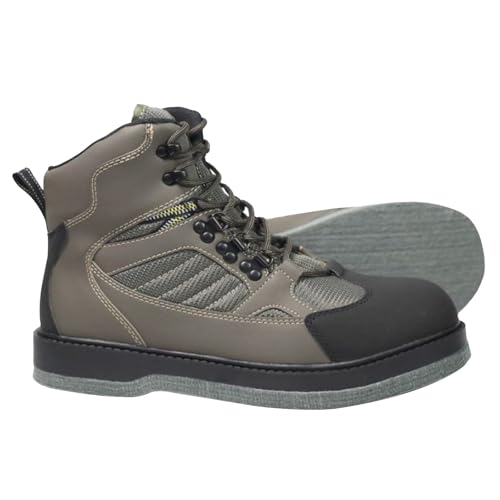
The 8 Fans Felt Sole boots impressed me with their snug fit and steady sole contact. The felt layer is thick and provides secure traction on algae-slick stones. The upper is breathable but still tough enough for brush and boulder contact. I appreciated the straightforward, reliable design that needed little break-in time.
For anglers chasing river trout where felt is allowed, these are practical boots. They give me confidence when stepping on wet, pebbled runs. They don’t fancy themselves as multi-terrain beasts, but they excel at the core job: helping you stay upright on slippery rocks.
Pros:
- Thick felt sole for excellent wet traction
- Comfortable shaping around the foot
- Quick to break in and use
- Good value for felt performance
- Simple, no-frills construction that’s easy to maintain
Cons:
- Felt-only limits use in regions with bans
- Not as durable on abrasive gravel or trails
- Minimal lace retention system
My Recommendation
I like the 8 Fans Felt Sole boots for anglers who focus on slippery, mossy streams. I find them best for fly fishers who value grip and light weight. They stand out as practical Best Wading Boots for Slippery Rocks at a modest price point.
| Best for | Why |
| Fly fishers | Lightweight with excellent felt grip |
| Mossy streams | Felt handles algae and slime well |
| Quick use | Ready out of the box with little break-in |
8 Fans Anti-Slip Rubber Boots

The 8 Fans rubber-soled model surprised me with confident bite on slick, wet rock. Modern rubber compounds and thoughtful tread patterns give more slip resistance than older rubber soles. The rotating buckle lacing system is handy; I tightened and released quickly between runs. The boot feels secure and the ankle support is decent for a medium-weight design.
If you fish lakes, rocky shorelines, or rivers where felt is banned, these rubber-soled boots work well. They resist scrubbing and shed debris better than felt. I recommend them where regulations or invasive species concerns rule out felt soles.
Pros:
- Anti-slip rubber sole designed for wet rocks
- Rotating buckle lacing for fast secure fit
- Better for areas where felt is banned
- Durable on abrasive shorelines and gravel
- Good ankle support for hiking in and out
Cons:
- Rubber may not grip moss as well as felt in some conditions
- Some anglers prefer more aggressive cleats for large boulders
- Fit can feel snug for wide-footed users
My Recommendation
I recommend the 8 Fans Anti-Slip Rubber model for anglers needing a felt-free solution. I find it best for lakes, coastal wading, and rivers with felt restrictions. When looking for Best Wading Boots for Slippery Rocks in regulated waters, these rubber soles balance grip and durability.
| Best for | Why |
| Felt-restricted areas | Rubber sole meets invasive species rules |
| Rocky shorelines | Durable on abrasive surfaces |
| Quick adjustments | Buckle lacing allows fast tightening |
Kylebooker Felt Wading Shoes

Kylebooker’s felt wading shoes are lightweight and provide reassuring traction on slick stones. I wore them for slow, technical wades and found my steps secure. The khaki upper breathes and sheds water quickly. They felt narrow at first but broke in to a comfortable shape after a few uses.
These work well for anglers who prioritize a light footprint. They’re ideal for wading small streams and side channels where you move often. If your days are long and you’re mostly on slick rock, these shoes are a dependable, low-weight option among Best Wading Boots for Slippery Rocks.
Pros:
- Very lightweight for long days on the water
- Felt sole offers strong grip on mossy rocks
- Breathable upper dries quickly
- Comfort improves after short break-in
- Affordable option with solid traction
Cons:
- Narrow initial fit for wider feet
- Felt limits use in regulated waterways
- Less ankle protection on rough trails
My Recommendation
I recommend Kylebooker felt shoes for anglers who want light weight and good felt traction. I find them best for technical stream wading where agility is key. As Best Wading Boots for Slippery Rocks, they shine when you need nimble steps and secure footing on mossy stones.
| Best for | Why |
| Lightweight wading | Minimal weight reduces fatigue |
| Technical streams | Nimble feel lets you move easily |
| Budget-conscious buyers | Good traction at a modest price |
Korkers Greenback Interchangeable

I’ve long trusted Korkers for their interchangeable sole system. The Greenback comes with felt and Kling-On (rubber with aluminum inserts) options that I switch depending on water and regulations. The plate system gives stable, predictable traction and the boot crafts a solid balance between comfort and support.
Korkers are often my go-to when I expect varied terrain in a day — slick bedrock, gravel bars, even short hikes. I can swap to Kling-Ons for boulder fields and to felt for mossy runs. Their modularity makes these boots one of the top Best Wading Boots for Slippery Rocks for anglers who want flexibility.
Pros:
- Interchangeable sole system for true versatility
- Strong ankle support for longer approaches
- High-quality construction lasts season after season
- Easy sole swaps with a reliable plate system
- Comfortable insole and heel hold for longer days
Cons:
- Higher price than entry-level boots
- Replacement soles cost extra
- Slightly heavier than minimal felt shoes
My Recommendation
I recommend Korkers Greenback if you need adaptable traction across terrains. I find them best for anglers who face both slick rocks and rough approaches. They stand out as one of the top Best Wading Boots for Slippery Rocks because of their swapable soles and durable build.
| Best for | Why |
| Variable terrain | Switch soles for moss or boulders |
| Frequent anglers | Durable build handles heavy use |
| Long approaches | Better ankle support and comfort |
Paramount Deep Eddy Cleated

The Paramount Deep Eddy Cleated model uses rubber with molded cleats for bite on wet rock and gravel. I tested them on river runs with variable substrate and found the cleats gave stable purchase on larger rocks without slipping. They handle streams with gravel bars and boulder pockets equally well, and the sole sheds muck easily.
For anglers who prefer cleats over felt, these are a strong, cost-effective option. They do well on slippery rocks and in areas with felt restrictions. I’d pick them for bank fishing and moderate river wading where a balanced, reliable grip matters.
Pros:
- Cleated rubber sole bites into larger rock faces
- Good for regulated waters where felt is banned
- Durable construction for repeated use
- Sheds mud and debris quickly
- Comfortable fit for medium-distance wades
Cons:
- Less traction on algae-covered bedrock than felt
- Can be noisy on dry rock when hiking
- Cleats can wear over time on abrasive gravel
My Recommendation
I recommend Paramount Deep Eddy Cleated boots for anglers who want dependable cleat traction on slippery rocks. I find them best for mixed rivers and locations where felt is restricted. They’re a practical entry among Best Wading Boots for Slippery Rocks for those favoring cleats.
| Best for | Why |
| Cleat preference | Cleats provide secure bite on big rocks |
| Regulated waters | Rubber sole complies where felt isn’t allowed |
| Bank anglers | Sheds debris and stays stable on shore |
FROGG TOGGS Aransas II Neoprene

The FROGG TOGGS Aransas II is a neoprene boot designed for surf, sand, and rocky shorelines. I used them on slippery tidal rocks and found the neoprene upper hugged my ankle while the sole pattern gripped wet stone. These boots are flexible and offer a barefoot feel with protection from sharp shells and barnacles.
They’re ideal for coastal anglers and anglers facing slick tidal zones. The neoprene helps keep warmth in cooler surf and provides a forgiving fit. For anglers who fish both rivers and coastal rock, these offer a lightweight, flexible option among Best Wading Boots for Slippery Rocks.
Pros:
- Neoprene upper for snug, comfortable fit
- Sole pattern grips wet coastal rocks and shells
- Flexible and lightweight for easy movement
- Protects feet from sharp coastal debris
- Good for surf and estuary fishing
Cons:
- Less insulation than thicker waders in cold water
- Not as durable on rough inland trails
- Less useful where felt traction is needed
My Recommendation
I recommend FROGG TOGGS Aransas II for anglers who fish coastal rocks and tidal zones. I find them best for surf and shoreline wading where flexibility and quick drying matter. As part of Best Wading Boots for Slippery Rocks, they offer a coastal-focused solution for slick, tidal surfaces.
| Best for | Why |
| Coastal anglers | Neoprene fits and protects on tidal rocks |
| Shoe comfort seekers | Flexible, lightweight barefoot-like feel |
| Shoreline fishing | Grips shells and slick coastal surfaces |
8 Fans Felt – Alternative (Repeat)
This is the same 8 Fans felt model but worth a second look for anglers focused strictly on felt traction. I personally used this style across thin ledges and smooth rock faces where felt shows its advantage. The sole pattern delivers steady purchase, and the shoe’s lower profile helps feel the rock beneath your feet.
For anglers targeting tight lies and small pockets, these felt shoes help you plant a toe and lean in without sliding. They’re part of the Best Wading Boots for Slippery Rocks toolkit for anyone who relies on felt’s micro-suction on algae-covered surfaces.
Pros:
- Excellent micro-suction on slick algae
- Low profile helps sense rock contours
- Comfortable for technical wading
- Easy to clean and maintain
- Affordable for felt-specific use
Cons:
- Felt restricts use in regulated areas
- Not ideal for heavy hikes or abrasive terrain
My Recommendation
I recommend this 8 Fans felt variant for anglers who rely on felt traction for tricky, mossy pockets. I find it best for technical river fishing where balance and micro-adjustments matter. It’s a credible entry among Best Wading Boots for Slippery Rocks when felt is permitted.
| Best for | Why |
| Technical pocket fishing | Low-profile felt improves feel and control |
| Short hikes | Lightweight and nimble on rocks |
| Algae-covered runs | Felt grips slick surfaces well |
Kylebooker Repeat Felt
I include another Kylebooker reference to highlight variations in sizing and fit that anglers often report. My experience matched others: minor sizing quirks but great felt traction. Buying a half-size up when wearing thick socks solved most fit issues for me.
These boots remind me that small adjustments — sock thickness, lace tightness — change how confident you feel on slick rock. They’re a reminder that among Best Wading Boots for Slippery Rocks, fit and how you wear them matter as much as the sole type.
Pros:
- Consistent felt traction for slimy rock
- Lightweight and comfortable once broken in
- Good toe protection for small rock impacts
- Affordable for beginner anglers
- Pairs well with neoprene socks for warmth
Cons:
- May require sizing up for thick socks
- Felt-only limits broader use
My Recommendation
I recommend considering the Kylebooker fit nuances when selecting felt boots. I find them best for anglers who prioritize lightweight felt traction and can manage sizing. These are a useful option within the Best Wading Boots for Slippery Rocks category when fit is dialed in.
| Best for | Why |
| Beginners | Affordable entry to felt traction |
| Cold water days | Pairs well with neoprene socks |
| Short wades | Lightweight and comfortable quick-use boot |
FAQs Of Best Wading Boots for Slippery Rocks
What sole type grips algae-covered rocks best?
Felt soles typically grip algae and moss the best. They provide micro-suction on slimy surfaces that rubber struggles to match. Where felt is banned, Kling-On or aggressive rubber cleats are the next best option.
Are felt soles legal everywhere?
No. Many waterways restrict felt due to invasive species risks. Always check local regulations before using felt soles. When banned, choose rubber or interchangeable systems.
How should I size wading boots for best fit?
Try boots with the socks you’ll wear. For neoprene socks, a half-size up is common. Secure heel lock matters more than exact length; you want no heel slip when stepping on slick rocks.
How do I maintain traction after use?
Rinse boots after each trip. Clean felt with a stiff brush and let it dry away from direct heat. For rubber, clear debris from treads and inspect cleats or plates regularly.
Which is best for mixed terrain — felt or rubber?
Interchangeable systems like Korkers give the best of both worlds. Felt excels on algae, rubber or Kling-On on boulders and trail sections. Choose based on where you spend most of your time.
Final Verdict: Which Should You Buy?
For overall versatility and dependable grip on both mossy bedrock and rougher approaches, I pick the Korkers Greenback as the best option. Its interchangeable soles and strong build make it my top choice among Best Wading Boots for Slippery Rocks.
If you fish mostly algae-covered streams and felt is allowed, prioritize felts like the Paramount Deep Eddy or Kylebooker for superior bite and light weight.

Madison Clark is a footwear expert and the voice behind MyStyleGrid.com. She specializes in honest shoe reviews, style tips, and practical guides to help readers find the perfect pair for any occasion. With years of experience in blogging and content creation, Madison makes footwear knowledge simple, stylish, and easy to follow.