Open toe shoes can be business casual in many workplaces, but style, office rules, and the shoe’s condition all matter.
The answer to “are open toe shoes business casual” depends on your work setting. A polished peep toe, dress sandal, or sleek slingback may look professional, while beach sandals and worn flip flops usually do not. This guide explains how to choose open toe shoes that look neat, feel comfortable, and fit your office dress code.
Are Open Toe Shoes Business Casual?
Yes, open toe shoes can be business casual in some workplaces. The key is choosing a refined design that looks intentional and matches the rest of your outfit.
Business casual usually sits between formal office wear and relaxed weekend clothing. It may include:
• Tailored trousers
• Chinos
• Knee length skirts
• Simple dresses
• Blouses and knit tops
• Blazers and smart cardigans
• Loafers, flats, pumps, and select sandals
When asking, “are open toe shoes business casual,” consider three factors:
• The shoe design
• Your workplace culture
• The condition of the shoes
A leather peep toe pump may work well in a corporate office with a relaxed dress code. A simple leather sandal may be suitable in a creative studio or warm climate. However, rubber flip flops, pool slides, and beach sandals rarely meet business casual standards.
The safest rule is simple: open toe shoes should look more polished than casual.

When Are Open Toe Shoes Appropriate for Work?
Open toe shoes are often appropriate when your workplace allows relaxed professional clothing. They are more common in warm regions, creative offices, small businesses, and casual business settings.
The answer to “are open toe shoes business casual” is more likely to be yes when the shoes have these features:
• Clean lines
• A firm sole
• A low or medium heel
• Quality leather, suede, or smooth fabric
• Neutral or muted colors
• Secure straps
• Minimal decoration
• A clean and well-kept appearance
A closed heel can also make an open toe shoe look more professional. For example, a leather slingback with a small heel often looks smarter than a loose slide sandal.


Your industry matters, too. In a design firm, open toe shoes may fit the culture. In a bank, law office, medical clinic, or formal corporate office, they may not. Always check written dress rules before making them part of your daily work wardrobe.

When Are Open Toe Shoes Not Business Casual?
Some open toe shoes look too relaxed for work, even when the office has a casual dress code. The problem is not always the exposed toes. It is often the material, shape, fit, or level of care.
Open toe shoes may not be business casual when they are:
• Rubber flip flops
• Beach sandals
• Foam slides
• Athletic recovery shoes
• Very flat thong sandals
• Shoes with heavy platform soles
• Shoes covered in glitter or large decorations
• Worn, cracked, stained, or noisy footwear
• Shoes that expose most of the foot
• Very high heels that make walking difficult
This is where many people make a mistake. They focus only on whether the toes are visible. In practice, the whole shoe creates the message. A clean leather sandal can look polished, while an old fabric sandal can look too casual.
I have found that a simple test works well: would you wear the shoes to meet a new client? If the answer is no, they may not be right for your office.
Types of Open Toe Shoes That Can Look Professional
Not all open toe shoes send the same style signal. Some designs look sharp and office ready, while others belong at the beach or on a weekend walk.
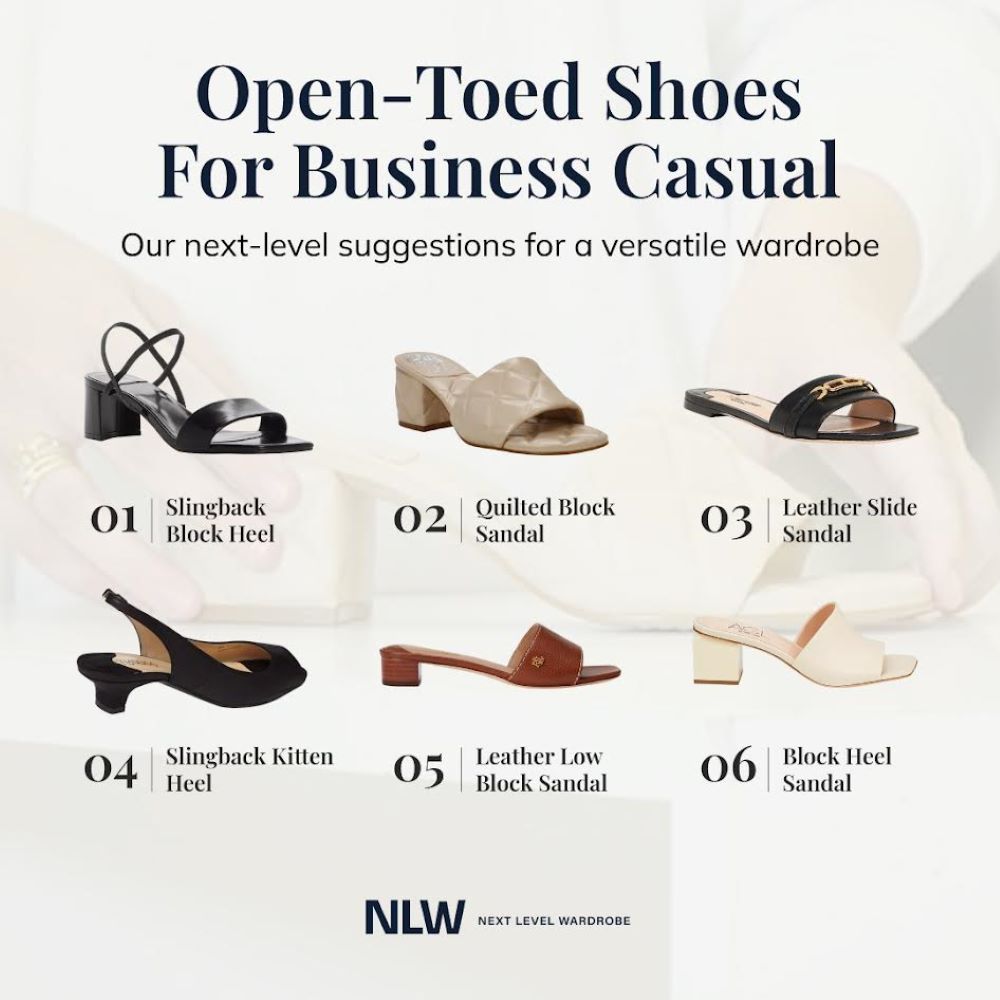
Peep toe pumps
Peep toe pumps are among the most formal open toe options. They combine the shape of a classic pump with a small opening near the toes.
Choose a pair with:
• A closed heel
• A modest heel
• A smooth finish
• A simple toe opening
• A stable fit
A black, navy, tan, or burgundy pair can work with trousers, dresses, or skirts. Avoid very high platforms or dramatic cutouts if you want a traditional business casual look.
Dress sandals
Dress sandals may be business casual when they have clean straps and a refined finish. Leather or high quality faux leather usually looks more professional than thin plastic or rubber.
A low heeled sandal works well with wide leg trousers, a midi dress, or an ankle length skirt. Make sure the straps do not pinch and that the shoes stay secure while you walk.


Slingback sandals
Slingbacks are a strong choice because the back strap adds structure. They often look more polished than loose sandals and can provide better support.
A pointed or almond shaped slingback may be suitable for a dressier office. A square toe style can look modern while still remaining neat.
Open toe flats
Open toe flats can work in a casual office, especially when they resemble a structured loafer or ballet flat. Look for a firm sole, clean shape, and good support.
Avoid flimsy flats that fold easily or look like house shoes. Business casual footwear should hold its shape.

How to Style Open Toe Shoes for Business Casual Outfits
The outfit around your shoes can change how professional they look. Even a simple sandal can appear polished when paired with tailored clothing.
With trousers
Pair open toe shoes with:
• Ankle length trousers
• Wide leg trousers
• Straight leg pants
• A tucked blouse
• A structured blazer
Keep the trouser hem neat. Pants that drag on the ground can make even expensive shoes look careless.
With skirts
A knee length or midi skirt usually creates a balanced office look. Pair it with a tucked knit top, button down shirt, or simple blouse.
If the skirt is loose or flowing, choose a more structured shoe. If the skirt is tailored, a simple sandal can soften the outfit.
With dresses
A modest dress and open toe slingbacks can create an easy warm weather outfit. Choose a dress with a clean shape and a length that feels suitable for your workplace.
Avoid combining a very short dress, bold cutouts, and casual sandals. Each item may be acceptable alone, but together they can look too relaxed.
With jeans
Some casual offices allow dark, clean jeans. If so, pair them with a blazer, polished top, and refined open toe shoes.
Avoid ripped jeans, faded denim, and beach style sandals. The goal is to create balance between relaxed and professional pieces.


Are Open Toe Shoes Business Casual in Different Workplaces?
Office culture has a major effect on the answer. A shoe that works in one setting may look out of place in another.
Corporate offices
Corporate workplaces often favor closed toe shoes. Some allow open toe pumps or dress sandals during warm months, but many still prefer conservative footwear.
If you work in finance, law, government, or executive administration, check the written policy. When unsure, choose closed toe shoes for important meetings.
Creative workplaces
Creative offices often allow more color, texture, and modern design. Open toe shoes can fit well if they look clean and intentional.
You may have more freedom with block heels, unusual shapes, or tasteful color. Still, comfort and neatness matter.
Casual offices
Casual offices may allow simple sandals and open toe flats. The shoes should still be clean, secure, and in good condition.
A casual dress code does not mean every casual shoe is appropriate. Work shoes should support a professional image.
Customer facing roles
If you meet customers, patients, or clients, polished footwear is especially important. Your shoes become part of your first impression.
In these roles, choose a structured open toe style or keep a pair of closed toe shoes at work for formal meetings.
Outdoor and active jobs
Open toe shoes may create safety concerns in warehouses, laboratories, kitchens, construction sites, and medical settings. Protective footwear rules may require closed toes, non slip soles, or safety shoes.
In these settings, the question “are open toe shoes business casual” matters less than whether the shoes meet safety requirements.
Workplace Safety and Dress Code Rules
Style is only one part of the decision. Workplace safety must come first.
Open toe shoes may be unsafe around:
• Heavy equipment
• Chemicals
• Hot liquids
• Sharp tools
• Moving machinery
• Construction materials
• Wet floors
• Falling objects
Some employers ban open toe shoes because of injury risks. Others allow them only in office areas. Follow your employer’s policy even if your shoes look polished.


Dress codes can also vary by season. A company may permit sandals from May through September but require closed toe shoes during formal events. If the policy is unclear, ask a manager or human resources representative.
A short question can prevent an awkward mistake: “Are open toe shoes business casual under our current dress code?”
How to Choose Comfortable Open Toe Shoes for Work
A professional shoe still needs to feel good after several hours. Discomfort can affect your posture, focus, and mood.
Use these checks before wearing a pair to work:
• Walk on a hard floor for several minutes
• Check whether your toes grip the shoe
• Make sure straps do not rub
• Look for a stable heel
• Test the shoes on stairs
• Check that your foot does not slide forward
• Wear them with your usual work socks or tights, if needed
• Confirm that the sole has enough traction
A low block heel is often easier to wear than a thin high heel. Cushioned footbeds can also help, but they do not fix a poor fit.
One lesson I learned from testing work shoes is that a shoe can feel fine for five minutes and uncomfortable by lunchtime. Wear new shoes at home first. This helps you find pressure points before an important workday.
Common Mistakes to Avoid
Even when open toe shoes are allowed, small style mistakes can make the outfit look less professional.
Wearing damaged shoes
Scuffed leather, loose straps, worn soles, and chipped heels can ruin an otherwise polished outfit. Inspect your shoes before wearing them to work.
Choosing overly casual materials
Rubber, thin canvas, and plastic often look too informal. They may be comfortable, but they usually belong in casual or outdoor settings.
Ignoring foot care
Open toe shoes draw attention to your feet. Clean nails and healthy skin help the shoes look neat. You do not need a bright polish, but basic grooming matters.
Wearing shoes that are too loud
Very high heels, heavy hardware, bright neon colors, and large decorations can distract from a professional outfit. Use your office culture as a guide.
Forgetting the weather
Rain, snow, and cold weather can make open toe shoes impractical. Wet feet can also damage leather and make walking unsafe.
Wearing them to a formal meeting
Even if open toe shoes are allowed every day, a board meeting, job interview, or client presentation may call for closed toe shoes. When the stakes are high, dress slightly more formally.
Open Toe Shoes Compared With Other Business Casual Shoes
Understanding the alternatives can make your choice easier. If you are not sure whether open toe shoes are business casual, compare them with familiar office styles.
| Shoe type | Typical business casual fit | Best use |
|---|---|---|
| Loafers | Strong choice | Daily office wear |
| Ballet flats | Usually suitable | Casual and traditional offices |
| Closed toe pumps | Very polished | Meetings and formal offices |
| Slingbacks | Often suitable | Warm weather and presentations |
| Peep toe pumps | Sometimes suitable | Relaxed corporate settings |
| Dress sandals | Office dependent | Warm climates and casual offices |
| Flip flops | Usually unsuitable | Beach and home wear |
| Athletic shoes | Office dependent | Casual creative workplaces |
This comparison shows why “are open toe shoes business casual” does not have one universal answer. The design and setting matter as much as the exposed toes.
A Simple Checklist Before Wearing Open Toe Shoes to Work
Use this checklist when you are unsure:
- Read your workplace dress code.
- Consider your industry and role.
- Check whether your toes and feet are well groomed.
- Inspect the shoes for damage.
- Choose a polished material.
- Avoid beach and athletic styles.
- Make sure the shoes fit securely.
- Match them with tailored clothing.
- Keep closed toe shoes available for formal meetings.
- Ask a manager if the policy is unclear.
This approach removes guesswork. It also helps you make a choice that feels confident rather than risky.
Frequently Asked Questions About Are Open Toe Shoes Business Casual
Are open toe shoes acceptable in a business casual office?
They can be acceptable if the shoes are polished, clean, and allowed by company policy. Refined sandals, slingbacks, and peep toe pumps are usually better choices than flip flops or beach sandals.
Are peep toe shoes considered business casual?
Peep toe shoes are often considered business casual because they have a structured shape and usually include a heel. However, very high heels, large openings, or dramatic platforms may look too formal or too flashy for some offices.
Can I wear open toe sandals to a professional office?
You may be able to wear open toe sandals in a relaxed professional office or warm climate. Select a structured pair with secure straps, a clean finish, and a modest heel or flat sole.
Are open toe shoes appropriate for a job interview?
Closed toe shoes are the safest choice for a job interview because they look more conservative. If you know the company has a relaxed dress code, a polished slingback may be acceptable, but avoid casual sandals.
Can I wear open toe shoes with business casual pants?
Yes, open toe shoes can pair well with ankle pants, straight leg trousers, and wide leg pants. Keep the pants neat and choose shoes with a structured design to maintain a professional appearance.
Are open toe shoes allowed in all workplaces?
No. Some workplaces ban open toe shoes for safety, hygiene, or formal dress reasons. Always follow your employer’s rules, especially in medical, laboratory, industrial, kitchen, and construction settings.
Conclusion
So, are open toe shoes business casual? They can be, especially when they are clean, structured, comfortable, and suited to your workplace culture. Refined slingbacks, peep toe pumps, dress sandals, and open toe flats are usually stronger choices than flip flops, plastic slides, or worn beach sandals.
Think of your shoes as the final sentence in your outfit. They should support the message you want to send: capable, polished, and ready for the workday. Check your dress code, test your shoes for comfort, and choose the more conservative option when you are unsure. Explore more workplace style guides and share your own office shoe tips in the comments.
Madison Clark is a footwear expert and the voice behind MyStyleGrid.com. She specializes in honest shoe reviews, style tips, and practical guides to help readers find the perfect pair for any occasion. With years of experience in blogging and content creation, Madison makes footwear knowledge simple, stylish, and easy to follow.