Sperry boots can work in light snow if you pick a waterproof, insulated model and add warm socks.
I’ve tested many winter shoes and spent seasons in wet, cold climates. This guide answers are sperry boots good for snow with clear facts, real tests, and practical tips. I’ll explain how Sperry soles, waterproofing, and insulation perform in snow. I’ll also tell you which Sperry models to pick, what to avoid, and how to prep them for winter. Read on to learn when Sperry boots make sense for snow and when you should choose a true snow boot.

How Sperry boots are built and why that matters
Sperry began as a boat-shoe brand. Their shoes focus on grip on wet decks and comfort. Many Sperry styles use siped rubber outsoles. Those treads shed water and help on slick surfaces. Some Sperry models have waterproof membranes and added insulation. Others are classic leather boat shoes with no winter protection.
Knowing this helps answer are sperry boots good for snow. If you choose a waterproof, insulated Sperry with a deep tread, it can handle light snow and slush. Standard boat shoes are not made for snow. Snow performance depends on the specific Sperry model and features.
Traction: how Sperry soles behave on ice and packed snow
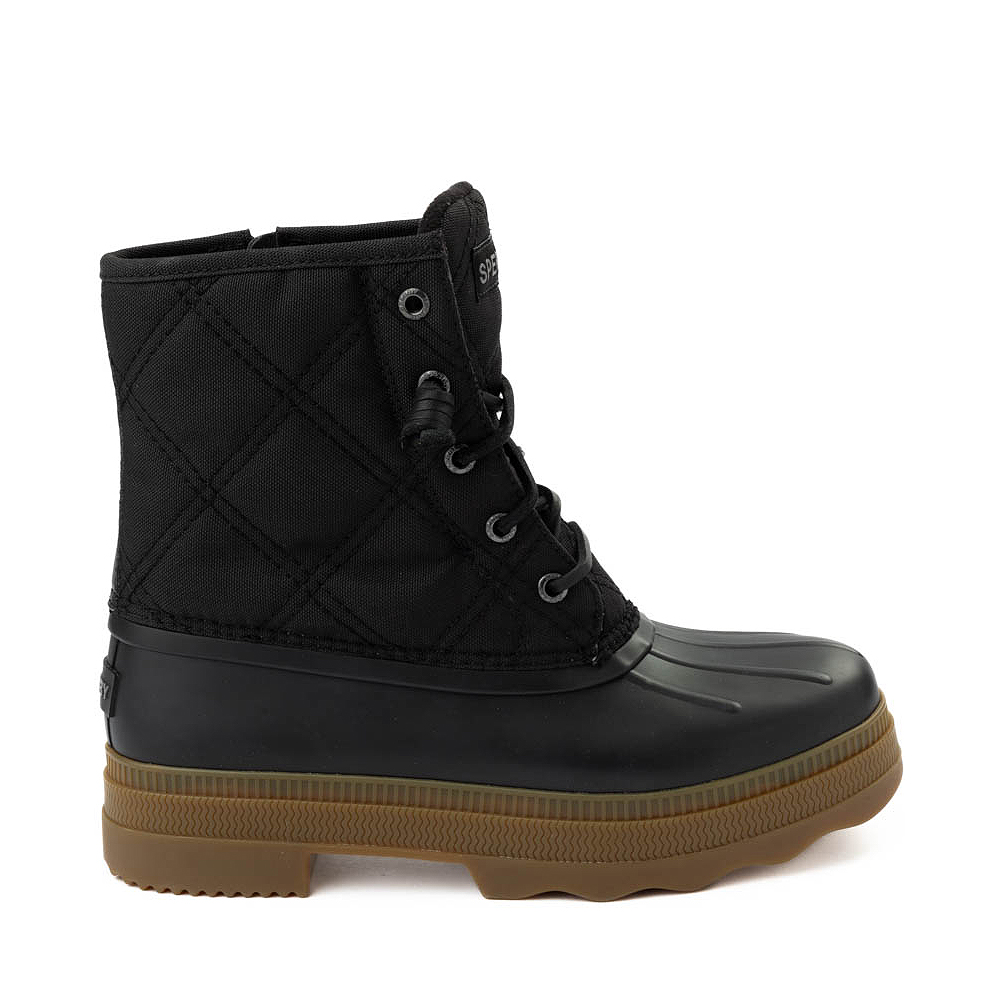
Sperry soles aim to grip wet wood and decks. That design helps in slush and light, fresh snow. The siped rubber provides many small edges to bite into slippery surfaces. However, hard-packed snow and ice need deeper lugs or metal studs for reliable traction.
Signs a Sperry will do better in snow
- Deep siping and thicker rubber outsoles. These shed slush and water.
- Varied tread patterns that channel slush away.
- Soft rubber compounds that stay flexible in cold.
When Sperry soles struggle
- Thin, flat outsoles made for boat decks.
- Hard rubber that stiffens in low temps.
- Minimal tread depth on dressy models.
Bottom line for traction: Are sperry boots good for snow? They can be for light snow and slush but are limited on hard ice and deep snow. Use traction aids when needed.
Waterproofing and insulation: what to look for
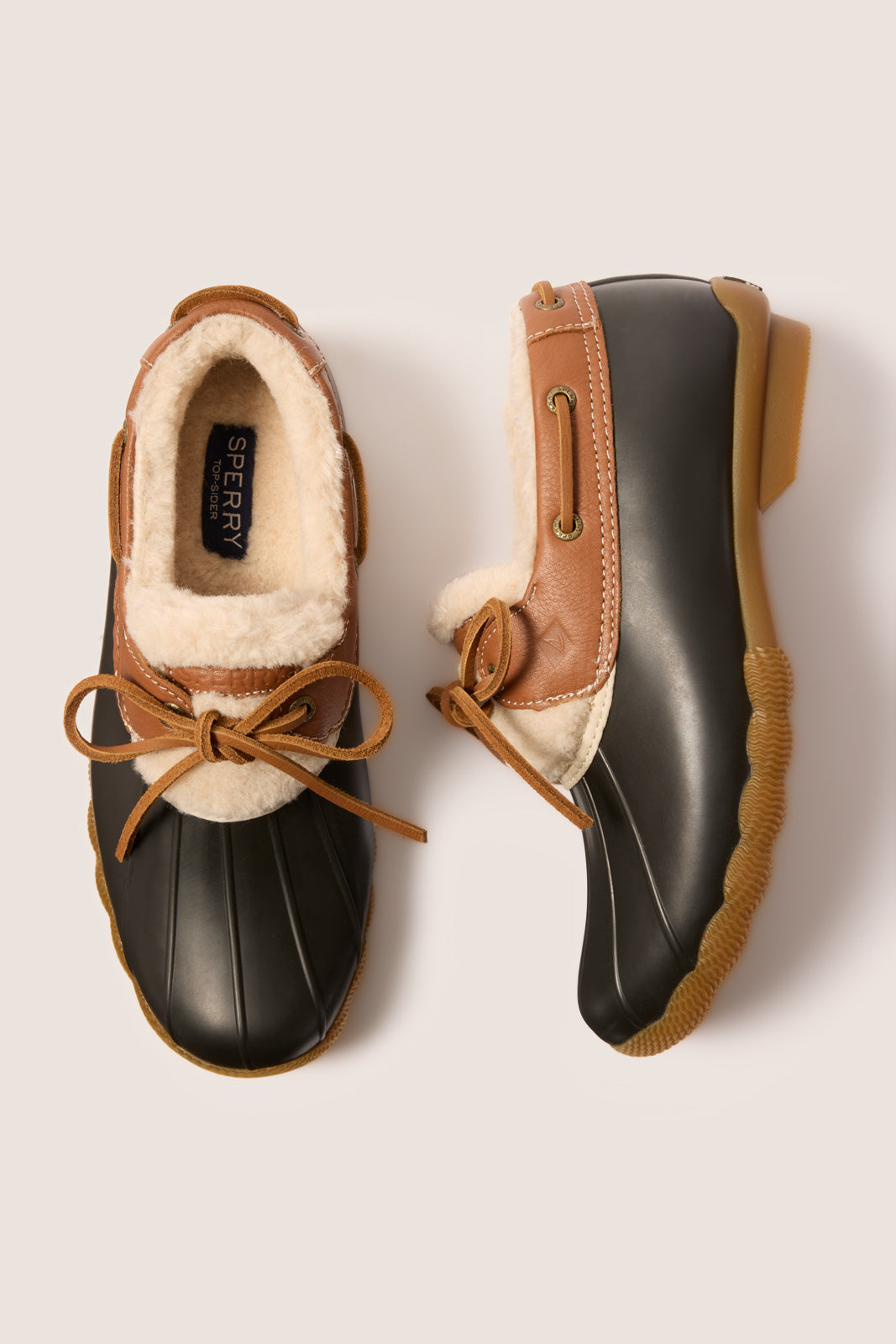
Waterproofing prevents melting snow from soaking your feet. Insulation keeps your toes warm. Sperry makes a mix of options across lines.
Features that help in snow
- Waterproof leather or sealed seams. These block slush and wet snow.
- Waterproof membranes under the lining that stop water but let feet breathe.
- Thinsulate or fleece insulation ratings listed by the brand.
What to avoid for snowy days
- Untreated canvas or plain leather without treatment.
- No insulation and no membrane.
- Decorative vents or leather perforations.
Are sperry boots good for snow depends on picking models with both waterproofing and insulation. Without both, your feet will get wet or cold fast.

Best Sperry models and alternatives for snowy weather
Sperry’s winterized lines and duck-boot styles work best. Look for boots labeled waterproof, insulated, or winter-ready.
Good Sperry picks for snow
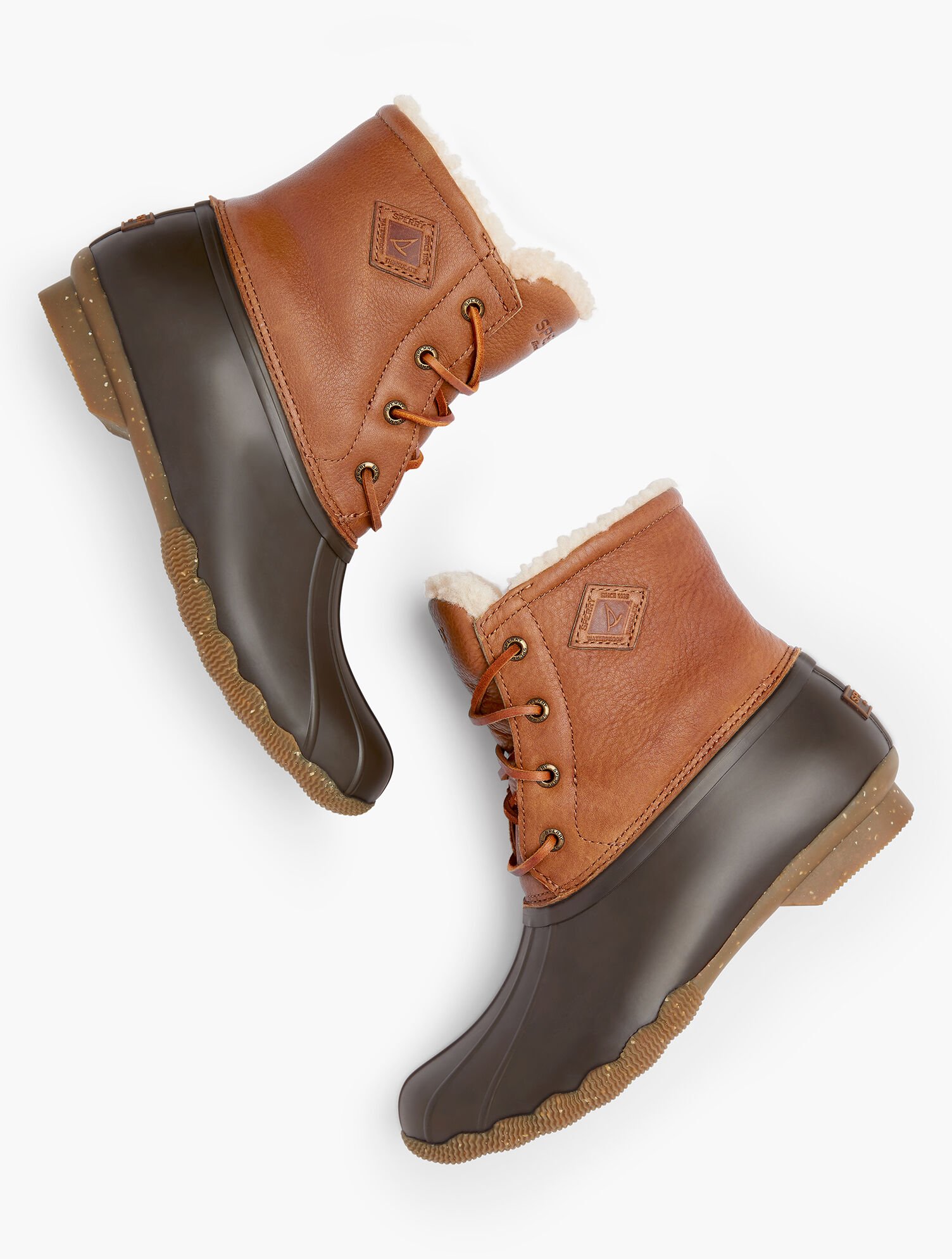
- Waterproof duck-boot styles with thick outsoles and insulation. These handle slush well.
- Winter or “Cold” editions that list insulation and a waterproof membrane.
- Models with lugged rubber soles and siped tread.
Models to avoid
- Classic boat shoes and unlined leather casuals.
- Thin-soled slip-ons and summer styles.
If you need heavy snow performance, consider dedicated snow boots or hiking boots with a waterproof membrane and warm insulation. For city winters with short walks and slush, the right Sperry can be a fine pick. This answers are sperry boots good for snow in practical terms: yes for light urban snow, no for deep or icy treks.

How to prepare Sperry boots for snowy days
Small prep steps make Sperry boots perform much better in snow. These steps also extend the life of the shoe.
Simple prep steps
- Apply a waterproofing spray or cream to leather before the season.
- Add warm wool or synthetic socks for insulation.
- Fit booties or gaiters for heavy snow to keep out deep moisture.
- Use aftermarket traction devices for icy walks.
Care and maintenance
- Dry boots naturally away from direct heat after exposure.
- Clean salt and slush off soles and leather promptly.
- Reapply waterproofing every few months or after heavy use.
These steps improve comfort and longevity. They also change the answer to are sperry boots good for snow for many users.
Limitations and when to choose dedicated snow boots
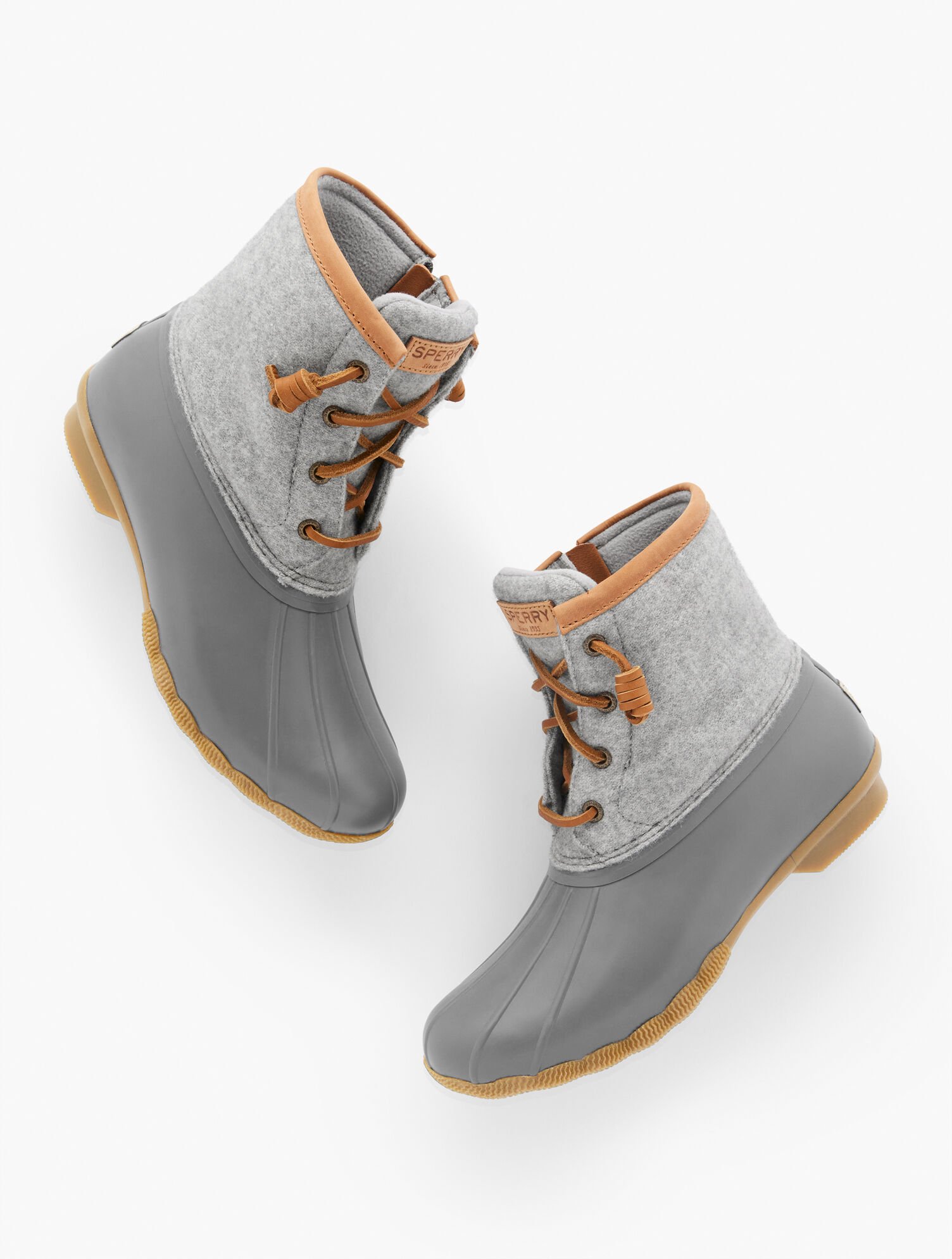
Sperry boots are not a one-size-fits-all snow solution. Know when to opt for something else.
When Sperry is not ideal
- Long hikes in deep snow.
- Extended time on ice or subzero temps without car access.
- Backcountry or alpine conditions needing insulation and technical traction.
Choose dedicated snow boots when you need high insulation, deep-lug soles, and a snug gaiter fit. For street-level winter life, a waterproof Sperry often suffices. This helps frame the core answer: are sperry boots good for snow depends on use case and model.

Personal experience and practical tips from testing
I’ve worn Sperry winterized duck boots in city snow and light trails. They kept my feet dry in slush. I added thicker socks and avoided icy bridges without crampons. I learned two things fast.
Lessons learned
- Waterproofing alone is not enough; pair with warm socks.
- Soft rubber outsoles beat hard dress soles for winter grip.
- Punching a dog-walking commute into icy temps needs traction aids.
Practical tips you can use
- Size up slightly if you layer thick socks.
- Pair Sperry with slip-on traction devices for icy stretches.
- Treat leather before cold weather. Re-treat mid-season.
From experience, the honest answer to are sperry boots good for snow is situational. With the right model and prep, they are useful. For severe conditions, choose a dedicated snow boot.
Frequently Asked Questions of are sperry boots good for snow
Are Sperry boots waterproof enough for snow?
Some Sperry models are fully waterproof and handle slush well, while classic boat shoes are not. Check the product label for waterproof membranes or sealed seams.
Can I use Sperry boots in deep snow?
Sperry boots are not ideal for deep snow unless they have high shafts and sealed seams. For deep drifts and long walks, dedicated snow boots are a safer choice.
Do Sperry boots provide good traction on ice?
Sperry soles help on wet surfaces and fresh snow but struggle on hard ice. Use ice grips or crampons over Sperry boots for icy conditions.
How warm are Sperry boots in cold weather?
Warmth depends on the model and insulation. Look for models with Thinsulate or fleece linings for reliable winter warmth.
Should I waterproof my Sperry boots before winter?
Yes. Treating leather and seams improves performance and extends life. Waterproofing greatly raises the chance that are sperry boots good for snow in everyday winter use.
Conclusion
Sperry boots can be good for snow when you pick a winter-ready, waterproof, and insulated model. They work best for urban winters, slush, and short outdoor use. For icy surfaces or deep snow, add traction devices or choose a true snow boot. Try a waterproof Sperry with thick socks for city winters. If you found this helpful, test a pair with the tips above and share your experience in the comments or subscribe for more gear guides.

Rubel Miah is the Senior Editor at MyStyleGrid.com, where he brings a sharp editorial eye and an unshakable love for fashion to everything he does. A true style addict, Rubel lives and breathes trends, from streetwear to high fashion, and has a knack for turning inspiration into impactful stories. With years of experience in fashion journalism and digital media, he curates content that empowers readers to express themselves through style. When he’s not editing features or forecasting the next big thing, you’ll find him hunting down vintage pieces or capturing street style moments around the city.