The best boots for railroad workers combine traction, toe protection, waterproofing, comfort, and strong support.
A long rail shift can mean wet ballast, oily steel, sharp scrap, cold wind, and miles of walking. The wrong boot may rub your heel before the first break or lose grip near a switch. I looked at the build, sole, fit, and work limits of these boots with those daily problems in mind. This guide helps you match a boot to your role, weather, and safety rules. Always confirm your railroad’s footwear policy before buying, since some jobs require a defined safety toe, electrical hazard rating, or other job-specific protection.
EVER BOOTS Tank Soft Toe Work Boots
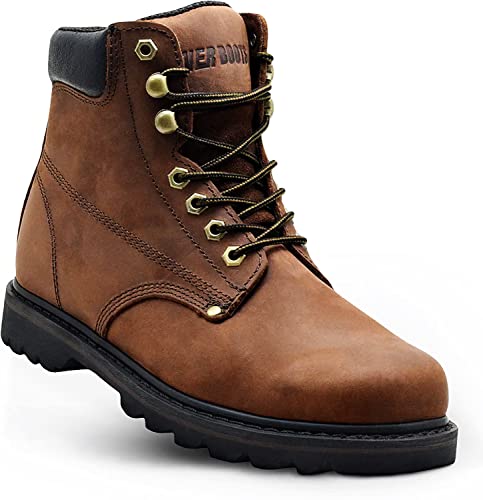
The EVER BOOTS Tank is a simple leather work boot for railroad workers who need solid daily coverage without paying premium-boot prices. Its full-grain leather upper gives it a sturdy feel and can handle dust, light rain, and routine scuffs. The soft-toe design keeps the front flexible, which may feel good during long walks. However, a soft toe does not replace a safety toe when your employer requires one.
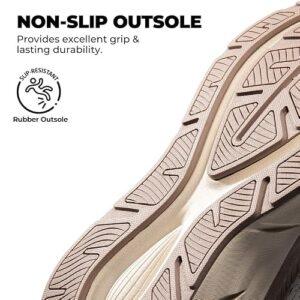
The rubber sole is the key feature for general yard work and construction-style tasks. It gives a firm base on hard ground and helps isolate your feet from rough ballast. I would treat the boot with a leather conditioner before heavy use and allow it to dry fully after wet shifts. For the best boots for railroad workers on a budget, this model offers a practical starting point, but check its safety ratings and fit for your exact duty.
Pros:
- Full-grain leather offers good everyday durability
- Rubber sole gives dependable grip on many work surfaces
- Soft toe allows a flexible, less rigid feel
- Useful for general maintenance and walking duties
- Usually costs less than premium American-made work boots
- Classic shape works well with most work pants
Cons:
- Soft toe may not meet a railroad safety-toe rule
- Water resistance can decline without leather care
- May need a break-in period for some feet
Danner Quarry USA Waterproof Black Boots

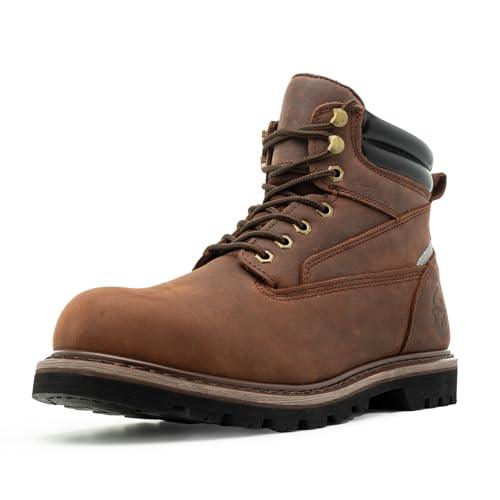
The Danner Quarry USA is the strongest all-around choice in this group for demanding railroad work. It has an 8-inch height, a waterproof build, and a rugged work-boot platform suited to rain, mud, and long outdoor shifts. The taller shaft helps keep water, gravel, and brush away from your ankle. It also gives useful support when you step over ties or walk uneven ballast.
Danner built this line for hard use, so it feels more like equipment than a casual boot. The leather may feel stiff at first, but that firmness often becomes a benefit once the boot shapes to your foot. The black finish looks professional and hides some grime between cleanings. If your workplace accepts its toe and electrical ratings, this is one of the best boots for railroad workers who want long-term protection and support.
Pros:
- Waterproof construction helps during rain and wet yard work
- 8-inch height adds ankle coverage and support
- Rugged sole suits rough ground and daily walking
- Made in the USA, according to the product designation
- Strong build should handle repeated work abuse
- Black leather presents a clean, professional look
Cons:
- Higher price than basic leather work boots
- Heavier feel may tire workers who prefer light footwear
- Needs careful break-in before a full-length shift
- Confirm the exact toe and electrical ratings before purchase
Danner Quarry USA Waterproof Brown Boots

The brown Danner Quarry USA shares the same work-focused idea as the black version but gives you a more traditional leather look. Its waterproof design is helpful for track crews who work through wet grass, standing water, and changing weather. The high shaft supports the ankle while the structured upper helps the boot hold its shape. That combination can reduce foot fatigue when a shift includes constant walking.
Distressed brown leather also hides small marks well, which is useful in a gritty rail environment. I like this version for workers who want a serious boot without the stark appearance of black footwear. Still, leather care matters, and no waterproof boot stays waterproof forever if seams and leather are neglected. For workers comparing the best boots for railroad workers, this is a dependable premium option for wet climates and rough terrain.
Pros:
- Waterproof build helps keep feet dry in wet conditions
- 8-inch shaft provides strong ankle coverage
- Brown leather hides normal work scuffs and dust
- Firm construction supports long outdoor shifts
- Rugged sole is suited to uneven ground
- Premium materials may provide better long-term value
Cons:
- Premium price may exceed a new worker’s budget
- Heavy design is less suited to fast, light movement
- Stiff leather requires patient break-in
- Ratings can vary by exact version, so verify before ordering
EverBoots Leather Construction Work Boots

These EverBoots leather work boots target workers who want a straightforward boot for construction, repair, and general outdoor labor. The black upper looks neat and is easy to pair with a uniform. Its leather body offers more structure than a sneaker, while the work-boot sole helps protect against rough ground. This model may suit a railroad employee whose job includes walking, inspection, and light maintenance.
I would not choose it by appearance alone. Railroad work can involve impact, compression, slips, and electrical hazards, so you must check the current product details and your employer’s written requirements. The boot may be a good value when comfort and basic durability matter more than specialized protection. As a budget pick among the best boots for railroad workers, it makes sense for lower-risk tasks when its specifications match the job.
Pros:
- Leather upper gives useful protection from daily scuffs
- Black color works well with many uniforms
- Work-boot shape provides more support than casual shoes
- Good option for general maintenance and inspection work
- Often more affordable than high-end safety boots
- Simple design is easy to clean and maintain
Cons:
- May not include a safety toe or electrical hazard rating
- Water protection may be limited in prolonged rain
- Less specialized than boots built for rail crews
- May feel firm until the footbed and leather break in
EVER BOOTS Moc Toe Lightweight Work Boots

The EVER BOOTS Moc Toe focuses on comfort and lower weight. That matters when a railroad shift includes many miles of walking rather than heavy lifting. A moc-toe shape gives the boot a relaxed look and may offer more room across the front for workers with wider feet. The lighter design can feel less tiring than a large, stiff logger-style boot.
This boot is best viewed as a comfort-first work option, not an automatic answer for every rail job. Check whether the toe is soft or safety rated, and confirm the sole’s slip performance for oil, water, and steel surfaces. I would pair it with moisture-wicking socks and a quality insole if the stock footbed feels thin. For workers seeking the best boots for railroad workers during long walking shifts, this model deserves attention when its protection level meets the site rules.
Pros:
- Lightweight build may reduce fatigue during long walks
- Moc-toe shape can feel roomy for some foot shapes
- Casual work style suits daily wear after the shift
- Leather upper provides basic protection from abrasion
- Good choice for workers who dislike very heavy boots
- May require less break-in than a rigid premium boot
Cons:
- May not provide the safety toe required for track duties
- Light construction may not match severe impact work
- Confirm traction claims before using it on oily surfaces
- Limited shaft height gives less ankle coverage
ACE Mammoth IV Composite Toe Work Boot
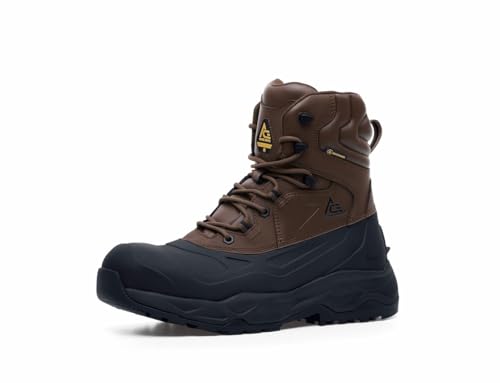
The ACE Mammoth IV stands apart because it uses a composite toe and a non-slip work sole. A composite toe does not conduct cold as quickly as steel, which can be helpful during winter outdoor work. It also avoids some of the extra weight that comes with a steel toe. The unisex design may work for a wider range of workers, but fit still matters more than the label.
This boot is worth considering for workers who need toe protection and spend time on slick floors or wet platforms. “Non-slip” is not a guarantee against every rail-yard hazard, so keep the tread clean and move with care around oil and loose ballast. Confirm the product’s current ASTM markings, electrical protection, and employer acceptance before relying on it. In my view, this is one of the more useful choices among the best boots for railroad workers when cold comfort and a composite toe are priorities.
Pros:
- Composite toe can reduce cold transfer in winter
- Non-slip sole helps on many smooth work surfaces
- Lighter than many steel-toe alternatives
- Unisex design expands sizing options
- Useful for platform, shop, and maintenance settings
- Toe cap adds more protection than a soft-toe boot
Cons:
- Verify ASTM certification and hazard ratings before use
- May not offer the ankle support of an 8-inch boot
- Composite toe can still feel tight in the wrong size
- Tread performance depends on surface, dirt, and wear
EPI Polaris CV Rear Drive Boot

The EPI CV Boot is not a work boot for your feet. It is a replacement drivetrain part for certain Polaris Sportsman Worker all-terrain vehicles. I included it because it appeared in the supplied product list, but it should not be confused with footwear for railroad employees. Its job is to cover and protect a constant-velocity joint, not protect a worker from impact, water, or slips.
This product may help a maintenance team that uses a compatible Polaris ATV to reach remote track areas. It must match the vehicle model, year, position, and drivetrain before installation. I would never place it in a boot comparison or recommend it as personal protective equipment. It has no meaningful place among the best boots for railroad workers, but it may support railroad operations as an ATV repair part.
Pros:
- Designed for listed Polaris Sportsman Worker applications
- Protects the CV joint from dirt and debris when matched correctly
- Can support ATV access in remote work areas
- Useful as a replacement maintenance component
- May help extend drivetrain service life after proper installation
Cons:
- It is not footwear and cannot protect a worker’s feet
- Fit depends on the exact ATV model and year
- Requires mechanical installation rather than normal boot use
- Provides no traction, toe, or electrical hazard protection
How to Choose the Best Boots for Railroad Workers
Railroad work is not one single job. A conductor may walk for hours, while a track laborer may lift, dig, and climb over uneven ground. A signal technician may need electrical hazard protection, and a locomotive mechanic may face oil, metal edges, and heavy parts. The best boots for railroad workers must match the actual hazards, not just look rugged.
Start With Your Employer’s Footwear Rule
Before comparing leather, soles, or brands, read your employer’s safety policy. Many railroad jobs require protective footwear that meets a recognized standard, such as ASTM F2412 and ASTM F2413. Those standards cover tests for impact and compression, but not every boot with a tough appearance carries those ratings.
Look for clear product information about the toe type and hazard protection. A soft-toe boot may work for a low-risk inspection role, yet fail a rule for work near moving equipment or heavy materials. I always treat the written policy as the final word. A comfortable boot that your supervisor cannot approve is not a useful purchase.
Safety Toe: Steel, Composite, or Soft Toe?
Steel toes remain popular because they offer strong impact and compression protection. They can feel heavier and may become cold in winter. Composite toes use materials such as plastic or carbon-based blends, so they often weigh less and transfer less cold. They may also be preferred in some electrical work settings, but you must confirm the complete electrical rating.
Soft-toe boots feel flexible and can be comfortable for walking. They do not provide the same impact protection as a certified safety toe. That makes the EVER BOOTS Tank and similar soft-toe models better for approved low-risk work than for jobs with a clear toe-protection requirement. Never assume that a thick leather toe equals a safety toe.
Traction Matters Near Rails
Rail yards can combine ballast, wet ties, metal steps, mud, oil, and loose grit. A deep rubber outsole helps, but tread depth alone does not guarantee grip. The rubber compound, tread pattern, surface condition, and cleaning all affect traction. A sole packed with mud can become as slick as a worn shoe.
Look for a heel that feels stable and a sole that bends at the right point. You need enough flexibility to walk naturally, but too much softness can make uneven ground feel unstable. Clean the outsole often, inspect it for worn lugs, and replace the boot when the tread no longer gives a secure step.
Waterproofing and Wet-Shift Comfort
Wet feet can turn a normal shift into a painful one. Waterproof membranes help block water, while treated leather helps resist surface moisture. A waterproof boot can still leak through the tongue, seams, or damaged leather. It also may breathe less than a non-waterproof boot, so sweat can build up inside.
For rainy regions, the Danner Quarry models are the most obvious choices in this list. Dry them at room temperature after work. Do not place wet leather directly against a heater, because intense heat can shrink and crack it. A second pair of boots also gives each pair time to dry and recover between shifts.
Boot Height and Ankle Support
An 8-inch boot covers more of the ankle and lower leg than a low work shoe. That extra height can help when you step across uneven ballast, climb ladders, or work around brush. It can also keep water and debris out. The trade-off is more weight, warmth, and stiffness.
A lower boot may feel better for a job based mostly indoors or on smooth platforms. A taller boot makes more sense when you need added support and weather coverage. The best boots for railroad workers often sit in the 6- to 8-inch range, but your mobility needs should guide the final choice.
Fit Is a Safety Feature
A boot that slips at the heel can cause blisters and poor balance. A boot that squeezes the toes can reduce comfort and focus during a long shift. Try boots with the socks you use at work, and leave enough room for your toes to move without letting your foot slide forward.
Check your size at the end of the day, when feet are often slightly swollen. Walk up and down a hard surface before wearing the boots outside. Your heel should stay mostly in place, and your toes should not hit the front when you bend or descend stairs. If one foot is larger, fit the larger foot and adjust the other side with lacing or an insole.
Weight Versus Durability
Heavy boots can feel reassuring, but weight adds up over thousands of steps. A worker may lift each foot several thousand times during a shift. That is why a lighter composite-toe boot or a lighter moc-toe boot can feel appealing for walking-heavy jobs.
Still, the lightest boot is not always the safest. Thick leather, a stable shank, a waterproof liner, and a protective toe all add weight. I prefer a boot that feels balanced rather than simply light. The right pair should support your foot without making every step feel like a chore.
Electrical Hazard Protection
Some railroad workers may encounter electrical systems, signal equipment, or other energized hazards. Electrical hazard protection is a special boot feature, and it must appear in the product specifications or marking. A rubber outsole alone does not prove that a boot has an electrical hazard rating.
Check the current label and ask your safety manager if the boot is approved for your role. Also remember that electrical hazard footwear has limits. Wet conditions, damaged soles, conductive objects, and high voltages can change the risk. A boot rating is one part of a broader safe-work plan.